Low-Cost Marketing for Cottage Food Businesses: Smart, Simple, and Easy Ideas You Can Start Today
 1 min read
A practical, neighborly guide to building real momentum from your home kitchen
There’s a quiet kind of bravery in starting a cottage food business.
You’re standing in your own kitchen — probably in yoga pants, hair in a claw clip, flour on your sweatshirt — telling yourself, “I think people would actually pay for this.” And they might. They absolutely might. But wanting customers and consistently getting customers are two very different things.
Here’s the good news: you do not need a giant ad budget, a storefront, or a viral TikTok to build real traction. What you do need is proximity, partnerships, patience, and a willingness to be seen in your community.
Let’s talk about how to make that happen in ways that are realistic for someone baking between school pickup and dinner prep.
Start Where You Live: The Power of Local Presence
One of the biggest advantages you have as a cottage food business is locality. You are not trying to ship nationwide (at least not yet). Your customers are likely within a 5–15 mile radius. That’s not a limitation — that’s a gift.
Neighborhood Facebook groups and Nextdoor are often overlooked because they don’t feel glamorous. They are not glossy. They are not curated. They are full of lost dogs, contractor recommendations, and someone asking if anyone heard that loud bang.
But they are also full of people actively looking for:
Birthday cakes
Holiday pies
Teacher appreciation gifts
Graduation cookies
Meal train contributions
Baby shower favors
Before you post, read the group rules carefully. Many prohibit direct selling. Instead of blasting, “Order my cupcakes!” position yourself as helpful and local.
Share things like:
“If anyone needs a last-minute dessert for Easter, I have two extra carrot cakes available.”
“I’ve been testing a new lemon blueberry loaf — would anyone like to taste test this week?”
You’re not just selling. You’re participating. Comment on other posts. Congratulate the new mom. Recommend the good plumber. When people see your name repeatedly in a positive way, you become part of the neighborhood fabric.
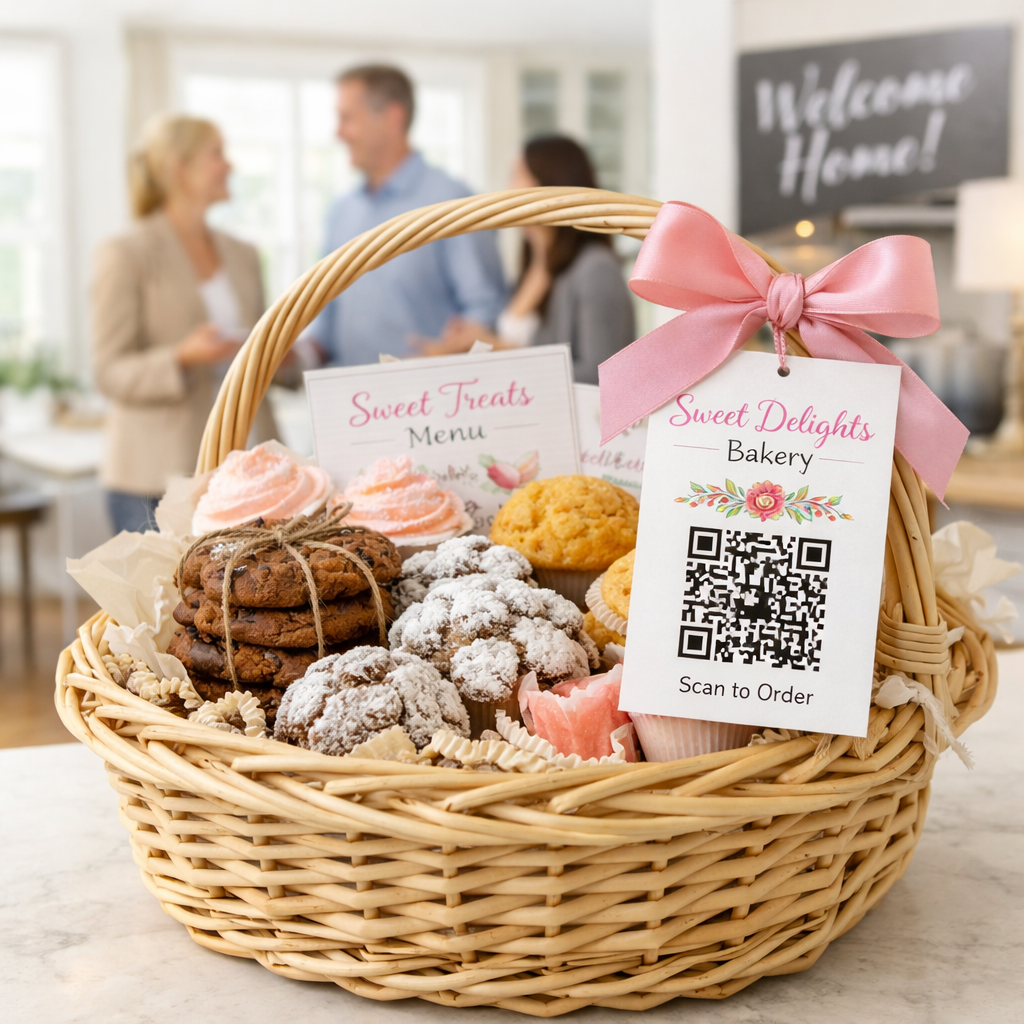
The same goes for community events: school fall festivals, HOA block parties, church events, park clean-ups. Show up. Donate a small tray with a simple printed card and a QR code linking to your order form. You don’t need a 6-foot banner and balloons. A well-labeled box of excellent brownies goes further than most marketing budgets.
And yes — bringing muffins to model homes works. Builders and sales agents love having something welcoming on the counter. Your label sits there all weekend.
Strategic Partnerships: Borrowed Trust Is Powerful
If you want to grow quickly without ad spend, borrow someone else’s audience — ethically, generously, and in a way that benefits them too.
Real estate agents are an obvious fit. But think broader.
New homeowners are your ideal customers. So are new parents. So are brides. So are people hosting events.
Who already serves those people?
Consider:
Local coffee shops (especially independent ones). Offer to provide a rotating “Local Baker Spotlight” item one weekend a month. They get something new and unique. You get exposure to a warm audience who already spends money on food.
Hair salons and nail studios. Clients sit there for an hour or more. Individually wrapped mini cookies at the front desk with a QR code for custom orders? Low cost. High visibility. You could even create “Thank You for Referring a Friend” cookie cards for stylists to give clients.
Boutique fitness studios or yoga instructors. Host a “Brunch & Stretch” collaboration where you provide post-class pastries at a discounted intro rate. Health-conscious doesn’t mean anti-treat — it means portion-aware and ingredient-conscious.
Photographers. Family and newborn photographers constantly interact with milestone clients. Offer branded cookie boxes as optional add-ons for mini sessions. The photographer upsells; you gain targeted exposure.
Wedding vendors beyond florists. Think wedding planners, venue coordinators, bridal boutiques, and even DJs. Drop off small, beautifully packaged samples labeled “Perfect for Welcome Bags or Shower Favors.” Make it easy for them to refer you.
Interior designers and home stagers. They frequently gift clients at reveal day or closing. A custom “Welcome Home” cookie set fits beautifully into that moment.
Daycares and preschools (where cottage food laws allow). Teacher appreciation weeks are gold mines for bakers. Offer ready-made appreciation boxes that parents can order quickly.
The key is this: don’t just ask for referrals. Offer something that enhances their service. Make them look good. When they win, you win.
And keep it simple. You are not building a corporate affiliate program. You are building human relationships.
Be the Generous Neighbor (With Strategy)
There’s a fine line between generosity and exhaustion. Giving away product endlessly is not a marketing strategy. Strategic generosity is.
If your town hosts a summer movie night, donate a small tray with clear signage. If there’s a charity auction, offer a gift certificate with a minimum order threshold. If a friend is hosting a baby shower filled with your target demographic (not just Aunt Linda and her bridge club), offer a dessert at a slight discount in exchange for displaying your menu.
HINT: these strategies work best when it is easy to follow-up. Make sure your leave behind leaves a clear and fast way to connect with and order from you. They may not need anything now but if they can find you on their social channels later it increases the odds of an order. QR codes that link to an easy to select option to both follow you on social and place an order are ideal. Also include website and contact information.
But here’s what to avoid: random large giveaways that don’t align with your audience.
Providing 200 cupcakes for a corporate event where no one is local? Not helpful.
Donating to a wedding shower where only one person is a bride and everyone else lives three states away? Also not helpful.

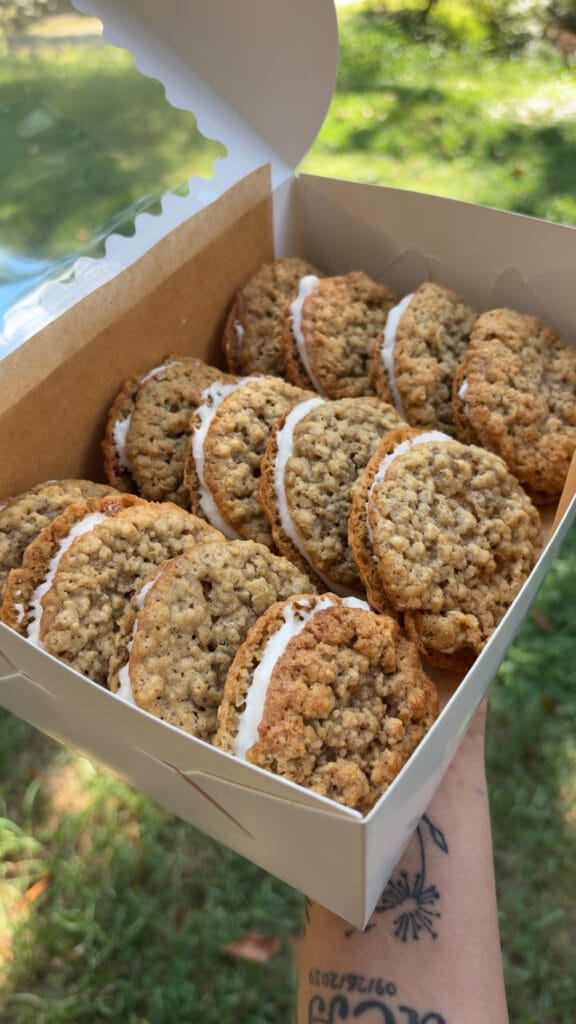
Ask yourself: Will the people eating this realistically become customers?
If the answer is yes, proceed. If not, save your butter.
Create Small Moments of Visibility
You do not need a storefront to create presence.
Think of places where your ideal customer physically goes.
Model homes, as mentioned. Local children’s boutiques. Farmers markets (even as a pop-in guest vendor occasionally). Holiday craft fairs. PTA meetings. Open houses. Book clubs.
Even something as simple as dropping off a neatly packaged “Thank You” treat to your child’s teacher — with a card that says, “Custom orders available locally” — can spark conversation in the teachers’ lounge.
And don’t underestimate signage. A small yard sign during major holidays (“Now Taking Thanksgiving Pie Orders — Scan Here”) in front of your house, if allowed by local ordinances, can quietly build awareness.
You’re not shouting. You’re consistently visible.
If You’re Doing All the Things… and Orders Aren’t Coming In
Let’s have the hard conversation.
Sometimes it’s not the marketing.
Sometimes it’s the product.
If you’ve shown up in groups, partnered locally, offered samples, attended events — and still nothing is sticking — pause and evaluate honestly.
Is the product truly exceptional?
Not “my family loves it.” Not “people say it’s good.” Exceptional.
Host a blind taste test with people who will not spare your feelings. Ask specific questions:
Is it better than what you’d buy at the grocery store?
Would you pay $X for this?
Is the packaging appealing?
What would make you order this again?
Also look at product-market fit. If your town is obsessed with decorated sugar cookies and you’re only offering rustic sourdough boules, that’s not wrong — but it might be niche. Can you add one or two products that align more directly with what people are already buying?
Marketing can amplify a good product. It cannot rescue a mediocre one.
This isn’t discouragement. It’s empowerment. Every strong business owner has had to refine.
Common Barriers (And How to Work Around Them)
Cottage food laws limit what you can sell. Storage space is tight. You don’t have staff. You are your own dishwasher, accountant, marketer, and delivery driver.
So grow within your capacity.
Don’t take 12 custom cake orders your second month because you’re afraid to say no. Don’t underprice to “build exposure.” Don’t accept every opportunity if it leaves you resentful and exhausted.
Choose the channels that feel sustainable. If Facebook groups drain you, focus on partnerships. If events energize you, double down there.
You are building something that needs to fit inside your real life.
The Long Game (The Part No One Talks About)
It is tempting to want this to take off immediately. But there is an underrated strength in slow growth.
When you grow gradually:
You refine recipes.
You improve packaging.
You learn pricing.
You build repeat customers.
You establish systems.
Growing too fast before you’re operationally ready can damage reputation quickly. One missed deadline can undo months of trust.
Let your business breathe.
Be consistent. Be visible. Be excellent.
Momentum in local food businesses is often quiet at first. Then one holiday season hits differently. Then a realtor sends three clients. Then a teacher tells another teacher. And suddenly, you’re booking out two weeks in advance.
That kind of growth isn’t flashy — but it’s durable.
And durable businesses win.
So keep showing up. Keep refining. Keep building relationships in rooms where your ideal customers already are.
You don’t need a massive ad budget.
You need a good product, genuine connection, and the patience to let word-of-mouth compound.
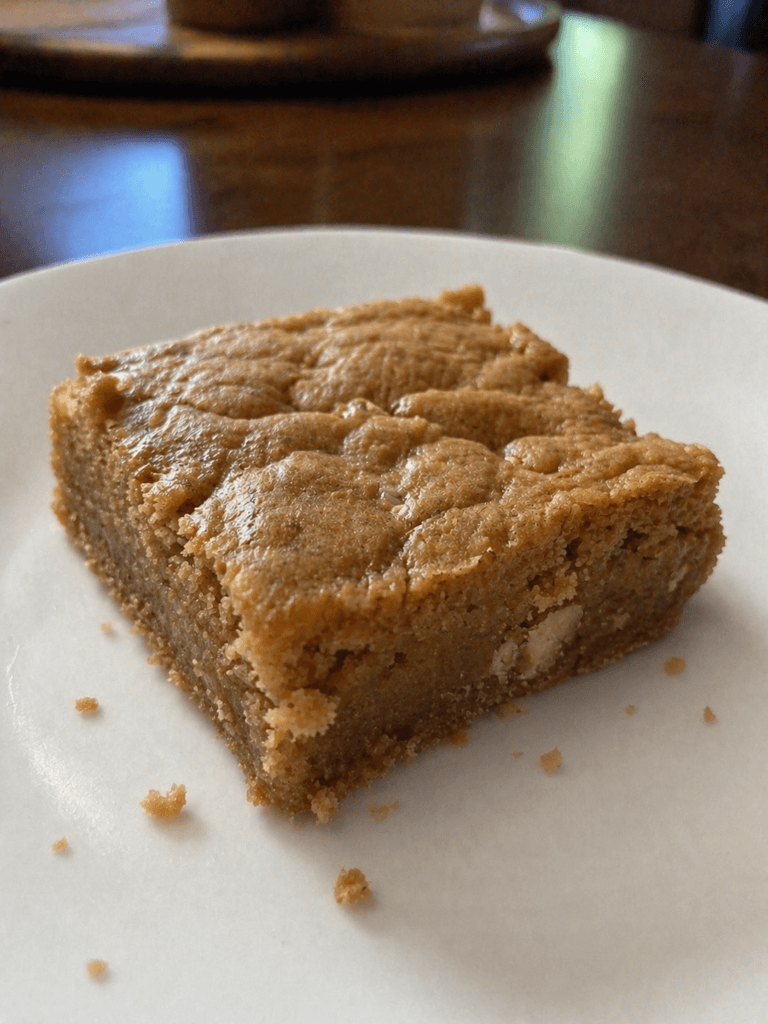
And maybe a really, really good brownie recipe.
What smart marketing ideas have you used to help your business grow? Share in the comments below and let's learn from each other.


Keep reading
More from the market
How to Get Your Baked Goods to Market Without Wrecking Them
Cakes slide, frosting sweats, cookies go soft in the car. The crates, timing and packing order that get your bakes to the…
Read more
How to Store Root Vegetables and Winter Squash So They Last Until Spring
Potatoes, squash, carrots and onions will keep for months if you get a few things right. What each one wants, and the…
Read more
What to Do With Unsold Stock When the Market Season Ends
The last market of the season ends with a car full of what did not sell. Here is how to turn that…
Read more