What “Made in a Home Kitchen” Actually Means (And Why That Label Isn’t a Warning)
That line on the jar isn't a warning label. Here's what "made in a home kitchen" actually means, and how to shop your farmers market with confidence.
 1 min read
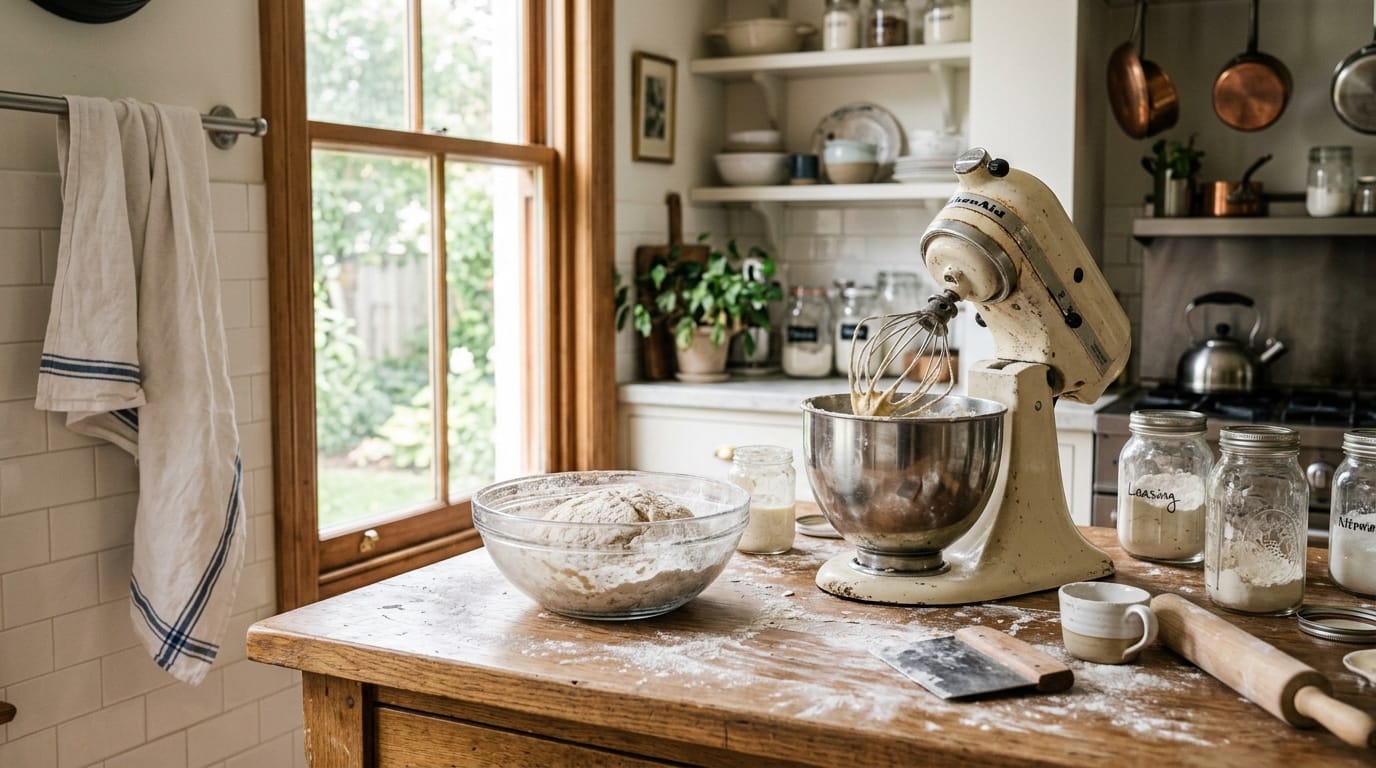
You are three stalls into the market, holding a jar of peach jam the color of a sunset, and you have already decided you want it. Then you turn the jar around and there it is in small italic type: Made in a home kitchen not subject to routine government food safety inspection.
And something in your brain goes hmm.
That hesitation is completely reasonable, and it is also the single most expensive sentence in the cottage food world. Vendors are legally required to print it. Almost nobody explains it to the person actually reading it. So let's fix that.
What a "made in a home kitchen" label actually says
The exact wording varies by state, but the shape of it is always the same: this food was made in a private home, and that home is not on a routine health-inspection schedule the way a restaurant or a commercial bakery is.
That is a disclosure, not a verdict. It is telling you where the food came from. It is not telling you the food is risky, unregulated, or made by someone who wandered in off the street with a bowl. Your state wrote that sentence so you would know what you are buying — the same instinct behind country-of-origin labels and "contains nuts."
Here is the part that gets lost: the label is required because there is a law. Ten or fifteen years ago in most states, selling that jam at all would have been illegal. The disclaimer exists as part of the deal that made your favorite vendor's business possible.
What it means — and what it doesn't
It means: a health inspector is not showing up at that kitchen unannounced twice a year.
It does not mean: nobody is watching, no rules apply, or the vendor is winging it. Home food businesses operate inside a fairly specific box, and stepping outside it is how you lose the right to sell at all.
It also does not mean the food is less safe than the alternative — which is the assumption almost everyone makes and the one we can actually check with data. More on that in a minute.
What the vendor is still required to do
Requirements vary from state to state, but the person who sold you that jam is very likely doing most or all of the following:

- Registering or permitting the business. Many states require a registration, a permit, or an inspection of the kitchen before the first sale.
- Passing a food safety course. A large number of states require food handler certification — the same coursework a restaurant line cook takes.
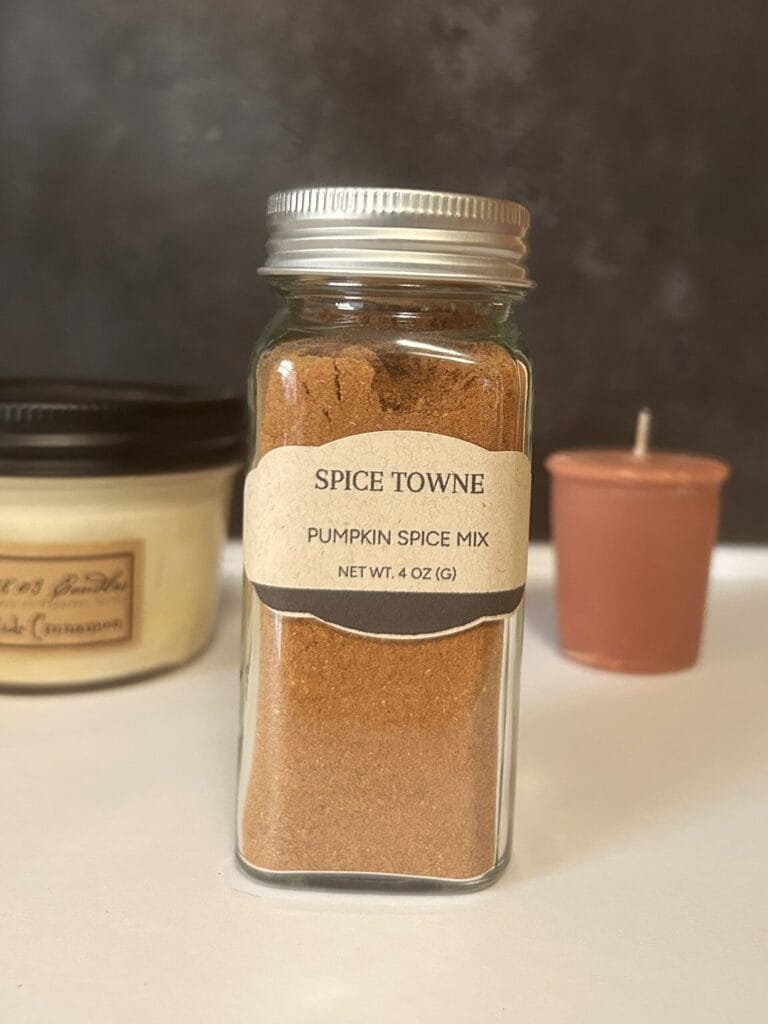
- Labeling everything. Name and address of the business, product name, full ingredient list in descending order by weight, net weight, and allergen disclosure. That is more information than a lot of restaurant food ever gives you.
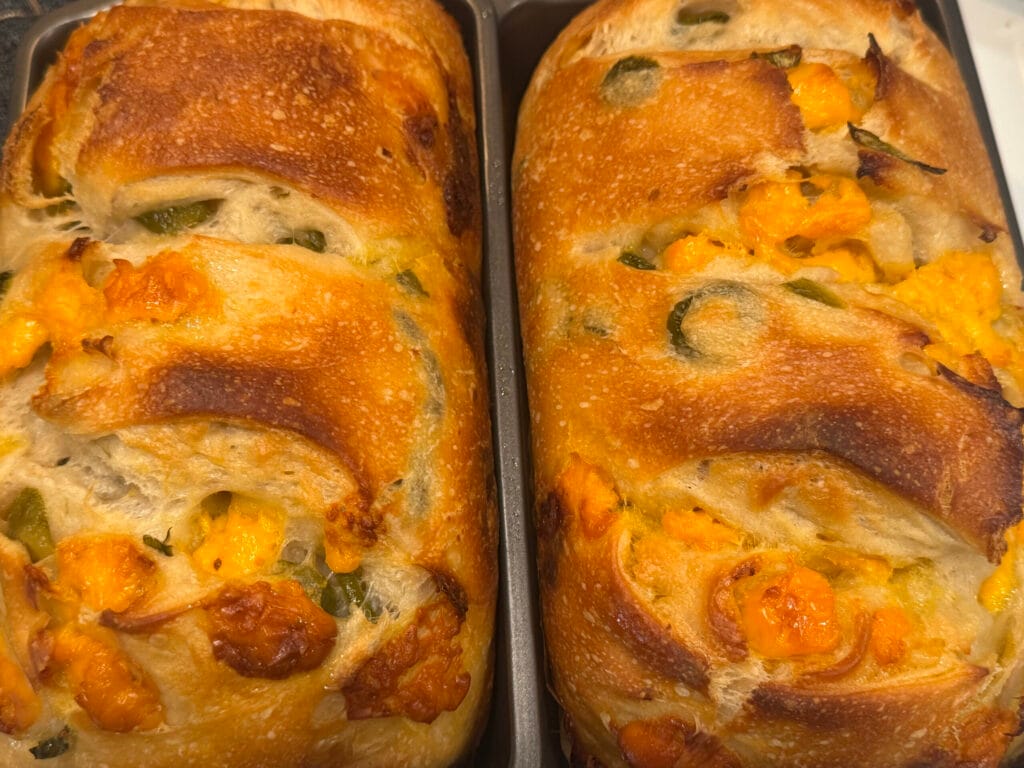
- Sticking to approved foods. Most states limit home producers to shelf-stable, low-risk items — breads, cookies, jams, granola, candy, dry mixes. The things most likely to make someone sick are the things most home kitchens are not allowed to sell.
- Following acidity and processing rules. If they are canning, there are pH thresholds and tested recipes involved, and in some states a lab test on file.
None of that is visible from the shopper's side of the table. All of it is real.
The safety record, since we can actually look it up
The Institute for Justice went looking for the outbreaks. They surveyed the seven states with the broadest homemade food laws — the ones that go furthest and allow home cooks to sell genuinely perishable food like tamales, cream pies, and prepared meals. That is the highest-risk end of the entire category, not the easy end.
Not one of those states had a single confirmed case of foodborne illness traced to food sold under its homemade food law. One county in California reported two suspected incidents that were never confirmed, and neither resulted in serious illness. That is the whole tally. (Institute for Justice, 2023.)
Think about what that means for the jar in your hand, which is almost certainly a shelf-stable jam sitting several safety tiers below a homemade tamale.
Why the incentives actually favor you
There is a structural reason this works, and it has nothing to do with regulation.
The woman who sold you that jam makes about forty jars a week. She will be standing in that same spot next Saturday, and the Saturday after that, and she will recognize your face. Her entire business is roughly two hundred people who like her and tell their friends. She does not have a legal department, a crisis PR budget, or the ability to absorb a bad batch and move on.
A factory can survive a recall. She cannot survive a rumor. That is not a small thing — that is the strongest food safety incentive that exists, and it is pointed directly at your experience.
How to buy with confidence
You do not need to become a food safety auditor. You need about ninety seconds and a little curiosity — and most vendors genuinely love these questions.
- Read the label. A complete one — business name, address, ingredients, allergens, net weight — tells you this person read the rules and follows them.
- Ask what's in it. "What do you use to sweeten this?" A vendor who knows their product answers instantly and happily.
- Ask how long it keeps and where to store it. The answer should be specific. "About a year sealed, three weeks in the fridge once you open it" is a good answer. A shrug is not.
- Buy from someone you'll see again. A regular market vendor with a real booth and a real following has everything riding on repeat business.
- Trust your eyes. Clean setup, covered product, gloves or tongs for anything unwrapped, no bulging lids or broken seals.
And if something is ever wrong — a seal that popped, a flavor that is off, a jar that just seems not right — tell the vendor first. Directly, kindly, and soon. Most of them will replace it before you finish the sentence and then go figure out what happened, because they want to know. If it is something serious, your state or county health department is the next call. But start with the person who made it.
A note for the vendors reading this
If that disclaimer is costing you sales, stop letting it sit there naked. Put a small card next to it that says what it means: "Required by state law. Here's what I do: certified food handler, every ingredient listed, small batches, made this week." Turn the sentence you're required to print into the sentence that sells the jar. The transparency is the pitch.
That's the whole thing, really. That label is not telling you to be careful. It's telling you a real person made this, in a real kitchen, with their name and their address printed right there on the front — which is more accountability than almost anything else in your pantry can claim.
Go buy the jam. Tell her it was good. That's the entire system working exactly as designed.


Keep reading
More from the market
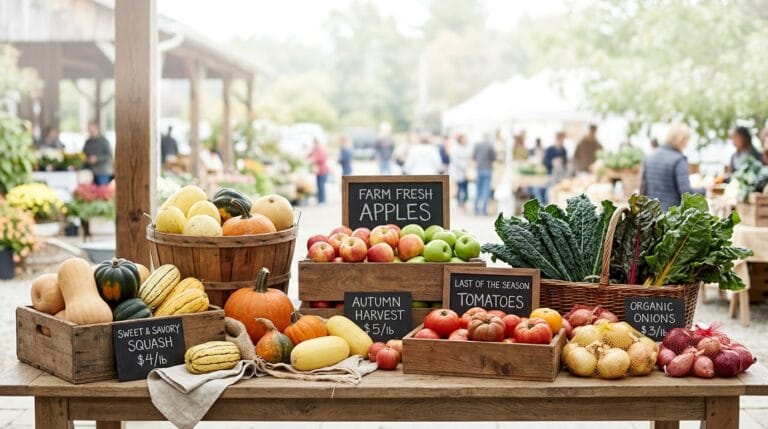
What’s at the Farmers Market in November? Your Late-Fall Shopping Guide
November farmers markets are smaller, colder, and sweeter than you expect. Here is what is in season, what frost improves, and what…
Read more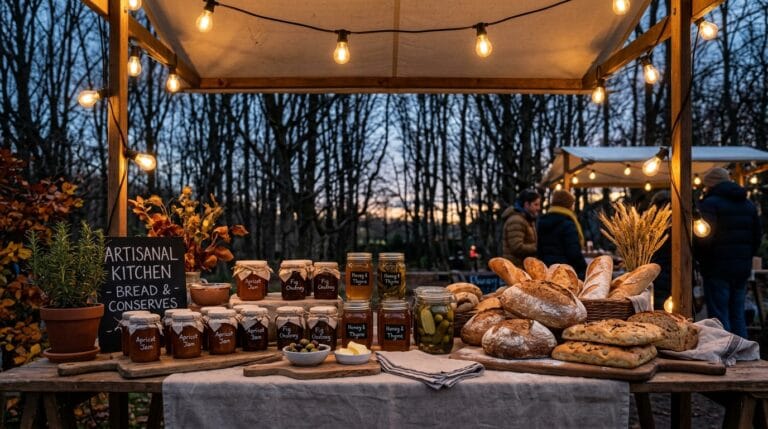
Cold-Weather Booth Setup: Wind, Light, and Days That End at Four
A booth built for August falls apart in November. What to change for wind, cold and a market that ends after dark…
Read more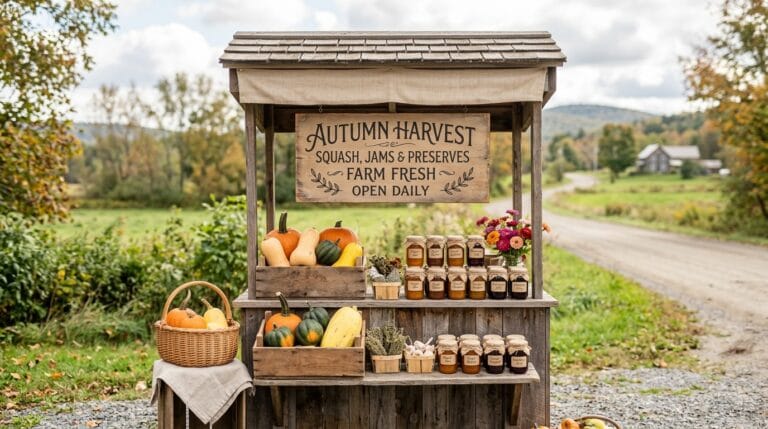
Selling from a Farm Stand: What It Takes and What It Makes
A stand at the end of the drive has no booth fee and no set hours. What to check before you build…
Read more