What’s at the Farmers Market in November? Your Late-Fall Shopping Guide
November farmers markets are smaller, colder, and sweeter than you expect. Here is what is in season, what frost improves, and what to buy before the season closes.
 1 min read
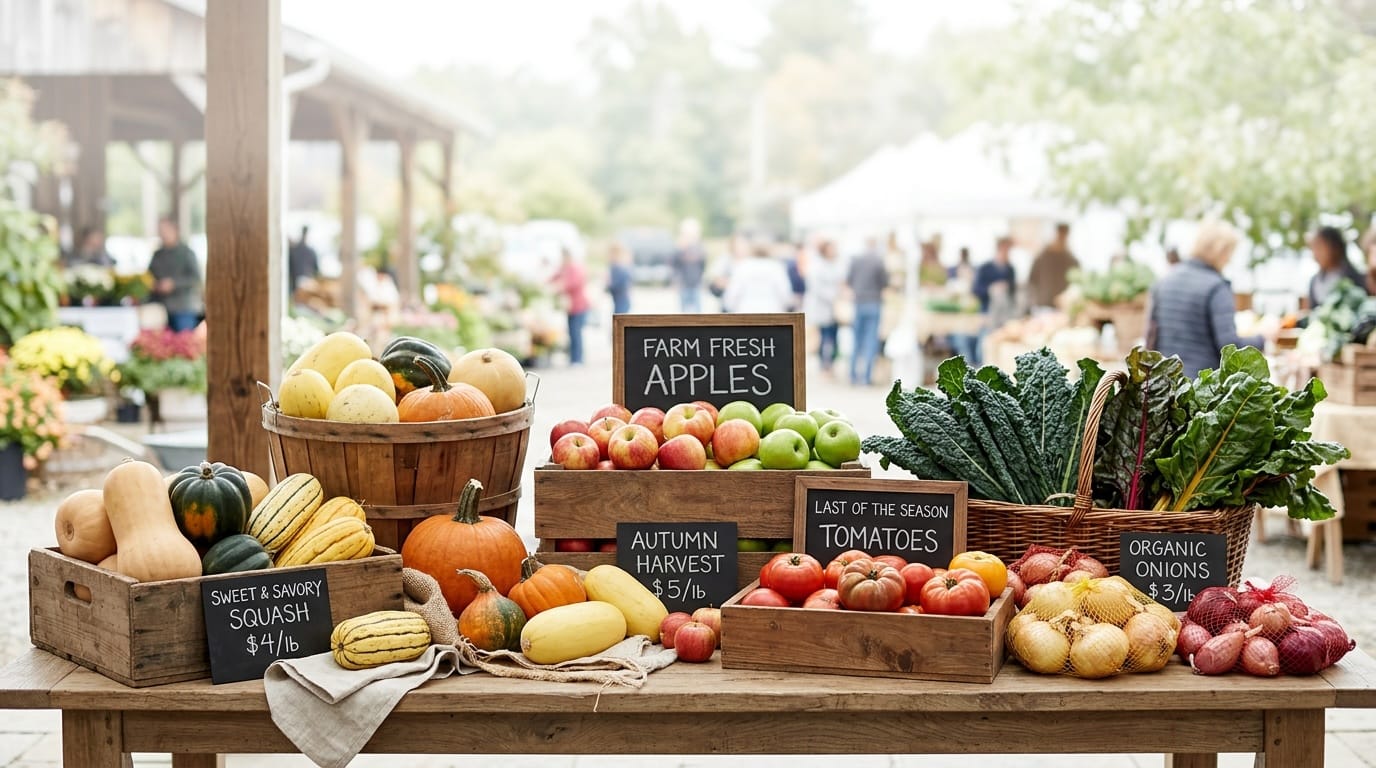
November is the month people quit on the farmers market, and it is a genuine mistake. The tables are shorter, yes. There are fewer of them, and the flowers are gone, and everyone is wearing a hat. But the produce that is left has spent the whole season getting good, and a couple of things on those tables are literally sweeter than they were in September because of the frost.
Here is what you will find, what to grab, and how to shop the last outdoor weeks like someone who knows what they are doing.
The things frost made better
Cold weather is not an inconvenience for certain crops — it is the finishing step. When temperatures drop, plants like kale, collards, Brussels sprouts, parsnips, carrots and turnips convert starches into sugars as a kind of antifreeze. The practical result is that the same vegetable, from the same field, tastes noticeably sweeter in November than it did in September.
This is why a November parsnip is a completely different vegetable from a July parsnip, and why the farmer who tells you "wait until after a frost" is not stalling. Carrots get candy-like. Kale loses its bitter edge and goes silky when cooked. Brussels sprouts stop tasting like a punishment.
If you buy one thing on this list, make it the roots. Roasted November carrots and parsnips with nothing but olive oil and salt will convince a skeptic faster than any argument.
What is actually on the tables
Winter squash and pumpkins. Butternut, acorn, delicata, kabocha, honeynut, spaghetti. These have been curing since September, which concentrates their sugars, so November squash is at its peak — and it keeps for weeks on your counter. If you are unsure which one to buy for what, our winter squash guide sorts them by what you want to cook.
Storage apples and late pears. The delicate early apples are done; what is left are the keepers — Fuji, Braeburn, Pink Lady, Granny Smith, Northern Spy — and they hold beautifully in a cold garage or the back of the fridge. Bosc and Anjou pears show up now and ripen on your counter, not on the tree.
Root vegetables. Carrots, parsnips, beets, turnips, rutabaga, celeriac, sweet potatoes, potatoes. This is the heart of a November market and the cheapest good food of the entire year.
Brassicas. Cabbage, Brussels sprouts on the stalk, cauliflower, broccoli, kohlrabi. Buy the sprouts on the stalk if you see them — they keep far longer that way and they are fun to carry through a parking lot.



Hardy greens. Kale, collards, chard, spinach, mustard greens, and often gorgeous cold-season lettuces from hoop houses. Spinach grown into the cold is thick and sweet and nothing like the bagged kind.
Alliums and cranberries. Cured onions, shallots, garlic, leeks. And in the northern tier, fresh cranberries for a few short weeks.
The made things. This is the month the cottage food tables come into their own: bread, pies, jams, apple butter, honey, granola, cheese, eggs, cider, spice blends, and every gift-shaped thing a vendor could build. More on that in a moment.
How to shop a November market well
Go early, but not for the reason you think. In summer you go early to beat the crowd. In November you go early because vendors bring less and pack up sooner, and a cold, quiet market at 11:30 is often a market that is already loading the truck.
Bring cash and bring bags. Fewer vendors, smaller setups, and a card reader that hates the cold. Cash keeps everything moving.
Buy in quantity for storage. This is the one month where buying twenty pounds of anything makes sense. Squash, potatoes, onions, apples and carrots will hold for weeks to months in a cool dark spot, and the November price is the best you will see.
Ask about the last day. Every outdoor market has one, and it is usually the weekend before Thanksgiving. Ask each vendor now, because "I'll get it next week" is how people end up without a Thanksgiving pie.
Order your Thanksgiving items two weeks out. Pies, rolls, turkeys, cheese boards and gift boxes all sell out. The vendors are taking those orders right now, and most of them are delighted to be asked.
The last-day list
Before your market closes for the season, do these four things. Buy storage vegetables in bulk. Buy enough jam, honey and apple butter to get you to spring. Ask every vendor you like where to find them in winter — many do indoor markets, holiday pop-ups, or online preorders, and almost none of them advertise it well. And take a card or a shop link from each one, because in February you will not remember the name of the woman with the sourdough.
That last one matters more than it sounds. The gap between "I loved that bread all summer" and "I have no idea who made it" is one small card in your coat pocket.
The last honest weeks
November markets have a particular feeling — fewer people, everyone friendlier, farmers who actually have time to talk because the season is nearly over and they are tired in a good way. Ask them what they are proud of this year. You will get a real answer.
Then buy the parsnips. Trust us on the parsnips.
What is the one thing you always stock up on before your market closes? Tell us — and if your area has a winter market, share it, because someone in your town is looking for exactly that.

Keep reading
More from the market
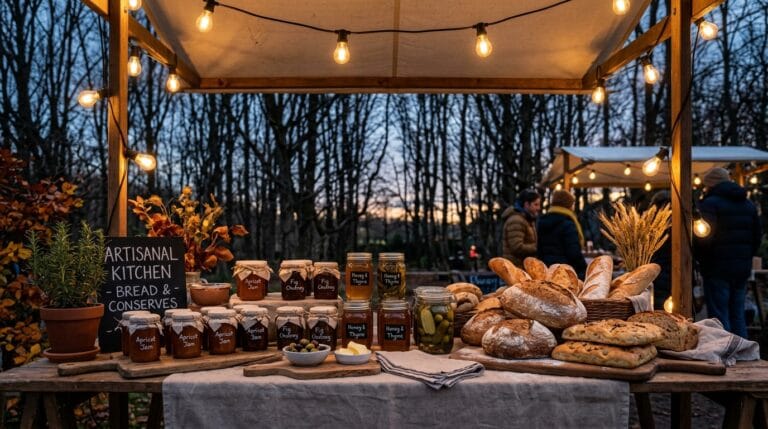
Cold-Weather Booth Setup: Wind, Light, and Days That End at Four
A booth built for August falls apart in November. What to change for wind, cold and a market that ends after dark…
Read more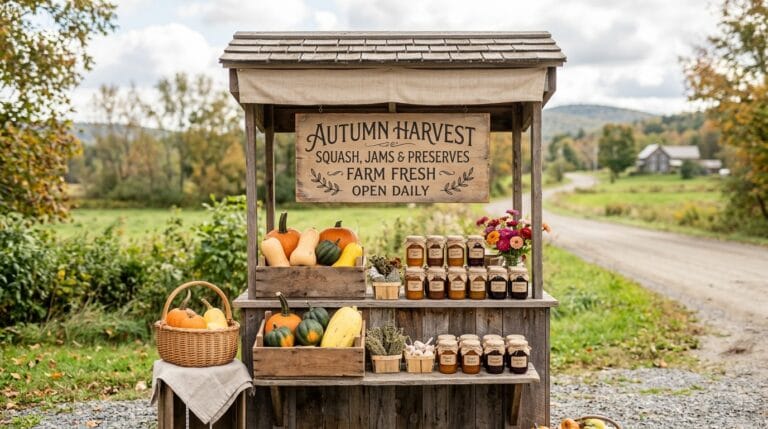
Selling from a Farm Stand: What It Takes and What It Makes
A stand at the end of the drive has no booth fee and no set hours. What to check before you build…
Read more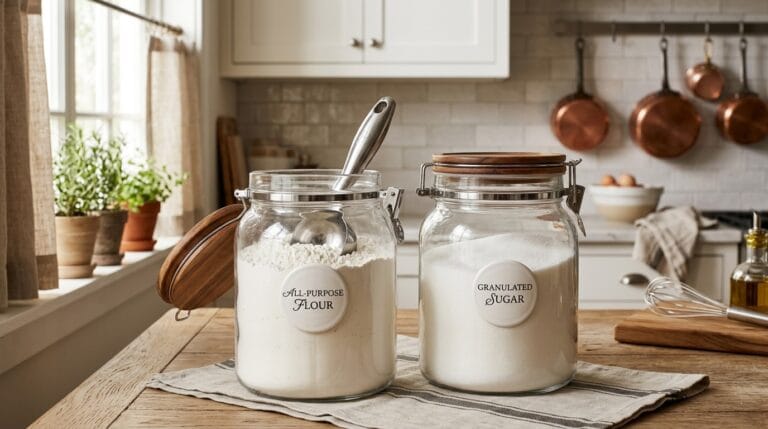
Buying Ingredients in Bulk Without Wasting Money
The bulk bag is only a saving if you use it in time. How to work out your true break-even, which ingredients…
Read more