The Farmers Market Winter Squash Guide: Which One to Buy for Roasting, Soup, and Pie
Nine winter squash varieties decoded: which to roast, which to blend into soup, which to bake into pie, and how to pick a good one at the farmers market.
 1 min read
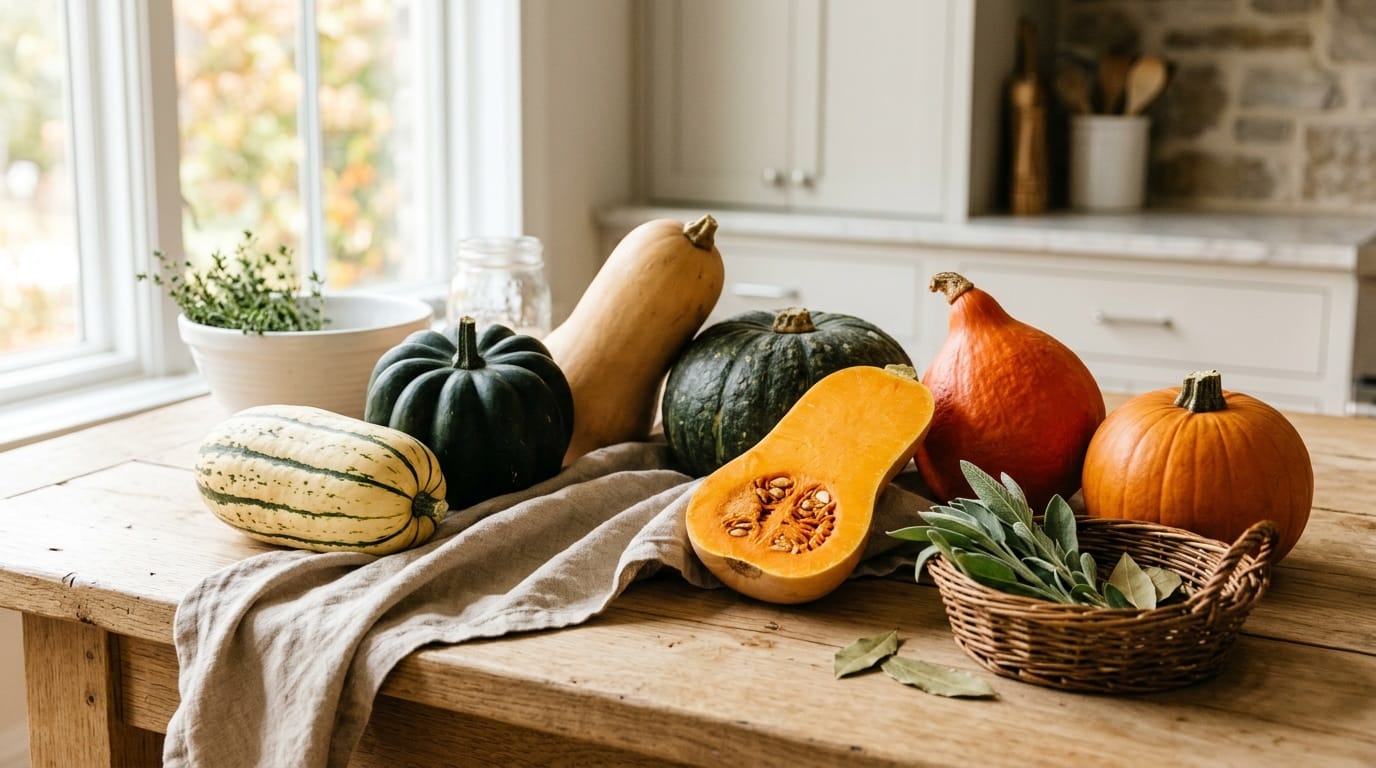
Late August is when the squash table appears. One week it is all tomatoes and peppers and corn, and the next there is a wooden crate at the end of the stall holding six things that look like they came from six different planets.
Most of us do the same thing: pick the one we recognize, take it home, roast it, and quietly wonder why it turned out watery. The truth is that winter squash varieties are not interchangeable, and the difference between a great squash soup and a disappointing one is usually the squash, not the cook.
So here is the farmers market winter squash guide, organized the way you actually shop — by what you want to make.
For Roasting: Delicata, Acorn, and Honeynut
Delicata is the one to grab if you are new to this. It looks like a small cream-and-green striped torpedo, and its best feature is that the skin is thin enough to eat, which means no peeling. Slice it into half-moons, toss with olive oil and salt, roast at 425°F until the edges go dark and sweet. It tastes faintly of sweet potato and brown butter before you have added either one. The tradeoff is that it does not store long — a few weeks, not a few months — so buy it to use it.
Acorn is the dark green ridged one your grandmother halved and filled with butter and brown sugar. It is more fibrous and less sweet than delicata, which makes it excellent when you want the squash to be a vessel rather than the star. Roast it cut-side down first to steam the flesh, then flip it to caramelize.
Honeynut looks like a butternut that shrank in the wash — small, dense, deep tan. It was bred specifically for flavor concentration and it delivers: roughly twice the sweetness of a butternut, with a color so orange it looks staged. If a grower has these, buy them. They are a farmers market specialty and grocery stores rarely carry them.
For Soup: Butternut, Kabocha, and Red Kuri
Butternut is the reliable one. Smooth flesh, no stringiness, blends into velvet, and it is easy to find and easy to peel. If a recipe just says "winter squash," it means butternut. Buy one with a long solid neck — that is all usable flesh, while the bulb end is mostly seed cavity.
Kabocha is the squat dark green one, and it is a revelation the first time. The flesh is drier and denser than butternut, almost chestnut-like, which means your soup comes out thick and silky without a cup of cream doing the work. It is also fantastic simply roasted, skin and all. It is harder to cut, so use your heaviest knife and a stable board.
Red kuri is the teardrop-shaped orange one that looks like a small hubbard. Nutty, smooth, and slightly less sweet, it makes a soup with more savory depth. It is also gorgeous, so if you are cooking for company, this is your showpiece.
For Pie and Baking: Sugar Pie Pumpkin and Long Island Cheese
Here is the thing nobody says out loud: the giant pumpkin on your porch is not for eating. Carving pumpkins are bred for size and wall thickness, not flavor, and they will make a watery, bland pie.
Sugar pie pumpkins — the small dense ones, usually six to eight inches across — are the ones you want. Halve, seed, roast face down until collapsing, scoop, and puree. The result is thicker and more flavorful than canned, though you will want to drain it in a strainer for an hour before baking or your custard will weep.
Long Island cheese pumpkin is the flat tan one that looks like a wheel of cheese, and it is what a lot of commercial pumpkin filling is actually made from. Sweet, smooth, low in moisture, and an heirloom worth asking about by name. Growers love being asked about it.
How to Pick a Good One
Whatever variety you are buying, the same four checks apply.
Heft it. A good winter squash feels heavier than it looks. Light means it has already lost moisture and will taste flat.
Check the stem. You want a dry, firm, corky stem still attached. A missing stem is an open door for rot, and a green soft stem means it was cut early and has not cured.
Look at the skin. It should be hard and dull, not glossy. Glossy means immature. Press a thumbnail against it — if it dents, keep looking. Scars and rough patches are fine and often a sign it grew outdoors in real weather.
Skip the soft spots. Any give, especially near the blossom end, means it has started to go.
Storing It Once You Get It Home
This is the quiet superpower of winter squash: it is the one thing at the market in September that will still be good in January.
Keep it whole, dry, and somewhere cool but not cold — around 50 to 55°F is ideal, which usually means a basement step, a closet on an exterior wall, or a spare room, not the refrigerator. Do not stack them touching each other. Butternut, kabocha, and hubbard will hold for two to six months. Acorn and delicata are the short-timers at four to eight weeks.
Once you cut it, it lives in the fridge, wrapped, for about five days. Roasted and pureed, it freezes beautifully for six months — which is why buying three at the market in October is a smarter move than it looks.
What to Actually Ask the Grower
Squash growers are among the most enthusiastic people at any market, largely because most shoppers walk past them. Ask which one is sweetest right now. Ask whether it has been cured — most winter squash gets noticeably sweeter after a week or two in the sun after harvest, and a grower who cures theirs will be delighted you knew to ask. Ask what they cook with it at home. You will leave with a variety you had never heard of and a plan for dinner.
That is the whole trick to shopping a fall market, really. The produce is at its best and cheapest right now, the people behind the table know things no recipe will tell you, and all you have to do is ask. If you want more on that, we have a whole guide to what to ask a farmer at the market and one on building meals around your haul all week so nothing goes soft in the crisper drawer.
Buy the strange-looking one. That is the real advice. Tell us which squash you came home with — we will help you figure out what to do with it.

Keep reading
More from the market
What’s at the Farmers Market in November? Your Late-Fall Shopping Guide
November farmers markets are smaller, colder, and sweeter than you expect. Here is what is in season, what frost improves, and what…
Read more
Cold-Weather Booth Setup: Wind, Light, and Days That End at Four
A booth built for August falls apart in November. What to change for wind, cold and a market that ends after dark…
Read more
Selling from a Farm Stand: What It Takes and What It Makes
A stand at the end of the drive has no booth fee and no set hours. What to check before you build…
Read more