How to Cook a Pasture-Raised Turkey from a Local Farm (Heritage Birds Included)
Farm turkeys cook faster than the chart expects. How to cook a pasture-raised turkey, heritage or not: ordering, thawing, safe temperatures and a juicy breast.
 4 min read
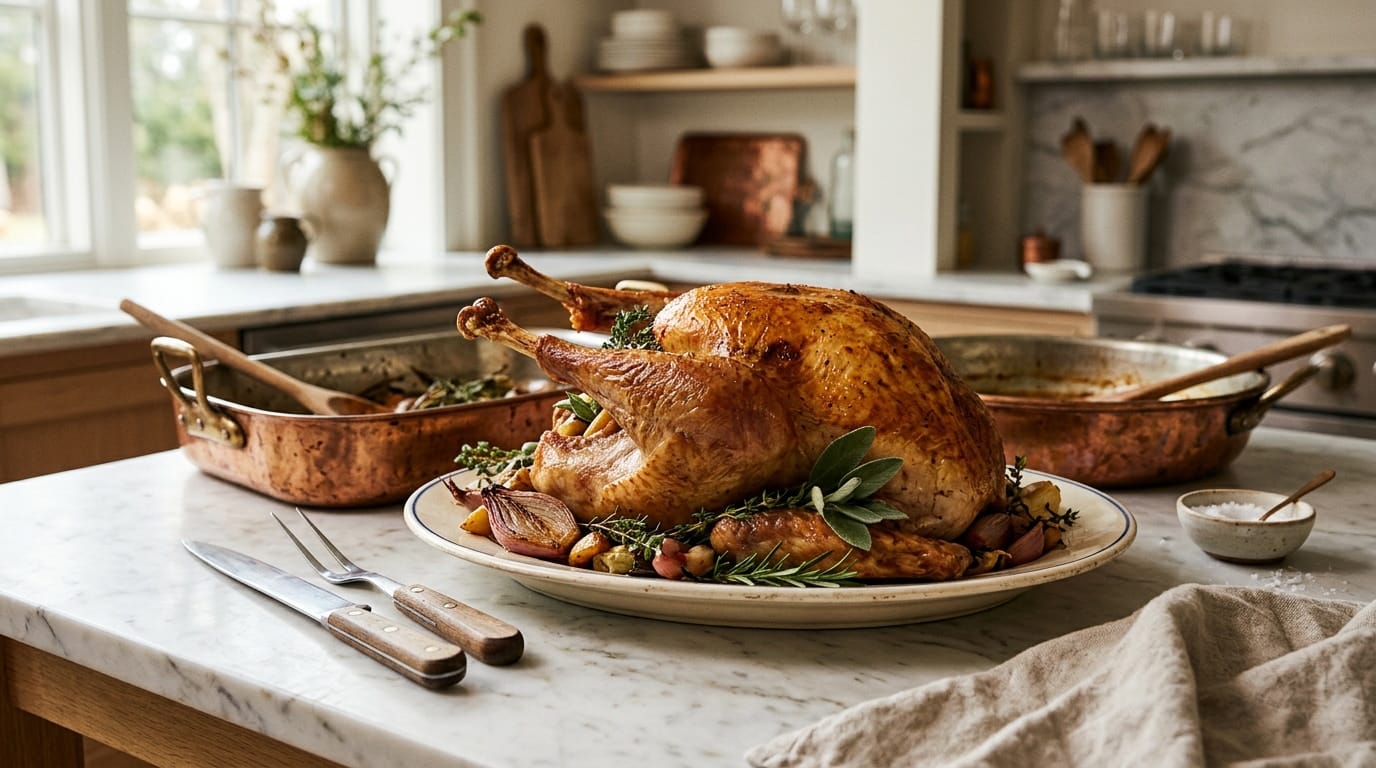
You did it. You ordered a turkey from a real farm, from a farmer you can name, and it is the most expensive bird you have ever bought. Then you pick it up and it looks different: longer legs, a narrower breast, darker meat showing through the skin. Before the nerves set in, here is how to cook a pasture-raised turkey so it comes out as good as it should.
The short version: it is still a turkey, and the food safety rules are exactly the same. What changes is the timing. Farm birds can cook faster than the charts expect, and the people who end up with dry meat are usually the ones who trusted the clock.
Pasture-raised and heritage are not the same bird
“Pasture-raised” tells you how the turkey lived: outdoors, on grass, with room to move. It does not tell you the breed. Plenty of pastured turkeys are Broad Breasted Whites, the same fast-growing breed in the supermarket, simply raised outside.
“Heritage” is about the breed itself: older varieties like Bourbon Red, Narragansett and Bronze. University of Kentucky Extension explains that a heritage turkey must be able to mate naturally, which commercial turkeys are too large to do. The meat differs too: a typical Broad Breasted White carries nearly 70 percent breast meat, while heritage birds run closer to half white and half dark.
Heritage turkeys also grow slowly. The ATTRA guide to pastured turkey production notes a Broad Breasted White can reach market weight in about 12 to 14 weeks, while a heritage bird may need up to 30. Those extra months are a big part of the price, and many people find they are a big part of the flavor too.
So the first job is simple: ask your farmer which breed you are getting. It changes how you cook it.
Ordering a turkey from a local farm
Small farms raise a set number of birds, and many take reservations and deposits well ahead of the holiday. If you have not ordered yet, ask now, and be ready to be flexible about size. A farm bird’s weight depends on the bird, not on a factory spec.
- Which breed is it?
- Roughly what weight will it be?
- Will it be fresh or frozen?
- When and where is pickup?
- Is the deposit refundable if plans change?
Fresh has a specific meaning. The USDA defines a fresh turkey as one that has never been chilled below 26°F, and recommends buying it only one to two days before you cook it. If the farm’s pickup day is earlier than that, ask whether you can freeze it at home, or plan your thawing around a frozen bird.
Thawing a frozen farm turkey
The rules from USDA’s Food Safety and Inspection Service, summarized in this Nebraska Extension turkey fact sheet, are straightforward:


In the refrigerator: allow about 24 hours for every 4 to 5 pounds. A 14-pound bird needs about three days, so Thanksgiving thawing starts on Sunday.
In cold water: allow about 30 minutes per pound, with the turkey in leak-proof wrapping, fully submerged, and the water changed every 30 minutes. Cook it as soon as it has thawed.
How to cook a pasture-raised turkey without drying it
The ATTRA guide puts it plainly: because of differences in size and body composition, meat from a heritage bird may cook more quickly, and that can lead to dry meat if it is not prepared correctly. The fix is not a special recipe. It is paying attention.
Use a reliable thermometer and start checking early. The USDA roasting chart says an unstuffed 12- to 14-pound turkey takes 3 to 3¾ hours at 325°F. That chart was built around conventional birds. With a heritage or pastured turkey, start checking a good hour before the chart says you should.
Cook to 165°F, measured in three places. USDA guidance is to check the thickest part of the breast and the innermost part of the thigh and the wing. All three need to read 165°F.
Keep the oven at 325°F or higher. USDA advises against roasting a turkey any lower than that.
Protect the breast. On a heritage bird especially, the dark meat needs longer than the slim breast. Butter under the skin helps, and if the breast is browning too fast, tent it loosely with foil while the legs finish cooking. Some cooks take the legs off and roast them separately, which is a perfectly good answer.
Cook the stuffing on the side
Stuffing inside the bird has to reach 165°F in its center, and by the time it does, a fast-cooking farm turkey can be overcooked. Bake your stuffing in a dish instead, and put an onion, a lemon and a handful of herbs in the cavity for flavor.
Rest it, carve it, save the bones
Let the turkey stand for 20 minutes before carving, as USDA recommends, so the juices settle back into the meat. Then get the leftovers into the fridge within two hours of serving and use them within three to four days.
You paid for the whole bird. The carcass is the start of the best soup of the year.Butter & Sage Market
A farm turkey makes a deeply flavored stock. Our guide to making stock from your market scraps works for turkey bones too, and our homemade chicken stock method scales up nicely for a big roasting pan’s worth of bones.
When you pick up your bird, take a minute to talk to the farmer. Our list of questions to ask a farmer is a good place to start, and they will usually tell you exactly how they cook their own. Still looking for a turkey farm, or eggs and butter for the rest of the meal? Find the markets and farms near you on the Butter & Sage farmers market map.

Keep reading
More from the market
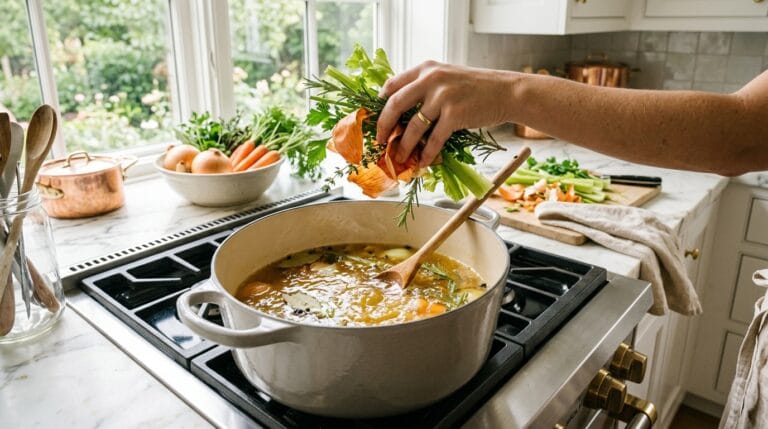
How to Make Stock from Your Market Scraps (The Free Ingredient in Your Freezer)
A bag in the freezer, filled with onion ends and carrot tops, becomes the best ingredient in your kitchen for free. What…
Read more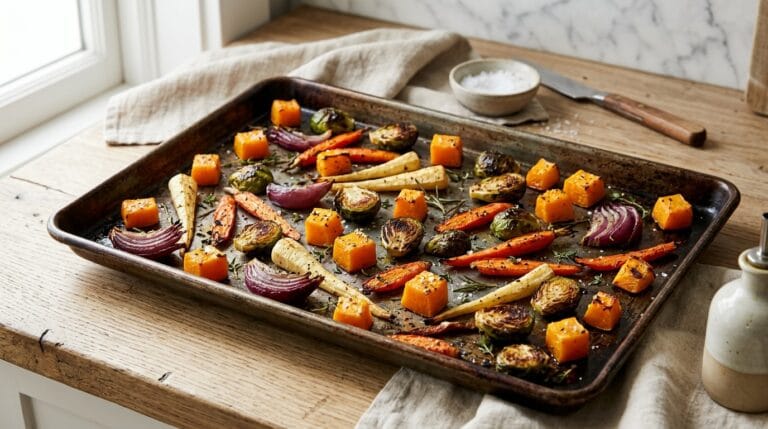
How to Roast Any Vegetable (One Method, Your Whole Market Haul)
One temperature, one pan, three rules that decide everything. Timings for the whole fall market table, and the crowding mistake that steams…
Read more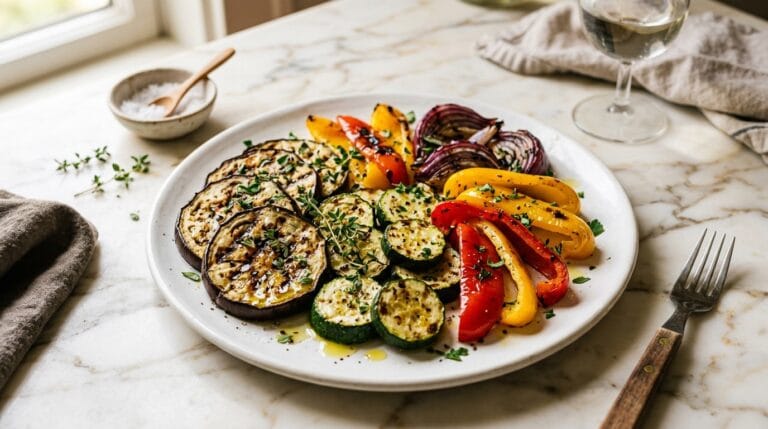
How to Grill Summer Vegetables (Eggplant, Zucchini, Peppers & More)
Grilling turns a farmers market vegetable haul into the best part of dinner. Here's how to grill eggplant, zucchini, peppers, and onions…
Read more