There’s a certain romance to a small food business. Flour on the counter. Labels stacked a little crooked. A recipe card stained with butter and time. Most cottage food businesses aren’t built in boardrooms—they’re built at kitchen tables, after bedtime, before sunrise, and in the precious quiet hours when the dough is resting and your brain is… tired.
So when someone suggests artificial intelligence as a business tool, it can feel wildly out of place. Cold. Corporate. Suspiciously unbuttered.
But here’s the truth: when used well, AI isn’t here to replace your creativity, your recipes, or your voice. It’s here to help you protect them—by saving time, sparking ideas, and acting like a very eager (if slightly literal) assistant who never gets tired of brainstorming captions.
The key is using AI ethically, transparently, and creatively, without crossing into misleading or inauthentic territory. Let’s talk about how to do that—ethical use of AI for small cottage food businesses - slowly, thoughtfully, and with a little friendly sass.
AI as a Creative Assistant, Not the Star of the Show
Think of AI like a prep cook. It can chop the onions, organize the pantry, and suggest pairings—but you are still the chef (ok, it can't physically chop the onions but you get the comparison). Your food, your story, your hands.
Used ethically, AI helps with getting unstuck when the content well runs dry, turning scattered thoughts into polished words, supporting consistency without draining creativity, and handling the “admin brain” work so you can focus on food.
Used poorly, it can mislead customers, create unrealistic expectations, and strip your brand of its warmth and honesty.
We’re aiming for the first list.
Digital Assistants in the Kitchen: A Normal, Everyday Kind of Smart
For many of us, digital assistants have quietly become part of daily kitchen life—so normal we barely think about them anymore. Asking Alexa or Siri to set three timers at once, convert cups to grams mid-recipe, or remind you to pull butter out of the fridge is just… cooking in 2026. No one considers it cheating. No one thinks it makes the food less handmade. It simply frees up mental space so your hands can stay where they belong—on the dough, the knife, the pan.
Using AI as a business assistant works the same way. It answers questions, organizes thoughts, compares options, and helps you move faster through tasks that would otherwise slow you down or steal energy from the parts of your business that matter most. When used thoughtfully, AI doesn’t dilute your craft—it protects it. It allows small food businesses to operate with the kind of support systems once reserved for larger teams, without losing the heart of what makes cottage food businesses special in the first place.
Smart tools don’t make your work less authentic. They make it more sustainable.
Using AI to Spark Content Ideas (When Your Brain Is Fried)
Every small food business hits the same wall eventually:
“I know I need to post something… but I have absolutely nothing interesting to say today.”
AI shines here—not by inventing your story, but by asking better questions than your exhausted brain can manage. It can suggest seasonal themes, behind-the-scenes moments, customer FAQs, or five different angles for one simple idea, like a baking day or market prep morning.
The magic happens when you choose what fits and add your lived experience. AI might suggest, “Share a post about why you bake early in the morning.” You’re the one who adds, “Because my kitchen smells like yeast and hope at 4:30 a.m., and my dog judges me for it.”
That part? AI can’t fake.
AI can also help with brainstorming new recipe ideas, collaborating on different ratios to test, and otherwise sparking your creativity fire. Try having a conversation with your favorite AI on ideas and see what comes up. It's your digital best friend that can help keep you motivated and innovating.
Writing Social Media Captions Without Losing Your Voice
AI is incredibly helpful for drafting captions—but the ethical line is this: it should help you say what you mean more clearly, not say something you don’t mean at all.
A good workflow starts with your messy, honest thoughts. From there, AI can help polish, shorten, or adapt them for different platforms. Read everything out loud. If it doesn’t sound like you, tweak it until it does.
If an idea hits us about a recipe we want to develop, or an article we want to publish (like this one) we tell our AI digital assistant to capture the idea to our idea list and add it to our editorial calendar so we don't forget. Voice commands are great when we don't have a pen handy, or our hands are covered in olive oil and parsley.
What you shouldn’t do is let AI invent emotions, stories, or experiences you didn’t have. If you didn’t cry over a failed batch of cookies at midnight, don’t post like you did. Your customers can smell that kind of thing—and not in a good way.
Think of AI as your editorial assistant. You capture the idea, the feeling, the expression, and emotion. AI Assistant does a little polish to your grammar & punctuation, possibly suggesting another phrase, and then you make the final approval. All of this has existed in every marketing department of every business around the world where multiple people contribute to a final polished idea - but now you get to take advantage of the same process without the large marketing budget.
Creating an Editorial Calendar That Doesn’t Feel Like Homework
Consistency is helpful. Burnout is not.
AI can help map content themes across a season, balance promotional posts with educational ones, and create gentle structure so you’re not starting from scratch every morning. Especially for market vendors juggling production, family life, and the occasional existential crisis, this kind of support can be the difference between showing up and giving up.
Think of an editorial calendar as a suggestion, not a contract. It’s there to support you, not boss you around.
Writing Product Descriptions That Feel Human
Product descriptions are one of the most overlooked growth tools for cottage food businesses—and one of the hardest to write.
AI can help translate ingredient lists into sensory language, clarify use cases, and ensure important details like allergens or storage are easy to understand. Ethical use here means accuracy above all else. AI should never invent ingredients, exaggerate health benefits, or make claims your product can’t support.
A helpful prompt sounds like:
“Help me write a warm, inviting product description for my lemon rosemary shortbread. Keep it honest, cozy, and suitable for a small-batch cottage bakery.”
You’re still the final editor. Always.
Email and Website Copy: Let AI Do the Heavy Lifting (Thoughtfully)
Emails and website pages often sit unfinished because they feel big. AI helps break them into manageable pieces—drafting welcome emails, rewriting website copy for clarity, or turning FAQs into conversational answers.
One of the most important (and least talked about) parts of using AI for email and website copy is testing and refining the messaging it produces. The first draft is rarely the final draft—and that’s not a failure, that’s the process. Think of it like training a new assistant who doesn’t yet know your customers, your tone, or how plainly you like to speak. You may need a few rounds of adjustment—rewriting prompts, tightening language, or asking for simpler explanations—before the copy truly resonates.
Over time, AI starts to understand what works for your audience: how much detail they need, where confusion tends to creep in, and what feels clear rather than clever. And sometimes that means gently telling your AI assistant, “That’s lovely, but my customers would absolutely not read all of that.”
Using AI as a Photo Editor (Without Lying to Your Customers)
Ethical AI photo editing keeps the food exactly as it is. Lighting, exposure, warmth, and background adjustments (slight ones) are fair game. Changing the food itself is not.
AI can help improve low-light market photos, create consistency across your website, or place your product in a clean, realistic environment. The key is specificity in your prompts:
“Keep the food exactly the same. Do not change shape, size, texture, or color. Only improve lighting, image quality, and blur the background.”
If a customer receives something that looks nothing like the photo, trust erodes. No caption can fix that.
NOTE: Not all AI photo editing is up to par for generating results that don't alter your intended food subject. For example, we've found that some of the very popular graphic design tools just can't follow this command (yet). Check the photo results. If it doesn't look like you, don't use it. Test out AI tools to find one that can really help you edit photos without changing the original picture that you took of the food. From our tests ChatGPT is holding up the best on this task - but there may be others.
Using AI When Original Content Isn’t Available
There will be days—or weeks—when you don’t have new photos, fresh bakes, or market footage to share. That doesn’t mean your business is failing; it means you’re human. This is where AI becomes a creative bridge, helping you stay present without forcing production when your energy is better spent elsewhere.
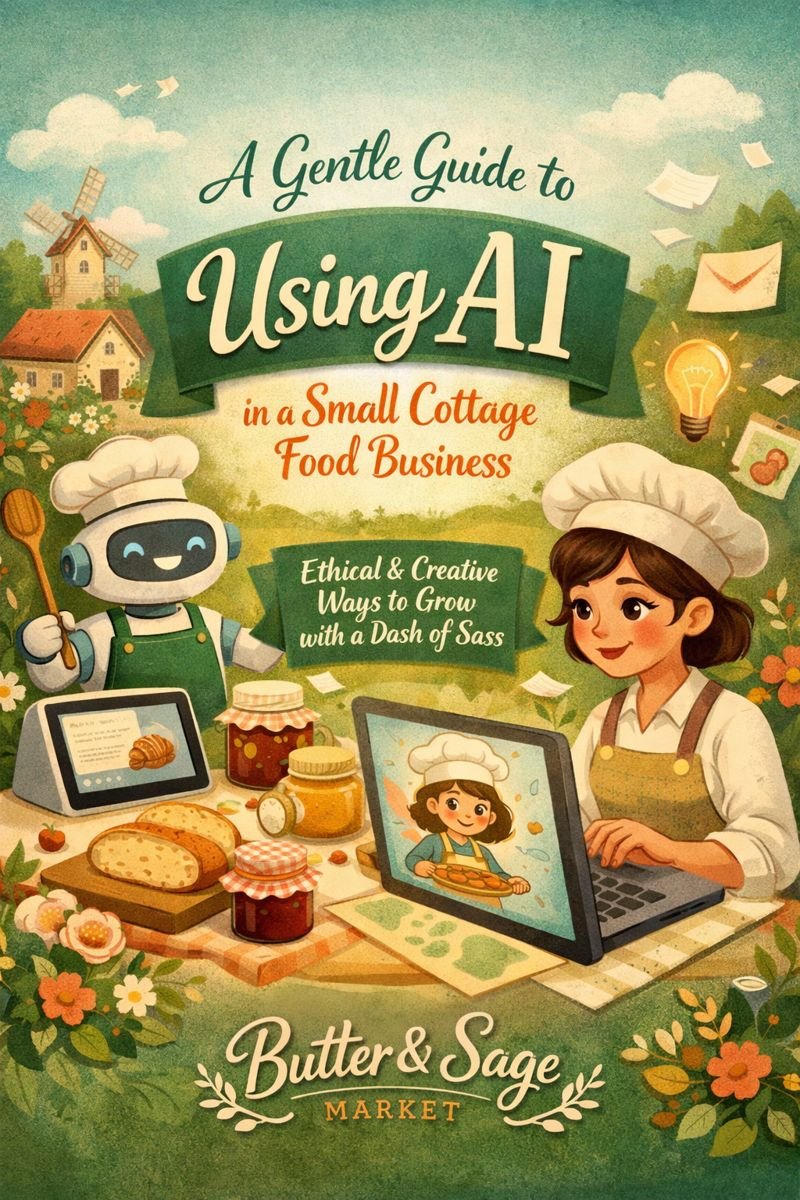
One especially ethical and joyful option is using AI in very obvious, playful ways. Turning a photo of yourself into a cozy cartoon baker, a hand-drawn illustration, or a whimsical avatar makes it clear this is creative interpretation—not reality. You might pair it with a caption like, “No fresh photos today, but cartoon-me is here to say I’m still baking behind the scenes.”
Stylized illustrations, seasonal graphics inspired by flavors you sell, or imagined scenes that clearly read as artistic are all fair game. When AI use is visible and intentional, it becomes part of your brand personality instead of a trust issue.
Unethical (and Misleading) Uses of AI—and How to Avoid Them
AI crosses the line when it invents food, exaggerates size or ingredients, fabricates origin stories, or claims handmade processes that aren’t true.
The fix is simple: don’t let AI invent your humanity or subject matter expertise. You already have that covered.
Being Transparent With Customers About AI
You don’t need a neon sign announcing every AI-assisted caption. But openness builds trust.
Mention using AI tools for writing help or photo cleanup. Frame it as a way to support your small business—not replace the handmade work at its core. Customers appreciate honesty, especially when they already value craft and care.
How Butter & Sage Market Uses AI (And How This Article Came to Be)
At Butter & Sage Market, AI is part of our creative and operational toolkit—not as a replacement for lived experience, but as a collaborative assistant. We use it to explore ideas, organize complex thoughts, and refine language so it’s welcoming, accessible, and genuinely helpful. AI is often a helpful editor for copy and photos.
This article is a perfect example. AI helped with early drafts, structure, and flow, but the heart of it came from real conversations and real values. We use long prompts to capture our intent of the subject, the ideas we want to clearly express, and input our knowledge on the subject. We added additional prompts to insert our own ideas, clarify our stance on ethics and transparency, and ensure the tone felt like us: warm, grounded, encouraging, and honest.
AI helped with the prep. We’re still the ones cooking.
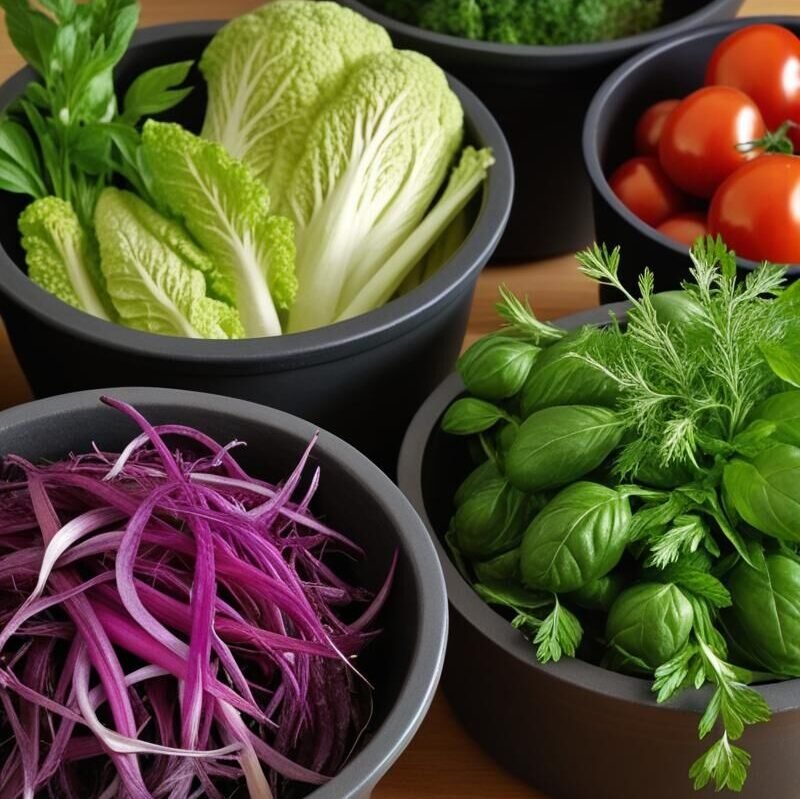
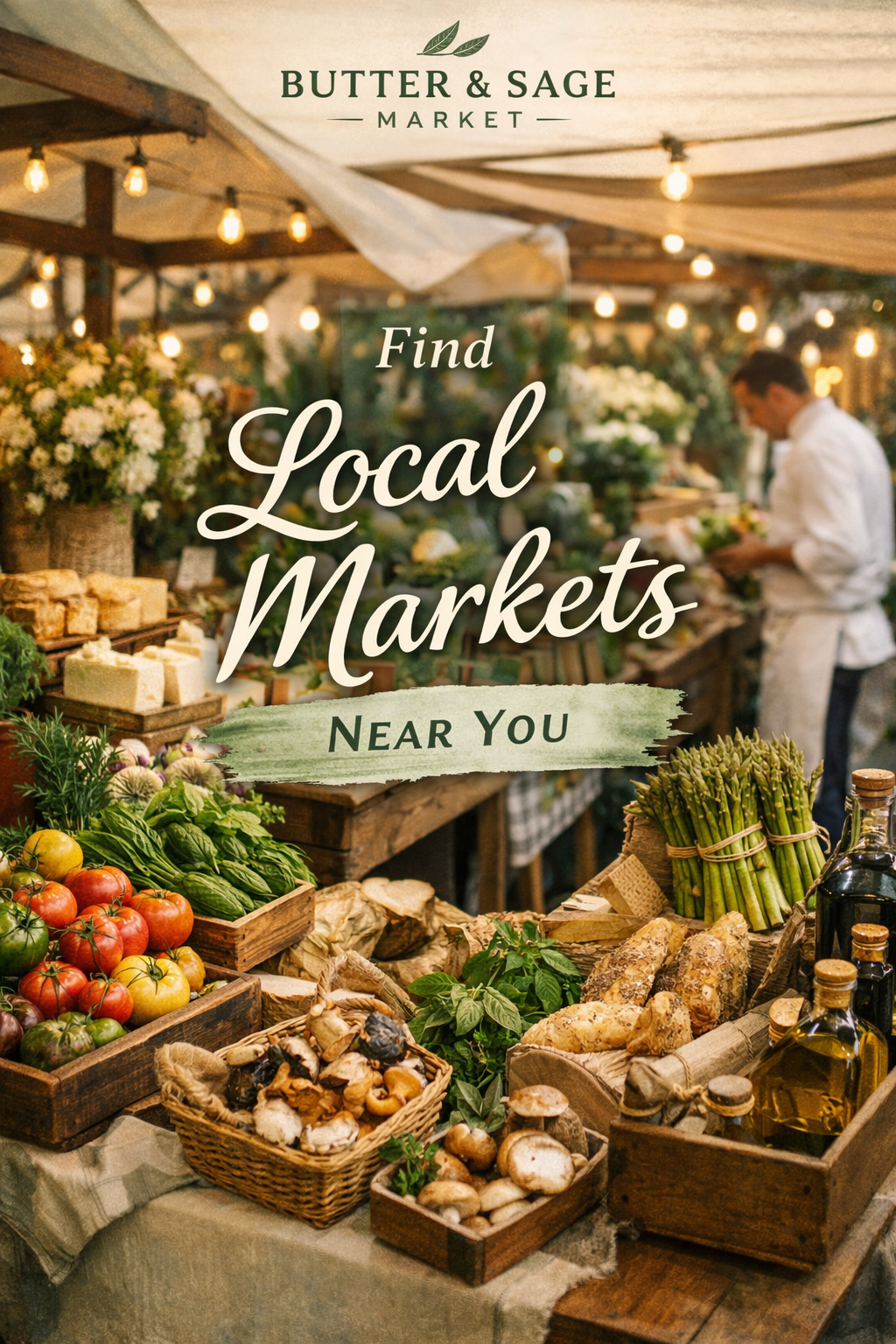
Since we sell digital services a lot of our company photos are modified with AI editing. We can't possibly get to all Farmers Markets across America but we want to encourage everyone to visit markets in their area - and visuals help us express that idea. We never use AI to generate photos of products we sell or recipes we publish. The cooking and final result images are always the food exactly as we made it with AI as our photo editor for cleanup and backgrounds. Our videos capturing recipes are never modified. That's us cooking in the kitchen.
A Final Thought (With Love and a Little Sass)
AI won’t make your food better.
It won’t replace your hands, your taste, or your instincts. And your product is what will keep customers coming back.
But AI can make running your business feel less overwhelming—and a little more joyful. Letting you focus on good food and AI running business tasks where you need an assistant.
Used ethically, AI becomes another tool in the drawer. Another way to protect your energy. Another way to keep showing up with care.
And that’s what Butter & Sage Market is all about:
Real food. Real people. Community.
Let us know your thoughts on AI in small business in the comments section below. Are you loving it? Hating it? We'd love to know how it's helped you or if you're avoiding it.
References & Resources
OpenAI – Responsible AI Use: https://openai.com/policies
FTC Guidelines on Advertising & Marketing Transparency: https://www.ftc.gov/business-guidance
Adobe on Ethical Photo Editing: https://www.adobe.com/creativecloud/photography/discover/photo-editing-ethics.html
Google Search Central – Helpful Content: https://developers.google.com/search/docs/fundamentals/creating-helpful-content
Cottage Food Law Resources (U.S.): https://forrager.com/laws/

0 Comments