
Gourmet Made Easy: Pasta all’Amatriciana for a Cozy Weeknight Dinner
Rich, smoky, and irresistibly comforting, Pasta all’Amatriciana is the Roman classic that turns simple ingredients into weeknight luxury. Made with guanciale, tomatoes, and Pecorino Romano, this authentic yet approachable recipe delivers bold Italian flavor with minimal effort — perfect for an easy gourmet dinner at home.
 1 min read
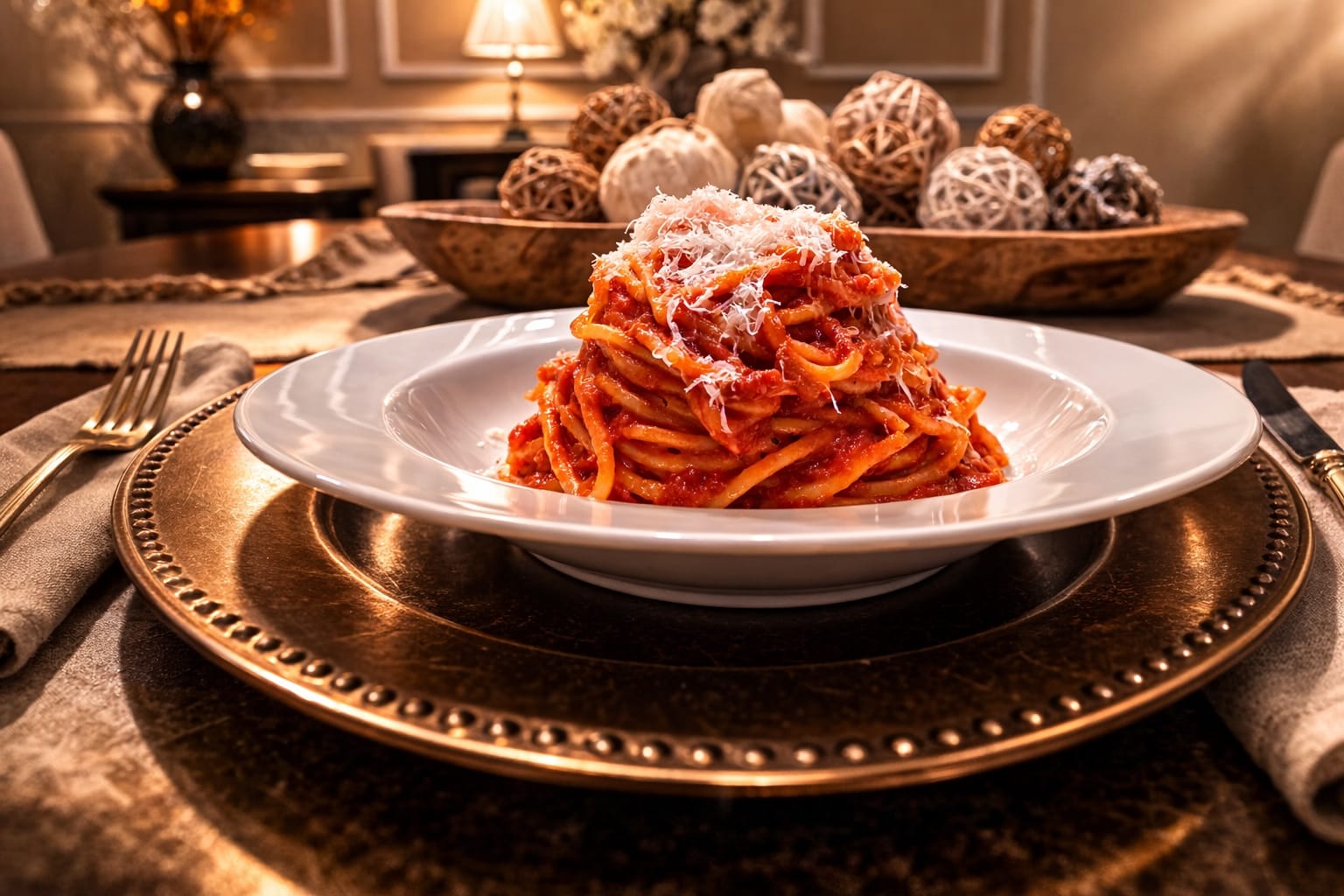
There are dishes you eat, and then there are dishes that eat with you—telling stories, nudging memories, insisting you slow down and twirl properly. Pasta all’Amatriciana belongs firmly in the second category. It’s simple, punchy, and unapologetically Roman in spirit, even though its heart beats in the mountains of central Italy. One forkful is smoky, salty, tangy, and just a little bit cheeky—like it knows you’ll be back for seconds.
Let’s wander through its past, its home, and the many ways cooks have made it their own without losing that unmistakable Amatriciana soul.
Where it comes from: mountain roots, Roman fame
The name points straight to Amatrice, a small town tucked into the Apennines in the region of Lazio, in Italy. Before tomatoes entered the picture, shepherds in these hills carried a hearty pasta called gricia: cured pork cheek, pecorino cheese, black pepper, and pasta. It was practical food—durable ingredients, big flavor, no fuss.
Then came the tomato, Europe’s most dramatic immigrant ingredient. By the 18th century, the red fruit found its way into the gricia formula, and Amatriciana was born. When cooks from Amatrice traveled or moved to Rome, the dish followed them and quickly became a staple in Roman trattorias. Rome gave it a wider stage; Amatrice gave it its name and backbone.
If cuisine had a passport, Amatriciana would list “born in the mountains, adopted by the city, loved everywhere.”
The classic build: three bold notes and a perfect balance
At its most traditional, Amatriciana is a study in restraint:
Guanciale (cured pork cheek): rich, fragrant, and the dish’s smoky-sweet anchor.
Tomatoes: bright acidity to cut through the fat.
Pecorino Romano: salty, sharp, and a little wild.
Pasta: usually bucatini—those wonderful hollow strands that trap sauce like tiny tunnels of joy.
Black pepper: the quiet finisher.
That’s it. No garlic, no onion, no herbs. The alchemy happens when the rendered guanciale meets tomato and pasta water, forming a glossy, clinging sauce that coats every curve and hollow. Pecorino melts in at the end, tying the room together like a well-timed punchline.
Roman preferences vs. hometown pride
In Amatrice, the identity of the dish is guarded with affectionate seriousness. The local tradition leans toward simplicity and balance—guanciale cut into strips, not cubes; tomatoes that are sweet but not jammy; a generous snowfall of pecorino.
In Rome, the dish became a beloved standard, and with popularity came personality. Some Roman cooks push the tomato a touch further, or lean into a peppery finish. The spirit is the same, but like any classic tune, the tempo shifts with the room.
Typical variations (and the debates they spark)
Food lovers adore a friendly argument, and Amatriciana provides plenty of opportunity.
Bucatini vs. spaghetti
Bucatini is the icon—its hollow center is practically engineered for this sauce. Spaghetti is a common alternative and perfectly respectable. Some cooks prefer rigatoni for its ridges and sturdy bite.
A hint of chili
A pinch of dried chili can add warmth without changing the character. Purists may raise an eyebrow; diners will usually raise a fork.

Wine in the pan
A splash of dry white wine after crisping the guanciale can lift the fond (those tasty browned bits) and add aroma. Not universal, but widely enjoyed.
Tomato styles
Crushed canned tomatoes are typical; some cooks favor passata for a smoother texture. The goal is brightness, not a heavy stew.
Substitutions that still honor the dish
Let’s be real: not everyone has a specialty deli down the street. Here’s how to adapt while keeping the essence intact.
Guanciale → Pancetta → Good bacon
Pancetta is the closest cousin—less funky, still lovely. If bacon is what you’ve got, choose a thick-cut, lightly smoked style and go easy; you want savory depth, not campfire domination.Pecorino Romano → A blend with Parmigiano-Reggiano
If pecorino’s sharpness feels too assertive, mix it with Parmigiano-Reggiano. You’ll soften the edge while keeping the salty snap.Fresh tomatoes when in season
Ripe summer tomatoes can shine, but cook them down enough to concentrate their flavor. Amatriciana isn’t a salad—it’s a sauce with purpose.Dietary tweaks
Vegetarian versions sometimes swap the pork for mushrooms browned deeply in olive oil. It won’t be traditional, but it can be delicious in its own right—call it a respectful riff, not a replica.
Why it endures
Amatriciana endures because it trusts a few ingredients to do a lot of talking. It’s robust but not heavy, straightforward yet deeply satisfying. It tastes like a place—stone streets, mountain air, the clink of plates in a busy trattoria—and also like a feeling: you’re cared for, you’re fed, you’re staying a little longer.
And perhaps that’s the best part. The recipe invites you to cook with attention but not anxiety. Render the pork slowly. Let the tomatoes simmer just enough. Salt the pasta water like you mean it. Then toss, twirl, and take a moment before the first bite. Somewhere between the guanciale and the pecorino, the past and the present shake hands—and your kitchen smells like Italy.
If you’d like, I can follow this with a step-by-step classic recipe (plus a weeknight shortcut version that still tastes like a Roman holiday).
The “I Have No Idea What to Cook” Lifesaver
There’s a special kind of weeknight fatigue when the fridge light comes on, you stare into the void, and the void stares back. This is where Pasta all’Amatriciana quietly becomes your culinary safety net — not because it’s fancy, but because it’s reliably possible.
Once you treat the core ingredients as staples rather than special purchases, this dish moves from “planned dinner” to “effortless default setting.”
Passata and pasta live happily in the pantry
A jar or carton of passata is basically culinary insurance. It waits patiently, requires no chopping, and delivers bright tomato flavor instantly. Pair it with dried spaghetti or bucatini — another pantry essential — and half your meal is already solved before you’ve even decided what to watch while eating.
Guanciale is freezer-friendly magic
Buying a whole piece of guanciale might feel ambitious the first time, but it’s one of the most practical ingredients you can own. Wrapped well and stored in the freezer, it keeps beautifully. Even better: you can slice or shave it straight from frozen. No thawing, no planning, no drama. It’s like having a secret flavor weapon on standby.
Pecorino Romano is a long-game player
Unlike delicate cheeses that demand immediate attention, Pecorino Romano is wonderfully patient. Properly wrapped in the refrigerator, it lasts for weeks and still tastes sharp, salty, and ready for duty. A small wedge goes a long way, and there’s something deeply reassuring about knowing it’s there.
That little wine trick
Keeping a small four-pack of single-serve wine bottles around is a quiet stroke of genius. One bottle gives you exactly what you need for cooking — and if there’s a splash left for the cook, well, that’s simply good kitchen management. No open bottles lingering, no waste, no excuses.
When these ingredients become part of your kitchen rhythm, Amatriciana stops being a recipe you plan and starts becoming a meal you fall back on. It’s the dinner equivalent of a favorite sweater: comforting, dependable, and always appropriate.
On nights when going out feels like too much effort and inspiration is nowhere to be found, you don’t need a grocery run or a complicated idea. You just need a pot of water, a pan, and the quiet confidence that something simple can still feel special.
And honestly, that might be the most luxurious part of all.
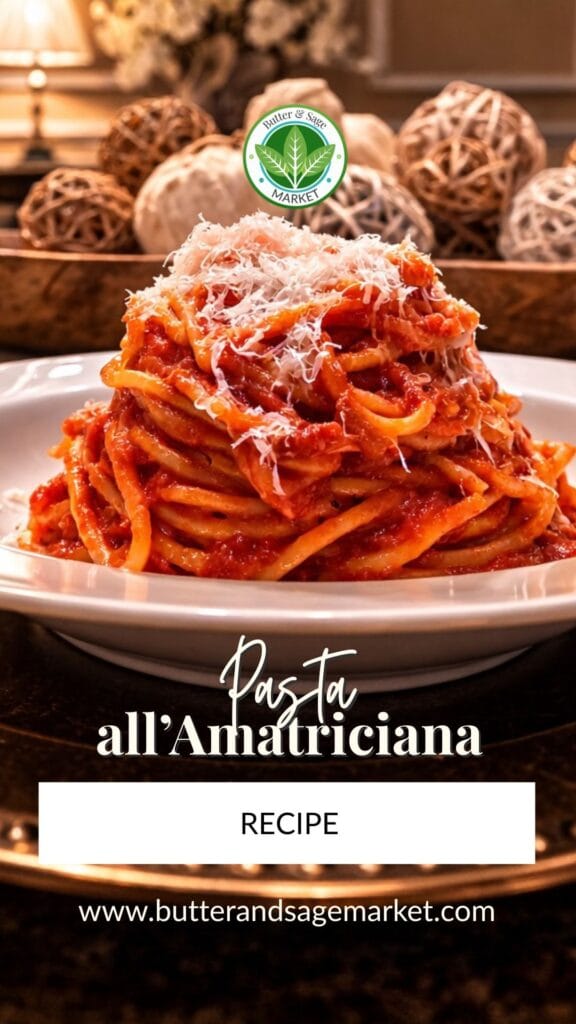
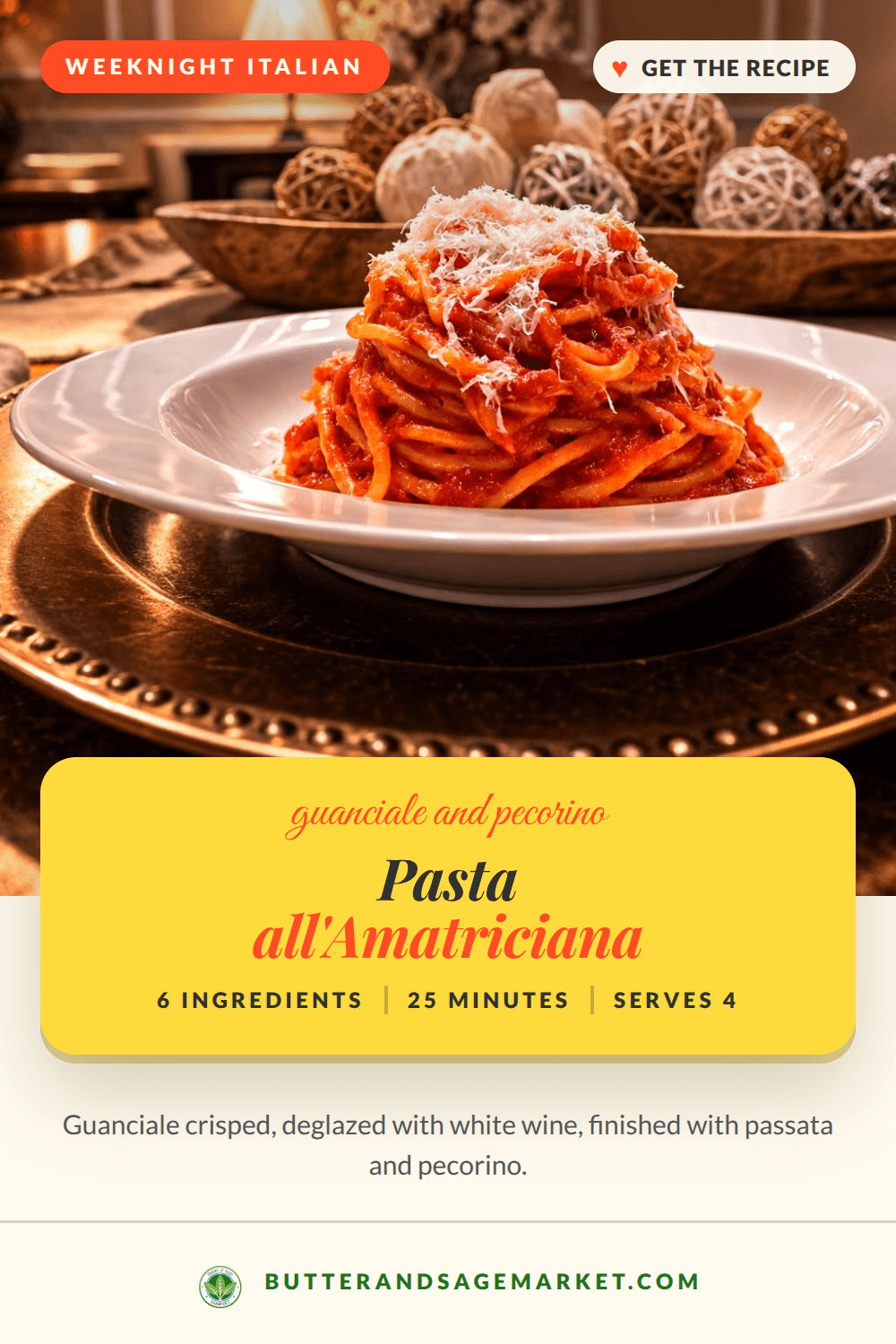
Pasta all’Amatriciana
There are dishes you eat, and then there are dishes that eat with you—telling stories, nudging memories, insisting you slow down and twirl properly. Pasta all’Amatriciana belongs firmly in the second category. It’s simple, punchy, and unapologetically Roman in spirit, even though its heart beats in the mountains of central Italy. One forkful is smoky, salty, tangy, and just a little bit cheeky—like it knows you’ll be back for seconds.
Ingredients
Instructions
- Heat water in stock pot on the stove for cooking the pasta. When it comes close to a boil add salt to the water. Add enough salt until the water seasoning is that of a well seasoned broth
- Heat the Guanciale in the skillet over medium high heat until crispy
- Deglaze the Guanciale with the white wine. Use a wooden spoon to scrape up any fond on the bottom of the skillet. Increase heat to medium high and reduce until the wine is syrupy and almost gone
- Add the tomato passata to the skillet and reduce heat to medium-low. Stir to fully imulsify.
- Cook the pasta until just about al dente (if the cook time for your pasta is 12 minutes aim to cook to 9 to 10 minutes)
- Add the pasta to the tomato passata. Toss together with the sauce until fully coated. Add the Pecorino and a little pasta water and toss once again until well incorporated.
- Add to bowls, sprinkle with more Pecorino and enjoy.

Keep reading
More from the market
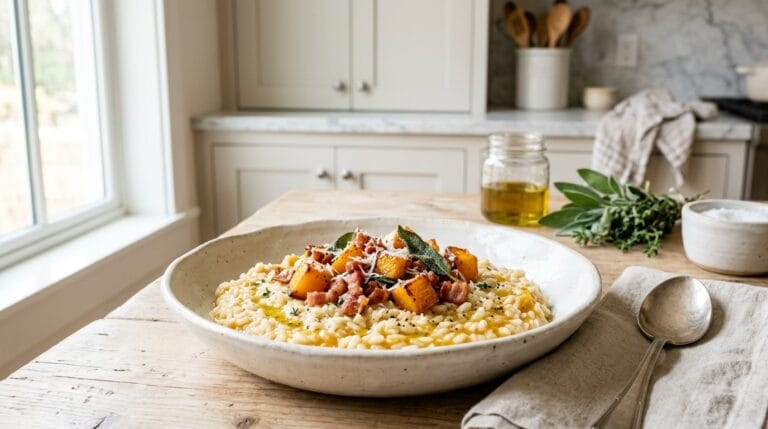
Butternut Squash Risotto with Crispy Pancetta
Half the squash melts into the rice, half stays roasted and whole. The two-texture trick that stops butternut risotto tasting like sweet…
Read more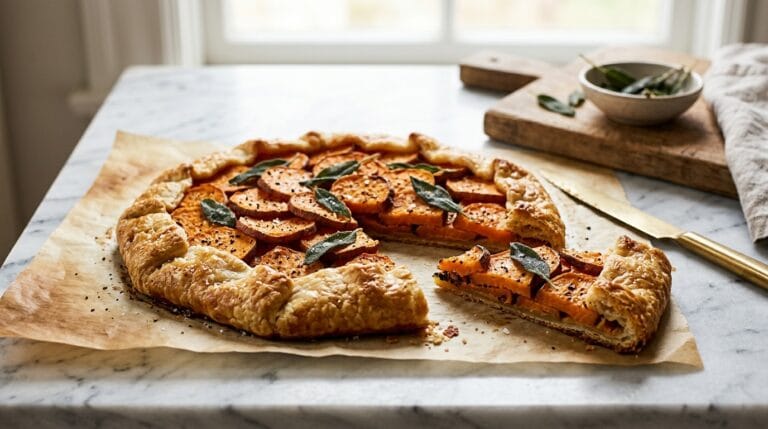
Savory Sweet Potato and Caramelized Onion Galette with Sage
Sweet potatoes, onions cooked down slow, and fried sage on a free-form crust. A savory galette that turns three cheap market vegetables…
Read more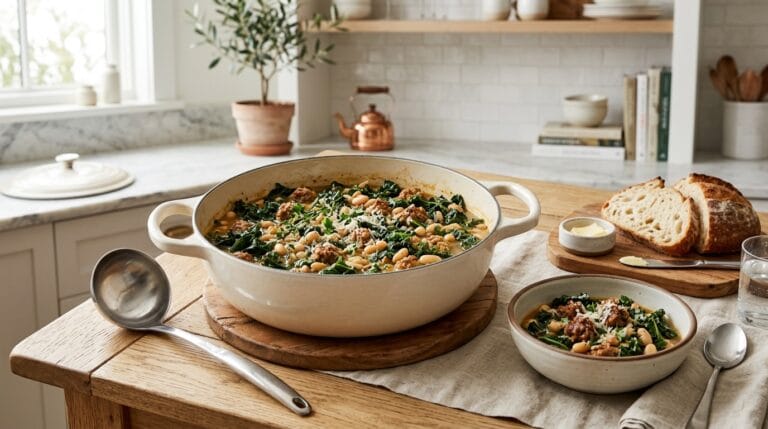
Kale and White Bean Stew with Sausage
One pot and forty minutes. Sausage, creamy white beans and a whole bunch of market kale, with the vinegar trick that stops…
Read more