
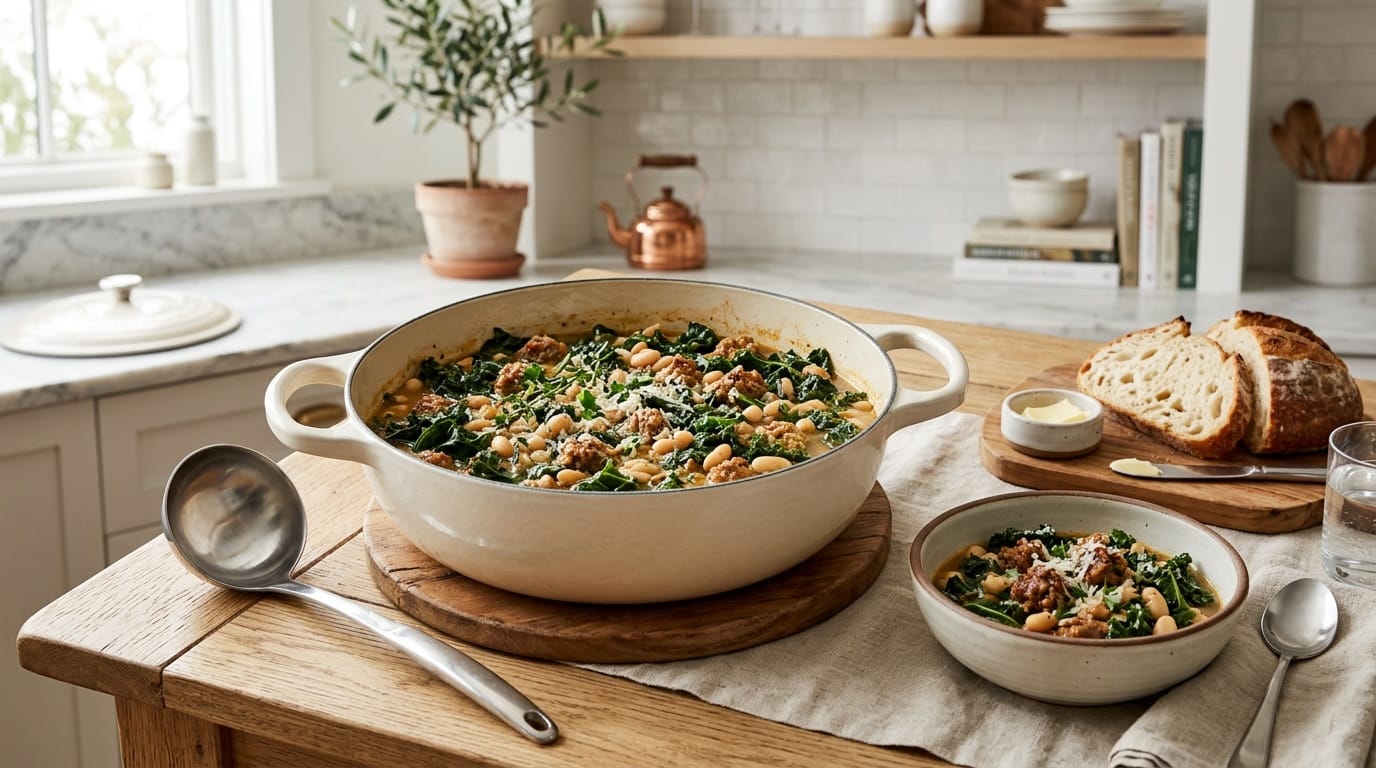

The first genuinely cold Saturday at the market changes what people are carrying. The tomato tables have thinned out, somebody has the first proper bunches of lacinato kale — dark, blistered, almost blue — and there is a queue at the sausage vendor that was not there in July.
This is the pot those three things end up in. It takes forty minutes, most of it unattended, and it makes the house smell like the reason anyone puts up with the clocks going back.
Why kale now, and which one to buy
Kale is another of the crops that a cold night improves. Frost converts some of its starch to sugar, so the bunches at the market in late September and October are noticeably sweeter and less aggressively mineral than summer kale.
Lacinato — also sold as dinosaur, cavolo nero or Tuscan kale — is the one to reach for here. Flatter leaves, a softer texture when cooked, and it holds its shape in a stew instead of going to threads. Curly kale works and takes a couple of minutes longer.
Look for firm, deep-coloured leaves with no yellowing. And take the whole bunch — it cooks down to about a quarter of what it looks like in your hand, which is the single most common reason people end up with a stew that is mostly beans.
The two things that make it taste like more than the sum of it
Crush some of the beans. About twenty minutes in, press a ladleful against the side of the pot and stir them back. The starch thickens the broth into something silky, and it is the entire difference between a stew and beans floating in stock. No cream, no flour, no effort.
Finish with vinegar. This is the step that feels wrong and is not. A pot of beans, sausage and greens is rich, savoury and — after forty minutes — slightly flat. A tablespoon of red wine vinegar stirred in at the end lifts the whole thing and makes every individual ingredient taste more like itself. Taste before and after and you will never skip it again.
If you have a Parmesan rind in the fridge door, put it in. It melts down over the twenty minutes and adds a savoury backbone you cannot get any other way. Ask at the cheese stall — most will sell you a bag of rinds for very little, and they keep in the freezer forever.
Make it yours
No sausage. Leave it out, double the fennel seeds, and add a diced fennel bulb with the onion. You lose the fat, so be more generous with the olive oil at the end.
Different greens. Chard is excellent and faster. Collards are excellent and slower — give them an extra ten minutes before the sausage goes back in. Escarole almost melts and is worth trying if your market has it.
More substantial. A handful of small pasta in the last ten minutes, or a slice of stale bread torn into the bottom of each bowl before you ladle over it, which is the older and better version.
Different beans. Cannellini are creamiest, but borlotti, great northern or chickpeas all work. If your market has a dried bean grower, cook a pot from dry — the cooking liquid is better than any stock and goes straight in.
It is better on the second day, which is rare and worth planning around. The beans keep softening, the broth keeps thickening, and Sunday's bowl is the one you will think about.
If you make it, tag @butterandsagemarket — and if the kale, the sausage and the beans all came from the same market morning, tell us who grew them. Those are the people worth naming.
Kale and White Bean Stew with Sausage
A one-pot autumn stew of Italian sausage, soft white beans and a whole bunch of kale, finished with vinegar so it tastes bright rather than heavy.


Ingredients
Instructions
- Warm 1 tbsp of the olive oil in a large heavy pot over medium-high heat. Add the sausage — either squeezed from its casings and broken into rough pieces, or sliced into coins. Cook 6 to 8 minutes without stirring much, so it browns properly rather than steams. Lift it out with a slotted spoon and set aside.
- Lower the heat to medium and add the remaining oil, the onion and the carrots with 1/2 tsp salt. Cook 8 minutes until softened and just starting to colour, scraping up the browned bits from the sausage.
- Add the garlic, fennel seeds and pepper flakes and cook 1 minute, until fragrant. Stir in the tomato paste and cook 2 minutes more — it should darken and smell sweet rather than sharp.
- Add the beans, stock and Parmesan rind. Bring to a simmer, then cook uncovered for 20 minutes. Crush a ladleful of the beans against the side of the pot and stir them back in; that is what makes the broth creamy without any cream.
- Return the sausage to the pot with any juices. Add the kale a handful at a time, letting each wilt before adding more. Simmer 5 minutes — no longer, or the kale goes drab.
- Fish out the Parmesan rind. Stir in the vinegar, then taste and adjust with salt, pepper and a little more vinegar. It should taste bright at the edges. Serve with grated Parmesan and bread.



0 Comments