

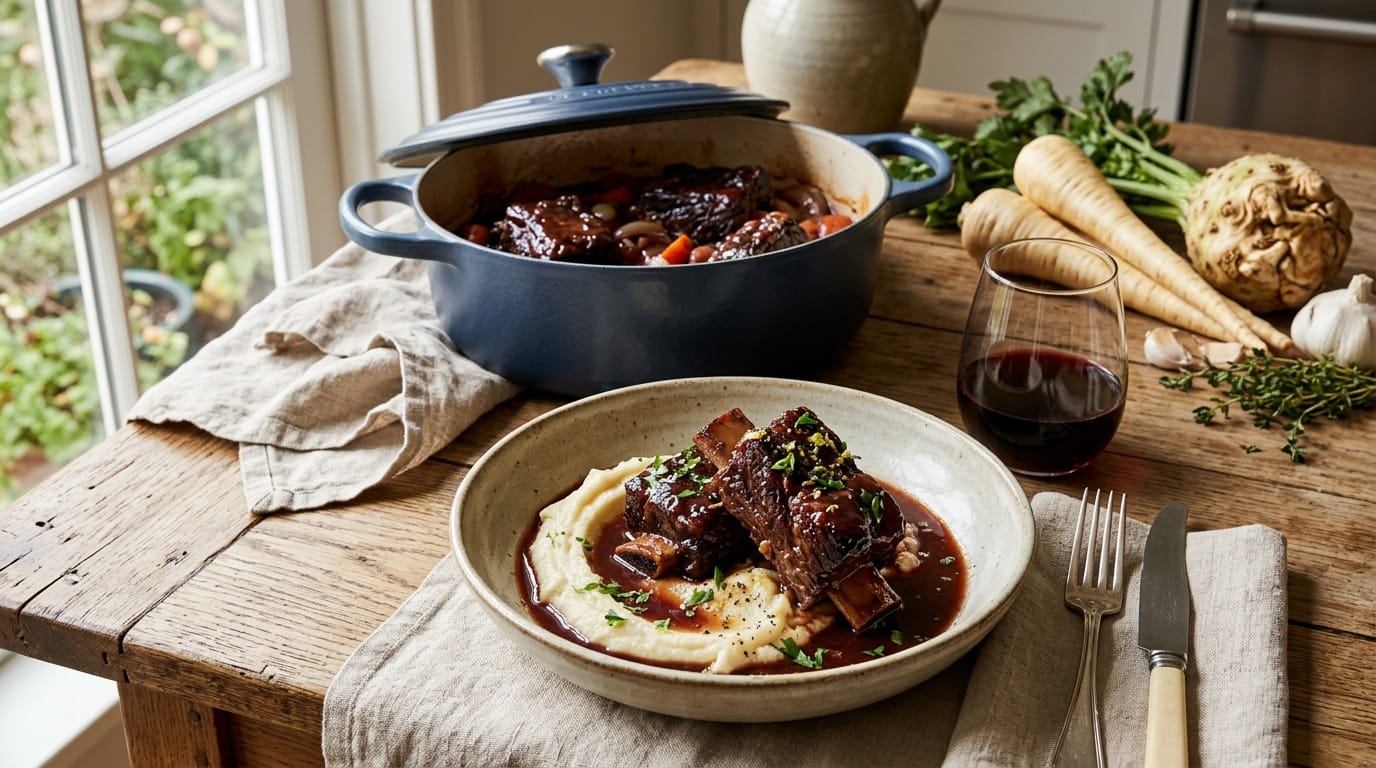
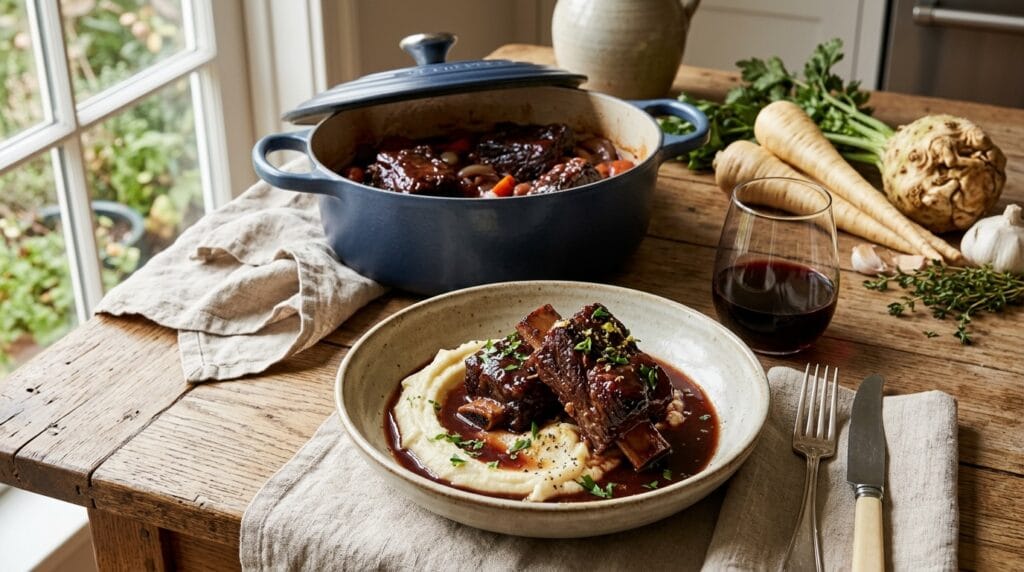
By November the beef farmer’s table looks different. The summer crowd that came for burgers and grilling steaks has thinned, the cooler is full of the cuts that need time, and the short ribs are sitting right there: thick, marbled, still on the bone, waiting for somebody with a free Sunday afternoon. Red wine braised short ribs are the best thing you can do with them.
This is a dinner that mostly cooks itself. The oven does the slow work, the house smells incredible all afternoon, and what comes out is beef that slides off the bone into a dark, glossy sauce, piled over a mash of potatoes, celery root and parsnips that tastes more interesting than plain potatoes ever manage.
Why red wine braised short ribs belong to November
Short ribs come from the lower rib section of the steer, where the muscles work hard and are laced with connective tissue. Cook them fast and they are chewy. Cook them low, slow and wet, and that same connective tissue melts into gelatin, which is what gives a braise its body and the meat its silky, pull-apart texture. Cold weather and a cut that rewards patience are a natural pair.
The vegetables are in season too. Celery root and parsnips are the knobbly, unglamorous end of the root vegetable table, and both get sweeter once the nights turn cold. If you bring home more than one dinner’s worth, our guide to storing root vegetables will keep them good well into winter.
How to buy short ribs from a local farm
Most small beef farms sell by the cut at the market and by the share (a quarter or half animal) straight from the farm. If you have the freezer space and want to go big, University of Minnesota Extension has a clear guide to buying a share, including how much meat a quarter really yields and how much freezer room it takes. For one dinner, buying by the cut is the easy way to start.
Ask for English-cut short ribs: thick, single-bone pieces with a generous cap of meat on top. Flanken-cut ribs, the thin strips sliced across several bones, are meant for the grill and do not braise the same way. Look for marbling running through the meat rather than just fat on the outside. Grass-finished beef is leaner with a deeper, more mineral flavor; grain-finished is richer. Both braise beautifully, so ask the farmer how the animal was raised and choose the one that sounds like your kind of dinner. Farmers genuinely enjoy these conversations, and here are a few more questions worth asking.

The two things that make a braise taste finished
Brown properly, then be patient. Most of the flavor comes from the dark crust you build on the ribs before they ever meet the wine. A crowded pot steams the meat instead of searing it, so work in batches and let each side go deep mahogany before you turn it. It feels slow. It is also the whole dish.
Make it a day ahead. Restaurant kitchens rely on this trick. Chill the finished braise overnight and the fat rises and sets into a solid cap that is easy to remove, leaving a cleaner, glossier sauce. The meat gets a night to soak up the wine and herbs, and it reheats beautifully. A dinner for guests becomes a matter of warming a pot and making the mash.
Cold weather and a cut that rewards patience. Short ribs were made for November.Butter & Sage Market
The mash has its own small secret. Parsnips cook faster than potatoes and celery root, so cut them a little larger and everything finishes together. Drain the pot well and let the steam escape before you add the butter; a watery mash is almost always a mash that was not given that moment to dry.
Make it yours
Swap the wine. A dark beer such as stout or porter makes a malty, slightly sweet braise that is lovely with the parsnips. Hard cider gives a lighter, fruitier version.
Change the mash. All potato is classic. Rutabaga or sweet potato can stand in for some of the roots, and a head of roasted garlic stirred through is never a bad idea. Creamy polenta or buttered egg noodles make good bases too.
Use a different cut. A beef chuck roast cut into large chunks braises almost the same way and is often easier on the budget. Bone-in lamb shanks are wonderful here if your market has a sheep farmer.
Brighten it. A little gremolata (parsley, lemon zest and garlic, chopped together) scattered over each plate cuts right through the richness and uses the last of the parsley from the herb stall.
Save the bones, too. Once dinner is done, they go straight into the freezer bag for your next pot of stock.
If you make these, tag @butterandsagemarket and tell us which farm raised the beef. The people behind the food deserve the credit. Still looking for a beef farmer near you? Find your local market and its vendors here.
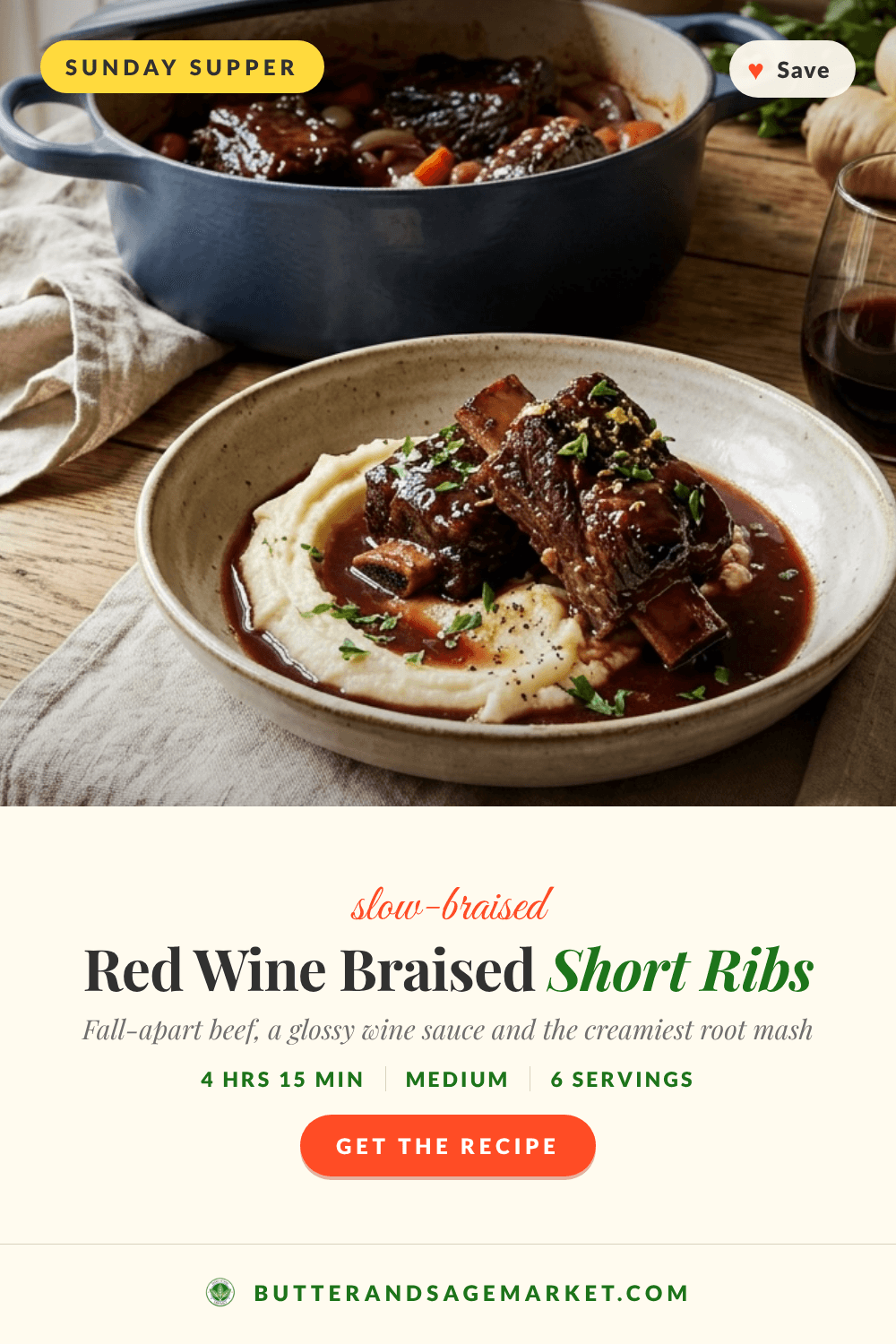
Red Wine Braised Short Ribs with Root Vegetable Mash
Bone-in short ribs braised low and slow in red wine until they fall off the bone, served over a buttery mash of potatoes, celery root and parsnips.
Ingredients
Short ribs
Root vegetable mash
To serve
Instructions
Braise the short ribs
- Pat the short ribs dry and season all over with the salt and pepper. If you have time, do this the night before and refrigerate them uncovered; the surface dries and browns better. Heat the oven to 325°F with a rack in the lower-middle position.
- Heat the oil in a large Dutch oven (at least 6 quarts) over medium-high heat. Brown the ribs in two batches without crowding, 3 to 4 minutes per side, until deep brown on every side. Move them to a plate and pour off all but about 2 tbsp of the fat.
- Lower the heat to medium. Add the onion, carrots and celery with a pinch of salt and cook 8 to 10 minutes, scraping up the browned bits, until softened and golden at the edges. Add the garlic and tomato paste and cook 2 minutes more, until the paste darkens.
- Pour in the wine and bring it to a boil, scraping the bottom of the pot. Simmer until reduced by about half, 10 to 12 minutes.
- Add the stock, thyme, rosemary and bay leaves. Return the ribs and any juices to the pot, bone side up, in a single snug layer. The liquid should come about three-quarters of the way up the meat; add a little water if it does not. Bring to a simmer, cover and move the pot to the oven.
- Braise for 2 1/2 to 3 hours, checking at 2 hours, until the meat is pulling away from the bone and a fork slides in with no resistance.
Make the mash
- While the ribs braise, cut the potatoes and celery root into 1 1/2-inch chunks and the parsnips into slightly larger pieces, since they cook faster. Put everything in a pot, cover with cold water by an inch and add the salt.
- Bring to a boil, then simmer 20 to 25 minutes, until everything is very tender. Drain well, return to the hot pot and let it steam dry for 2 minutes.
- Mash with the butter and warm milk until smooth, then season with salt and pepper. Cover and keep warm.
Finish the sauce and serve
- Lift the ribs onto a platter and tent with foil; discard any loose bones. Strain the braising liquid into a bowl, pressing on the vegetables, and spoon or pour off as much fat as you can (a fat separator makes this quick).
- Return the liquid to the pot and simmer over medium-high heat until reduced to about 2 cups and glossy enough to coat a spoon, 10 to 15 minutes. Taste and season.
- Spoon the mash into shallow bowls, top each with a short rib and plenty of sauce, and finish with parsley and a little lemon zest.
Notes

Keep reading
More from the market
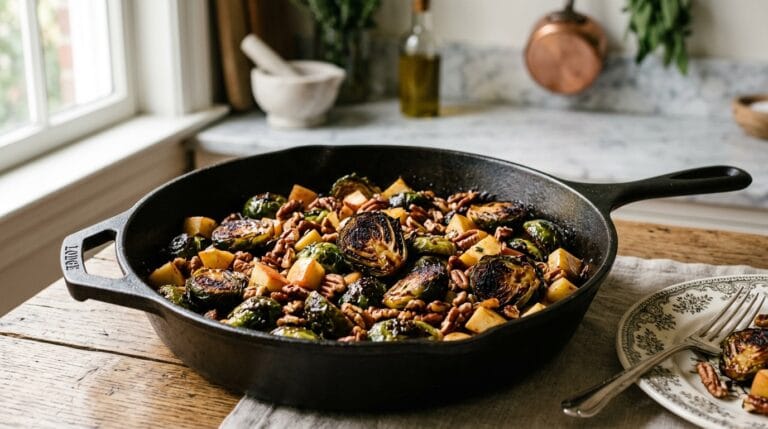
Crispy Brussels Sprouts with Apples, Pecans, and a Cider Glaze
Roasted cut-side down until the edges go dark, then tossed with apple, pecans and a maple-cider glaze. Twenty-five minutes, one pan, and…
Read more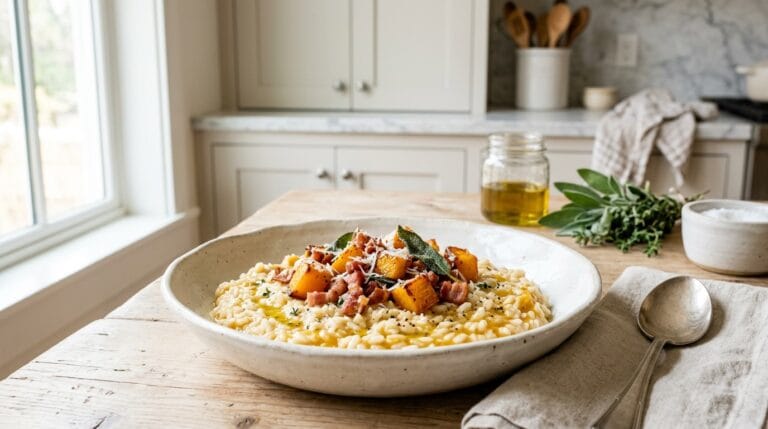
Butternut Squash Risotto with Crispy Pancetta
Half the squash melts into the rice, half stays roasted and whole. The two-texture trick that stops butternut risotto tasting like sweet…
Read more
Savory Sweet Potato and Caramelized Onion Galette with Sage
Sweet potatoes, onions cooked down slow, and fried sage on a free-form crust. A savory galette that turns three cheap market vegetables…
Read more