
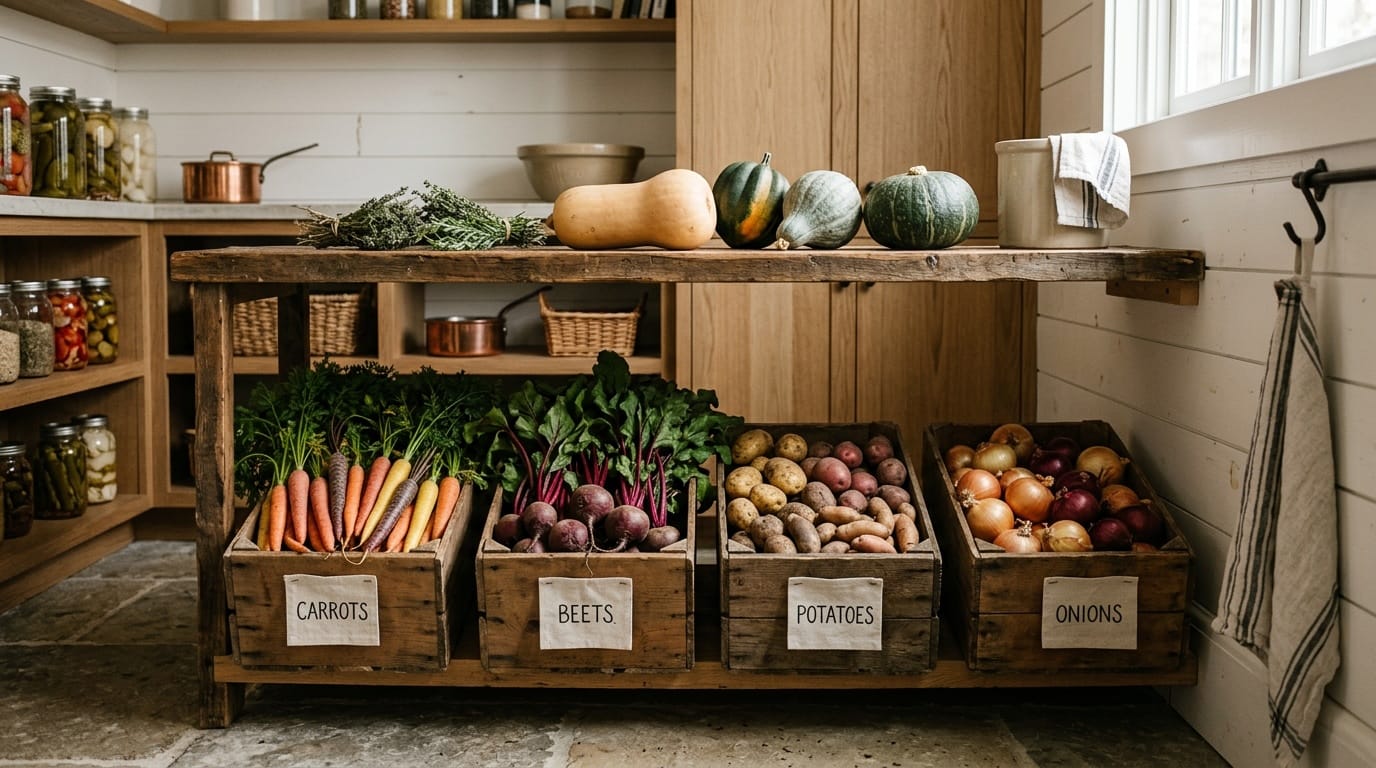

There is a moment in October at every market where the maths changes. Winter squash is suddenly two dollars instead of four. Potatoes come by the ten-pound bag. Onions are cured and stacked like firewood, and the farmer would rather sell you thirty pounds than haul it home again.
This is the cheapest local food gets all year, and most of us walk past it because we are picturing the four butternut squash rotting on the counter in November.
They do not have to. Most of what is on that table was bred to survive a winter in a cellar, and the rules for keeping it are simple once you know them.
The three things every one of them cares about
Temperature. Cold but not freezing for most roots, cool and dry for squash and onions. The difference between 40°F and 60°F is often the difference between March and Christmas.
Humidity. Roots want it damp or they go rubbery. Squash, onions and garlic want it dry or they go mouldy. This is the split that matters most, and it is why the same shelf cannot hold all of it.
Air, and distance from each other. Stacked in a sealed bag, anything will sweat and rot. And one bad one takes its neighbours with it, which is the single most common way a whole crate is lost.
What each one actually wants
Winter squash — cool and dry, around 50–55°F, with air around each one. Not the fridge, which is too cold and too damp. A spare bedroom floor, a stair landing, a shelf in a cool cupboard. Do not stack them touching. Butternut and hubbard keep for months; acorn and delicata are the sprinters at about a month, so eat those first. Leave the stem on — a squash with its stem knocked off is a squash with an open door.
Potatoes — cold, dark, humid, around 40–45°F. Light turns them green and bitter, so a paper bag or a cardboard box, never clear plastic. Never the fridge proper: below about 40°F the starch turns to sugar and they go sweet and brown oddly when cooked.
Onions, shallots and garlic — cool and very dry, with air. A mesh bag or an open basket, hung or on a shelf. The exact opposite of potatoes, which is why the old advice to store them together is wrong — onions give off moisture and gas that makes potatoes sprout.
Carrots, beets, parsnips, turnips, celeriac — cold and damp. Cut the greens off within a day of buying, or the tops keep drinking and the root goes soft. Then into the fridge in a bag with a damp cloth, or packed in a box of barely damp sand in a cold garage. Sand sounds fussy and is how these things kept for centuries; carrots come out in February crisp enough to snap.
Cabbage — cold and damp, whole, outer leaves left on. A whole cabbage in the bottom of the fridge lasts a month or more and you just peel back to a fresh layer.
Sweet potatoes — the exception that catches people. They want warmer than regular potatoes, around 55–60°F, and cold ruins their texture. Keep them out of the fridge entirely.
The mistakes that cost a whole crate
Washing before storing. Dirt is a coat. Brush it off dry and wash right before you cook. A washed, damp root in a box is the fastest way to a soft spot.
Storing near apples or pears. They give off ethylene, which makes potatoes sprout and carrots go bitter. Keep the fruit somewhere else entirely.
Sealed plastic. Everything sweats. If it must be a bag, perforate it.
Never looking. Check the box every couple of weeks and pull anything soft. Two minutes a fortnight saves the rest, and the one you missed is always the one that took out five.
What to ask at the market
The person who grew it knows more about how it keeps than any article does, and almost nobody asks.
Ask whether the squash has been cured — squash that has sat a week or two after harvest keeps far longer than squash straight off the vine, and good growers do it as a matter of course. Ask whether the onions and garlic are cured too. Ask which potato variety it is, because some are storage varieties and some are meant to be eaten in a fortnight.
And ask about bulk. A grower with a full truck in late October will very often do you a price on a whole case, and that is the single cheapest good food you will buy all year.
What is the longest you have kept a market squash? Mine was a hubbard that made it to March, mostly because it was too big to be worth cutting into.



0 Comments