You didn't go into the business of making jam, cookies, or bread so you could become a social media manager. You did it because you love food and you're good at making it. But somewhere along the way, someone told you that Instagram was the key to reaching customers, and now you're standing in your kitchen wondering if you should have paid attention in that one business webinar about content calendars.
Here's the truth: Instagram works for cottage food businesses. Really works. But not because of perfectly styled photos or viral content strategies. It works because Instagram is where people who love food, farmers markets, and local shopping actually spend their time. Your future customers are already there. You just need to show up and be real.
Why Instagram Actually Works for Cottage Food Makers
Instagram is a visual platform, which means it's built for food. No explaining, no long-form copy—just a beautiful photo of your sourdough or your jam, and people immediately understand what you do. But there's something else that matters even more: Instagram is where community happens. People who buy at farmers markets, who care about where their food comes from, who choose local over mass-produced—they're on Instagram looking for exactly what you're making. You're not competing with national brands. You're connecting with neighbors who want what you make.
Set Up Your Profile for Success
Your bio is the first impression. Use this formula: What you Make | Where People Find You | Call to Action
- "Sourdough bread baked fresh weekly | Find us at [Farmers Market Name] Saturdays | DM to pre-order"
- "Small-batch jams from our kitchen | [City] Farmers Market + online | Link in bio to order"
- "Gluten-free cookies made with local eggs | Farmers market booth Wed/Sat | Shop local with us"
Notice what these don't do: they don't say "farm to table," "artisan," or "locally sourced"—everyone says that. They tell people exactly what you make and how to get it.
What to Post (The 5 Content Types That Actually Work)
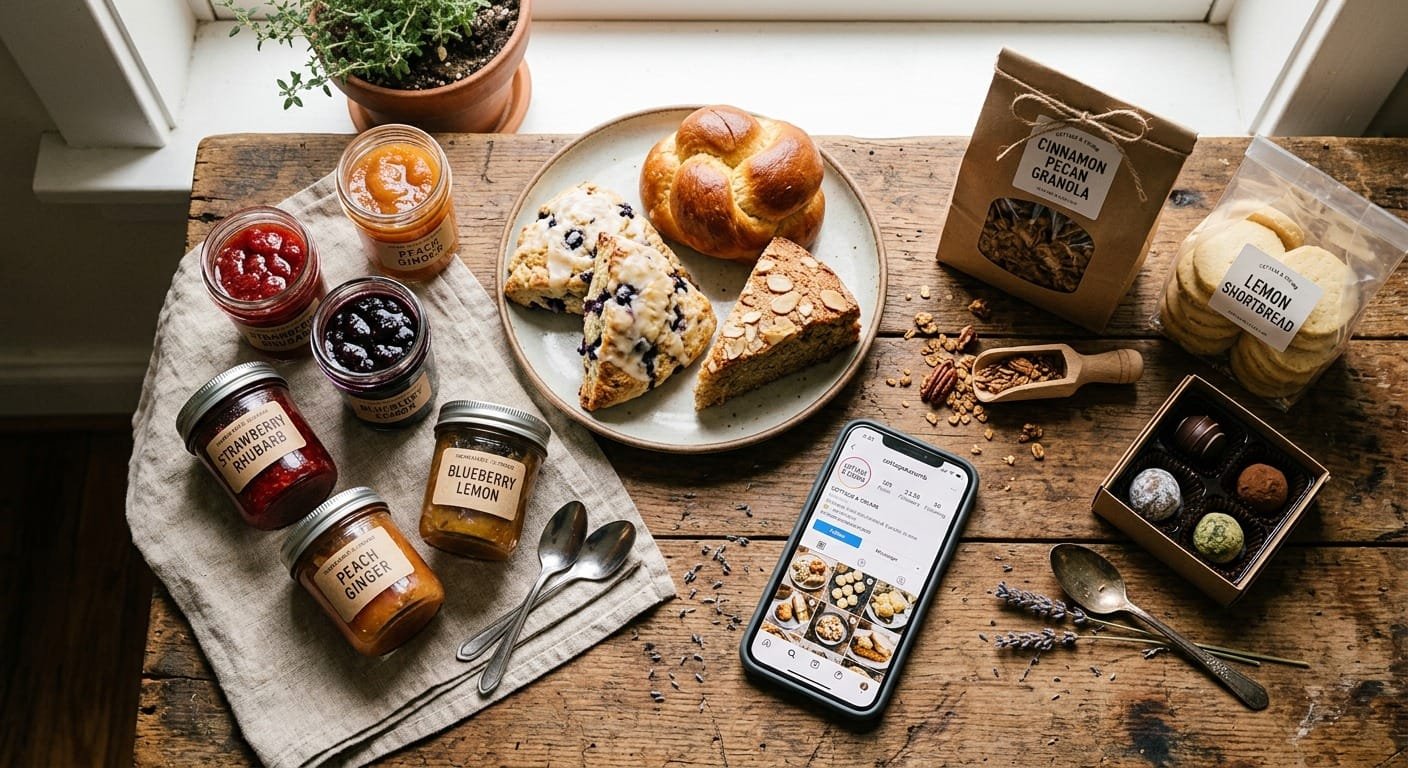
1. Finished Products — A beautiful photo of what you made. This is the photo that makes someone stop scrolling. Post these 2–3 times a week minimum
2. Process Shots — Mix being stirred. Dough being shaped. Jam boiling. These humanize your business and show real care goes into what you make.
3. Behind the Scenes — Your kitchen, your workspace, your prep station. These don't have to be polished. People want to see the real you.
4. Farmers Market Booth Photos — Every market day, snap a quick photo. It reminds followers when and where to find you. Tag the farmers market location.
5. Customer Reactions (With Permission) — If a customer shares a photo of your product, ask to repost it. It's social proof and content you didn't have to create.
Build a Rhythm: The "Saturday Market" Content Habit
Don't try to post every day. That's a burnout setup. Instead, build a simple weekly rhythm:
- Monday or Tuesday: One finished product photo + caption about what you're selling this week
- Wednesday or Thursday: A process shot or behind-the-scenes photo
- Friday: A market-day reminder + booth photo
- Weekend: One customer reaction or finished product photo
That's 3–4 posts per week. It's sustainable. Pro tip: Batch your photos. Spend 30 minutes on a market Saturday taking 10–15 photos. You just got content for two weeks.
Use Local Hashtags and Tag Farmers Markets
Use location-based hashtags: #YourCityName #YourCountyName #YourStateFarmersMarket. Tag the actual farmers market location in your post. When someone visits the farmers market's Instagram page, your post appears. That's a customer discovery moment. Use 8–12 hashtags per post.
Why This Matters for Your Business
Instagram does one thing that's hard to do anywhere else: it builds direct relationships with people who actually want what you make. You don't need millions of followers. You need engaged followers who show up at your booth and remember you exist. If you sell through Butter & Sage Market or your own online shop, Instagram is the front door.
Start simple. Three to four posts a week. Real photos. Local hashtags. Farmers market tags. Do that for a month and watch what happens.
And here's the best part: you're not becoming a social media manager. You're just sharing what you already do. Your real work is in the kitchen. Instagram is just the place you tell people about it.
0 Comments