Running a small food business out of your home is equal parts flour-dusted joy and total chaos. You're the head baker, social media manager, accountant, and janitor—all while trying to figure out how to make your cookies look sexy on camera. The good news? With a few smart marketing moves (and maybe some new labels), you can get more eyes—and mouths—on your delicious creations.
So let’s roll up our sleeves, dust the powdered sugar off our laptops, and talk about how to get more people to buy your beautiful, buttery goods.
Your Brand Is More Than Your Logo (But Yes, Get a Logo)
 Your “brand” isn’t just the cute name you hand-lettered on a chalkboard at your last pop-up (though props for that). It’s the whole vibe: your packaging, your personality, your tone, your values. Are you farm-chic? Retro-glam? Goth sourdough queen? Embrace it—and be consistent with it everywhere.
Customers love to feel like they’re buying from a real person, not some anonymous loaf factory. Use packaging that looks good, but more importantly, feels like you. That might mean kraft boxes and twine, or holographic stickers and pink glitter.
Building a brand takes time and consitency. A brand palette with colors that convey a message and looks like you is a first step. Are you earthy and warm? Are you bright and colorful? Do you want your colors to represent that you're witty? Maybe luxury is your thing? Pick a palette that represents that personality and stick to it.
Typography is another way to build consistency. We'll dive into this topic more in future posts but a good starting point is to pick a headline font, sub-headline font, and font for body text. Contrast in font styles is helpful for grabbing attention and making it easier to read in today's low-attention-span audience. Avoid fancy or heavily sculpted text for your body text. Body text is smaller than headline text so any extra flourishes or fancy scripting could be difficult to read.
There's more to building a solid brand such as photo styles, graphics, icons, voice and tone which we'll cover in future articles but these tips will get you a good starting point.
Just please, for the love of butter, make sure people can read what’s inside. Ingredient labels, allergy info, and reheating instructions all say “I care about you and your digestive tract.”
Packaging That Says “I’m Professional… but Still Totally You”
Don’t just toss your product into a plastic clamshell and call it a day. That croissant deserves better.
A little investment in packaging goes a long way—whether that’s compostable bags with branded stickers or custom-printed boxes that make customers gasp with joy when they open them. And don’t forget the magic touch: a handwritten thank-you note. It doesn’t have to be Shakespeare. Just a friendly, “Thanks, Jamie! Hope these cookies brighten your week. Leave us a review if you loved ’em! ♥ —Butter & Sugar Mafia.”
Want to make it easy? Include a QR code or short link for reviews. Add a discount code for next time. People love discounts almost as much as they love flaky pie crust.
Social Media: The Free Billboard Where You Talk to Strangers
 You don’t have to go viral (unless you want to become the Banana Bread Queen of TikTok), but a consistent social media presence builds trust. Pick 1–2 platforms where your customers hang out. Facebook is great for local moms and farmers market fans. Instagram is perfect for gorgeous food shots. TikTok? Well, if you’re comfortable dancing with a piping bag, go wild.
Be yourself. Share what you’re baking, how it’s going, when you’re this close to crying because your butter split. People love a peek behind the curtain. Just don’t forget to post about your products—what’s coming up, how to order, and when you’ll be sold out (because let’s be honest, you will sell out).
Make Your Instagram Profile Work Smarter (So You Don’t Have To)
Instagram is basically your digital storefront window—and you’ve got about three seconds to convince a scrolling stranger to stop and say, “Ooh, what’s this?” So if your bio is blank and your link goes nowhere… we’ve got some work to do, friend.
A well-optimized Instagram profile can help turn casual visitors into loyal customers faster than you can say “strawberry crumble bar.”
Here’s how to make your profile actually work:
1. Your Handle & Name Fields Should Be Searchable.
Your @handle can be fun, but your “Name” field should include what you sell. For example, “Delia’s Delights” is cute—but “Delia’s Delights | Custom Cakes” is searchable and clear.
2. Use Your Bio to Answer Three Things:
What do you make?
Where are you located or where do you deliver?
How can people order?
Throw in a little personality—“Home bakery serving Houston. Cake is my love language. DM or shop below to order. 🍰” works beautifully.
3. Use a Link-in-Bio Tool.
Since Instagram only gives you one link, make it count. Use tools like Linktree, Milkshake, or Later’s Linkin.bio to point people to your shop, pre-order form, reviews, and more. Clean, easy, clickable. Boom.
4. Add Highlights That Actually Help.
Don’t leave five random videos of your cat in your Highlights. Use them strategically:
Menu
Pricing
How to Order
Behind-the-Scenes
Customer Reviews
Give them cute icons or on-brand covers so your whole profile looks tidy and inviting.
Want more step-by-step help? Check out this fantastic article from Later:
👉 How to Optimize Your Instagram Bio to Grow Your Business
Website vs Marketplace: Where Should People Buy?
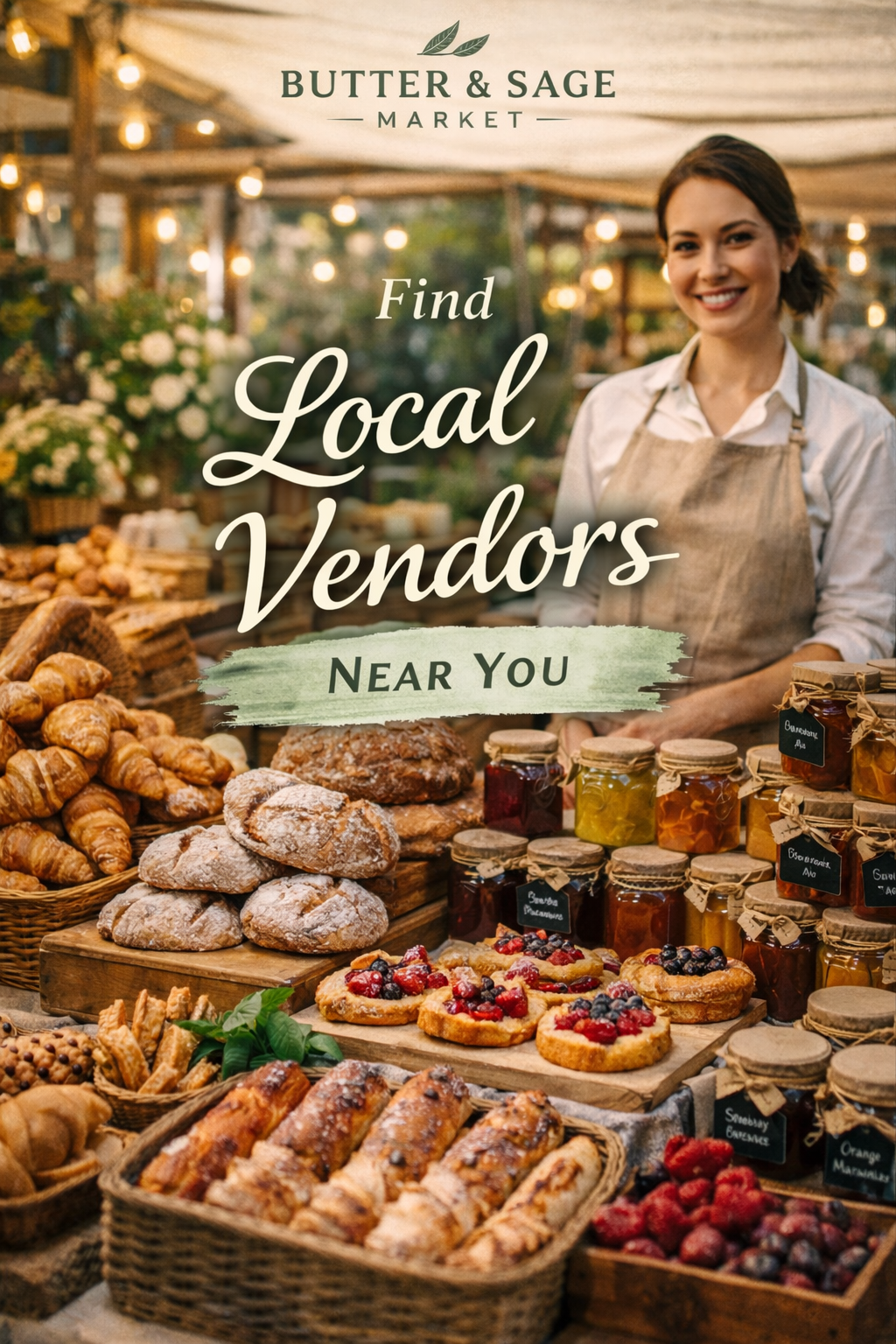
If your website is just a home page and a contact form, we need to talk. Your customers want to give you money. Let them. Set up a simple store on your site (many platforms like Shopify, Squarespace, or Wix make this super easy), or use a marketplace like Butter & Sage Market to build a cute little shop page without reinventing the digital wheel.
A marketplace is perfect if:
You hate building websites.
You want to piggyback off existing traffic.
You want to be searchable alongside other talented local food folks.
Your customers don’t want to slide into your DMs to ask if you have any lemon bars left. Give them a shop link. Let them click and pay while they’re still drooling.
Avoid the DM Dumpster Fire
Please. Don’t do all your orders in DMs. That way lies chaos, missed messages, and scammer heartbreak.
Set up a process: either through your website, a form, or your Butter & Sage shop page. That way you get customer info, order details, and payment all in one place. Built in reporting tools and secure payment collection will make managing your business and tax time much easier. Plus, it makes you look way more pro than “Venmo me $8 and I’ll meet you behind the CVS.”
When Your Website Looks Like 2002 (and Not in a Cool, Y2K Way)
Let’s be real: unless you are a professional designer (in which case, carry on you glorious unicorn), trying to DIY your website from scratch can go sideways fast. You’re a wizard with butter and flour—but HTML? Not so much.
An outdated, clunky, or confusing website can actually hurt your brand. If your site loads slowly, has blurry product photos, or looks like it was built during your 9th grade computer class, people might bounce before they ever see how amazing your shortbread is.
Why It Matters:
Your website is often your first impression. It’s your digital storefront, your 24/7 employee, and your best chance to make a stranger trust you enough to hand over their credit card info for a box of cookies they haven’t even smelled yet. If it looks messy, homemade (in a bad way), or too bare bones, it doesn’t scream “trustworthy business”—it whispers, “this might be a scam, run.”
So What Can You Do Instead?
1. Use a user-friendly website builder.
Platforms like Squarespace, Shopify, or Wix have beautiful, drag-and-drop templates that even your tech-averse aunt could manage. Stick to clean designs, easy navigation, and high-quality photos. Don’t reinvent the wheel—just make sure the wheel spins and looks nice doing it.
2. Let a marketplace do the heavy lifting.
If the thought of building a site still makes your brain cramp, good news: you don’t have to. Marketplaces like Butter & Sage Market are made for folks like you—offering plug-and-play shop pages that are easy to update, mobile-friendly, and designed to make you look like a pro. Plus, you get discovered alongside other great local food businesses. It’s like farmers market energy… but online.
3. At minimum, get a branded link and email.
Even if you don’t have a full-blown site, using a link-in-bio tool (like Linktree or Milkshake) or having a branded email (like hello@yourbakery.com instead of sallycupcakez420@yahoo.com) makes you look instantly more polished.
Take Better Photos (Yes, Even With Your iPhone)
Lighting is everything. Natural light is your best friend. Set up by a window, use a white poster board for a bounce, and shoot from a few angles until your cookie looks like a Food Network star.
No one’s expecting Vogue spreads here, but clean backgrounds, in-focus shots, and consistent styling will make your feed (and your business) look a lot more pro. Want to show your personality? Add some sprinkles. A spatula. A cat in the background. Just maybe not in the batter.
Content Ideas When Your Brain is Fried
Ever stare at your screen thinking, “What do I even post today?” Don’t worry, we’ve all been there.
Here are a few tried-and-true ideas:
Behind-the-scenes (flour explosions encouraged)
Product close-ups with drool-worthy captions
Polls: “Which flavor should I make next?”
Teasers for upcoming drops or specials
Customer shoutouts and reviews
Seasonal promotions (“You bring the BBQ, I’ll bring the buns!”)
If you're stuck, think about what you love seeing on your feed. Your customers are real people—they want to laugh, learn, and get hungry.
Grow Your Sales Without Burning Out
Want more orders? Try these:
Promote in local Facebook groups and market weekly (yes, every week!)
Show up at a few pop-ups or farmers markets, even just seasonally
Partner with local shops, salons, or realtors who want branded treats
Offer fundraisers for schools or causes—bake sales with heart
Also… raise your prices if you need to. You’re not a nonprofit. If eggs are $7/dozen, your cupcakes should reflect that. If you need help with figuring out pricing you can use our Pricing Calculator and this helpful post on Effective Pricing Strategies for small & cottage food businesses.
Final Thoughts: Be You, But Slightly More Branded
Running a small food business is a lot. But with a bit of strategy, some good lighting, better packaging, and a well-placed thank-you note, you’ll look like the rockstar you already are.
Marketing doesn’t have to mean selling out or being fake. It’s just storytelling with snacks. And your story (plus that salted caramel bar) deserves to be shared.
Need help building your Butter & Sage shop page? Want label templates or caption ideas? I’m here for you—minus the apron, but full of support.
Let’s make your brand as irresistible as your cinnamon rolls. 🧁
0 Comments