
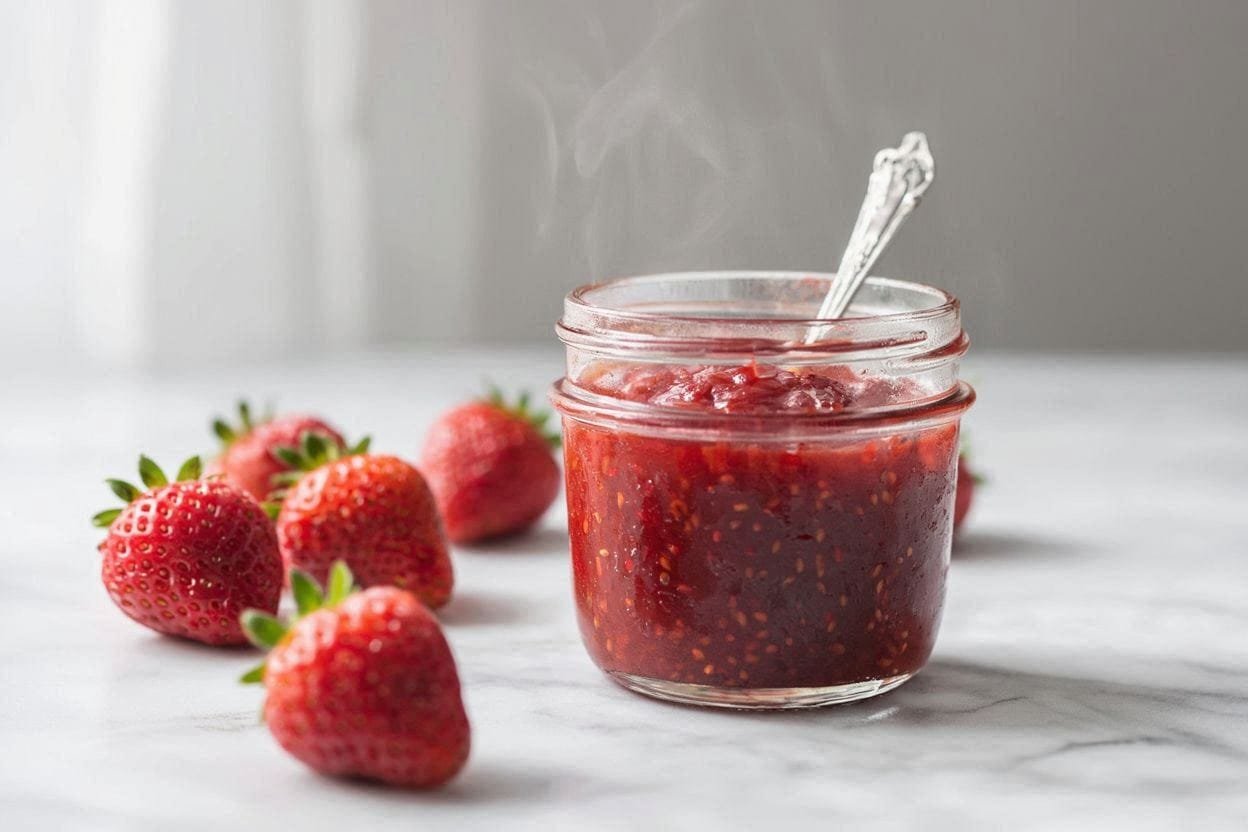
There's a moment every strawberry season—maybe late May, maybe early June, depending on where you live—when you buy a full flat of strawberries because they're at peak perfection: bright red, still warm from the sun, possibly already staining your fingers. And even though you swore you'd eat them fresh, you know you won't get through them all.
This is what jam is for. Real jam—the kind you make when you give yourself a Sunday afternoon and let your kitchen fill with steam and the smell of pure strawberry.
Why No-Pectin Jam Works
Strawberries have natural pectin already—it's concentrated in the white part just inside the skin. The more slightly under-ripe berries you include, the more pectin you have to work with. Lemon juice does double duty: it brightens the berry flavor AND helps the pectin set properly. You don't need commercial pectin. You just need heat, time, and a thermometer (or a plate in the freezer).
The Recipe
Ingredients (Makes ~3 half-pint jars)
- 2 lbs fresh strawberries, hulled and halved
- 1.5 cups granulated sugar
- 2 tablespoons fresh lemon juice
- Pinch of fine sea salt (optional but recommended)
Instructions
Step 1 — Macerate (10 min active + 30 min rest): Combine strawberries, sugar, lemon juice, and salt in a large heavy-bottomed pot. Stir gently. Let rest at room temperature for 30 minutes until the berries have released their juice.
Step 2 — Cook (20–30 minutes): Place pot over medium heat. Don't stir constantly—let it come to a simmer on its own. Once bubbling, stir occasionally and skim off any foam that rises to the surface. Continue cooking until the mixture thickens substantially.
Step 3 — Test for Set: Place a small plate in the freezer before you start cooking. To test: drop a spoonful of jam on the cold plate, wait 30 seconds, then push your finger through it. If it wrinkles and holds its shape, it's done. If it's still liquid, cook 5 more minutes and test again.
Step 4 — Jar (while hot): Pour jam into clean glass jars, leaving 1/4 inch headspace. Wipe rims, cap tightly. For pantry storage up to a year: process in a boiling water bath for 10 minutes. For refrigerator storage (up to 4 weeks): just cool and refrigerate.
Step 5 — Cool: Let jars sit undisturbed for 8 hours. Jam continues to set as it cools.
Tips & Variations
- Berry ratio: 60% ripe, 40% slightly firm gives the best set.
- Lemon zest: add 1 teaspoon at the start for extra brightness.
- Vanilla variation: stir in 1/4 tsp vanilla extract after testing for set.
- Rhubarb twist: replace half the strawberries with rhubarb for a tart, sophisticated jam.
- Honey swap: substitute up to half the sugar with honey for a floral, looser set.
There's something genuinely magical about opening a jar you made yourself in the dead of winter and tasting August.
Small-Batch Strawberry Jam Without Pectin
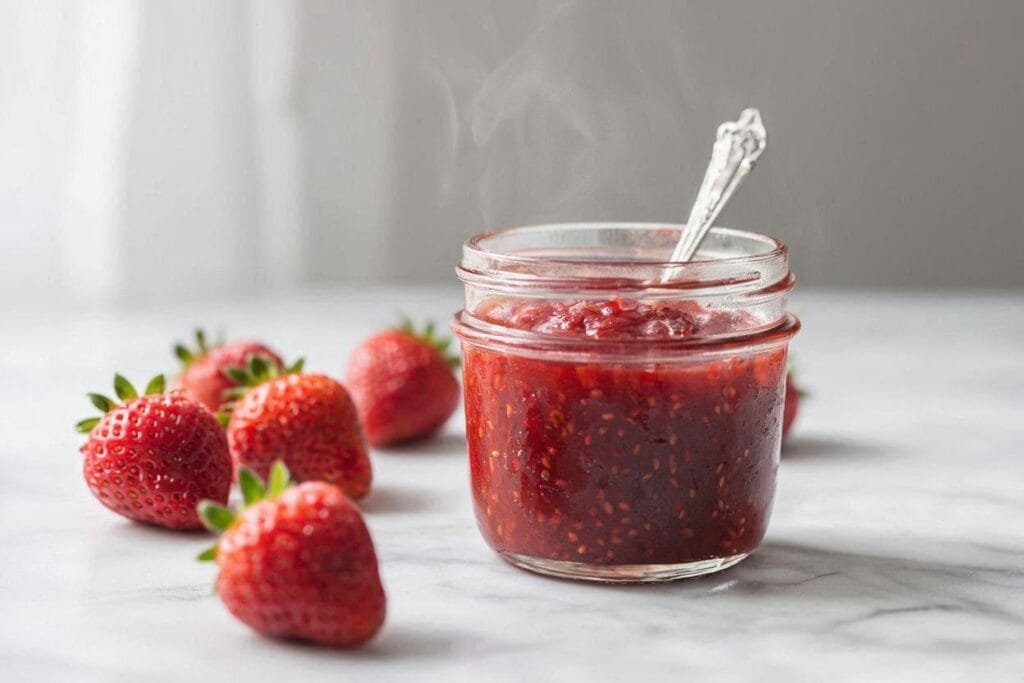
There's a moment every strawberry season—maybe late May, maybe early June, depending on where you live—when you buy a full flat of strawberries because they're at peak perfection: bright red, still warm from the sun, possibly already staining your fingers. And even though you swore you'd eat them fresh, you know you won't get through them all. The best way to preserve and enjoy them for longer is to make homemade strawberry jam.
Ingredients
Instructions
- Macerate u2014 Combine strawberries, sugar, lemon juice, and salt in a large heavy-bottomed pot. Stir gently. Let rest at room temperature for 30 minutes until the berries have released their juice.
- Cook u2014 Place pot over medium heat. Let come to a simmer on its own. Once bubbling, stir occasionally and skim foam. Continue cooking until the mixture thickens substantially, about 20u201330 minutes.
- Test for Set u2014 Drop a spoonful on a cold plate from the freezer, wait 30 seconds, push your finger through it. If it wrinkles and holds, it's done. If still liquid, cook 5 more minutes and retest.
- Jar u2014 Pour into clean glass jars leaving u00bc-inch headspace. Process in a boiling water bath 10 min for pantry storage, or refrigerate up to 4 weeks.
- Cool u2014 Let jars sit undisturbed for 8 hours. Jam continues to set as it cools.


0 Comments