
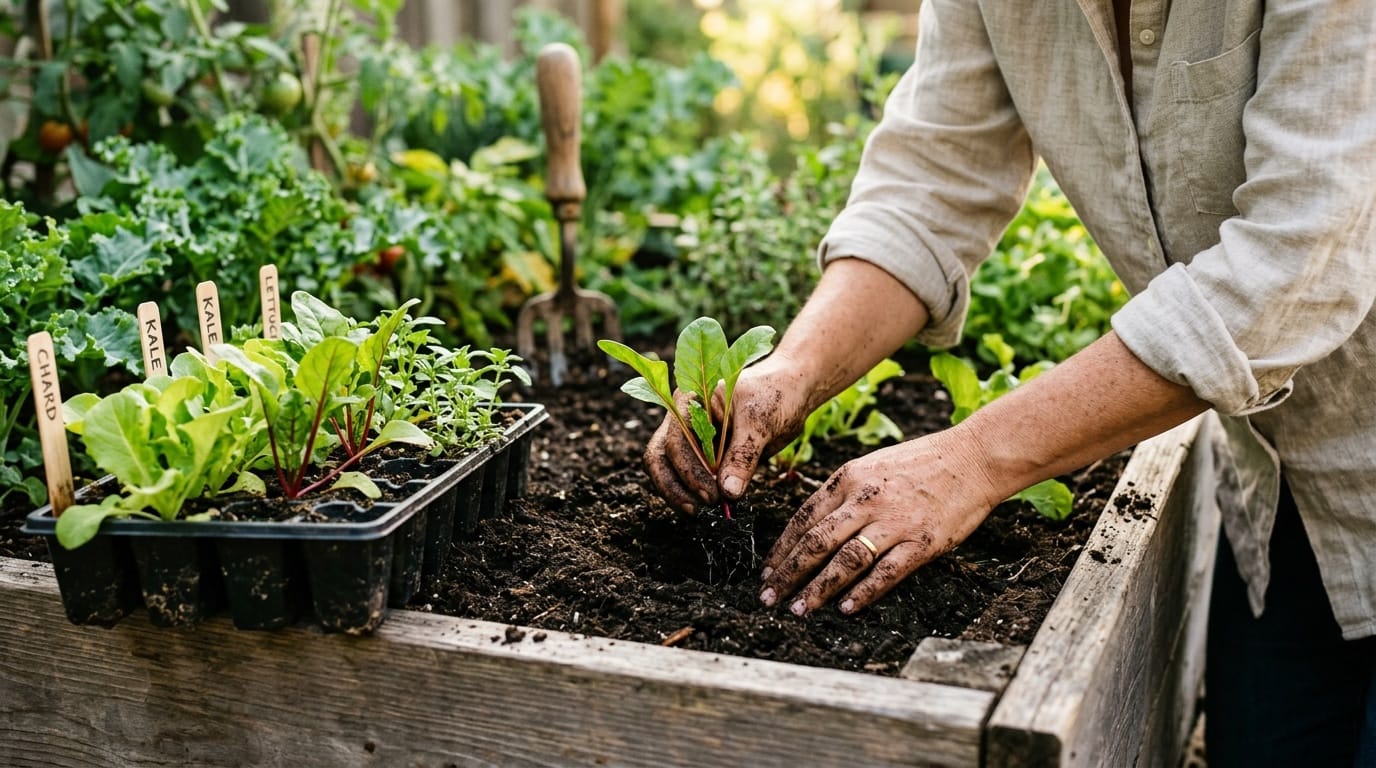
It's easy to look at a tired August garden — the lettuce bolted, the peas long gone — and assume the season's winding down. But here's the secret that keeps experienced gardeners harvesting into October and beyond: August is planting time all over again. The heat that's exhausting your spring crops is exactly what a whole second wave of vegetables needs to get started. A little effort now buys you months more from the same patch of dirt.
Why Plant in the Heat of Late Summer?
Cool-weather crops actually taste better when they mature as the weather cools — many, like kale and carrots, turn sweeter after a light frost. If you plant them now, they'll do their fast early growing in the warm soil of late summer and finish up in the crisp air of fall, which is their happy place. The trick is counting backwards: check the "days to maturity" on the seed packet, add a couple of weeks for slower fall growth, and count back from your area's first expected frost. If there's time, plant it.
What to Plant Right Now
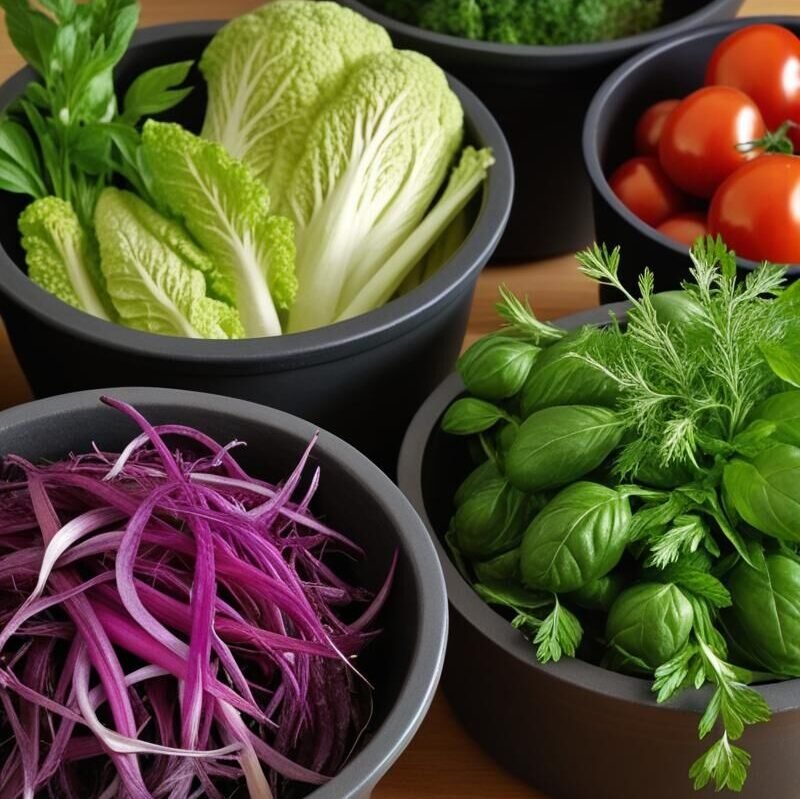
You've got great options. Fast-growing leafy greens are the easiest win — lettuce, spinach, arugula, and Asian greens like bok choy can be ready in as little as a month. Root crops like radishes (three to four weeks!), carrots, beets, and turnips sown now will size up as it cools. For a bit more patience, brassicas such as kale, collards, broccoli, and Swiss chard planted in August carry you deep into fall, sometimes all the way to Thanksgiving. Bush beans squeezed in now can give you one more quick harvest before frost, and this is also the moment to plant garlic-adjacent alliums and to start thinking about overwintering.
Growing zones matter here — a gardener in Minnesota has a tighter window than one in Georgia — so lean on that frost-date math and your local extension office if you're unsure.
Give New Seedlings a Fighting Chance
The one real challenge of August planting is that seeds don't love baking in dry, hot soil. Set them up to succeed: water consistently, even twice a day in a heat wave, until they're established. A thin layer of mulch or a shade cloth over the bed keeps the soil cooler and holds moisture while seedlings find their feet. Once they're up and the weather turns, they'll practically take care of themselves.
So don't put the garden to bed just yet. Clear out a spent spring bed, refresh it with a little compost, and tuck in a fall crop this week. Come October, when everyone else is done, you'll still be walking out to pick dinner.
What are you planting for fall this year? Share your list with the community — a little inspiration goes a long way this time of year.



0 Comments