
How to Bring Herbs Indoors for Winter (Which to Save, Which to Let Go)
Before the first frost, decide what to save. How to bring herbs indoors for winter, which to leave outside, and the light and water rules that keep them going.
 5 min read
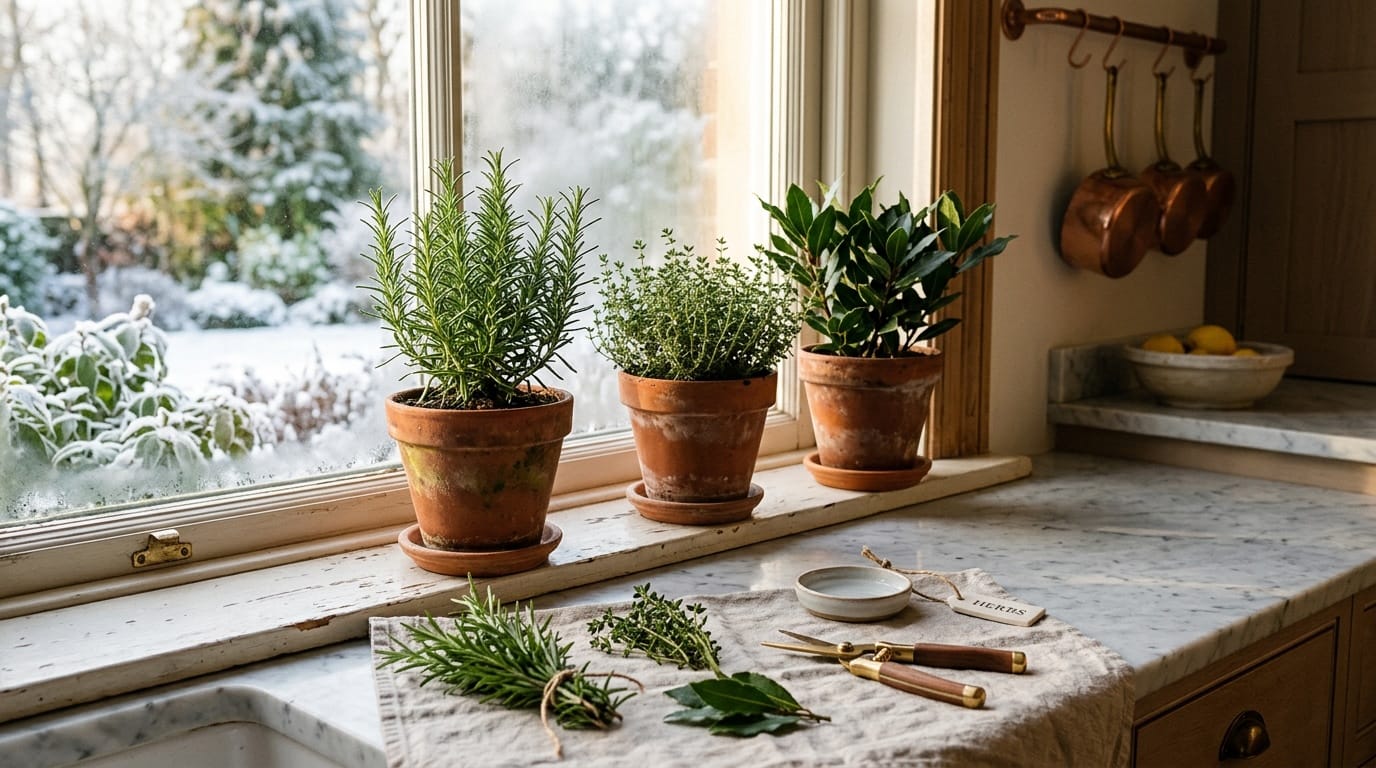
The forecast says frost on Thursday, and suddenly every pot on the back step looks like a decision. The rosemary you have been snipping all summer. The thyme that finally filled its pot. The basil that is already going dark at the edges. If you want to bring herbs indoors for winter, the good news is that you do not have to save all of them, and you should not try.
Some herbs come inside and carry on quietly until spring. Some are better left in the ground. And a few are simply done, and the kindest thing is to harvest every leaf and let them go. Here is how to tell which is which.
Which herbs to save, and which to let go
Save these. Rosemary is the big one. It is a tender perennial, and University of Illinois Extension notes it is not reliably hardy in zone 6 or colder, so in much of the country it either comes in or it dies. Bay is worth the windowsill too. Thyme moves indoors well, as long as you are careful with the watering can.
Leave these outside. Chives and mint are tough. NC State Extension says both are winter hardy and can stay in the garden under a light layer of mulch. If you want fresh chives in January, pot up a small clump after a light frost; the cold gives them the rest they need before they grow again indoors.
Start fresh. Parsley is a biennial, and NC State suggests treating it as an annual. A new pot sown from seed will do better on your windowsill than an old plant dug out of the bed.
Let go, or take a cutting. Basil hates the cold. Illinois Extension notes its leaves can blacken at 50°F, and a basil plant dragged inside in November rarely recovers. Harvest the whole plant now, or root a few stem tips (more on that below) and start again.
- Bring in: rosemary, bay, thyme
- Leave outside, lightly mulched: chives, mint
- Sow fresh indoors: parsley, basil
- Harvest everything first: basil and any tender annuals
When to bring herbs indoors for winter
Earlier than you think. University of Minnesota Extension advises bringing potted plants in before nights drop below roughly 45 to 50°F. Rosemary can stay out a little longer, since it handles a cool night better than basil does, but bring it in before the first real frost arrives.
Watch the ten-day forecast rather than the calendar. In some places that means late September, and in others it means Thanksgiving week.
Clean them up before they come through the door
An herb pot that spent the summer outside is a small apartment building for bugs. Minnesota Extension recommends checking for aphids, mealybugs and whiteflies, then washing the tops and undersides of the leaves with mild soapy water and rinsing. Let the soapy water reach the soil too, and wipe down the outside of the pot.



If your rosemary is planted in the ground rather than in a pot, think twice before digging the whole plant. Illinois Extension notes that rosemary does not transplant well and losses are common when it is moved. Taking cuttings is the safer bet.
For pots, use a container at least 6 inches across with a drainage hole and a well-drained potting mix. Iowa State Extension likes clay or terracotta for herbs, because the porous sides help the mix dry out between waterings.
Light is the whole game
Most indoor herb trouble is really a light problem. Herbs want at least six hours of direct sun a day, so give them your sunniest window, which is usually south-facing.
Even that may not be enough for the Mediterranean herbs. Iowa State Extension says rosemary, thyme and bay may need a full-spectrum LED or fluorescent grow light on a timer for 12 to 16 hours a day. If your plants get long, pale and floppy, they are telling you they need more light.
Make the move gradually. Plants that lived in full sun outside should go into your brightest window first. Minnesota Extension warns that a sudden drop in light can cause yellow leaves, wilting and dieback.
Water less, but not too little
Indoor herbs grow slowly in winter, so they drink less. Water when the top of the soil feels dry, then let the pot drain completely. Never let it sit in a saucer of water.
Rosemary is the fussy one. Illinois Extension recommends keeping its soil on the dry side, because extra water leads to root rot, while also warning that letting it dry out completely causes brown tips and dieback. Check it every few days until you learn its rhythm.
University of Illinois Extension suggests keeping indoor herbs between 60 and 70°F. Go easy on fertilizer, too: Iowa State recommends a balanced fertilizer at half or quarter strength, and only now and then. Expect very little new growth until the days get longer, and harvest lightly.
Cuttings: the easy way to keep basil and rosemary going
A cutting takes up a fraction of the space of a full plant, and it settles into indoor life far more easily. Purdue Extension says basil, oregano, lavender, rosemary, thyme and sage all root easily from shoot tips.
Cut a few inches off a healthy stem tip, just below a node, which is the spot where the leaves join the stem. Strip off the lower leaves and push the cut end into moist potting mix, perlite or vermiculite. Cover the pot loosely with a plastic bag, keeping it off the leaves, and set it somewhere warm and out of direct sun until new growth appears.
What to do with the herbs you let go
Do not waste them. Strip every last leaf before the frost does it for you. Woody herbs dry beautifully hung in bunches. Soft herbs like basil and parsley are better blended with oil and frozen in ice cube trays, or beaten into butter. Our guide to compound butter with fresh herbs turns a frost-day harvest into a freezer full of instant flavor.
The herbs that stay outside need a little care too. Our post on putting your garden to bed for winter explains why you should not cut back sage and thyme hard in the fall. When spring comes around, our herb gardening guide covers planting the whole bed again.
If your windowsill crop runs thin by February, local growers can fill the gap. Many winter markets have someone selling cut herbs from a greenhouse or hoop house, and a few sell potted plants. Find the markets still running near you on the Butter & Sage farmers market map, and ask the grower what they are cutting this week.

Keep reading
More from the market
How to Put Your Garden to Bed for Winter (And Make Next Spring Easier)
What to pull, what to leave for the birds, and why covering bare soil now is the single best thing you can…
Read more
How to Save Seeds from Your Best Tomatoes and Peppers
The best tomato in your garden this year can be next year's whole crop, for free. Here's how to save tomato and…
Read more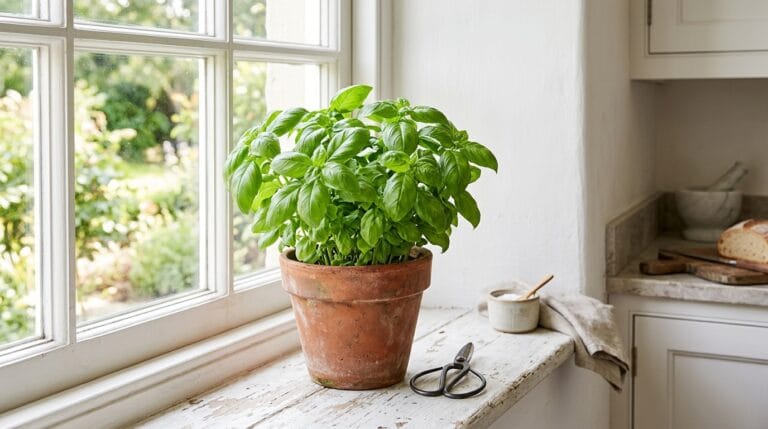
How to Grow Basil at Home (And Never Buy a Sad Plastic Clamshell Again)
How to grow basil at home — from starting plants to the pinching technique that keeps them producing all summer. A beginner-friendly…
Read more