
How to Grow Basil at Home (And Never Buy a Sad Plastic Clamshell Again)
How to grow basil at home — from starting plants to the pinching technique that keeps them producing all summer. A beginner-friendly guide to endless free pesto.
 1 min read
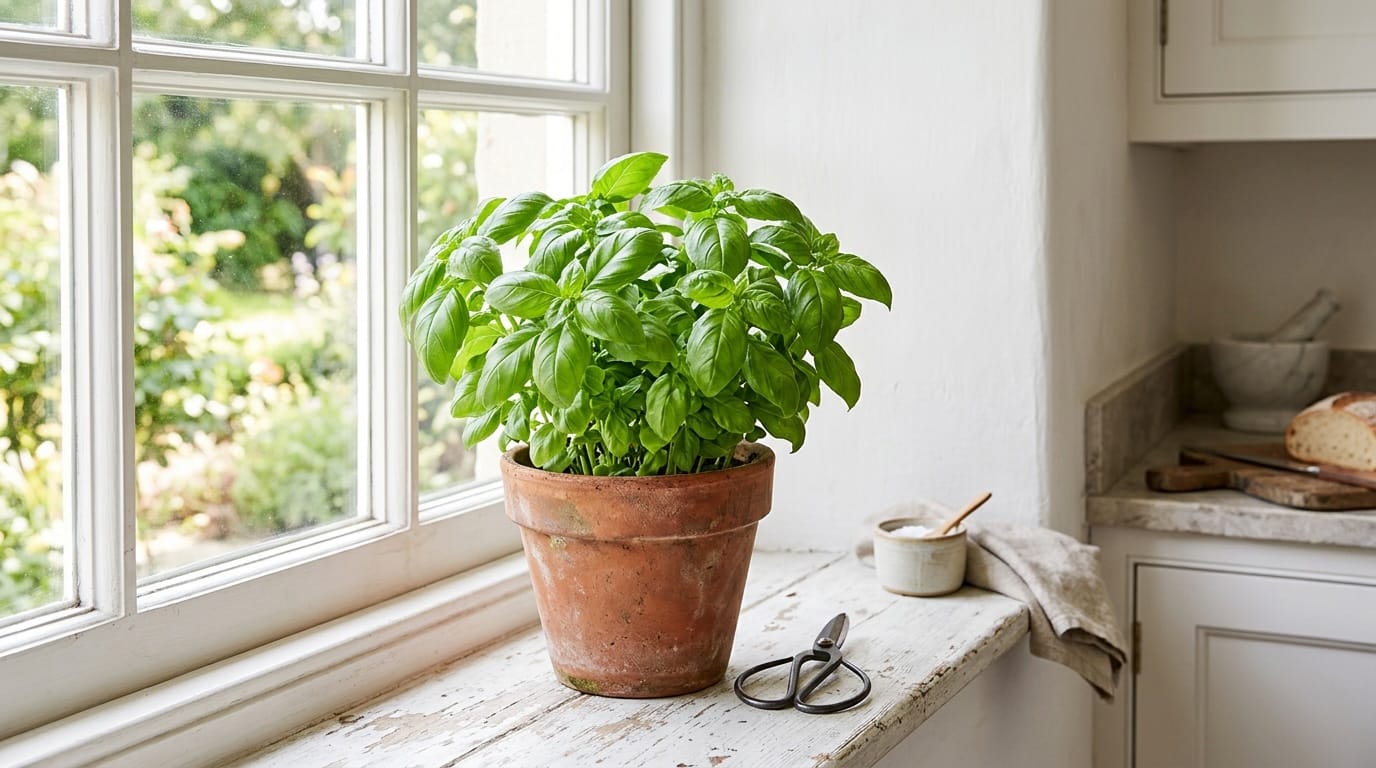
Four dollars. That's what a plastic clamshell of basil costs, and it contains roughly enough for one caprese salad, and half of it will be black and slimy by Thursday.
Meanwhile, a single basil plant in a pot on a sunny step costs about the same and will hand you more basil than you can reasonably use from June through the first cold night in fall. It's arguably the highest return of anything you can grow, and it is genuinely hard to fail at — as long as somebody tells you the one thing that most people get wrong.
Let's fix that.
Start With a Plant, Not a Seed
You can absolutely grow basil from seed, and if you're starting in early spring indoors, go for it. But if it's already summer and you want basil this month, buy a plant. Your farmers market almost certainly has one, and market-grown herb starts are usually sturdier than the ones that have been sitting under fluorescent lights at a big-box store.
Look for a plant that's compact and bushy rather than tall and leggy. Deep green leaves, no yellowing at the bottom, no flower buds forming yet. Skip anything that's already blooming — it's further along in its life cycle than you want.
One useful trick with grocery-store basil pots: they're usually a dozen seedlings crammed into one container, competing for the same soil. If you buy one, gently separate it into three or four clumps and plant them apart. You'll get four healthy plants out of one purchase instead of one struggling mass.
Varieties worth knowing: Genovese is the classic — big soft leaves, that unmistakable sweet basil smell, the right choice for pesto and everything Italian. Thai basil has a licorice note and stands up to heat in stir-fries and curries. Lemon basil is bright and lovely in dressings and drinks. Purple basil is mostly for looks and is a genuinely beautiful plant.
What Basil Actually Needs
Sun. Six to eight hours, minimum. Basil is a Mediterranean plant and it does not compromise on this. In less light it gets leggy, pale, and disappointing.
Warmth. This is the one that catches people out. Basil hates cold. Below about 50°F it sulks, and a light frost kills it outright. Don't plant it out until nights are reliably above 50 — putting it out too early is the most common reason a basil plant just sits there refusing to grow.
Well-draining soil. A container with real drainage holes and ordinary potting mix. Basil will tolerate mediocre soil far better than it tolerates wet feet.
Consistent water, not constant water. Water deeply when the top inch of soil is dry, then let it drain. Basil in a pot may need water daily in August heat. It wilts dramatically when thirsty and perks right back up within an hour of a drink — dramatic, but not a crisis.
Container or ground both work fine. A 10 to 12-inch pot holds one plant comfortably. Containers dry faster but you can move them, which is useful when a cold night shows up in September.
The One Thing That Changes Everything: Pinch It
Here's what nobody tells beginners, and it's the entire difference between a basil plant that gives you three good weeks and one that produces until frost.


Harvest from the top, and cut the whole stem tip — never pick individual leaves off the sides.
Find a spot on the main stem where two small leaves are emerging from the joint. Cut just above that pair. The plant responds by sending out two new stems from that point instead of one. Do it again on each of those, and you get four. Then eight. Within a few weeks you have a dense, bushy plant instead of a tall bare stalk with a tuft of leaves at the top.
Start pinching when the plant is about six inches tall, even if you don't need the basil yet. Especially then. It feels wrong to cut a healthy young plant. Do it anyway — it's the single highest-value thing you'll do all season.
And pinch off flowers the moment you see them. When basil flowers, it's shifting energy into making seed, and the leaves turn noticeably more bitter and less fragrant. Snip the flower buds off as soon as they appear and the plant goes right back to making leaves. If you miss a few and they bloom fully, the bees will be delighted — but cut them off and keep going.
What Goes Wrong (And How to Fix It)
Leggy, stretched-out plant. Not enough light, or you haven't been pinching. Move it sunnier and cut it back hard — basil recovers fast from an aggressive haircut.
Yellow lower leaves. Usually overwatering. Let the soil dry more between waterings and check that the pot actually drains.
Small holes in leaves. Japanese beetles or slugs. Hand-pick them in the morning. A ring of crushed eggshell or a shallow beer trap handles slugs; beetles come off by hand into soapy water.
Black spots after a cold night. Cold damage. Trim the affected leaves and move the plant somewhere warmer. It'll be fine unless it actually froze.
Sudden wilting that doesn't recover after watering. Likely root rot from soggy soil. This one is usually terminal — start over with better drainage.
What to Do With All of It
You will have too much basil. That's the goal.
Pesto freezes beautifully. Make it in batches and freeze in ice cube trays, then bag the cubes. A single cube dropped into pasta or soup in February is a genuine mood improvement.
Freeze whole leaves in oil. Pack leaves into an ice cube tray, cover with olive oil, freeze. Better texture than drying, which honestly does basil no favors — dried basil is a different, sadder herb.
Basil simple syrup. Steep leaves in hot simple syrup, strain, refrigerate. Excellent in lemonade and cocktails, and the same technique as our strawberry basil simple syrup.
Take cuttings in September. Snip a few six-inch stems, strip the lower leaves, put them in a glass of water on the windowsill. They root in about a week, and you'll have small plants to carry indoors through winter. It won't be as vigorous as summer basil, but fresh basil in January is a small triumph.
Give it away. A grocery bag of basil handed to a neighbor in August is one of the great small pleasures of growing anything.
One plant. Six hours of sun. Pinch the tops. That's the whole thing — and by the time the tomatoes come in, you'll have exactly what you need sitting right there on the step.
Growing something this summer? Come tell us what's working. Our farmers market directory will help you find a market with good herb starts if you want to add another pot.

Keep reading
More from the market
How to Save Seeds from Your Best Tomatoes and Peppers
The best tomato in your garden this year can be next year's whole crop, for free. Here's how to save tomato and…
Read more
What to Plant in August for a Fall Harvest
August isn't the end of the garden — it's the start of your fall harvest. Here's what to plant now for a…
Read more
How to Grow Lavender at Home (And Why Your Kitchen, Your Booth, and Your Neighbors Will Thank You)
Lavender is the most versatile plant in the cottage garden — beautiful, low-maintenance once established, and the source of honey, syrup, shortbread,…
Read more