How to Sell at Fall Festivals and Craft Fairs: A Cottage Food Vendor’s Late-Summer Playbook
Fall festival applications close in July and August. Here's how to pick the right events, price for a craft fair crowd, and plan inventory so you sell out instead of hauling it home.
 1 min read
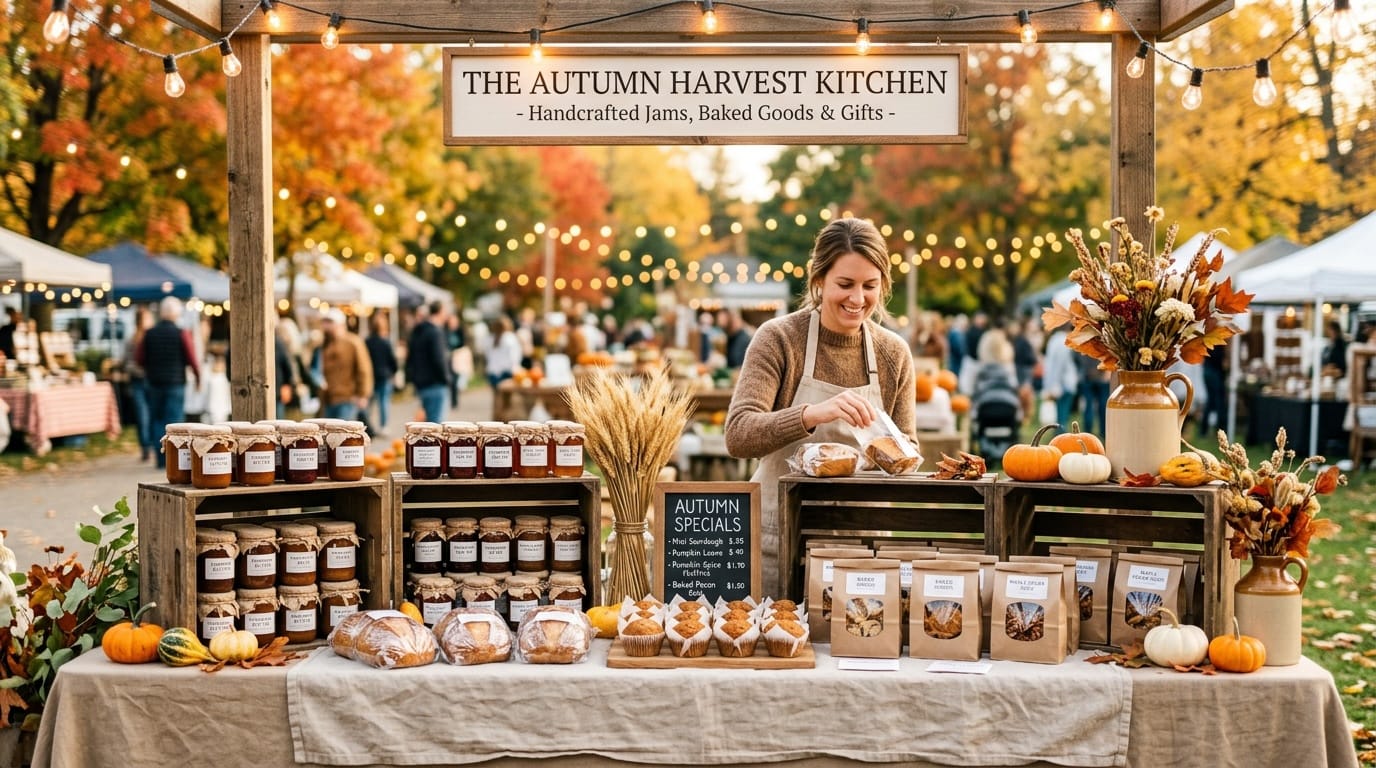
It is late July. It is 96 degrees. You are not thinking about pumpkins.
Unfortunately, the people running every good fall festival within a hundred miles of you are — and most of them are closing applications in the next four to six weeks. The apple butter festival, the harvest market, the church craft fair that somehow draws 4,000 people and nobody can explain why. Those juried booths get filled in August, and the vendors who show up in October got their paperwork in while it was still swimsuit season.
So here's the playbook. Twenty minutes of planning now, and you spend the fall selling instead of scrambling.
Fall Festivals Are Not Farmers Markets (And Pricing Like They Are Will Cost You)
This is the thing most vendors learn the expensive way. A weekly farmers market is a grocery trip. People come with a tote bag and a rough plan. They buy the bread, the eggs, the jam, and they go home.
A fall festival is an outing. People come with kids, in-laws, and a wallet they've mentally set aside for the day. They are not shopping for groceries. They are shopping for a treat right now and a gift for later.
That changes three things:
Impulse items outsell staples. The single cookie, the caramel apple, the small bag of kettle corn — the thing somebody eats while walking. At a farmers market that's an afterthought. At a festival it can be half your revenue.
Gift-ready packaging earns a real premium. The same jar of hot honey sells at your market price on a Saturday. Put two jars in a kraft box with a ribbon and a card and it becomes a $28 hostess gift, and people will thank you for making their shopping easy.
Price points want to be simple. Festival crowds move fast and often pay cash. $5, $10, $20 with the tax built in keeps your line short. Every time you have to count out $1.37 in change you lose the three people who wandered off.
How to Pick Events That Are Actually Worth It
Not every festival is a good festival, and the booth fee tells you almost nothing. Ask organizers these five questions before you write a check:

- What was last year's attendance, and how do you know? "Thousands" is not a number. A real answer sounds like "about 3,200 through the gate, we count tickets."
- How many food vendors will be there, and how many sell what I sell? A juried event that caps categories is worth more than a cheaper open event with nine other jam makers.
- Is there electricity, and does it cost extra? This determines whether you can run a warmer, a cooler, or a card reader that doesn't die.
- What's the rain policy? "Rain or shine, no refunds" is fair — but you want to know before October.
- How do you promote it? An organizer with an email list and an active social presence is doing marketing you don't have to do.
Run the break-even before you commit. Booth fee plus ingredients plus your packaging plus gas, divided by your average sale. If a $150 booth means you need to sell 30 jars before you make a dollar, decide honestly whether that's a Saturday you can deliver.
Inventory Planning: The Part That Actually Decides Your Day
Bring too little and you close at noon with people still walking up. Bring too much and you spend Sunday eating your own inventory and calling it dinner.
A workable starting rule for a first-time event: plan to sell to one to two percent of expected attendance. At a 3,000-person festival, that's 30 to 60 transactions. Multiply by your average order — if people typically buy two items, you need 60 to 120 units on the table.
Then build the mix like this:
- 60 percent proven sellers. The thing you know moves. This is not the day to find out whether people like the lavender one.
- 25 percent impulse-priced items. Single servings, small jars, samplers. This is what turns browsers into buyers.
- 15 percent gift bundles. Higher ticket, pre-assembled, ready to hand over.
Bring a small "reserve" box you don't put out — 15 or 20 units held back. If you sell through by 1 p.m., you restock and look like a genius. If you don't, you never unpacked it and it goes home clean.
Fall Flavors Sell, But Don't Abandon What Works
Yes, the seasonal shift is real, and yes, people will pay for it. Apple, maple, cinnamon, brown butter, cranberry, pumpkin (which peaks earlier than you'd think — early October, not November). Add two seasonal SKUs, price them slightly higher, and let them do the emotional work of pulling people to your table.
But your bestseller is your bestseller. Don't retire the chocolate chip cookie in September because you think everyone wants spice cake. They don't. They want the spice cake and the chocolate chip cookie, and one of those is a proven revenue line.
If you're already thinking about December, this is the moment to start — our guide on planning your holiday baking season picks up right where this leaves off.
The Logistics Nobody Mentions Until You've Been Burned
October weather is a coin flip. Bring a tent with actual weights — not the cinder block you meant to buy, real weights — because a 20-mph gust turns a canopy into a kite with your name on it.
Bring layers, a folding chair, and hand warmers. A 7 a.m. setup in 41 degrees is a different animal than July, and you cannot sell well while shivering.
Bring a battery pack for your card reader and your phone. Cold weather murders batteries, and a dead reader in the middle of a rush is a genuinely painful way to lose $200.
Bring a light. Fall events run later and it gets dark at 6:30. A battery-powered LED strip across the front of your table costs $20 and keeps you selling in the last hour when everyone else has gone dim.

Get the applications in this month. Pick two events instead of five and do them well. And when somebody at the harvest festival tells you the apple butter tastes like their grandmother's, remember why you started doing this in the first place.
Which fall event are you eyeing this year? Tell us — we'd love to hear how it goes.

Keep reading
More from the market
How to Get Your Baked Goods to Market Without Wrecking Them
Cakes slide, frosting sweats, cookies go soft in the car. The crates, timing and packing order that get your bakes to the…
Read more
How to Store Root Vegetables and Winter Squash So They Last Until Spring
Potatoes, squash, carrots and onions will keep for months if you get a few things right. What each one wants, and the…
Read more
What to Do With Unsold Stock When the Market Season Ends
The last market of the season ends with a car full of what did not sell. Here is how to turn that…
Read more