How to Start Selling Apple Butter and Fall Preserves at the Farmers Market
Apple butter costs almost nothing to make and sells at a premium every fall. Here is how to price it, label it, and build a whole fall preserve line around it.
 1 min read
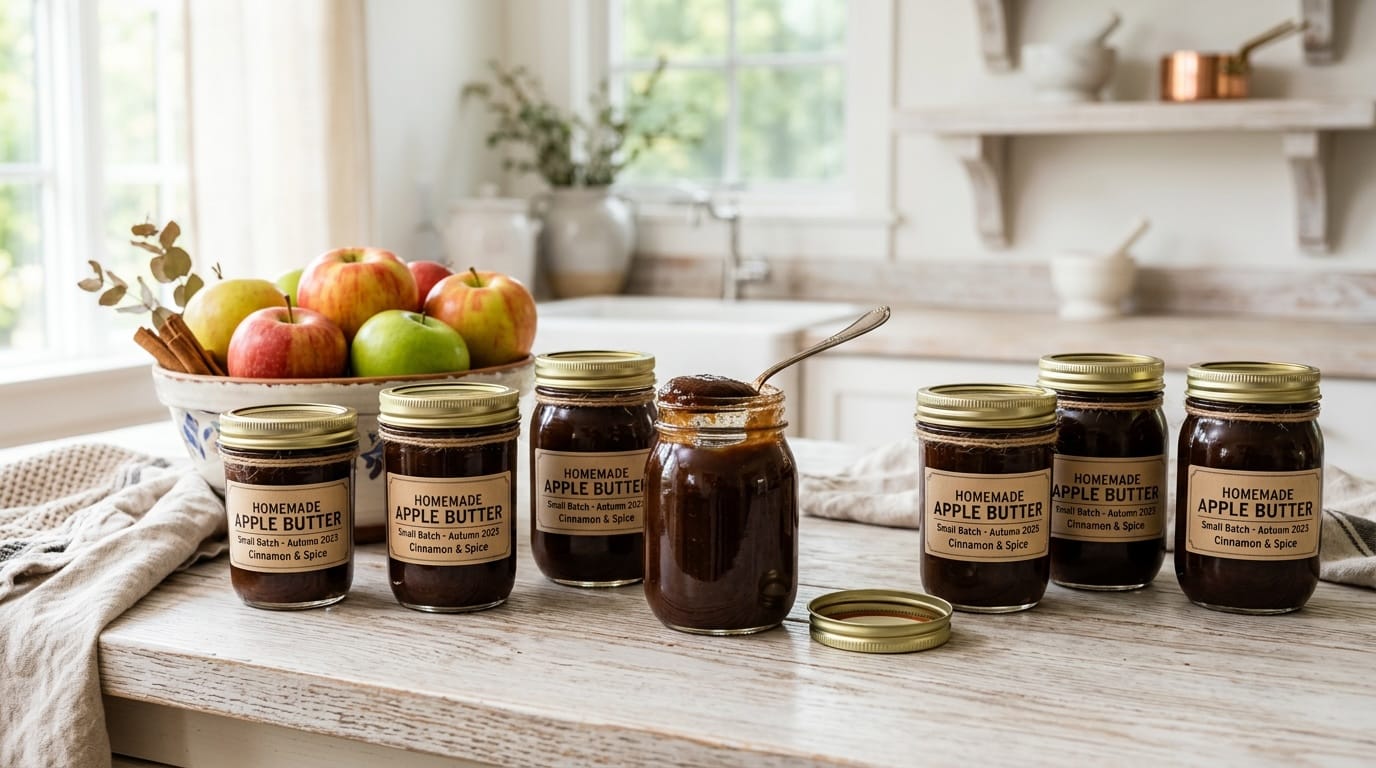
There is a moment in early October when the fruit tables at the market shift overnight. The peaches are gone, the berries are a memory, and suddenly there are five bushel crates of apples that the orchard would very much like to not haul home again. That is the moment a preserve vendor has been waiting for all year.
Selling apple butter is one of the simplest, highest-margin moves available to a cottage food business in the fall. The raw material is cheap and abundant, the process is forgiving, the shelf life is long, and the finished jar sells at a price that has nothing to do with what the apples cost you. If you are already making jam, this is the easiest line extension you will ever add.
Why Apple Butter Is Such a Good Fall Product
Start with the math, because the math is the whole argument. Second-quality apples — the ones with a bruise, a scab, or an odd shape — go for a fraction of what perfect eating apples cost, and they are exactly what you want for butter. You are cooking them down to a paste. Nobody will ever see the bruise.
From there, apple butter has three qualities that most cottage food products do not have all at once. It is shelf-stable and water-bath safe, which means you are not tied to a cooler or a same-day sale. It scales beautifully — a slow cooker or a low oven does the work while you sleep. And it holds its value all the way through December, because it doubles as a gift item long after the apples are gone.
It is also a genuinely seasonal flavor at a moment when seasonal flavor is what people are shopping for. Worth noting for your labeling and marketing: cinnamon-forward products have been outpacing pumpkin spice in consumer interest, so leaning into a warm-spice apple butter rather than chasing the pumpkin lane is a defensible bet.
Check Your State Rules Before You Cook a Single Batch
Apple butter sits in a friendly spot legally — it is a high-acid, high-sugar preserve, which is the category almost every cottage food program allows. But "almost every" is doing some work in that sentence, and the details vary.
Two things to confirm with your state before you scale up. First, whether your program requires a tested recipe or a pH verification for reduced-sugar or savory versions. Plain sweet apple butter is usually fine; an apple-onion butter or a low-sugar version may not be. Second, whether you are allowed to sell shelf-stable canned goods at all venues you plan to use, since some states treat farmers markets, online sales, and shipping differently.

Pull up your state agriculture department's cottage food page directly rather than relying on a forum post. Rules change, and the person confidently answering in a Facebook group may live three states away.
Build a Fall Preserve Line, Not a Single Product
One product is a purchase. Three related products are a decision — and a decision keeps people at your table longer. Once you have apple butter running, the same equipment and the same market apples give you a whole fall lineup:
- Spiced apple butter — your anchor. Cinnamon, a little clove, a whisper of allspice.
- Apple cider caramel sauce — reduced cider, cream, sugar. Higher price point, sells itself at the sample spoon.
- Pear and vanilla butter — the sleeper hit for people who say they are tired of apple.
- Hot apple chutney or an apple-jalapeno jam — the sweet-heat lane is still running strong, and it gives you something savory to pair with cheese.
- Cranberry preserves — comes in late, carries you straight through the holidays.
Notice what this lineup does. It gives you a sweet, a savory, a dessert item, and a gift item, all from the same corner of the market. That is a table people can shop rather than a table people can sample.
What to Charge for Apple Butter
Price on value and time, not on the cost of the apples — this is the single most common mistake in fall preserve pricing. Your cost per jar will be genuinely low, and if you price off that number you will end up charging less than the grocery store for a vastly better product.
Build your price from four inputs: ingredients, jar and lid and label, your hourly rate multiplied by the real time per batch including cleanup, and your booth or platform fees. Then compare to what comparable handmade preserves sell for at your market. If your number lands well under the local going rate, that is not a bargain you should pass on to the customer — that is margin you earned by sourcing well.
Offer two sizes. A small four-ounce jar is your gift-box component and your impulse buy. An eight or nine-ounce jar is your regular. Skip the giant jar — apple butter is used a spoonful at a time and a big jar sits open in someone's fridge until they feel guilty about it.
Sell It at the Table
Apple butter has a sampling problem and a sampling superpower. The problem is that it looks like a jar of brown paste. The superpower is that one taste ends the conversation.
So sample it, and sample it on something. A pretzel crisp, a slice of sharp cheddar, a spoon of plain yogurt. Put a small card next to the jar with three uses — on toast, stirred into oatmeal, spread on a pork sandwich — because the thing standing between a shopper and a purchase is usually not taste, it is not knowing what they would do with it.
And name the apple. "Made with Northern Spy apples from Wilcox Orchard, eight miles from here" outsells "apple butter" every single time, because it turns a jar into a story about your neighbors.

Get one clean batch made, photograph it in daylight, and bring it to the next market with a sample spoon. Apple season is short and the window closes fast — but the jars you fill in October are still selling in December.

Keep reading
More from the market
How to Get Your Baked Goods to Market Without Wrecking Them
Cakes slide, frosting sweats, cookies go soft in the car. The crates, timing and packing order that get your bakes to the…
Read more
How to Store Root Vegetables and Winter Squash So They Last Until Spring
Potatoes, squash, carrots and onions will keep for months if you get a few things right. What each one wants, and the…
Read more
What to Do With Unsold Stock When the Market Season Ends
The last market of the season ends with a car full of what did not sell. Here is how to turn that…
Read more