
Year-End Bookkeeping for Your Cottage Food Business (Before December 31)
A few hours in November beats a frantic April. What to reconcile, what to write down, and the deductions cottage food vendors most often leave on the table.
 1 min read
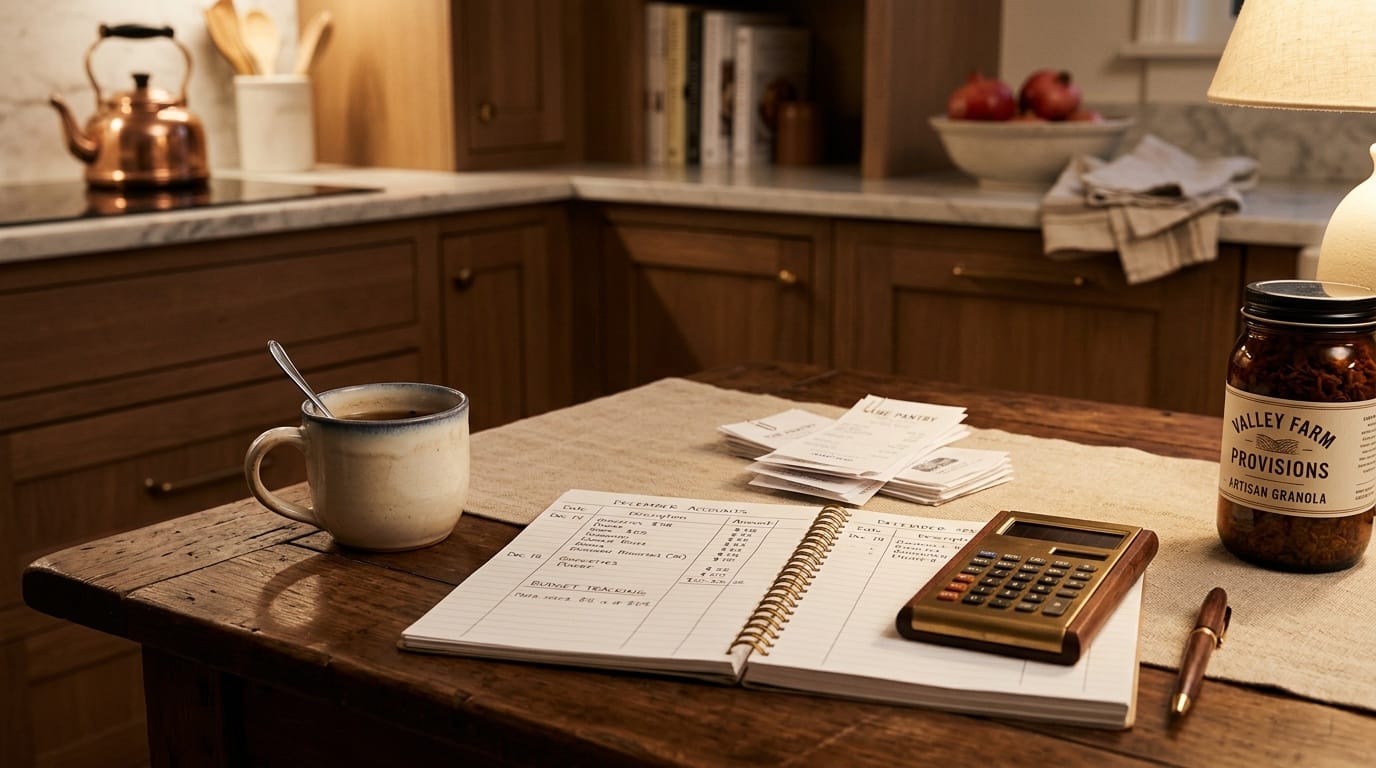
Nobody started a food business because they were excited about bookkeeping. You started it because you are good at the thing you make. But there is a specific kind of misery that arrives in early April, and it is entirely preventable with a few hours in November while the year is still fresh in your head.
Worth saying up front: I am not an accountant, and this is not tax advice. It is a list of what to have in order before December 31, so that whoever does your taxes — you, a preparer, or software — has something to work with. Anything specific to your situation is a question for a professional, and a good one usually costs less than the mistakes.
Do these four things before the year closes
Reconcile your sales. Add up every channel: cash at market, card reader, online orders, custom orders, wholesale. Cash is the one that goes missing, because it never generated a record anywhere. If you have been keeping a market-day notebook, now is when it earns its keep. If you have not, reconstruct from deposits and be honest about the gaps.
Count your inventory on December 31. Ingredients, packaging, finished product. This matters more than people expect, because what you spent on ingredients is not the same number as what you used, and the difference is your closing inventory. A written count with a date on it is the whole job.
Chase down the receipts you have not filed. The glovebox, the tote bag, the grocery app history, the email confirmations. Ingredients bought on a personal card at the regular supermarket are the ones that most often get missed, and for most food makers that is the single biggest category of spending.
Total your mileage. For 2026 the IRS business standard mileage rate is 72.5 cents per mile. Market days, ingredient runs, delivery drops, the trip to the packaging supplier. Twenty markets at forty round-trip miles is 800 miles, which is $580 of deduction you will otherwise lose because you did not write it down. A note in your phone on market morning is enough — you need the date, the purpose and the miles.
The deductions food makers most often miss
Not exotic ones. Ordinary things that do not feel like business expenses because they live in your house.



Market stall fees and event or festival fees. Business insurance. Your permit or license renewal. Packaging, jars, labels, boxes, ribbon, the shred in the gift boxes. The canopy, the tables, the weights, the folding chair. Your card reader and its fees. Website and email costs, your domain, any platform or listing fees. Ingredients, obviously, including the ones you bought for recipe testing that did not work. Food safety training or certification. Business mileage, above.
Two that need care rather than avoidance: kitchen equipment used for both family and business, which is deductible on the business-use portion rather than in full, and the home office or kitchen space deduction, which has real rules attached and is worth asking a preparer about rather than guessing at.
Three things you can decide in December that you cannot in April
This is the actual reason to do this now rather than later.
Timing a purchase. If you were going to buy a freezer or a stand mixer in the new year anyway, and this was a strong year, buying it before December 31 moves the deduction into this tax year. If it was a lean year, the opposite may be true. Either way it is a choice you only have while the calendar is still open.
Estimated taxes. If your business made real money this year and nothing has been withheld, there may be a payment due in January. Finding that out in November gives you two months to set money aside. Finding out in April does not.
Whether this is a business or a hobby, on paper. If you have been treating it casually — no separate account, no records, no real tracking — the IRS has views about the difference, and they affect what you can deduct. Cleaning that up starts with a separate bank account, which takes twenty minutes and makes next year's version of this article unnecessary.
What to change for next year, in one sentence
Open a separate business bank account and run everything through it.
That is genuinely the whole thing. Not software, not a system, not a spreadsheet with fourteen tabs that you will abandon in March. One account that only touches business money turns your bank statement into your books, and it turns next November from a reconstruction project into an afternoon.
If you want the fuller version of the running-the-numbers side, the cottage food bookkeeping guide covers what to track during the year rather than at the end of it.

How are you tracking this year — notebook, spreadsheet, app, or vibes and a shoebox? No judgement on the shoebox. It is more common than anybody admits.

Keep reading
More from the market

Can You Sell Dry Mixes? Soup, Cookie and Spice Blends, Explained
Can you sell dry mixes from home? Usually yes. Here is what makes soup, cookie and spice mixes risky, how long they…
Read more
How to Run a Holiday or Winter Farmers Market: Venues, Vendors and Weather Plans
How to run a winter farmers market or a single holiday market: choosing a warm venue, shifting the vendor mix, setting hours…
Read more
A Holiday Gift Guide for People Who Would Rather Buy from a Local Maker
Gifts made by someone with a name, a kitchen and an oven. What to buy from local food makers this year, who…
Read more