
How to Make Stock from Your Market Scraps (The Free Ingredient in Your Freezer)
A bag in the freezer, filled with onion ends and carrot tops, becomes the best ingredient in your kitchen for free. What goes in, what ruins it, and how long.
 1 min read
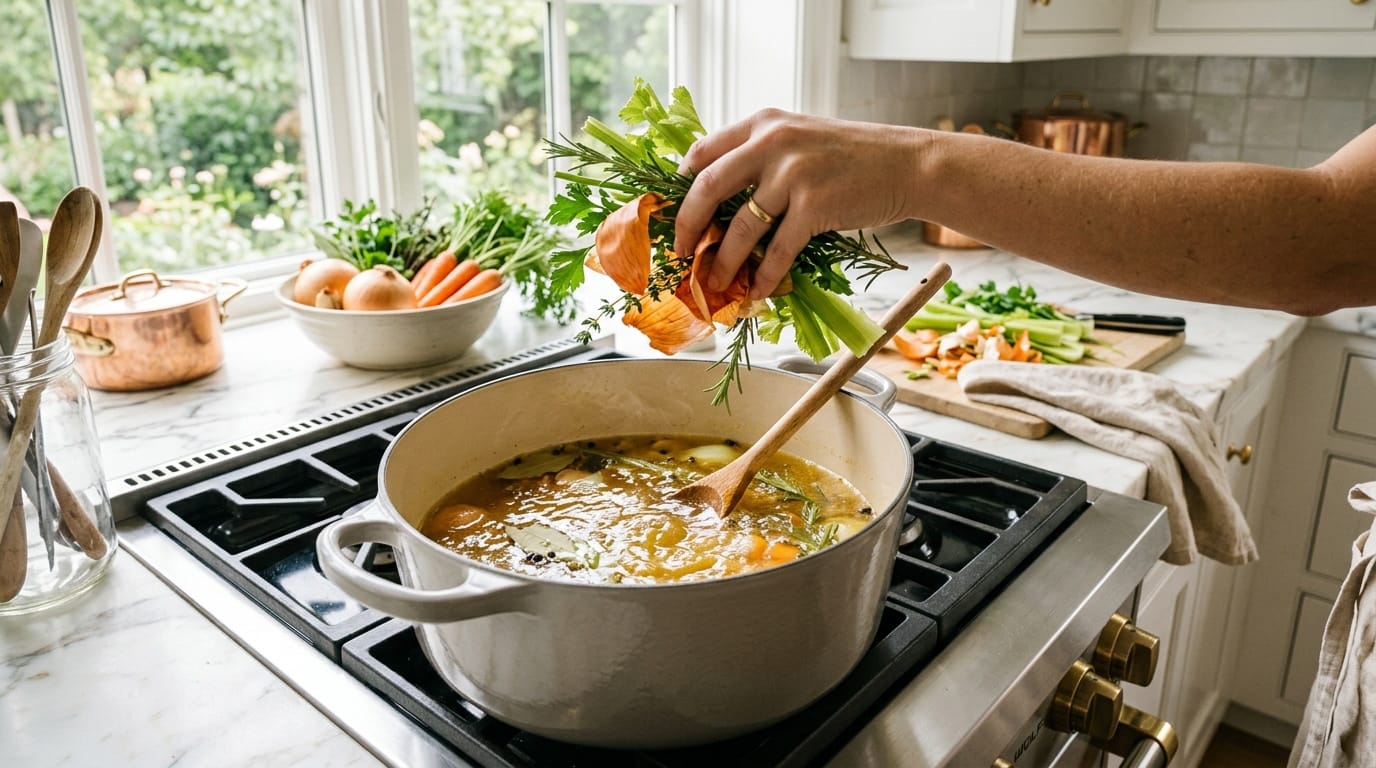
Every time you cook a market haul you throw away the makings of something good. Onion ends, carrot tops, the woody bottoms of leeks, parsley stalks, the core of a fennel bulb, mushroom stems. It goes in the bin, and then next week you buy a carton of stock.
The fix is a bag in the freezer and about ten minutes of attention a month.
The bag
One large freezer bag or lidded container. Every time you prep vegetables, the trimmings go in instead of the bin. When it is full, you make stock. That is the entire system.
No need to keep them separate or tidy. They are going in a pot of water.
What goes in
Always good: onion skins and ends, leek tops and roots, carrot peel and tops, celery leaves and bases, parsley and thyme stalks, mushroom stems, fennel fronds and cores, garlic skins and ends, corn cobs after you cut the kernels off, tomato cores, squash skins, the tough outer leaves of cabbage.
Onion skins are the ones to keep deliberately. The papery brown ones give stock a proper golden colour, and without them home stock comes out pale and looks like dishwater regardless of how it tastes.
Use sparingly: anything in the cabbage family beyond a leaf or two — broccoli stems, cauliflower cores, sprout trimmings. A little is fine; a lot turns the whole pot sulphurous. Beet trimmings turn everything pink, which is only sometimes what you want. Potato peel makes stock cloudy and starchy.
Never: anything mouldy or slimy — stock does not rescue food that has turned, it just spreads the taste. Bitter greens, artichoke leaves and large amounts of pepper cores will make a batch bitter and there is no fixing it afterwards.
Making it
Tip the frozen scraps into a large pot. Cover with cold water by an inch or two — no more, or you are making scrap-flavoured water. A bay leaf and a few peppercorns if you have them.



Bring it to a bare simmer and hold it there. Not a boil. A rolling boil emulsifies the solids into the liquid and gives you cloudy, slightly muddy stock. A lazy simmer with an occasional bubble gives you something clear.
Forty-five minutes to an hour for vegetable stock. Longer is not better — past about an hour the vegetables start giving back bitterness rather than flavour, which is the opposite of how meat stock behaves.
Strain through a sieve. Press the solids gently with the back of a spoon; pressing hard pushes purée through and clouds it.
Do not salt it. Stock is an ingredient, not a soup. You do not yet know whether it is going into a risotto that is already salty or a braise that will reduce by half. Salt at the point of use, every time.
A stronger version, when you have twenty extra minutes
Roast the scraps first. Tip them onto a tray, toss with a little oil, roast at 425°F for twenty-five minutes until browned at the edges, then into the pot.
The difference is significant — deeper colour, considerably more savoury, and it makes a vegetable stock that can stand up in a dish where you would normally want chicken. Deglaze the roasting tray with a splash of water and tip that in too; that is where a lot of the flavour is.
Storing it, and the format that gets used
Cool it quickly, then freeze it flat in bags — a litre per bag, labelled and dated. Flat bags stack and thaw in minutes.
Freeze some in an ice cube tray as well. Stock cubes are what you actually reach for on a weeknight — two into a pan to loosen a sauce, three into a risotto, one to deglaze. The litre bag is for soup; the cubes are for Tuesday.
Good in the freezer for around six months, and three or four days in the fridge.
The economics are quietly absurd. A carton of decent stock is a few dollars, a household goes through a fair few of them across a winter, and the raw material is something you were paying to put in the bin. It is the closest thing to free money in a kitchen.
What goes in your bag that I have not listed? Corn cobs were the one that surprised me — they make a stock sweet enough to build a chowder on.

Keep reading
More from the market
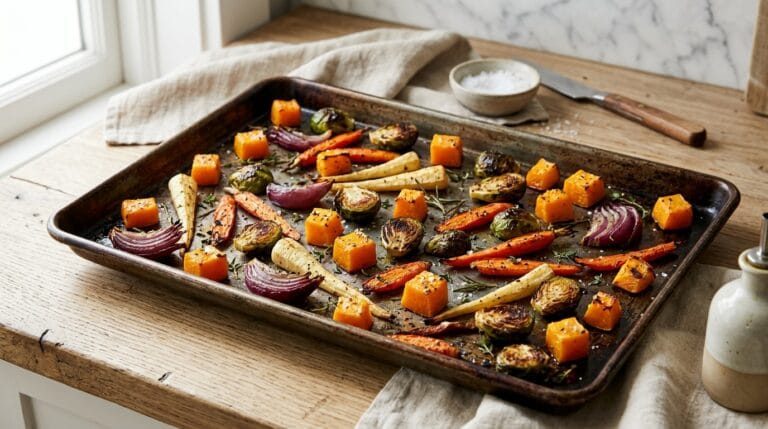
How to Roast Any Vegetable (One Method, Your Whole Market Haul)
One temperature, one pan, three rules that decide everything. Timings for the whole fall market table, and the crowding mistake that steams…
Read more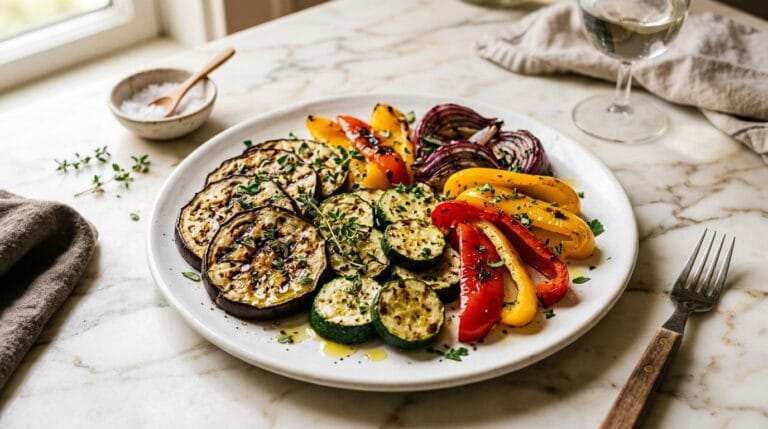
How to Grill Summer Vegetables (Eggplant, Zucchini, Peppers & More)
Grilling turns a farmers market vegetable haul into the best part of dinner. Here's how to grill eggplant, zucchini, peppers, and onions…
Read more
How to Make Refrigerator Pickles at Home (No Canning, No Special Equipment, Just Really Good Pickles)
Refrigerator pickles require no canning equipment and are ready in 24 hours. Here is the brine ratio, the flavor add-ins, and the…
Read more