The Farmers Market Apple Guide: Which Variety to Buy for Eating, Baking, and Sauce
Farmers market apples come in dozens of varieties you will never see in a grocery store. Here is how to tell which one to buy for eating, baking, and sauce.
 1 min read
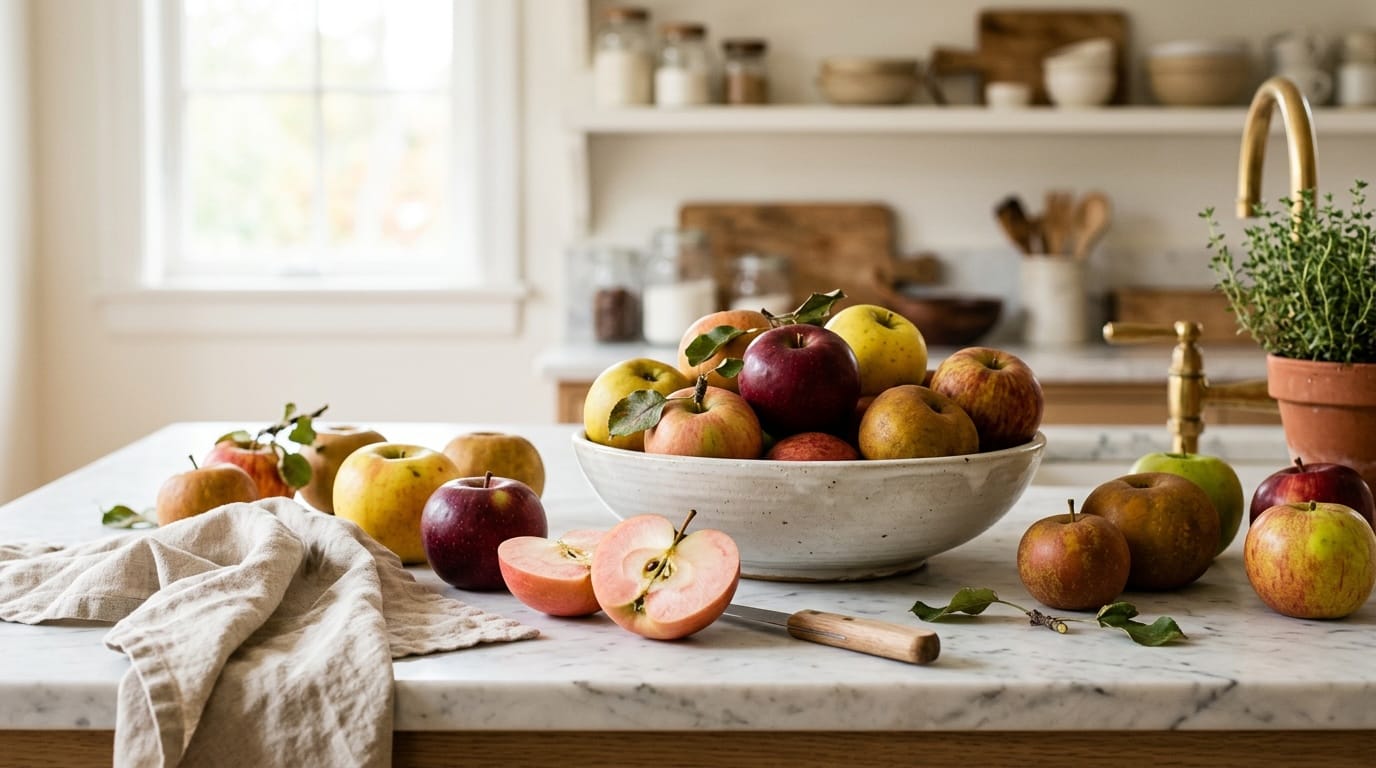
The grocery store gives you five apples. Your farmers market in October might give you twenty-five, most of them with names that sound like they came out of a nineteenth-century seed catalog — because they did. Northern Spy. Ashmead's Kernel. Winesap. Cox's Orange Pippin.
It is genuinely wonderful and slightly paralyzing. So here is the short version: apples are not interchangeable, the difference matters most when you cook them, and the person selling them can tell you exactly which one you want if you ask the right question.
The Only Three Questions That Matter
Forget memorizing varieties. Every apple decision comes down to three things:
Sweet or tart? This is personal preference and it is the fastest way to narrow twenty apples down to six. Just say which you like and the grower will point.
Does it hold its shape when cooked, or does it collapse? This is the single most important thing to know, and it is entirely about the apple's cell structure. Firm apples stay in recognizable pieces in a pie. Soft apples melt into sauce. Neither is better — they are for different jobs.
Are you eating it this week or storing it? Some apples are at their best the day they come off the tree and are mealy by Thanksgiving. Others are frankly unpleasant in October and become spectacular after two months in a cold garage. Nobody tells you this and it explains a lot of disappointing apples.
Ask a grower those three things and you will get a better answer than any chart, because they know what their trees did this particular year.
Best Apples for Eating Fresh
For out-of-hand eating you want crisp texture and balanced sugar and acid. Look for:
- Honeycrisp — the famous one, and famous for a reason. Explosively crisp, very sweet, mild acid. Does not store especially long.
- Cox's Orange Pippin — a classic English apple, complex and aromatic, tastes almost like it has spices in it. Hard to find, worth grabbing.
- SnapDragon, EverCrisp, and the newer crosses — bred for crunch and shelf life. Ask your grower what they planted recently.
- Gala and Fuji — reliably sweet, low acid, the safe choice for kids and lunchboxes.
- Ashmead's Kernel — looks like a russeted potato, tastes like sharp cider and pear drops. The apple that converts skeptics.
Best Apples for Baking and Pie
For pies, tarts, galettes, and anything where you want distinct pieces, you need an apple that stays firm and has enough acid to not taste flat under sugar.
- Northern Spy — the pie apple that serious bakers hunt for. Firm, tart, holds up beautifully.
- Granny Smith — widely available, very tart, extremely reliable. Often better mixed with something sweeter.
- Braeburn — firm, spicy, good balance. An excellent all-purpose baking apple.
- Winesap and Stayman — old varieties with real acidity and a wine-like note. Fantastic in a pie.
- Rhode Island Greening — a heritage baking apple, tart and firm, hard to find and worth it.
The best pies use two varieties: one firm and tart for structure, one softer and sweeter to break down and fill the gaps. If you only remember one thing from this section, remember that.
Best Apples for Sauce, Butter, and Cider
Here you want the opposite of a pie apple. You want fruit that collapses fast, has plenty of flavor, and does not need much added sugar.
- McIntosh — the classic sauce apple. Falls apart almost immediately, bright and aromatic.
- Cortland — breaks down well, resists browning, which makes it lovely for anything raw too.
- Gravenstein — an early apple, intensely flavored, legendary for sauce and cider.
- Jonathan and Jonagold — soften nicely with good tartness.
- A mixed bag of seconds — genuinely the best sauce is made from whatever the orchard has too many of. Blends beat single varieties here almost every time.
For apple butter specifically, a mix is not just acceptable, it is preferable. You are cooking for hours and concentrating flavor — complexity wins.
How to Pick a Good Apple at the Market
Weight is your best signal. Pick up two apples of the same size; the heavier one has more moisture and will be crisper. A light apple for its size is on its way to mealy.
Press gently near the stem with your thumb. It should not give at all. Any softness there means the flesh underneath has started to break down.
Ignore cosmetic flaws. Russeting — that rough tan patina some varieties get — is a characteristic, not damage, and often signals a more interesting apple. Superficial scab and hail dings affect nothing. What you do want to avoid is any soft brown bruise, a wrinkled skin, or a stem end that smells fermented.
And smell them. A good apple at peak smells like an apple from a foot away. If it smells like nothing, it was picked early or stored too long.
Storing Them Once You Get Home
Cold and humid, away from everything else. Apples give off ethylene gas, which will accelerate ripening in every other piece of produce nearby — that bag of apples next to your greens is why the greens went limp.
Keep them in the crisper drawer in a perforated bag, and check them weekly. One rotting apple genuinely does spoil the rest, and fast. Storage varieties like Northern Spy, Winesap, and Fuji will hold for months this way. Honeycrisp and McIntosh will not — eat those first.
If you bought a case of seconds, sort them the day you get home. Cook the soft ones immediately into sauce or butter, and store the sound ones properly. That twenty minutes of triage is the difference between a great deal and a compost bin.
Ask the Person Who Grew It
Every guide, including this one, is a generalization. The grower at your market knows what the weather did to their crop this year, which block ripened early, and which variety is eating unusually well right now. That conversation is free, it takes ninety seconds, and it is one of the real advantages of buying apples from a neighbor instead of a distribution center.
Ask them what they would take home. Then buy that.

Keep reading
More from the market
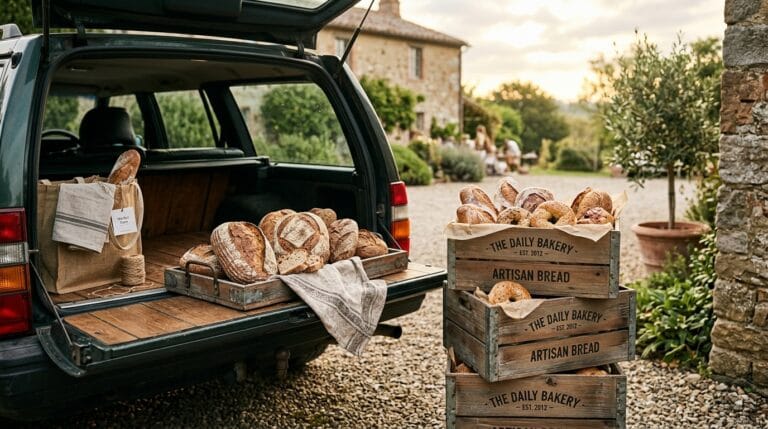
How to Get Your Baked Goods to Market Without Wrecking Them
Cakes slide, frosting sweats, cookies go soft in the car. The crates, timing and packing order that get your bakes to the…
Read more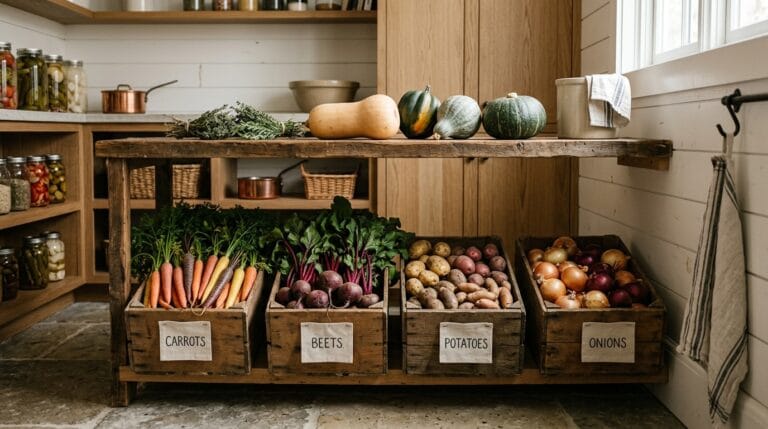
How to Store Root Vegetables and Winter Squash So They Last Until Spring
Potatoes, squash, carrots and onions will keep for months if you get a few things right. What each one wants, and the…
Read more
What to Do With Unsold Stock When the Market Season Ends
The last market of the season ends with a car full of what did not sell. Here is how to turn that…
Read more