

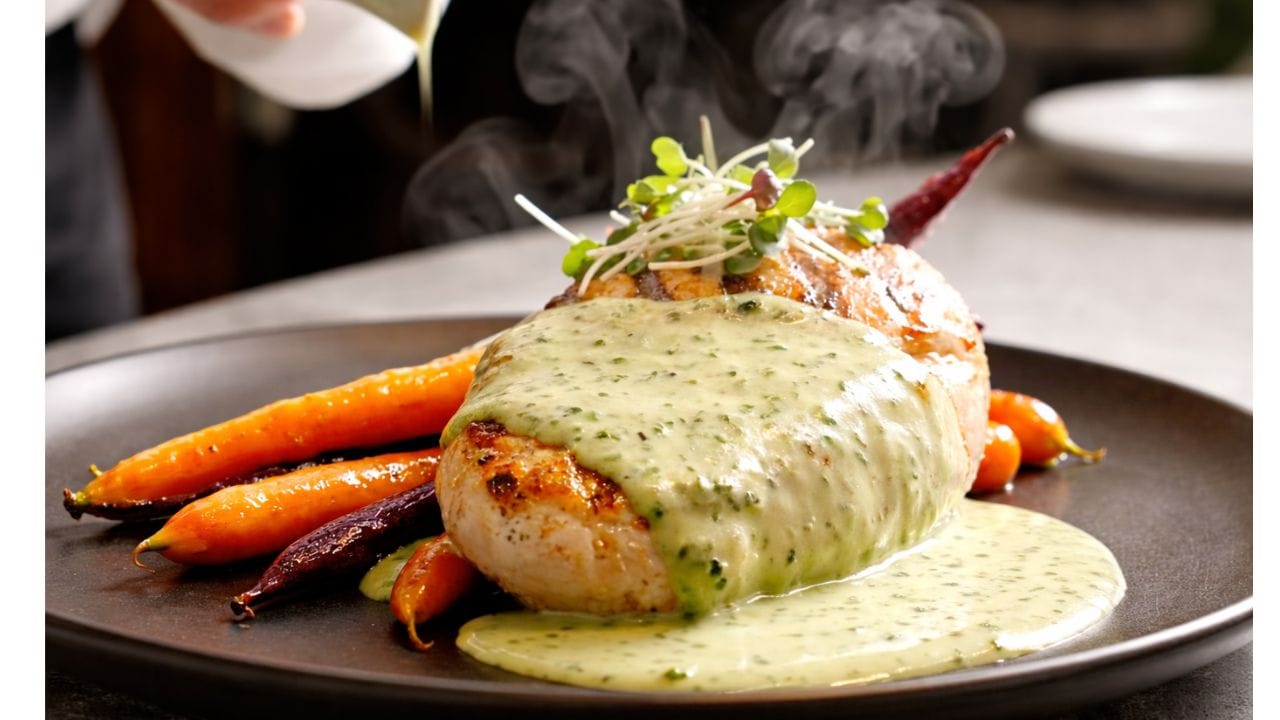
In the world of classical cooking, few concepts carry as much weight—and quiet authority—as the French mother sauces. These foundational sauces are less about rigid recipes and more about technique, ratios, and transformation. They are the culinary equivalent of grammar: once understood, they allow a cook to improvise, adapt, and create with confidence. These mother sauces are the inspiration for many sauces created all across the world: including this recipe for our Tarragon and Wine cream sauce.
The system most cooks recognize today was codified by Auguste Escoffier in the early 20th century, though its roots trace back even further to earlier chefs like Marie-Antoine Carême. Escoffier simplified and refined the list into five “mother sauces”: Béchamel, Velouté, Espagnole, Tomato, and Hollandaise. From these, hundreds of “daughter sauces” emerge—each one a variation built through reduction, enrichment, or the addition of aromatics.
Among these, velouté stands out as one of the most versatile and quietly elegant. And it is this sauce—subtle, adaptable, and endlessly modifiable—that provides the inspiration for our tarragon & wine cream sauce.
Understanding Velouté: The Quiet Backbone of Sauce-Making
Velouté begins simply: a blond roux (butter and flour cooked briefly) combined with a light stock—typically chicken, veal, or fish. The result is a sauce that is silky, pale, and delicately flavored. Unlike the richness of béchamel or the intensity of espagnole, velouté is intentionally restrained. It exists to be built upon.
What makes velouté so powerful is its role as a neutral canvas. It invites additions—wine reductions, herbs, cream, mushrooms, shallots—without overpowering them. Many classic sauces stem from it, including:
Sauce Suprême (velouté + cream)
Sauce Bercy (velouté + white wine + shallots)
Sauce Allemande (velouté enriched with egg yolks and cream)
If you look closely, this tarragon & wine cream sauce sits comfortably within this lineage. It doesn’t strictly follow the roux-based method, but philosophically, it mirrors velouté’s structure: a light stock foundation, layered with aromatics, wine, and cream for richness.
From Classical to Contemporary: Evolving the Framework
Modern cooking often moves away from roux-thickened sauces in favor of reductions and natural emulsions. This shift keeps flavors brighter and textures lighter while still honoring classical balance.
This sauce takes this modern approach:
Shallot replaces the mirepoix base, offering a refined, slightly sweet aromatic backbone.
White wine introduces acidity and depth, echoing traditional French pan sauces.
Stock provides body and savory structure—this is where the velouté influence is most evident.
Heavy cream adds richness and silkiness, similar to a suprême-style finish.
Fresh tarragon delivers a distinctly French herbal note, often paired with poultry and cream sauces.
Instead of thickening with flour, the sauce relies on reduction and cream to achieve its texture—resulting in something lighter, cleaner, and more contemporary while still deeply rooted in tradition.
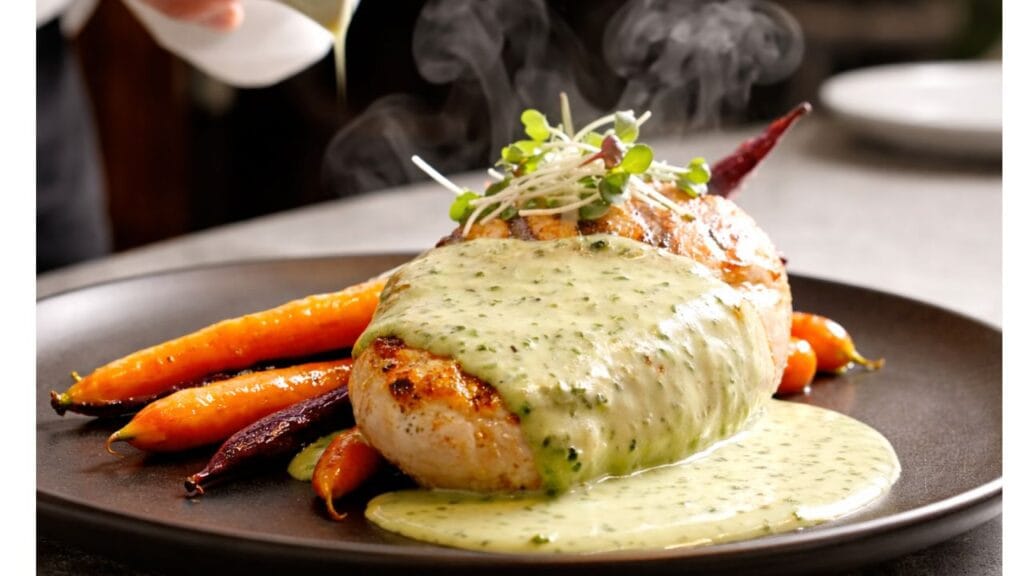
The Sauce: Tarragon & Wine Cream
This sauce feels like something you’d find in a small French bistro—spooned over roasted chicken, draped across seared fish, or paired with a simple pan-seared pork chop. It’s elegant but approachable, and most importantly, it’s built on technique rather than complexity.
Ingredients
1 shallot, finely minced
3/4 cup white wine
1 cup stock (chicken or vegetable)
1 cup heavy cream
1 tablespoon fresh tarragon, chopped
Method and Technique: Building Flavor in Layers
Start by gently sautéing the shallot in a bit of butter or oil over medium heat. You’re not looking for color here—just softness and aroma. This step mirrors the foundational role of aromatics in classical sauces.
Next, add the white wine. This is where the transformation begins. Allow it to simmer and reduce by about half. As it reduces, the alcohol cooks off, leaving behind acidity and concentrated flavor. This step is critical—it prevents the sauce from tasting flat or overly rich later on.
Once reduced, add the stock. This is your nod to velouté—the structural backbone of the sauce. Let it simmer again, reducing slightly to concentrate its flavor.
Now, stir in the heavy cream. The sauce will begin to take on body and silkiness. Let it gently simmer until it thickens to your desired consistency. Because there’s no roux, you’re relying on evaporation and the natural viscosity of cream—so patience here pays off.
Finally, finish with fresh tarragon. Add it at the end to preserve its delicate, slightly anise-like flavor. Taste and adjust seasoning as needed.
Why This Sauce Works
What makes this sauce compelling is its balance:
Acidity from the wine cuts through the richness of the cream
Savory depth from the stock grounds the sauce
Aromatics from the shallot add complexity without heaviness
Fresh herbs brighten the entire dish
This is the same balance that defines classical French sauces—just expressed in a more modern, streamlined way.
A Living Tradition
The beauty of the French mother sauces isn’t just in their history—it’s in their adaptability. They aren’t relics; they’re frameworks. Your tarragon & wine cream sauce is a perfect example of how these foundations continue to evolve.
It borrows the spirit of velouté—the reliance on stock, the layering of flavors, the pursuit of a silky finish—while shedding some of the rigidity of classical technique. The result is a sauce that feels both timeless and current.
And that’s ultimately the goal of great cooking: not to replicate tradition exactly, but to understand it well enough to make it your own.
Tarragon & Wine Cream Sauce
Simple ingredients—shallots, white wine, stock, cream, and fresh tarragon—come together using timeless French techniques to create a rich, balanced sauce perfect for chicken, fish, or pork.
Ingredients
Instructions
- Pre-heat sauce pan over medium heat. Add butter or neutral oil and allow to heat.
- Add shallot to saucepan and sauté until softened and just turning golden. Salt the shallots lightly as they cook. Stir while cooking. If you are using dried tarragon add it now.
- Add the white wine to deglaze the pan and allow to cook down until syrupy. A little more than halfway but not completely to the point it’s almost gone. Stir occasionally.
- Add the chicken stock and allow to cook down half way. If you’re using homemade stock that has developed gelatin it should start to thicken. If you’re using box stock you may want to bloom a gelatin sheet in the stock before adding to the sauce pan to get the same thickened consistency. Taste and add more salt if needed, but aim for less seasoning as the taste will intensify as it continues to reduce.
- Once stock has reduced half way add in the heavy cream. At this point you want to stir consistently to prevent the cream from burning on the bottom. Cook until the sauce reaches desired consistency. Add the fresh tarragon for the last 5 minutes of cooking. If you are using box stock without bloomed gelatin the sauce will not reach an entirely thick consistency, so don’t over-reduce. Aim for about half way. Taste and finish with salt as needed.

Keep reading
More from the market

Savory Sweet Potato and Caramelized Onion Galette with Sage
Sweet potatoes, onions cooked down slow, and fried sage on a free-form crust. A savory galette that turns three cheap market vegetables…
Read more
Kale and White Bean Stew with Sausage
One pot and forty minutes. Sausage, creamy white beans and a whole bunch of market kale, with the vinegar trick that stops…
Read more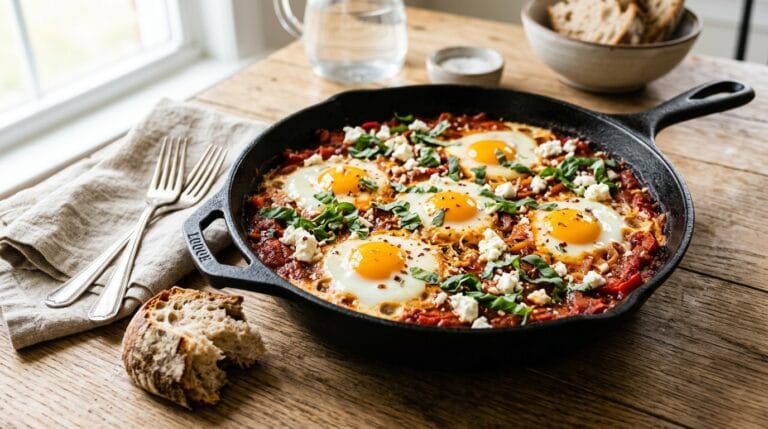
Skillet Baked Eggs with Blistered Tomatoes and Feta
One skillet, thirty minutes, and the best possible use of late-summer market tomatoes and farm eggs. Breakfast, lunch, or a very good…
Read more