
How to Grow Strawberries in Your Backyard (From First Planting to First Harvest)
Everything you need to know to grow your first crop of backyard strawberries — from choosing a variety to planting depth, first-year care, and knowing when to pick.
 1 min read
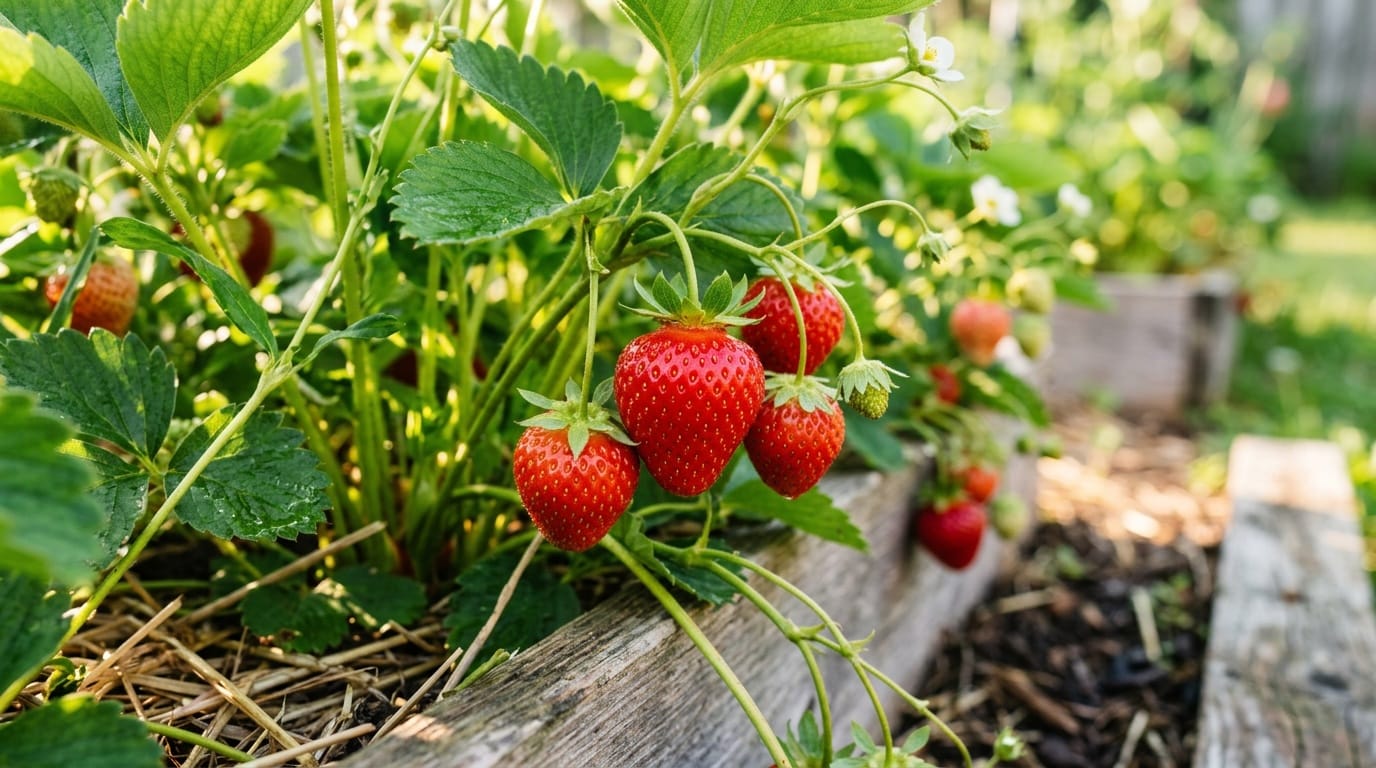
There are a few things in life that are genuinely better homegrown than bought, and strawberries are at the top of that list. The difference between a grocery store strawberry and one you picked from your own garden — still warm from the morning sun, smelling like summer — is not subtle. It is life-changing. Dramatic? Sure. True? Absolutely.
The good news is that strawberries are not difficult to grow. They are forgiving, enthusiastic, and remarkably productive for the amount of space they take up. Here's everything you need to know to get your first planting in the ground this spring.
Choosing the Right Variety: June-Bearing vs. Everbearing
Before you plant, you need to decide what kind of strawberry harvest you want — because the two main variety types give you very different experiences.
June-bearing strawberries produce one large, concentrated crop in late spring or early summer (typically over 2–3 weeks). The harvest is massive and beautiful — perfect if you want to make jam, freeze berries, or preserve them in any way. Varieties like Honeoye, Earliglow, and Allstar are popular for this reason. The trade-off: you get one glorious window per year, and then the plant spends the rest of the season building energy for next year.
Everbearing strawberries produce two to three smaller flushes throughout the season — typically early summer, midsummer, and fall. Total yield per plant is lower than June-bearing, but you get fresh berries over a longer window. Ozark Beauty and Quinault are common everbearing varieties. Great for snacking and enjoying fresh all season.
Day-neutral varieties (technically a subset of everbearing) produce fruit consistently throughout the growing season as long as temperatures stay between roughly 35°F and 85°F. Seascape and Albion are popular day-neutral choices, especially in moderate climates.
For most home gardeners getting started: pick one June-bearing variety for a big, satisfying first harvest, and add a few everbearing plants if you want fresh berries to snack on all summer.
When and How to Plant
Plant strawberries in early spring as soon as the soil is workable and nighttime temperatures are consistently above 35°F. In most of the US, that window falls somewhere between March and mid-May depending on your location.
Strawberries need full sun — at least 6 hours per day, with 8–10 hours being ideal. They want slightly acidic soil with a pH between 5.5 and 6.8. If you haven't done a soil test, now is a good time — it takes the guesswork out of amendments. Before planting, work some well-rotted compost into the bed to improve drainage and add nutrients.


Plant spacing: 18 inches apart in rows, with 24 to 36 inches between rows if you have the space. This gives each plant room to send out runners — the little horizontal stems that produce daughter plants and expand your patch over time.
Planting depth is critical and commonly done wrong: the crown (the thick stem just above the roots) needs to sit right at soil level — not buried, not elevated. About 1/4 to 1/2 inch above ground level is ideal. Too deep and the crown rots. Too shallow and the roots dry out. Take your time with this step.
Caring for Your Plants: The First Year Is Different
Here is the one piece of advice that trips up almost every first-time strawberry grower: in the first year, remove the blossoms. All of them. Yes, really.
I know. It feels wrong. But when a strawberry plant puts energy into producing fruit in its first season, it sacrifices root development. Pull the blossoms in year one, let the plant build a strong root system, and you'll be rewarded with dramatically higher yields in years two and three. It's a delayed gratification play, and it's absolutely worth it.
For ongoing care: give plants 1 to 1.5 inches of water per week, watering at the base rather than overhead (wet foliage invites fungal problems). Add a layer of straw mulch around the plants — hence the name "strawberry" — to retain moisture, regulate soil temperature, and keep the fruit from sitting directly on wet soil.
Container Growing: Yes, You Can Do This on a Patio
No backyard? No problem. Strawberries are one of the best container crops you can grow. Use a pot at least 12 inches wide and deep, with good drainage holes, and a high-quality potting mix amended with compost. Hanging baskets, window boxes, and tiered strawberry planters all work beautifully.
Container plants will need more frequent watering (check daily in warm weather — the soil dries out fast) and may benefit from a diluted balanced fertilizer every few weeks during the growing season. Other than that, care is essentially the same as in-ground planting.
When to Harvest (and How to Know It's Time)
Resist picking too early. A strawberry that's red on the outside but still white or pale near the stem is not ripe yet — give it another day or two. A fully ripe strawberry is uniformly deep red, fragrant, and pulls from the stem with almost no resistance. That's the one you want. Harvest in the morning if possible, when the berries are cool, and handle them gently — homegrown strawberries bruise easily because they're so much more delicate than the gas-ripened grocery store kind.
Check your plants every day or two during peak season. Strawberries go from perfect to overripe quickly, and overripe fruit left on the plant can spread mold to neighboring berries.
Happy planting — and I hope your first harvest is every bit as ridiculous and wonderful as mine was. I ate half of them before I made it back inside.
— Amy

Keep reading
More from the market
How to Save Seeds from Your Best Tomatoes and Peppers
The best tomato in your garden this year can be next year's whole crop, for free. Here's how to save tomato and…
Read more
How to Grow Basil at Home (And Never Buy a Sad Plastic Clamshell Again)
How to grow basil at home — from starting plants to the pinching technique that keeps them producing all summer. A beginner-friendly…
Read more
What to Plant in August for a Fall Harvest
August isn't the end of the garden — it's the start of your fall harvest. Here's what to plant now for a…
Read more