

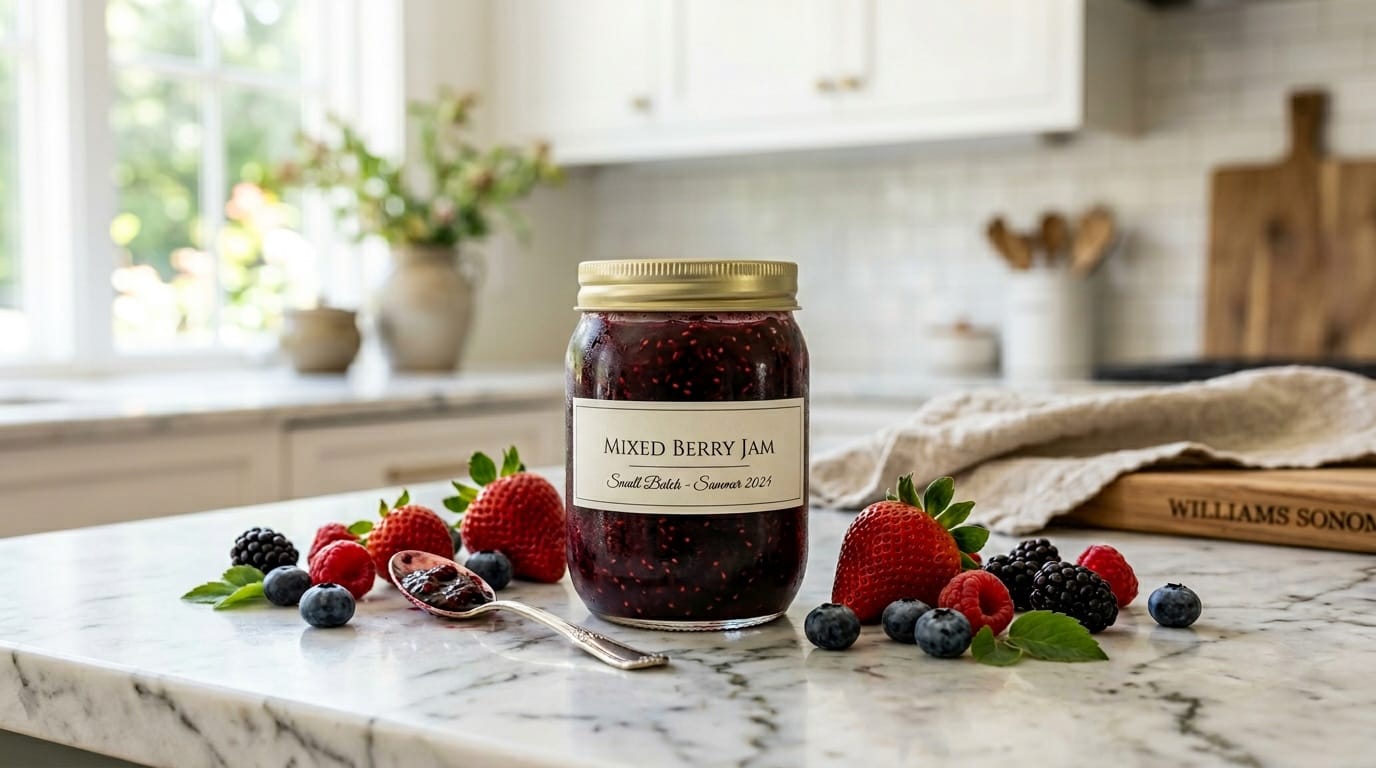
There's a moment in late June when the farmers market turns into something close to a fever dream — strawberries piled high next to blueberries and raspberries, blackberries so ripe they stain your fingers just looking at them. If you've ever stood there holding a quart of each, wondering what to do before they all go soft by Tuesday, this jam is your answer.
Small batch mixed berry jam is one of those recipes that rewards you out of proportion to how much effort it takes. An hour on a Sunday morning, four jars you can keep, gift, or sell, and your kitchen smelling like the absolute best version of summer. Let's make it.
Why No Pectin?
Most jam recipes call for pectin — a thickening agent that sets the jam quickly. It works great, and you can absolutely use it here if you prefer. But this recipe skips it for a reason: making jam without pectin produces a slightly looser, more intensely fruity result that tastes unmistakably like real fruit rather than the jammy-sweet spread you find in grocery store jars. The lemon juice (which is high in natural pectin) and the slow simmer do the thickening work, and you end up with something that tastes genuinely homemade in the best possible way.
It takes about 20–25 minutes of active simmering versus the 1-minute boil of a pectin recipe. Worth every minute.
Choosing Your Berry Mix
This recipe is forgiving by design — use whatever combination of summer berries you have or can find at your local market. A few notes on how the mix changes the final jam:
More strawberries gives you a sweeter, lighter-colored jam with a classic flavor. More blueberries creates a deeper, more intensely set jam with a rich purple-blue color. More raspberries adds beautiful tartness and a jewel-toned, glossy finish (and raspberries are naturally high in pectin, so a raspberry-heavy mix sets up beautifully without added pectin). Blackberries add depth, mild earthiness, and that dramatic dark color that looks stunning on a cheese board.
Start with whatever's ripest and most abundant, and you'll end up with something delicious regardless of the ratio. That's the beauty of peak-season fruit — it does most of the work for you.
The Farmers Market Connection
If you sell at a farmers market or are thinking about it, mixed berry jam is one of the most reliable products you can bring to a table. It's shelf-stable (with proper canning), visually beautiful, and has broad appeal — it works for breakfast toast, cheese pairings, gifting, and everything in between. In most states, homemade jams and jellies are explicitly covered under cottage food laws, meaning you can often sell this from your home kitchen without a commercial facility.
We've written up state-specific cottage food law guides — including coverage for your state — if you want to know exactly what your rules are before you start labeling jars.
[Recipe card will be embedded here via Divi builder]
This jam keeps beautifully for up to 18 months in a properly sealed jar, so you can batch it through berry season and still be selling it in December when the market is all about soups and root vegetables. Summer in a jar is not a bad product to have on hand.
— Amy
Fresh. Local. Sustainable.
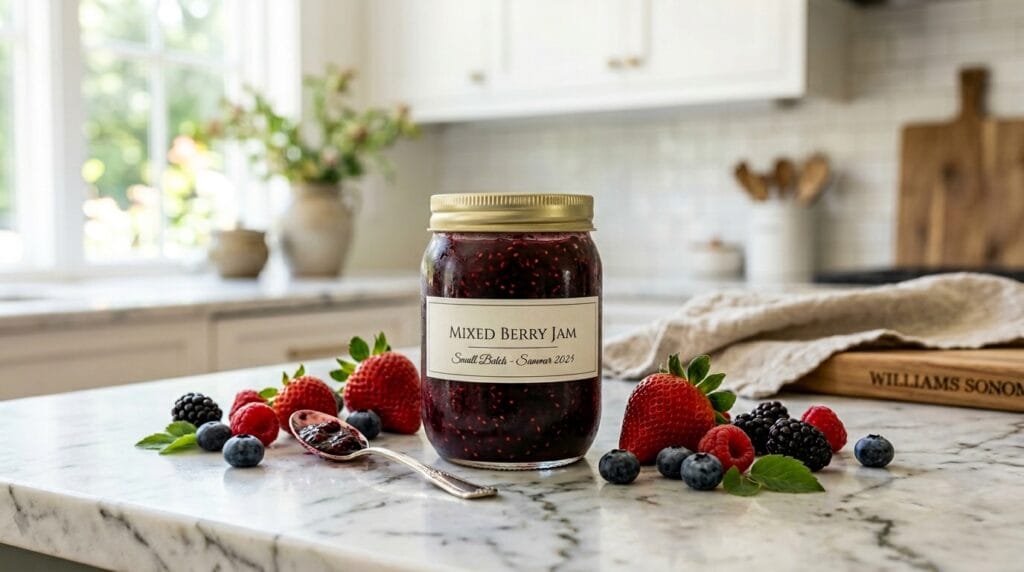
Small Batch Summer Mixed Berry Jam
A simple, deeply flavorful mixed berry jam made with fresh summer fruit. No pectin required — the natural sugars and lemon juice do all the work. Makes 4 half-pint jars, perfect for gifting at the farmers market.

Ingredients
For the Jam
Instructions
Prep
- Wash 4 half-pint (8 oz) canning jars with hot soapy water. Place in a 200°F oven to keep warm until needed. Prepare lids per the manufacturer's instructions.
- If using strawberries, hull and quarter them. Blueberries, raspberries, and blackberries go in whole. If berries are frozen, no need to thaw — just add a few extra minutes to the cook time.
Make the Jam
- Combine all the berries and lemon juice in a heavy-bottomed saucepan over medium heat. Use a potato masher or fork to gently crush the berries — you're aiming for a mix of smooth and chunky texture, not a completely smooth puree.
- Add the sugar and stir well to combine. Bring to a rolling boil over medium-high heat, stirring frequently to prevent scorching.
- Once boiling, reduce heat slightly and continue cooking at a vigorous simmer, stirring often, for 20–25 minutes. The jam will thicken as it cooks and the liquid reduces.
- Test for doneness: place a small spoonful on a chilled plate and let it sit for 30 seconds. Push it with your finger — if it wrinkles and holds its shape, the jam is ready. If it's still runny, cook another 5 minutes and test again.
- Stir in the lemon zest if using. Skim any foam from the surface with a spoon.
Can and Store
- Ladle the hot jam into your warm jars, leaving 1/4 inch of headspace. Wipe the rims clean with a damp cloth, apply the lids and rings, and finger-tighten (not over-tight).
- Process jars in a boiling water bath canner for 10 minutes (adjust time for altitude if needed). Remove jars and place on a towel to cool completely — don't disturb for 12–24 hours.
- Check seals once cooled: the center of each lid should be firm and not flex up and down. Properly sealed jars keep at room temperature for up to 18 months. Refrigerate after opening and use within 3 weeks.
Notes

Keep reading
More from the market
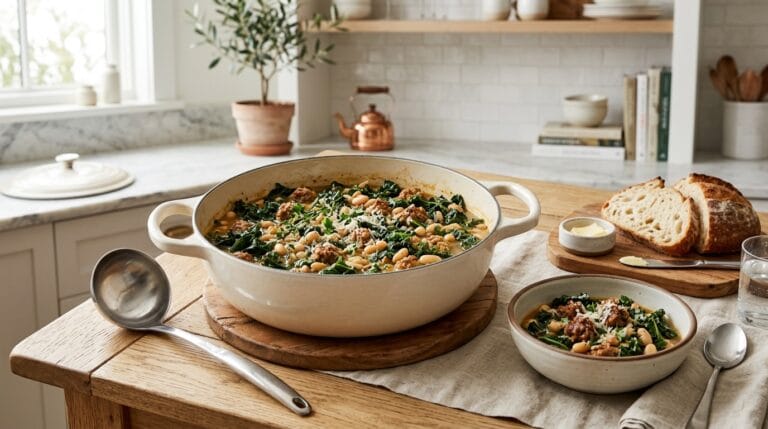
Kale and White Bean Stew with Sausage
One pot and forty minutes. Sausage, creamy white beans and a whole bunch of market kale, with the vinegar trick that stops…
Read more
Skillet Baked Eggs with Blistered Tomatoes and Feta
One skillet, thirty minutes, and the best possible use of late-summer market tomatoes and farm eggs. Breakfast, lunch, or a very good…
Read more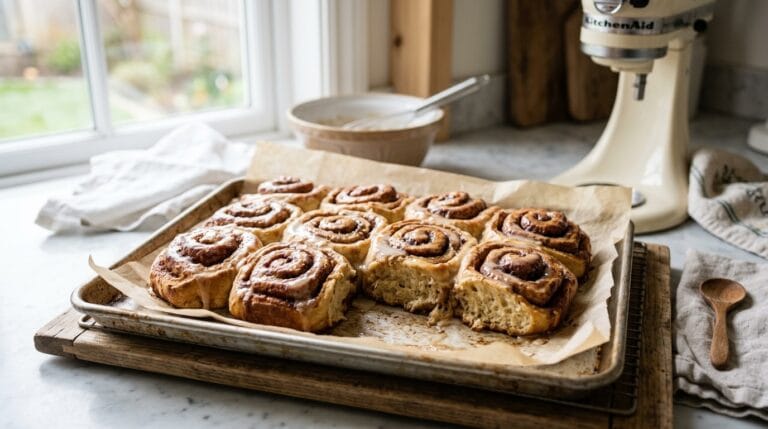
Overnight Sourdough Cinnamon Rolls (Soft, Tangy, and Market-Ready)
Soft, tangy overnight sourdough cinnamon rolls. The cold rise does the work while you sleep — and they hold up beautifully on…
Read more