
How to Tell When Jam Has Set (Plus How to Fix It When It Doesn’t)
The difference between perfectly set jam and syrup comes down to one number: 220°F. Here's how to nail it every time—thermometer, wrinkle test, or both.
 1 min read
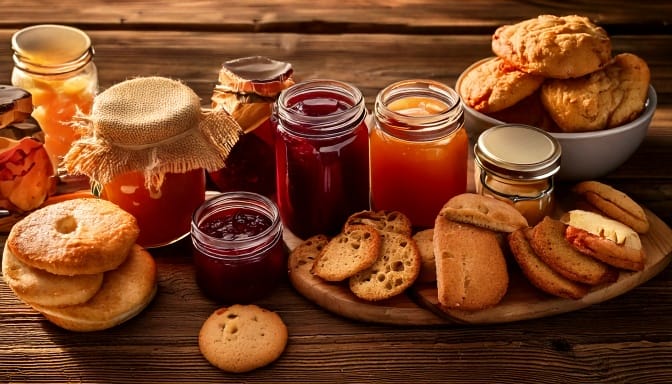
How to Tell When Jam Has Set (Plus How to Fix It When It Doesn't)
You've spent the morning chopping fruit, measuring sugar, and standing over a steaming pot. The smell is incredible. But now you're staring at the surface of your jam, and you can't quite tell if it's done. Is it set? Or is it still a beautiful, expensive syrup?
If you've been there—and honestly, most of us have—this post is for you. Setting point is the moment your jam goes from liquid to spreadable, and it's less mysterious than you think.
The Magic Number: 220°F
Jam sets when the water content drops and the sugar concentration reaches a specific point. That point is 220°F (104°C) at sea level. Here's why it matters: fruit juice is mostly water. When you heat it with sugar, the water evaporates and the sugar becomes more concentrated. At 220°F, the pectin in the fruit gels around the sugar and creates that lovely spreadable texture.
If you live at higher altitude, subtract 2°F for every 1,000 feet above sea level. At 5,000 feet, you're aiming for 218°F. At 7,000 feet, it's 216°F. A lot of batches "fail" not because something went wrong, but because someone at elevation followed sea-level instructions.
Method 1: The Wrinkle Test (The Classic)
Before you start cooking, put a small plate in the freezer. When you think your jam might be done, drop a small spoonful onto that cold plate and let it cool for about 30 seconds. Then push it with your finger.
If it wrinkles—if the surface crinkles and doesn't flow back together—it's set. If it's still glossy and flows back, keep cooking and test again in 5 minutes. Why this works: the cold plate mimics the temperature your jam will actually be at in a jar. It's the most honest test because it shows you exactly what you're getting.
Method 2: The Thermometer (The Precise)
Clip a candy or jam thermometer to the inside of your pot, making sure the bulb isn't touching the bottom. Watch it climb as your jam cooks. When it hits 220°F (or your adjusted altitude number), you're done. This is the fastest, most repeatable method. No guessing. No cold plates to wash. Just numbers. Invest in a good thermometer—around $10–15. It'll pay for itself in successful batches.
Method 3: The Spoon/Sheet Test
Dip a wooden spoon into the jam, pull it out, and hold it horizontally. If the jam runs off in two separate drops instead of one sheet, it's not set yet. When it slides off as a single sheet, it's done. This gets faster the more you do it, and it requires no equipment other than a spoon you already have.
How Long Does Jam Take to Set?
Usually 20–40 minutes for a small batch (4–6 cups of fruit), depending on how wet your fruit is. Jam keeps cooking even after you turn off the heat. Most experienced makers pull the pot off 2–3 degrees before 220°F—the residual heat will nudge it the rest of the way.
Can You Over-Cook Jam?
Yes. When jam goes past 225°F, the gel structure breaks down and the jam becomes hard, almost brittle. The window between "just right" and "too far" is only a few degrees. Check often near the end.
What to Do If Your Jam Doesn't Set
You have options:
- Recook it: Pour the jam back into the pot, bring it back to 220°F, and re-jar it. This works about 70% of the time.
- Make it into a topping: Delicious over ice cream, yogurt, or cake. Call it a fruit sauce and own it.
- Leave it alone: Some jam makers use "syrup" jam deliberately—it pours beautifully onto breakfast pastries. There's no shame in that.
If this happens repeatedly, check: your thermometer accuracy, your altitude adjustment, and your pectin freshness (old pectin loses its gelling power).
Why This Matters for Cottage Makers
If you're making jam to sell—whether at a farmers market, through Butter & Sage Market, or to friends—setting point is everything. Customers expect jam to be jam. Nailing your set point is how you build trust and get repeat customers. Use a thermometer. Check your altitude. Test on a cold plate. Do two or three batches this way, and you'll develop an instinct for it. That's when jam making stops being a mystery and starts being a skill.
— Amy
Fresh. Local. Sustainable.

Keep reading
More from the market
How to Make Stock from Your Market Scraps (The Free Ingredient in Your Freezer)
A bag in the freezer, filled with onion ends and carrot tops, becomes the best ingredient in your kitchen for free. What…
Read more
How to Roast Any Vegetable (One Method, Your Whole Market Haul)
One temperature, one pan, three rules that decide everything. Timings for the whole fall market table, and the crowding mistake that steams…
Read more
How to Grill Summer Vegetables (Eggplant, Zucchini, Peppers & More)
Grilling turns a farmers market vegetable haul into the best part of dinner. Here's how to grill eggplant, zucchini, peppers, and onions…
Read more