
Small-Batch Lemon Curd: Spring’s Most Sellable Jar (And Easier Than You Think)
Bright, silky, and made with just five ingredients, this small-batch lemon curd is the spring recipe worth learning — whether you are selling jars at the farmers market or just treating yourself on a Tuesday.
 1 min read
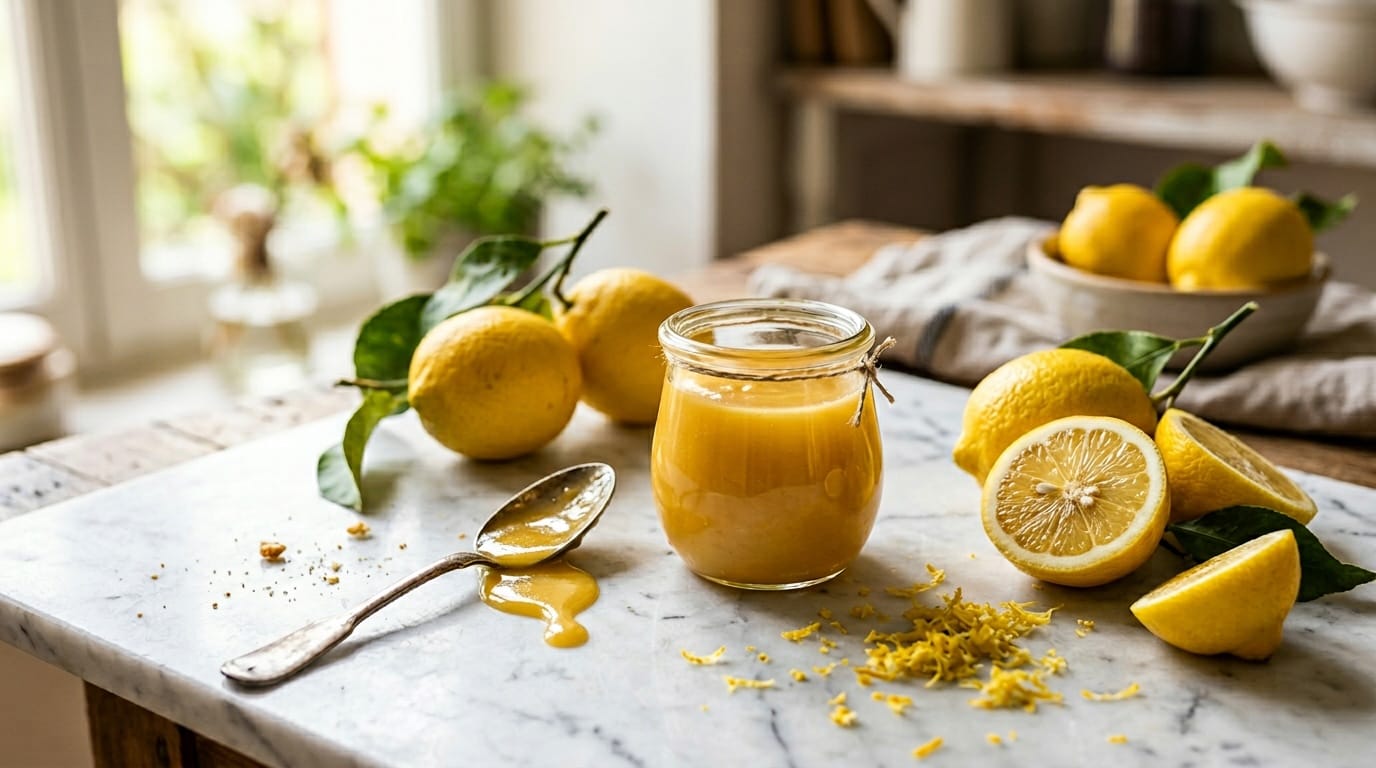
Every spring, without fail, lemon curd shows up on my counter. It starts with a bag of lemons from the market — the beautiful, aromatic kind that are impossible to walk past without buying — and ends with a jar of the most sunshine-yellow, lip-puckeringly good lemon curd I have ever tasted, made with nothing but eggs, sugar, butter, and those lemons I almost let sit too long.
Lemon curd is one of those recipes that sounds like it requires a culinary degree and a candy thermometer. It does not. You need a saucepan, a whisk, and about twenty minutes of patient stirring. That is it. And once you have made it once, you will understand why it is one of the most popular things cottage food vendors sell in the spring — it is elegant, it tastes incredible, and people will genuinely pay good money for a jar of something this beautiful.
Why Lemon Curd Is Worth Learning
There is an argument to be made that lemon curd is the most versatile thing you will ever learn to make. It goes on scones, fills tarts, acts as a sauce for shortbread cookies, can be swirled into yogurt, spooned onto pancakes, or eaten directly off a spoon at 10pm. (No judgment.)
It is a crowd-pleaser in a way that very few things are, because almost everyone has a positive association with the bright, clean flavor of lemon. There is no learning curve for the people eating it. They already know they want it.
For cottage food vendors, lemon curd is a natural spring seasonal item that signals freshness and quality. A handwritten label on a small jar at a farmers market table has a way of stopping people in their tracks — the kind of thing that says someone made this with genuine care.


A Few Tips for Getting It Right
The most important rule for lemon curd: do not rush it. Cooking over medium-low heat and stirring constantly is what gives you that silky, smooth texture. High heat can scramble the eggs, and nobody wants scrambled egg situation on their scones.
Use fresh lemon juice. Bottled juice gives a flat, vaguely chemical flavor that does not belong anywhere near something this delicate. Fresh is non-negotiable here — it is the whole point.
Strain it. Do not skip this step. Running the finished curd through a fine mesh sieve removes any bits of cooked egg white and gives you a texture that looks as good as it tastes.
Press the plastic wrap directly onto the surface. This prevents a skin from forming while the curd cools — a small step with a big difference in the final jar.
Make It Your Own
Once you have made the base recipe, the variations are almost endless. Lime curd is a farmers market staple for many vendors in summer. Meyer lemon curd has a sweeter, more floral character that people adore. And lavender lemon curd — a small amount of culinary lavender steeped into the lemon juice before you start — is the kind of thing that could become your signature product.
The recipe below makes about one cup — one small jar. It doubles and triples well, which is exactly what you will want to do if you are planning to sell it. Make a batch. See how fast it disappears from your table.
Small-Batch Lemon Curd
Bright, silky lemon curd made with just five simple ingredients. Ready in under 30 minutes, this spring staple is gorgeous on scones, shortbread, toast, and everything in between — and popular enough to sell out at any farmers market.


Ingredients
Instructions
- In a medium saucepan, combine the eggs, egg yolks, sugar, lemon juice, lemon zest, and salt. Whisk everything together until smooth before turning on the heat — this prevents lumps later.
- Add the butter cubes to the pan, then place over medium-low heat. Cook, stirring constantly with a wooden spoon or silicone spatula, until the mixture thickens enough to coat the back of a spoon — about 10 to 12 minutes. Don't rush it on high heat; slow and steady gives you the silkiest curd.
- Remove from heat and immediately strain through a fine mesh sieve into a clean jar or bowl. This removes any bits of cooked egg white and gives you that perfectly smooth texture.
- Press a piece of plastic wrap directly onto the surface of the curd (this prevents a skin from forming) and let cool completely at room temperature, about 1 hour.
- Transfer to a clean jar, seal, and refrigerate. Lemon curd keeps for up to 2 weeks.
Notes

Keep reading
More from the market

Kale and White Bean Stew with Sausage
One pot and forty minutes. Sausage, creamy white beans and a whole bunch of market kale, with the vinegar trick that stops…
Read more
Skillet Baked Eggs with Blistered Tomatoes and Feta
One skillet, thirty minutes, and the best possible use of late-summer market tomatoes and farm eggs. Breakfast, lunch, or a very good…
Read more
Overnight Sourdough Cinnamon Rolls (Soft, Tangy, and Market-Ready)
Soft, tangy overnight sourdough cinnamon rolls. The cold rise does the work while you sleep — and they hold up beautifully on…
Read more