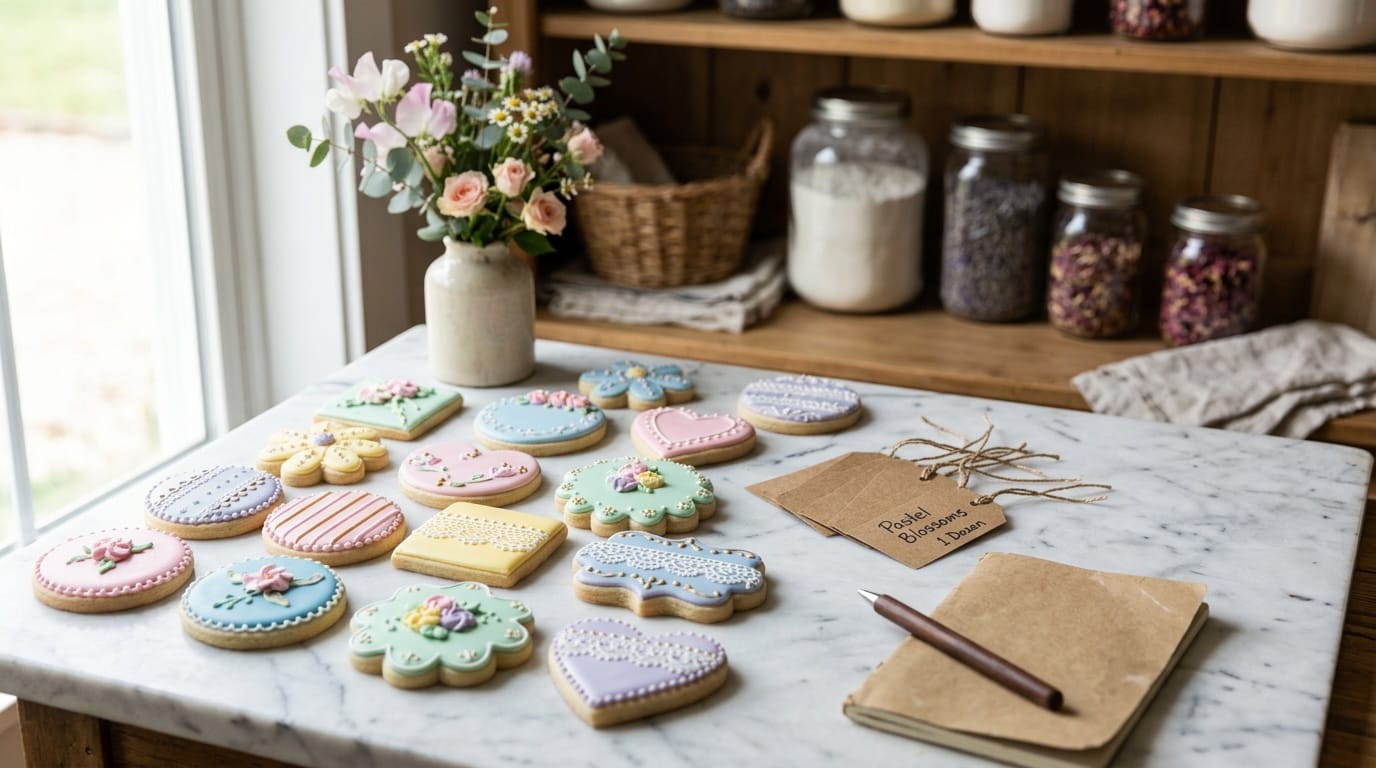
You posted one photo of your decorated sugar cookies on Instagram, and now your DMs are a small disaster. Someone wants two dozen for a baby shower. Someone else wants "something similar but with blue instead of purple." A third person asked for a quote three days ago, you forgot to respond, and now they've followed up with a very polite but slightly pointed "just checking in."
If any of this sounds familiar, welcome to cottage food custom orders — one of the most profitable parts of a food business, and also one of the most chaotic if you don't have a system. The good news: the system doesn't need to be complicated. It just needs to exist.
Step 1: Stop Taking Orders Through DMs
Instagram DMs, Facebook messages, and text threads are where custom order businesses go to slowly lose their minds. Information gets buried. Payments get awkward. Deadlines get missed because your customer said "late March" and you read it in a notification that disappeared.
The single most impactful thing you can do for your custom order workflow is move it off social media entirely. You don't need expensive software. Even a simple Google Form with fields for event date, quantity, flavor, design description, dietary restrictions, and contact information is a massive upgrade over DMs. It forces your customers to give you the information you actually need, all in one place, before any back-and-forth begins.
Even better: set up an online ordering platform designed for cottage food vendors. Tools like Butter & Sage Market, Square, and HotPlate all let you take pre-orders and custom requests in a structured way — with payment collected upfront, order details attached, and no more "wait, which shower was this for?" moments at midnight before a Saturday delivery.
Step 2: Set Clear Terms Before You Say Yes
The number one reason custom orders turn into headaches is accepting them before you've established the terms. Before you confirm anything, communicate these basics in writing:
Order deadline: How far in advance do you need the order? Most cottage food bakers require 1–2 weeks minimum for custom decorated items, and 3–5 days for simpler orders. Put this in your profile, in your inquiry response, and on your order form. Say it three times and someone will still try to order the week of — but at least you have documentation that you told them.
Deposit requirement: Custom orders should always require a non-refundable deposit — typically 25–50% at booking, with the remainder due at pickup or delivery. This protects your ingredient costs and your time. Never start a custom order without payment confirmed.
Cancellation policy: What happens if they cancel three days before? Two days? Day of? Write it out, put it in your order confirmation message, and stick to it. It feels awkward the first time you enforce it and completely normal the fifth time.
What customization actually means: "Can you make it blue?" is very different from "Can you recreate this 47-element Pinterest board?" Be specific about what's included — flavors, colors, basic design elements — and what constitutes a special request with an upcharge.
Step 3: Build a Simple Order Tracking System
You don't need project management software to run a custom order business. You need a way to see, at a glance, what's due when and what stage it's at. A Google Sheet works. A simple whiteboard in your kitchen works. The format matters less than the habit of using it consistently.
Track at minimum: customer name, contact info, event date, order details, deposit status, balance due, and completion status. Add a "notes" column for the inevitable "she mentioned her daughter is allergic to tree nuts but not peanuts, double-check before final batch" moments.
Review your order tracker at the start of every week. Not monthly. Every week. Fifteen minutes on Sunday evening to look at what's coming up, what's in progress, and whether anything needs attention before it becomes urgent.
Step 4: Price Your Custom Work Properly
Custom orders almost always take longer than you think they will. Build that into your pricing. The extra time for a consultation conversation, the ingredient prep for a test batch, the packaging you ordered specially for this order, the re-do because the first attempt at that flower design didn't look right — all of that is real labor that belongs in your price.
A useful starting point: calculate your standard item price (ingredients × 3, plus labor at your hourly rate), then add a customization premium of 20–30% for anything that requires design decisions, special ingredients, or significant back-and-forth communication. Complex decorated cookies from scratch warrant even higher margins — many experienced cottage bakers price decorated sugar cookies at $4–7 each at minimum, with custom multi-dozen orders commanding $60–100 per dozen.
If a customer balks at your price: that's useful information. It means they're not the right customer for custom work, and that's okay. You don't want to fill your calendar with orders that don't pay for your time.
Step 5: Get a Written Confirmation Every Time
This doesn't have to be a formal contract. It can be a simple email you send after every booking that says: "Hi [name], just confirming your order: [details]. Your event date is [date]. Your deposit of $X has been received. Balance of $X is due at pickup on [date]. Looking forward to it!" That's it. That's a confirmation. Send it every time without exception.
This single habit resolves the vast majority of custom order disputes before they happen, because there's a written record of what was agreed. Customers remember things differently than vendors do. A written confirmation is your receipt, your evidence, and your peace of mind.
Butter & Sage Market
Your Custom Orders Deserve a Better System Than Your DMs.
Butter & Sage Market gives cottage food vendors a real storefront — with custom order management, a public shop page, and buyers already looking for local food makers. Focus on flavor. We'll handle the rest.
Fresh. Local. Sustainable.
— Amy

0 Comments