
Not long ago, if you asked whether cottage food businesses could sell online, the answer was almost always no. Cottage food laws were written for the farmers market table and the church bake sale — not for Instagram DMs and online checkout pages.
That's changing fast. In 2025 and 2026, several states have updated their cottage food laws to allow online ordering, website sales, and even in-state shipping. If you've been wondering whether you can take your cottage food business online — or if you just want to know what your state actually allows — this is your guide.
Which States Now Allow Cottage Food Online Sales?
The landscape varies widely by state, but here's where things stand for some of the most notable:
States that allow website sales AND in-state shipping:
- Michigan — As of March 2026, online sales and third-party delivery are now permitted. A major win for Michigan home bakers who were previously limited to in-person sales.
- Indiana — Home-based vendors can sell online and ship within Indiana via mail or third-party carrier.
- Florida — Online sales with in-state shipping are permitted under Florida's generous $250,000-cap cottage food law.
- Vermont — Your own website with direct mail-order delivery to Vermont customers is allowed under Act 42 (2025).
- Minnesota — In-state online sales and shipping will be permitted starting August 1, 2027, under 2025 legislation.
States allowing online ordering with in-person pickup or local delivery: Many states allow you to use a website as an order form but require the actual exchange to happen in person. Texas, Georgia, and several others fall into this category — you can take orders online, but the product must be handed off directly.
States allowing interstate shipping (a very short list): Kansas, North Dakota, and Pennsylvania are among the rare states where cottage food can legally cross state lines — a genuine competitive advantage if you're in one of them.
States that still restrict online sales: Washington and Arizona currently require in-person transactions for all cottage food sales. Always check your state's current statutes — these laws are changing frequently enough that information from even a year ago may be outdated.
How to Set Up Your Online Cottage Food Presence
Once you've confirmed your state allows online selling, the next question is how to build your presence:
Your own website is the safest foundation. Vermont's law allows online sales through your own website but prohibits selling on third-party platforms like Amazon or Etsy. Other states have similar language. Having your own website gives you full control and ensures you're not running into marketplace restrictions you didn't anticipate.
A marketplace built specifically for cottage food is different from a general retail platform. Platforms designed for small and cottage food businesses — like Butter & Sage Market — connect you with shoppers who are actively looking for what you make, and operate differently than the general consumer marketplaces most cottage food restrictions are aimed at.
Payment processing is simple. Square, Stripe, and PayPal all integrate easily with most website builders. You don't need anything complicated to accept online orders — most home bakers start with a simple site and a standard payment processor and scale from there.
Labeling and Packaging for Shipped Cottage Food
Shipping your products adds an extra layer of responsibility. When packing orders for shipment:
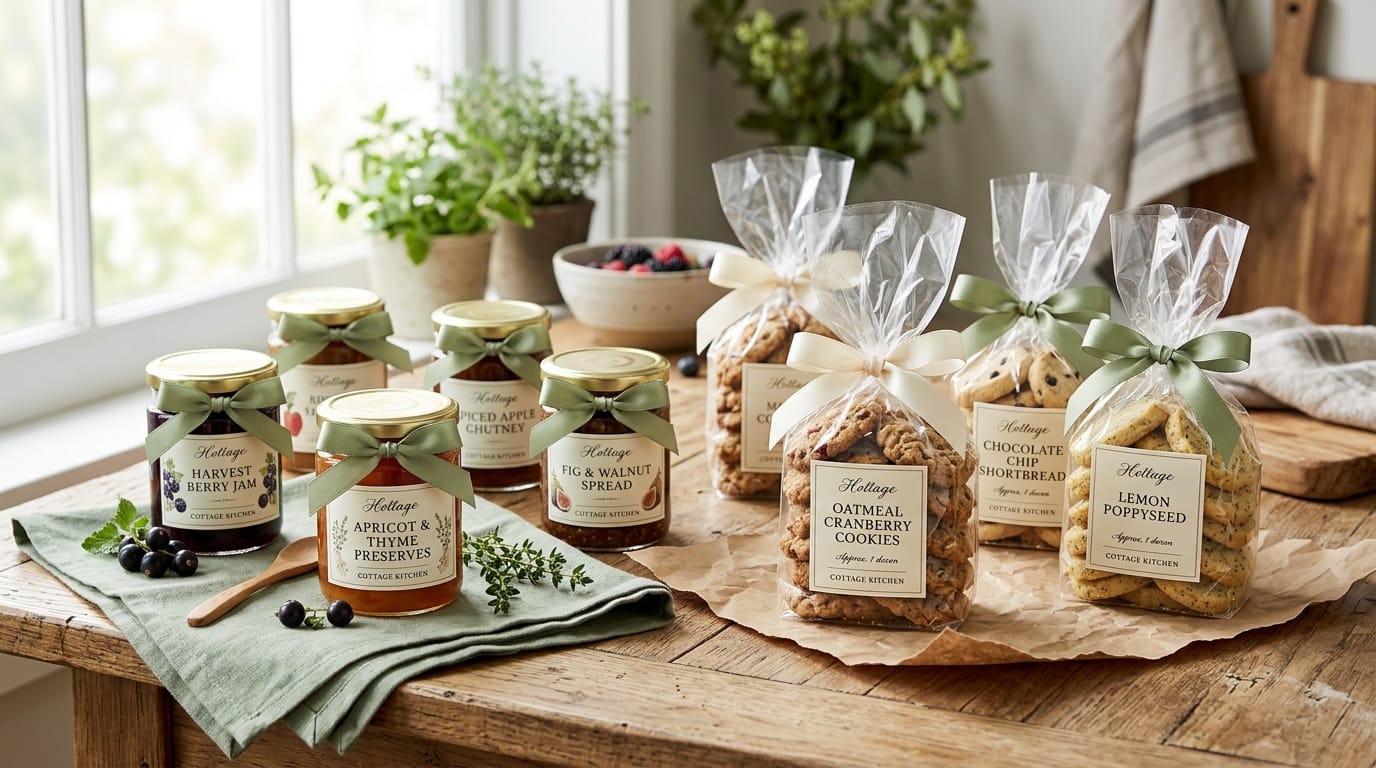
- Packaging must protect the product. Cookies need to survive transit. Jars need bubble wrap or padded mailers. Think about how your product will look when it arrives — first impressions matter even when you're not there.
- Your full label must travel with the product. Ingredient lists, allergen information, your name and address, and the required cottage food disclaimer all need to be on the product itself — not just on your website listing.
- Heat sensitivity matters. If you're selling butter-based or chocolate products through the warmer months, communicate shipping timelines clearly and consider how your product will hold up in a delivery vehicle.
The Bottom Line
The cottage food world is shifting toward online access, not away from it. Michigan just opened up in March 2026. Minnesota opens in 2027. More states will follow. If your state already allows it — don't wait. Setting up an online presence takes a weekend, and reaching customers beyond your local market is how a cottage food hobby becomes a cottage food business.
Butter & Sage Market is a marketplace built specifically for small and cottage food vendors — no tech skills required, and the shoppers who find you here are already looking for exactly what you make.
Fresh. Local. Sustainable.
— Amy

0 Comments