
Every tomato gardener has the same memory: the first time they ate a tomato still warm from the vine. Sweet, a little acidic, deeply savory in a way that the grocery store version simply is not. That memory is why people grow tomatoes. And once you have grown your own, buying them from a store starts to feel like a significant step down.
Here is a friendly, no-fuss guide to growing tomatoes at home — whether you have a backyard bed, a container on a sunny patio, or just a few square feet of good light.
Choose the Right Tomato for Your Goals
Tomatoes fall into two categories. Determinate varieties grow to a set size and ripen most of their fruit at once — good for sauce-making and canning. Indeterminate varieties keep growing and producing until frost — better for continuous fresh eating all season long.
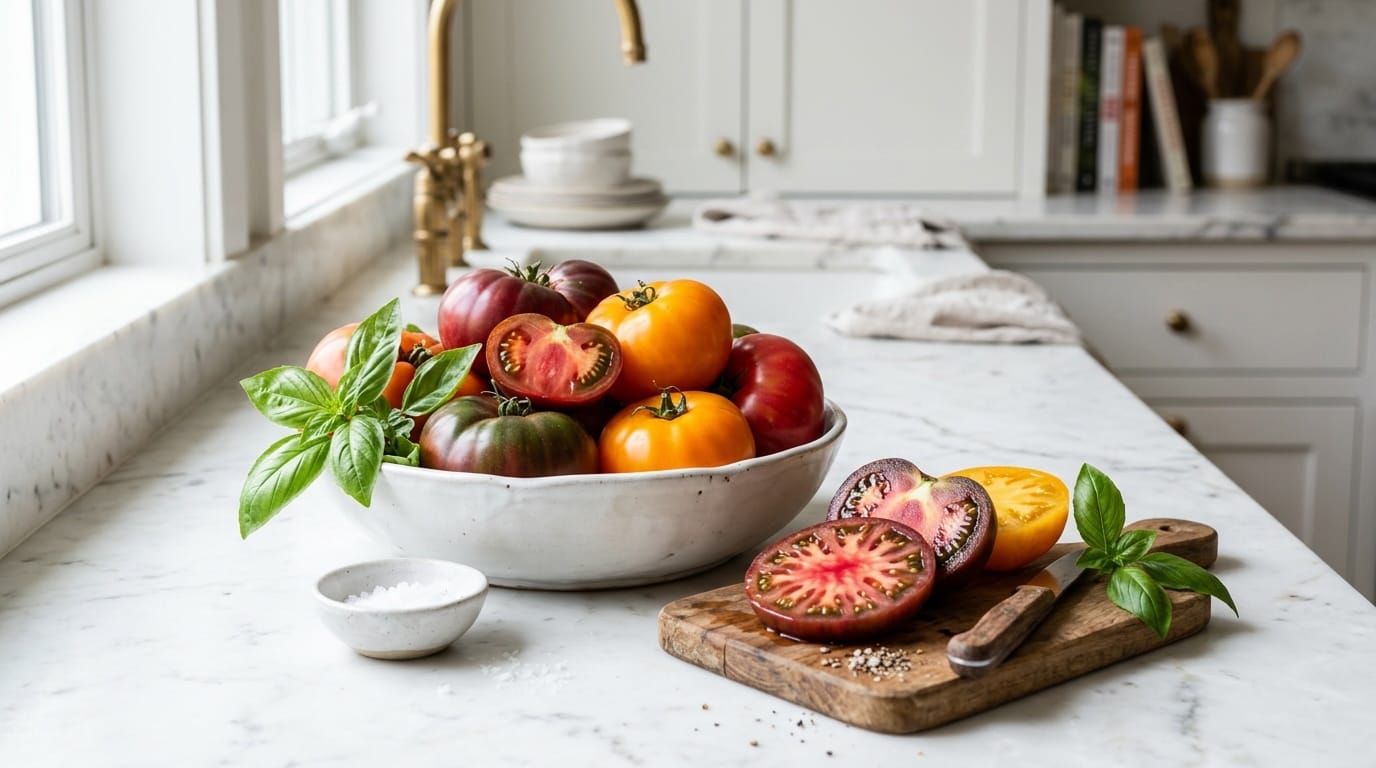
For beginners, cherry tomatoes are the most forgiving and productive choice. Sungold is sweet and orange, beloved by gardeners and farmers market shoppers alike. Sweet 100 and Black Cherry are also excellent. If you want slicers, Cherokee Purple and Brandywine are heirloom favorites worth the extra attention they require. For sauce, paste tomatoes like San Marzano or Amish Paste produce meaty, low-moisture fruit that turns into sauce without a fight. Start with varieties recommended for your climate zone — your local nursery or farmers market often stocks starts specifically suited to your region.
Plant Them Deeper Than You Think
Tomatoes are one of the few vegetables that grow roots along their buried stem. The deeper you plant them — or the more stem you bury sideways in a trench — the stronger and more drought-resilient the root system becomes. A leggy transplant with six inches of bare stem? Bury most of it. You will get a healthier, more productive plant that handles dry spells much better. Plant after your last frost date in a spot that gets at least eight hours of direct sun. Tomatoes planted in shade will give you mostly leaves and disappointment.
Water Consistently and at the Root
Inconsistent watering — a deep soak on Saturday, nothing until Thursday, another deep soak — is the main cause of blossom end rot and cracked fruit. Tomatoes want regular, even moisture. Aim for one to two inches of water per week, delivered slowly at the base of the plant rather than overhead. Overhead watering splashes soil onto lower leaves, which is a common pathway for fungal disease. Mulch around the base of each plant to hold moisture and regulate soil temperature. It is one of those small things that makes a noticeable difference by midsummer.
Stake Early and Stake Seriously
Put your stakes or cages in the ground at planting time, before you need them. Trying to stake a three-foot plant that has already flopped over is a lesson in frustration and broken branches. A sturdy cage or a six-foot stake per indeterminate plant is not overkill — it is the minimum for a plant that will eventually outgrow your expectations. For indeterminate varieties, removing suckers — the new shoots that sprout in the crotch between the main stem and a branch — keeps the plant focused on fruit rather than foliage. It is optional but tends to result in larger, earlier tomatoes.
When to Harvest and What to Do With All of Them
Tomatoes are ready when they are fully colored and give slightly to gentle pressure. If they feel hollow or mushy, you waited too long. If they are still firm all the way through, give them another day on the vine. Never refrigerate a fresh tomato — it kills the flavor and turns the texture mealy. Keep them at room temperature, stem side down, out of direct sun.
When the plants hit peak production in midsummer, you will have more tomatoes than you know what to do with. Roast a sheet pan with olive oil and salt and freeze in bags for winter sauce. Give bags to neighbors. Bring extras to the farmers market if your state cottage food law allows it — slow-roasted tomatoes and homemade tomato jam are perennial market favorites. The embarrassment of tomato riches is one of gardening's genuinely great problems to have.



0 Comments