

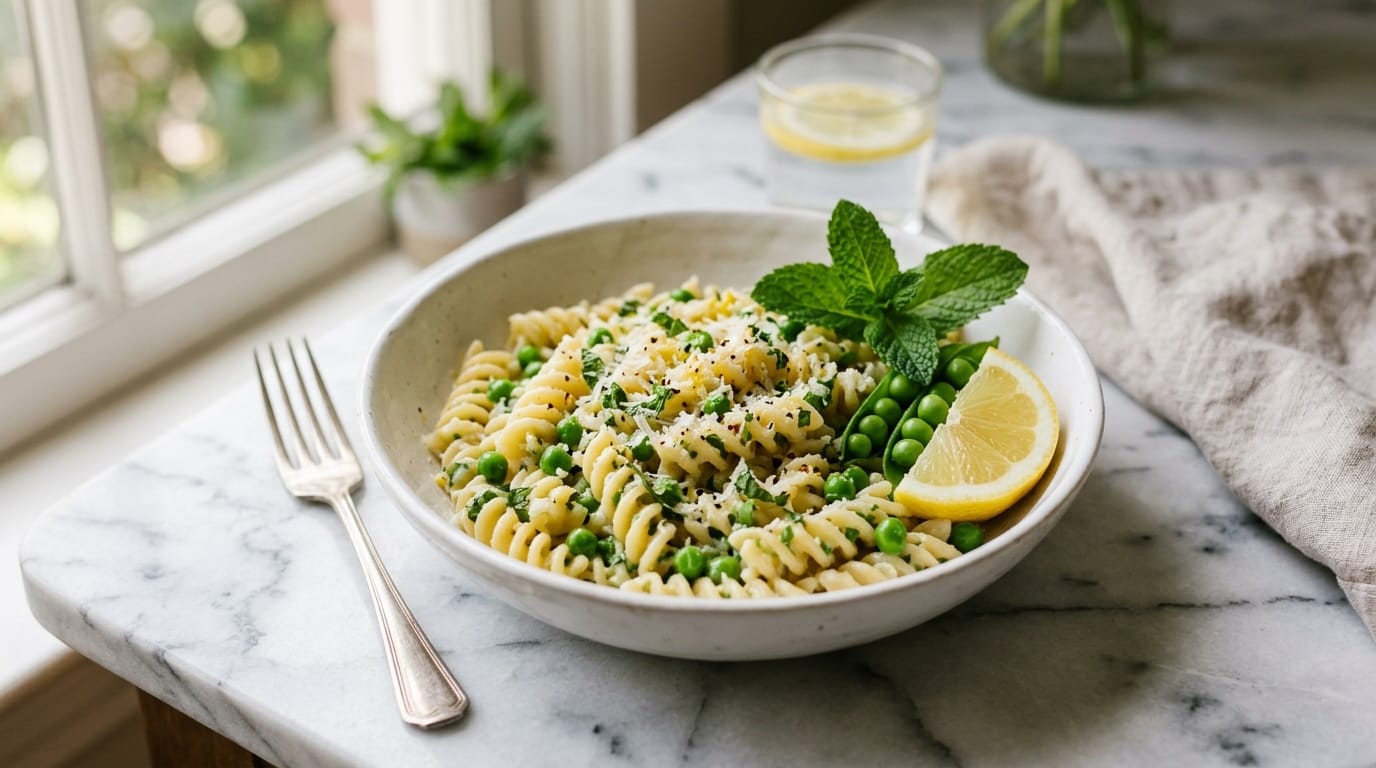
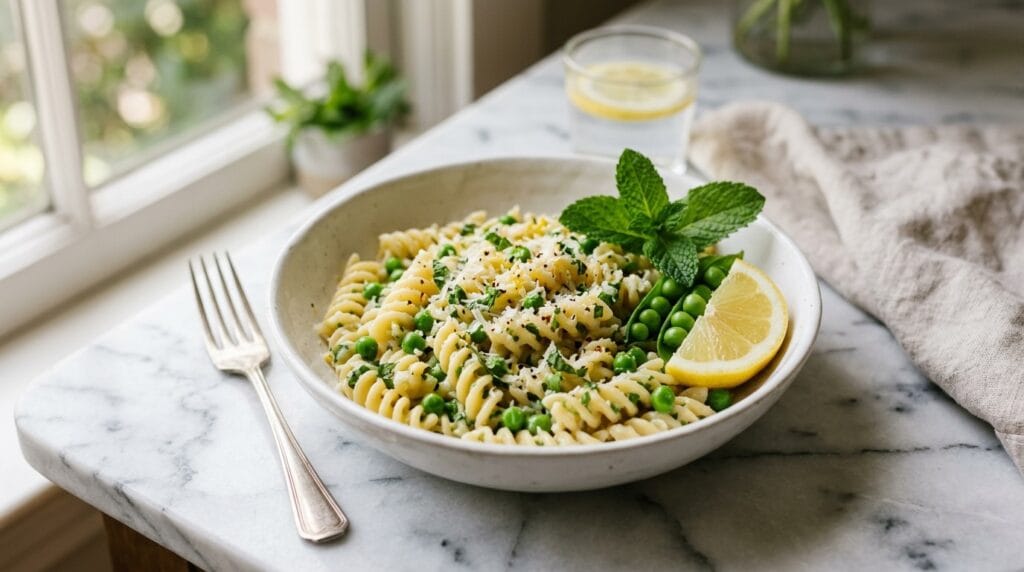
You know that little moment at the farmers market when you spot the peas? The ones piled high in a wooden crate, bright green and impossibly fresh, and the vendor is already shucking a handful for you to try right there in the aisle? That's the moment this pasta was made for.
Spring pea and mint pasta with lemon brown butter is the dish I make every single year the first week English peas show up at my market. This is not a complicated recipe. It's a seasonal one, and there's a difference. Complicated takes skill. Seasonal takes attention — to what's ripe, who grew it, and what it wants to be.
How to Pick the Best Spring Peas at Your Farmers Market
Fresh English peas have a window. A short, glorious one in late spring when the pods are plump but not bulging, the color is vibrant, and the sweetness is real — not the starchy sweetness of peas that have been sitting too long. At your market, look for pods that are firm and bright green with a slight sheen. Give one a gentle squeeze — you should feel the individual peas inside, and the pod shouldn't feel rubbery or dry at the ends. Ask your vendor when they were picked. If the answer is "this morning," you've struck gold.
Don't see fresh English peas? Snap peas and sugar peas work beautifully here too — just slice them on the bias rather than shucking. And if you're reading this in July when fresh peas are long gone, good-quality frozen peas are genuinely excellent in this recipe. No shame in the frozen pea game.
The Technique That Makes This Pasta: Brown Butter
Brown butter sounds like something a pastry chef does on purpose to impress you. It is not. It's butter with patience. You melt it in a light-colored pan, let it foam, and keep going until the milk solids turn toasty and golden and the whole kitchen smells like hazelnuts and caramel. Takes about five minutes. Transforms this pasta from a simple weeknight dinner into something you'll want to make every week until the peas run out.
The rules: use a stainless or light-colored pan so you can actually see the color change, keep the heat medium-low, swirl occasionally, and pull it off the heat the second you see golden-brown specks at the bottom. It goes from "perfect" to "burned" in about thirty seconds — so hover. Once you add fresh lemon juice it'll sizzle dramatically. That's normal. That's perfect. Don't flinch.

Make It Yours: Market-Haul Variations Worth Trying
One of my favorite things about this recipe is how well it plays with whatever else came home from the market with you.
Add goat cheese: Crumble a couple tablespoons of fresh chèvre from a local dairy vendor into the warm pasta right before serving. It melts slightly into the brown butter and adds a beautiful tangy richness.
Toss in pea shoots: If you spot pea shoots at the market, throw a small handful in at the very end. They wilt just slightly from the heat of the pasta and add a lovely raw, grassy note.
Add prosciutto or pancetta: A few thin slices crisped in the pan before you brown the butter takes this firmly into dinner-party territory.
Make it vegan: Use a high-quality vegan butter that actually browns (some don't), skip the Parmesan, and finish with toasted pine nuts and extra lemon zest. Still gorgeous.
[Recipe card will be embedded here via Divi builder]

Tag me if you make this one — I love seeing what you do with your market haul. And if you find a pea vendor worth shouting about, drop them a review on Butter & Sage. Neighbors finding neighbors is kind of our whole thing.
— Amy
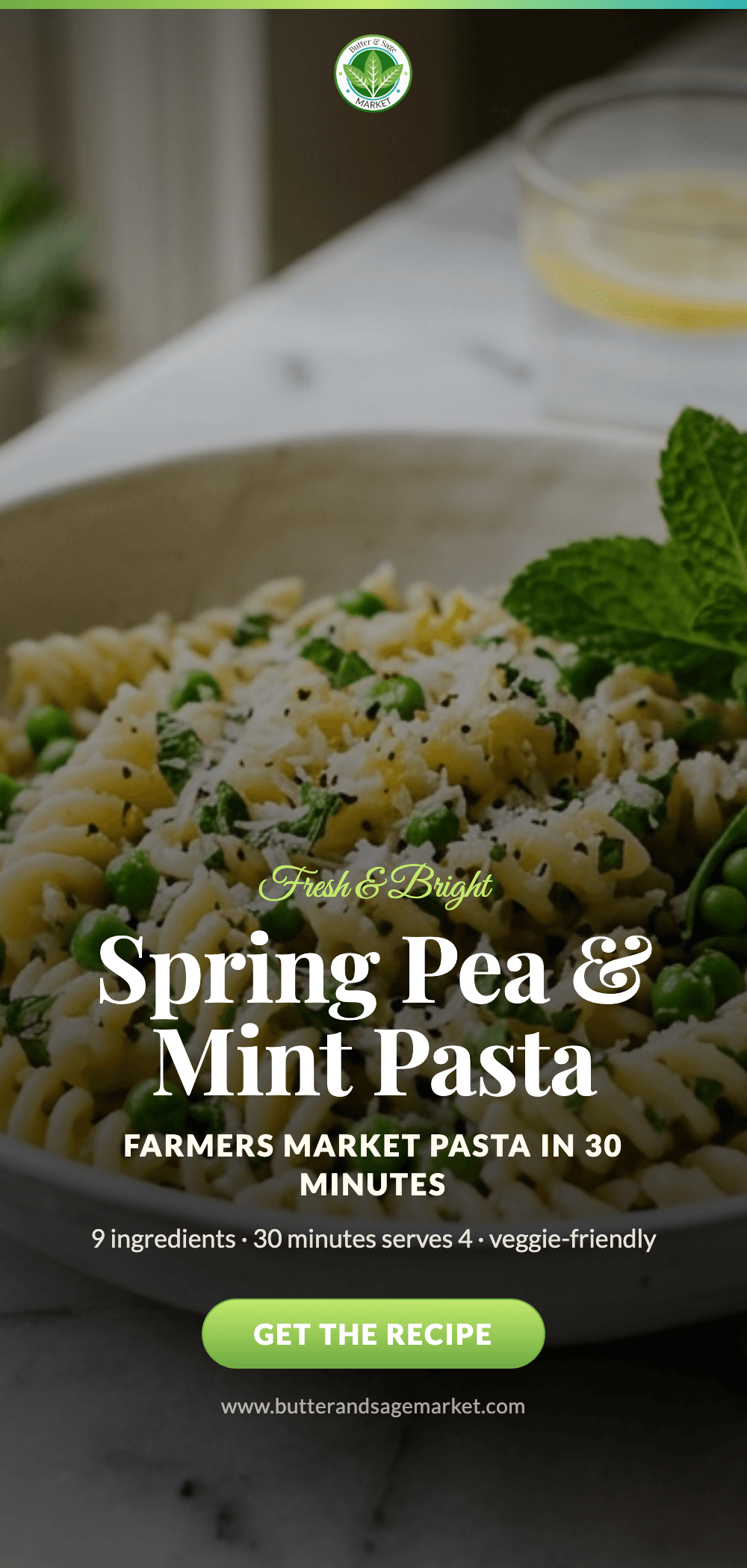
Spring Pea and Mint Pasta with Lemon Brown Butter
Fresh spring peas, nutty brown butter, bright lemon, and fragrant mint come together in this easy 30-minute pasta. The seasonal dish that makes Saturday morning market trips completely worth it.
Ingredients
Instructions
- Bring a large pot of heavily salted water to a boil. Cook pasta according to package directions until al dente. Reserve 1 cup pasta water before draining.
- While pasta cooks, make the brown butter: melt butter in a light-colored skillet over medium heat. Swirl occasionally and cook until the milk solids turn golden brown and it smells nutty, about 4–5 minutes. Watch it closely — it goes from golden to burned fast.
- Add the sliced garlic to the brown butter and cook 30 seconds until fragrant. Add red pepper flakes if using.
- Add the fresh peas and cook 2–3 minutes until just tender and bright green. If using frozen peas, cook 1 minute.
- Remove from heat. Squeeze in the lemon juice (it will sizzle — that's perfect). Add lemon zest.
- Add the drained pasta to the skillet and toss to coat. Add pasta water a splash at a time until the sauce is glossy and clings to the pasta.
- Fold in the mint and Parmesan. Taste and adjust salt and pepper. Serve immediately with extra Parmesan and a few mint leaves on top.
Notes

Keep reading
More from the market
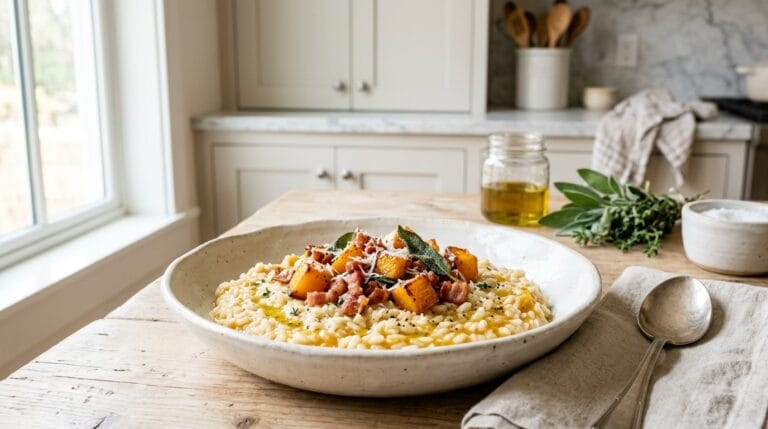
Butternut Squash Risotto with Crispy Pancetta
Half the squash melts into the rice, half stays roasted and whole. The two-texture trick that stops butternut risotto tasting like sweet…
Read more
Savory Sweet Potato and Caramelized Onion Galette with Sage
Sweet potatoes, onions cooked down slow, and fried sage on a free-form crust. A savory galette that turns three cheap market vegetables…
Read more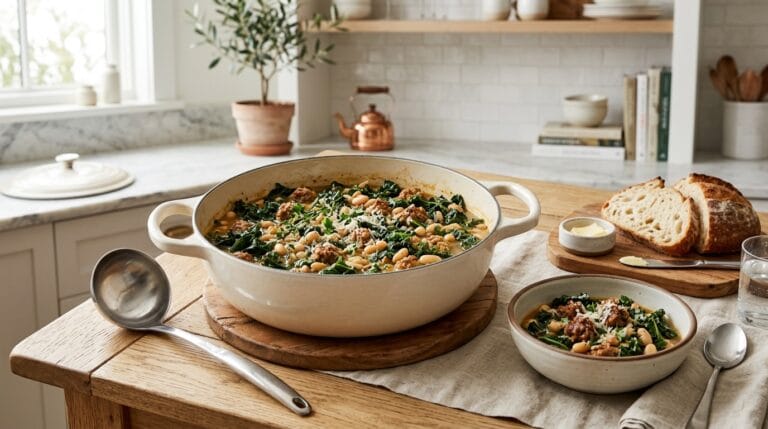
Kale and White Bean Stew with Sausage
One pot and forty minutes. Sausage, creamy white beans and a whole bunch of market kale, with the vinegar trick that stops…
Read more