
There's a reason sourdough keeps stealing the show at farmers markets. It smells incredible, it looks like a little work of art, and people will happily line up for a good crackly-crusted loaf. If you've been baking for your family and quietly wondering whether you could sell it, the short answer is: yes, and this is a great year to start. Sourdough is one of the fastest-growing food categories going right now, and demand at local markets is right there with it.
Is It Legal to Sell Sourdough From Home?
Good news first: bread is one of the most universally allowed cottage foods in the country. Because a baked loaf is shelf-stable and not potentially hazardous, sourdough is treated the same as any other bread under cottage food rules — even though it's leavened with a wild starter instead of packaged yeast. Nearly every state lets you bake and sell it from your home kitchen, most commonly at farmers markets, which are the most widely permitted place to sell.
What varies by state is the paperwork around it: whether you need a food handler's card, what your label has to say, and whether there's a cap on how much you can earn. Almost every state requires a label with your name, the product, ingredients, allergens, and a "made in a home kitchen" disclaimer. Check your own state's current rules before your first market — a five-minute read now saves a headache later.
What Should You Charge for a Loaf?
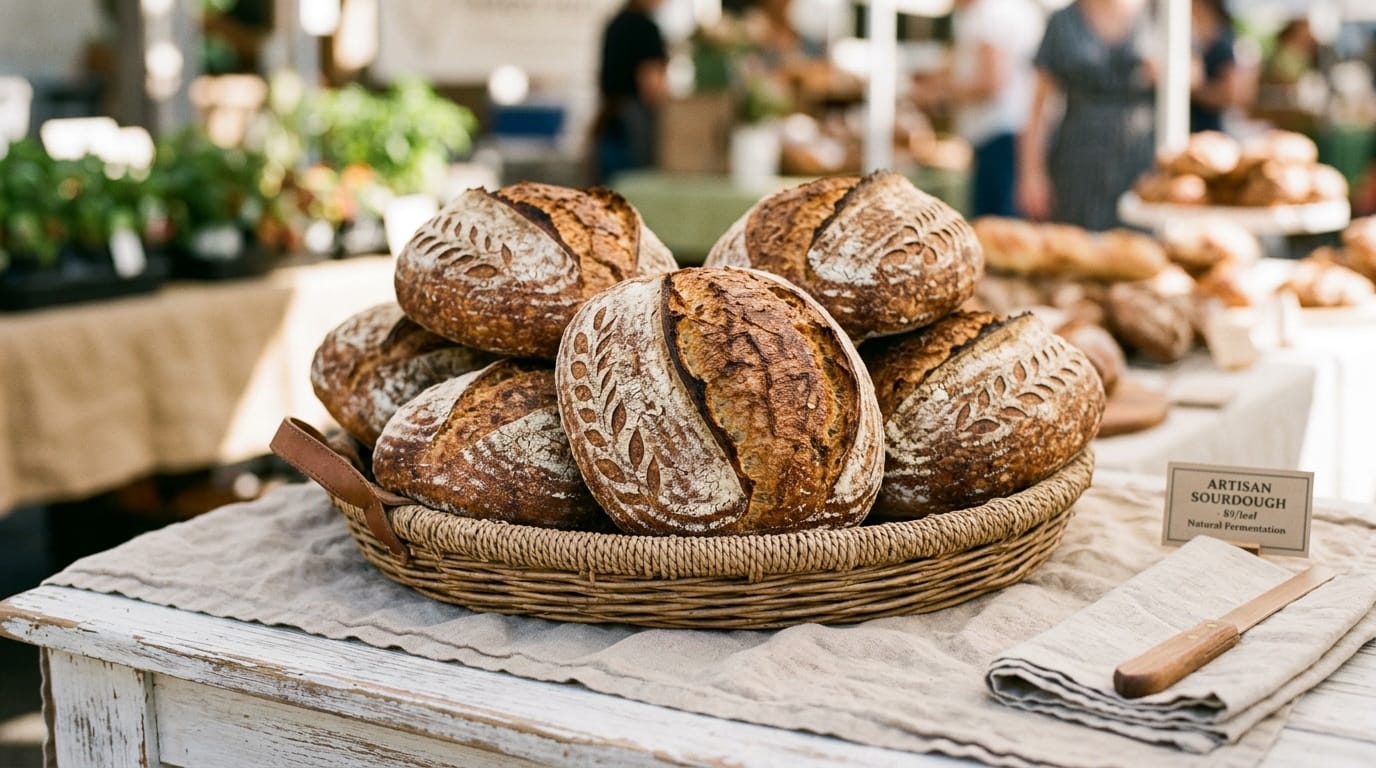
Here's where a lot of new bakers undersell themselves. A standard country sourdough loaf sells for roughly $9 to $12 at most U.S. farmers markets in 2026, with specialty loaves (seeded, jalapeño-cheddar, cinnamon-raisin) running higher. Your actual ingredient cost per loaf is usually under a dollar — but resist the urge to price off ingredients alone. You're charging for a full day of feeding starter, mixing, folding, shaping, proofing, and baking, plus your booth fee, packaging, and the drive to market.
Price the loaf so that after your booth fee (commonly $25–$75 a day) and packaging, you're still making money on a realistic number of loaves. If you'd be embarrassed to charge $10, that's usually a sign you should. Your neighbors are buying a hand-shaped loaf from someone they can talk to — that's worth real money, and they know it.
Setting Up a Table People Walk Toward
Sourdough sells itself when people can see it. Stack loaves high in a basket lined with a linen cloth so the crust catches the light. Cut one loaf open so shoppers can see the open crumb — that airy interior is your best salesperson. Bring a small chalkboard with your loaf types and prices, keep a stack of ingredient/allergen cards, and have a way to take cards as well as cash, because plenty of people don't carry bills anymore.
Start small. Bake what you can genuinely handle for your first few markets — selling out early is a much better problem than hauling home two dozen unsold loaves. Track what moves, learn your regulars' names, and grow your batch as demand tells you to.
Butter & Sage Market
Ready to sell more than one market can hold?
A farmers market table is the perfect place to start — but your regulars can't always make it on Saturday. Open a Butter & Sage shop and let neighbors order your loaves online, reserve for pickup, and find you all week long.
Fresh. Local. Sustainable.
Sourdough rewards patience — in the kitchen and in the business. Bake a great loaf, price it like you mean it, and let word of mouth do the rest. Come tell us in the community what's rising in your kitchen this week.

0 Comments