
What’s at the Farmers Market in October? Your Peak-Harvest Shopping Guide
October is the fullest month at the farmers market and the last call for a lot of it. Here is what is in season, what to buy in bulk, and what to preserve now.
 1 min read
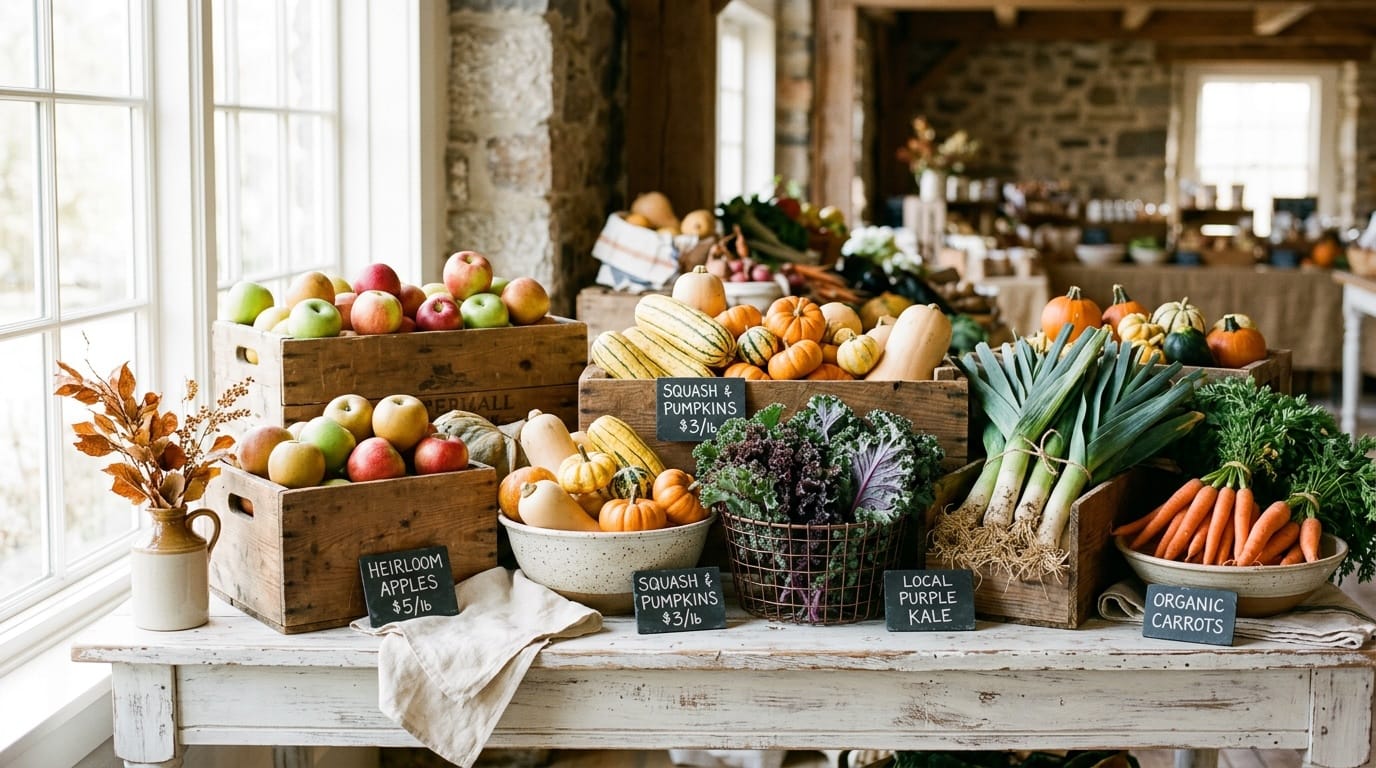
There is a particular kind of overwhelm that happens at the farmers market in October. You walk in planning to grab a few things for the week, and forty minutes later you are holding two bags, a squash the size of a small dog, and no clear plan. Everything is at once, and some of it is about to disappear until May.
October is the fullest month of the entire market year — the last of summer overlapping with the first real wave of fall storage crops. It is also the month where a little strategy pays off enormously, because what you buy and put away now is what you will be grateful for in February.
What Is Actually in Season at the Farmers Market in October
Exact timing shifts by a few weeks depending on where you live, but across most of the country this is the October table:
Apples and pears. Peak of peak. This is the month with the widest variety you will see all year — dozens of apples that never make it to a grocery store because they bruise easily or do not ship. Ask which ones are for eating and which are for baking; they are rarely the same apple.
Winter squash. Delicata, butternut, acorn, kabocha, honeynut, and whatever heirloom your grower is obsessed with this year. These are storage crops — a cured winter squash will sit happily on your counter for two to three months.
Root vegetables. Carrots, beets, turnips, celeriac, parsnips, and sweet potatoes. Fall carrots are noticeably sweeter than summer carrots because cold weather converts their starch to sugar. This is not marketing; it is the actual reason.
Brassicas. Kale, cabbage, broccoli, cauliflower, and Brussels sprouts still on the stalk if you are lucky. Kale after the first frost is a completely different vegetable — sweeter, less bitter, worth the wait.
The last of summer. Tomatoes, peppers, and eggplant are still around in early October in a lot of regions, and they are cheap because growers are clearing the field. This is your last honest tomato until next July.
Alliums and hardy herbs. Storage onions, shallots, leeks, and garlic. Sage, rosemary, thyme, and parsley are all still going strong.
Also worth looking for. Cranberries, quince, figs in warmer regions, fresh-pressed cider, wild mushrooms, pumpkins that are meant for eating rather than carving, and the year's new-crop nuts.

What to Buy in Bulk This Month
October is the one month where buying more than you need is the smart move, because so much of what is on the table stores well with almost no effort.
Buy winter squash by the armful. Cured squash needs nothing but a cool, dry spot away from direct sun — no fridge, no processing. Buy storage onions, shallots, and garlic in quantity for the same reason. Buy carrots and beets in five-pound bags; trim the greens off immediately so they do not pull moisture out of the root, and they will keep for months in the crisper.
Buy the ugly apples on purpose. Seconds — the bruised, scarred, oddly shaped ones — often cost half what the display apples do, and they are identical once they are sauce, butter, or a pie filling. Ask the orchard if they have any; a lot of growers keep them in a crate under the table and only sell them if you ask.
And buy the last tomatoes and peppers while they are cheap. Roast a sheet pan of them, freeze them flat in bags, and thank yourself in January.
What Disappears After This Month
This is the part worth paying attention to, because a lot of shoppers get caught by it. In most regions, once the first hard frost lands, the following are simply gone until late spring: field tomatoes, sweet peppers, eggplant, corn, green beans, basil, summer squash, and most soft fruit.
If there is a summer thing you have been meaning to preserve all year and never got around to, this is the weekend. Not next weekend.
Basil is the sneakiest one. It dies at the first cold night, no warning. If you see a big bunch of it in October, buy it and turn it into pesto that afternoon — freeze it in an ice cube tray and you will have August on hand all winter.
How to Shop October Without Coming Home Overwhelmed
A loose plan beats a shopping list this month, because you do not know what will be there. Try this instead: walk the whole market once before you buy anything. Note who has what and what looks best. Then go back and build your week around the two or three things that looked extraordinary rather than the things you wrote down at home.
Bring more bags than you think you need and something rigid for the bottom — squash and root vegetables are heavy and unkind to tote handles. Bring cash and small bills. And go early if you want the odd heirloom varieties, or go in the last hour if you are hoping for a deal on seconds and end-of-day produce.
One more thing that makes October easier: ask your growers what they are most excited about. In a month this abundant, the person who grew it has a much better sense of what is peaking this exact week than any guide can give you — including this one.
Support the People Who Grew It
October is a hard, beautiful month for small farms. Harvest is relentless, the season is closing, and every crate that goes home unsold is money that does not come back. Buying deep this month — the extra squash, the bag of seconds, the case of apples — genuinely matters to the people standing behind those tables.
It also happens to be the best eating of the year. Not a bad trade.
Wondering which apple to reach for, or what to do with a delicata squash once you get it home? We have you covered — and if you want to find the markets and small food vendors near you, that is exactly what Butter & Sage Market was built for.

Keep reading
More from the market
How to Get Your Baked Goods to Market Without Wrecking Them
Cakes slide, frosting sweats, cookies go soft in the car. The crates, timing and packing order that get your bakes to the…
Read more
How to Store Root Vegetables and Winter Squash So They Last Until Spring
Potatoes, squash, carrots and onions will keep for months if you get a few things right. What each one wants, and the…
Read more
What to Do With Unsold Stock When the Market Season Ends
The last market of the season ends with a car full of what did not sell. Here is how to turn that…
Read more