

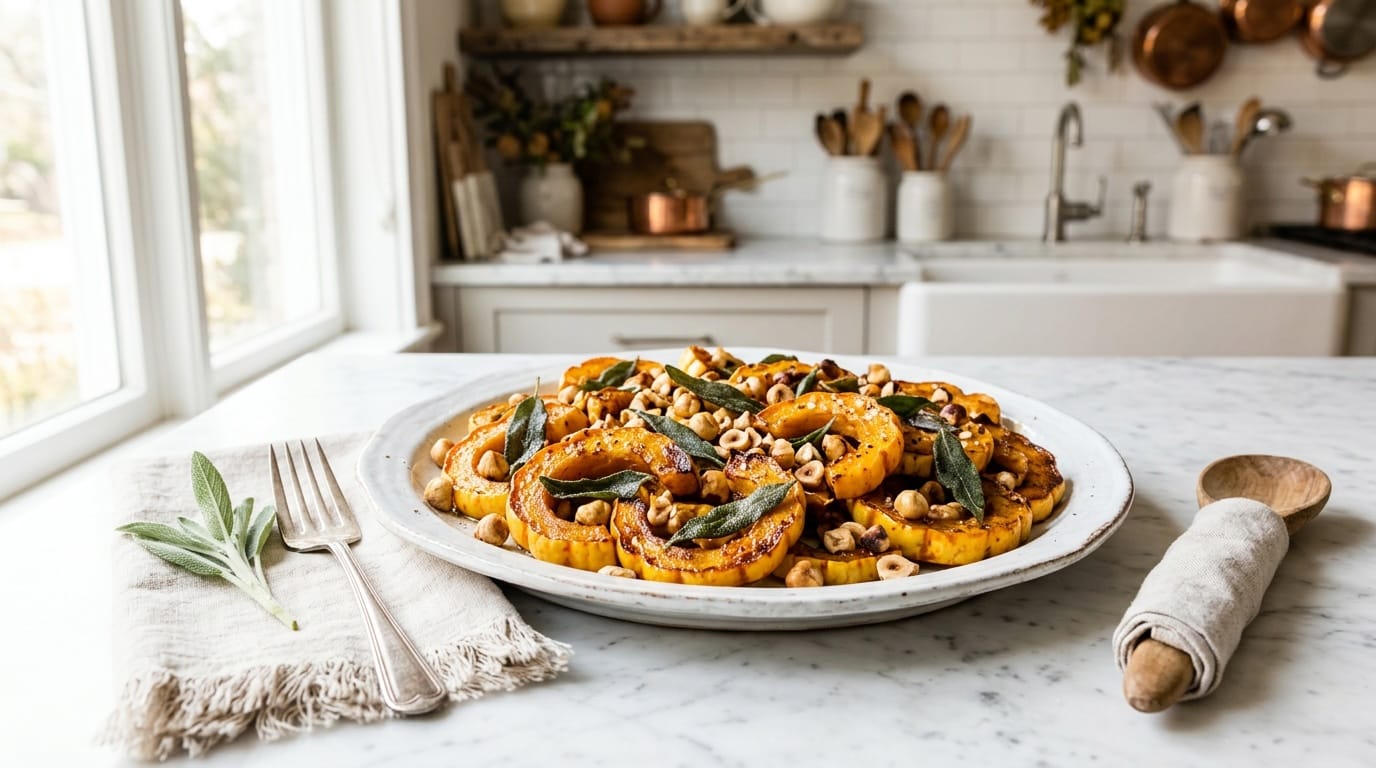
The first delicata of the season always shows up at the market looking like it wandered in from a different vegetable family. Small, ridged, striped cream and green, sitting in a crate next to the enormous butternuts like a completely different proposition. Which it is — because delicata is the one winter squash you do not have to peel.
That single fact changes everything about how often you will actually cook it. No wrestling a rock-hard butternut with a vegetable peeler and quietly reconsidering your life. You slice a delicata into half-moons, scoop the seeds, toss with fat, and roast. The skin goes tender and slightly chewy and is completely, deliciously edible.
Why Delicata Is Worth Grabbing in October
Delicata is sweeter than most winter squash — it tastes closer to a sweet potato than to acorn squash — and the flesh caramelizes hard at the cut edges when it roasts. It is also thin-skinned, which is why it cooks in thirty minutes instead of an hour, and why it does not store as long as its thick-skinned cousins. That is the trade. Buy it when you see it, cook it within a few weeks.
Look for squash that feels heavy for its size with firm, matte skin and deep green stripes. A glossy sheen usually means it was picked young and has not developed its sugar. And skip anything with soft spots at the stem or blossom end.
At the market, this is often a small-farm crop rather than a wholesale one — growers plant delicata precisely because it is a variety that people who shop farmers markets recognize and want. If your market has a squash-heavy grower, ask what else they have in the honeynut and heirloom range while you are there.

Brown Butter Is the Whole Technique
If you take one thing from this recipe, take this: brown butter is not a fancy step, it is just butter you paid attention to for four minutes.
Melt butter in a light-colored pan so you can see what is happening. It will foam, then quiet down, and then the milk solids at the bottom will start to turn gold and smell like toasted nuts. That is the moment. It goes from perfect to burnt in about twenty seconds, so pull it off the heat the instant it smells nutty and looks amber, and pour it out of the hot pan immediately so it stops cooking.
Drop your sage leaves into that hot butter and they crisp in seconds while perfuming the whole thing. You now have a sauce with three ingredients that tastes like it took effort. It did not.
A note for anyone nervous about it: use a stainless or light enameled pan, not dark nonstick. You cannot judge the color in a black pan, and judging the color is the entire skill.
Make It Yours
This recipe is a template more than a rule. A few directions that all work:
- Swap the nut. Toasted pecans, walnuts, or pepitas all work. Pepitas keep it nut-free and lean into the squash.
- Add something sharp. A crumble of goat cheese, shaved pecorino, or blue cheese over the warm squash cuts the butter beautifully.
- Add something bright. A squeeze of lemon or a splash of apple cider vinegar right at the end wakes the whole dish up. Do not skip this if it tastes flat.
- Make it a main. Spoon it over farro, barley, or wild rice, add a handful of arugula and dried cranberries, and it becomes a full vegetarian dinner.
- Go savory-sweet. Drizzle with hot honey at the table — the sweet heat against brown butter is genuinely excellent.
- Make it vegan. Brown-butter olive oil is not a thing, but toasting the sage in good olive oil with a spoonful of miso whisked in gets you a shockingly close depth of flavor.
What to Serve It With
This lands somewhere between a side and a centerpiece. It is wonderful next to roast chicken or pork, it holds its own on a Thanksgiving table, and it reheats better than most vegetable dishes — spread it on a sheet pan and hit it with high heat for five minutes rather than microwaving it into mush.
It also makes a very good lunch the next day, cold, straight from the container, standing at the counter. Not that anyone here would do that.
If you make this, we would love to see it — tag @butterandsagemarket so we can share it. And if your market has a grower with a table full of odd, striped, beautiful squash you have never heard of, buy one of those too. That is how you find your next favorite.
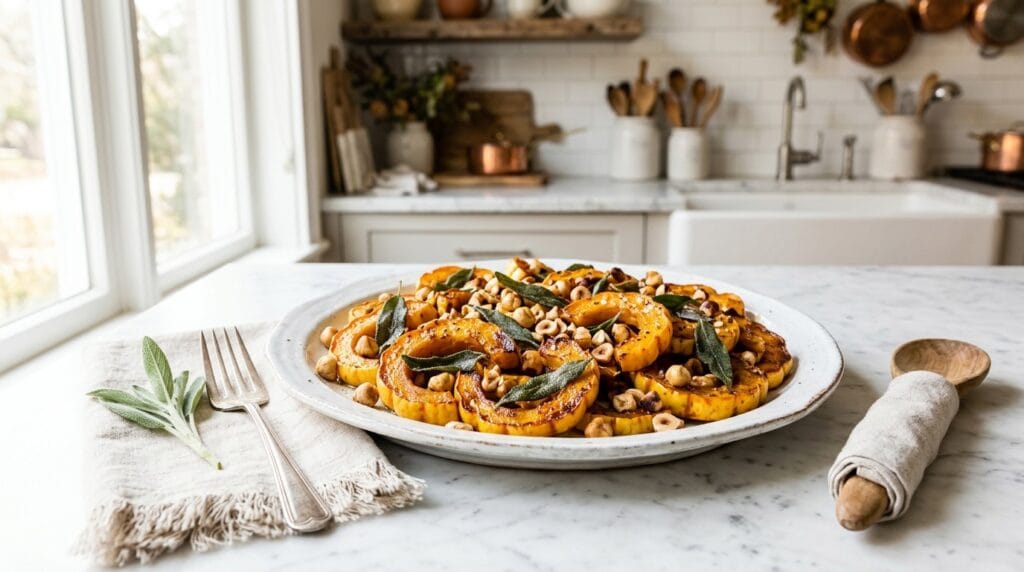
Roasted Delicata Squash with Brown Butter, Sage, and Hazelnuts
The fall side dish that skips the peeling entirely. Delicata squash roasts into sweet, caramelized half-moons, then gets tossed with nutty brown butter, crisp sage, and toasted hazelnuts.
Ingredients
For the Squash
For the Brown Butter Sage
Instructions
Roast the Squash
- Heat the oven to 425°F and set a rack in the lower third. Line a large sheet pan with parchment.
- Trim the ends off each delicata squash, slice in half lengthwise, and scoop out the seeds with a spoon. Do not peel — the skin is thin and completely edible once roasted.
- Slice each half crosswise into 1/2-inch half-moons. Toss on the sheet pan with the olive oil, kosher salt, and pepper until evenly coated, then spread into a single layer with space between the pieces. Crowding steams the squash instead of caramelizing it.
- Roast for 20 minutes, flip each piece, and roast another 8 to 12 minutes until deeply golden at the edges and tender all the way through.
Brown the Butter
- While the squash roasts, melt the butter in a light-colored stainless or enameled skillet over medium heat. Using a light pan matters — you need to see the color change.
- Swirl occasionally. The butter will foam, then quiet down, then the milk solids will turn golden brown and smell distinctly nutty. This takes 3 to 5 minutes. Watch it closely at the end; it goes from perfect to burnt in seconds.
- The moment it smells toasty and looks amber, add the sage leaves. They will sizzle and crisp in about 30 seconds. Immediately pour the butter and sage into a heatproof bowl so it stops cooking in the hot pan.
Finish and Serve
- Transfer the roasted squash to a serving platter. Spoon the brown butter and crisp sage leaves over the top.
- Scatter with the toasted hazelnuts, add the vinegar or lemon juice, and finish with flaky sea salt. Taste and adjust — if it tastes flat, it needs more acid, not more salt.
- Serve warm.
Notes
To toast hazelnuts: spread on a dry sheet pan at 350°F for 8 to 10 minutes until fragrant, then rub in a clean kitchen towel to remove most of the skins. Pecans, walnuts, or pepitas all substitute well.
Make it a main: spoon over cooked farro, barley, or wild rice with a handful of arugula and dried cranberries.
Make it vegan: skip the butter and instead warm 4 tbsp good olive oil with the sage and 1 tsp white miso whisked in.
Reheat on a sheet pan at 425°F for 5 minutes rather than in the microwave, which turns the edges soft.
Choosing squash: look for firm, matte skin with deep green stripes and a squash that feels heavy for its size. Delicata does not store as long as thick-skinned winter squash — use within 2 to 3 weeks.

Keep reading
More from the market

Kale and White Bean Stew with Sausage
One pot and forty minutes. Sausage, creamy white beans and a whole bunch of market kale, with the vinegar trick that stops…
Read more
Skillet Baked Eggs with Blistered Tomatoes and Feta
One skillet, thirty minutes, and the best possible use of late-summer market tomatoes and farm eggs. Breakfast, lunch, or a very good…
Read more
Overnight Sourdough Cinnamon Rolls (Soft, Tangy, and Market-Ready)
Soft, tangy overnight sourdough cinnamon rolls. The cold rise does the work while you sleep — and they hold up beautifully on…
Read more