
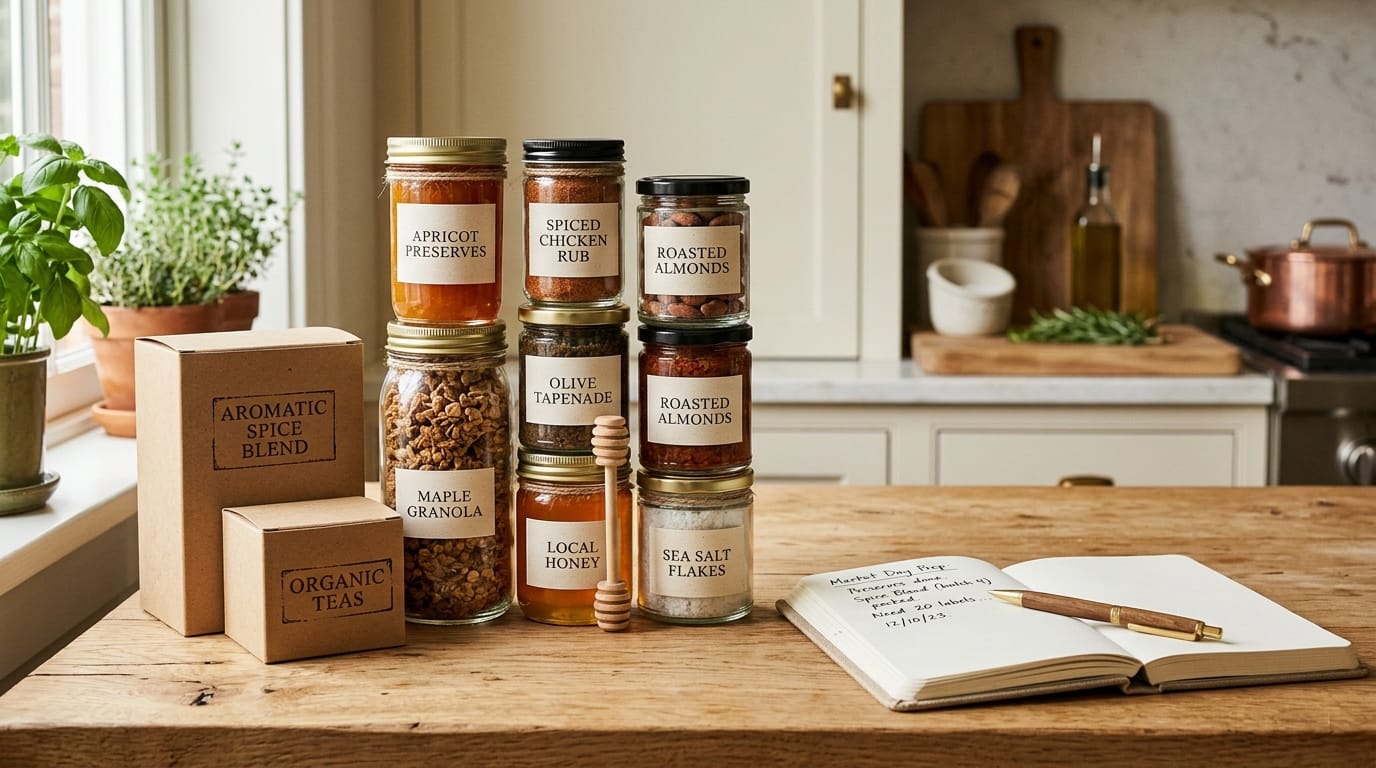

There is a particular feeling at the end of the last outdoor market, and it is not triumph. You are tired, it got dark early, and you are loading back into the car roughly a third of what you loaded out of it. Somewhere in your house there is already a shelf, or a closet, or an entire spare room, holding what did not sell in August.
Nobody plans for this part. The whole season is about making enough, and then it ends and you are holding the difference.
First, sort it into three piles — not two
Most people sort into "still good" and "not good," and then feel bad about the second pile until it goes in the bin. There is a more useful cut.
Pile one: time-sensitive. Anything with a date coming up inside six weeks. This pile has a deadline and gets your attention first.
Pile two: shelf-stable and fine. Jams, honey, spice blends, dried goods, anything sealed and happy for months. This pile is not a problem, it is next season's opening inventory, and it should be stored like an asset instead of stuffed somewhere.
Pile three: the information pile. Whatever you have a lot of. Not because it went bad, but because it did not move. That pile is the most valuable thing in your garage and the easiest to throw away without reading it.
Five ways to turn the first pile into something
Bundle it instead of discounting it. A markdown teaches people your prices are soft and trains the regulars to wait. A bundle does the opposite — three jars in a box at a price that is obviously a deal on the third one, while every individual price stays exactly where it was. Same money to you, no damage to what you charge in April.
Sell it to the people who already said yes. Your email list and your regulars will clear a surprising amount of end-of-season stock in one message, especially framed honestly: this is what is left, here is what it costs, here is when you can get it. You do not need a campaign. You need one plain note to people who already like what you make.
Turn singles into gifts. October is early enough that a "last of the season" gift box is a real offer, not a clearance sale. Odd quantities and one-offs that look like leftovers on a market table look deliberate in a box with tissue and a card.
Trade it. The soap maker two booths down also has stock she is looking at. Vendors trading end-of-season inventory is how half of us do our holiday shopping, and it costs neither of you cash.
Give some away on purpose. Not as a sad giveaway — as a deliberate spend. A local food pantry, the teachers at your kid's school, the people who let you park in their lot all summer. It is a legitimate business decision with a real return, and it feels considerably better than watching it expire.
Then read the third pile, because it is telling you something
Sit with what did not move and ask which kind of "no" it was.
Did you make too much of something that sells fine? That is a batch-size problem, and the fix is next year's prep sheet, not the product.
Did it sell early and then stop? That is a seasonality problem. Peach anything dies in September no matter how good it is. Make it, sell it, stop making it.
Did it never really move at all? That one is worth being honest about. Every vendor has an item they keep making because they like it, or because one person asked for it in 2024. It takes up a slot on the table, a line on the label order, and space in your prep day. Retiring it is not failure — it is how the table gets stronger.
Write down what you decide now, while the season is fresh. In March you will remember that it was "a good year" and nothing else, and you will make eighty of the thing again.
Store what is left like you meant to keep it
Whatever survives into pile two: label the box with what is in it, how many, and the date. Not a guess in a Sharpie, an actual count. Keep it somewhere with a stable temperature — not a garage that swings forty degrees, which will do more damage over a winter than the whole summer did.
Come spring, that box is a head start instead of a mystery. And the first market of next season is hard enough without inventing your opening inventory from scratch at 5 a.m.
Butter & Sage Market
Keep selling after the tent comes down
An online shop gives your shelf-stable stock somewhere to go all winter, with local pickup so your neighbors can still grab a jar without a market in sight.
Fresh. Local. Sustainable.
The season ending does not have to mean the selling ends — plenty of makers keep a shop open through the winter and let the shelf-stable stock keep working. However you handle yours, I would love to hear what actually cleared your table.



0 Comments