
How to Put Your Garden to Bed for Winter (And Make Next Spring Easier)
What to pull, what to leave for the birds, and why covering bare soil now is the single best thing you can do for next year's vegetables. A beginner's checklist.
 1 min read
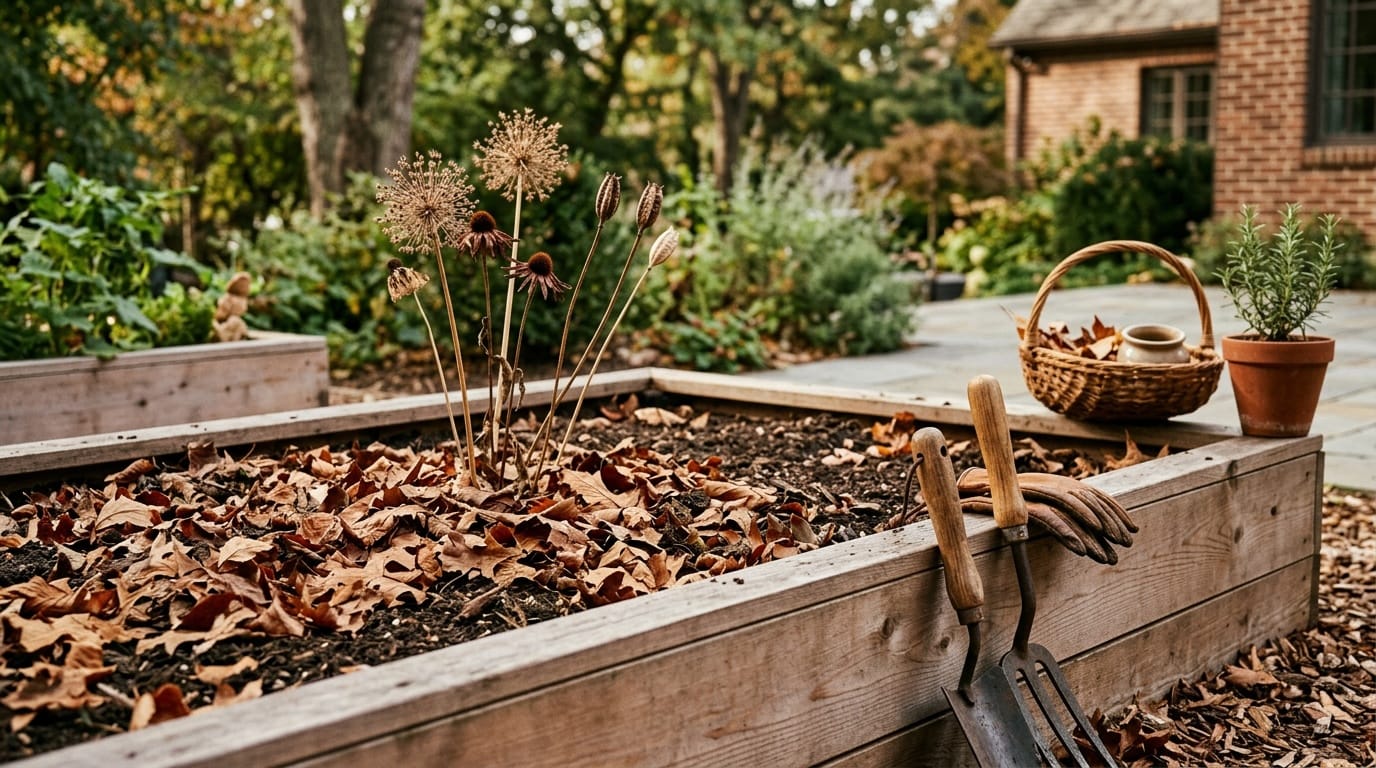
By October the garden has stopped being a project and started being a mess. The tomatoes are half-dead and still producing three sad fruit a week, something has gone to seed in the corner, and the whole thing has the air of a party nobody cleaned up after.
The temptation is to shut the door on it until March. Resist that, because about an hour of work now is worth a whole weekend in spring, and one of the jobs genuinely changes how well things grow next year.
Pull these, and pull them properly
Anything diseased goes, and it does not go in the compost. Tomato plants with spotted, yellowing leaves, squash with powdery white leaves, anything that rotted — bag it or burn it. Home compost heaps rarely get hot enough to kill those spores, and you will be spreading the same problem on your beds next June.
Anything finished and healthy can come out and go straight on the heap: bean plants, spent annual flowers, the last of the courgettes.
Pull the weeds now, especially the ones that have set seed. One hour in October against one weed for every seed in April is the best trade in gardening.
Leave these standing
This is where the old advice has changed, and for good reasons.
Leave seed heads — sunflowers, coneflowers, rudbeckia, ornamental grasses. Birds eat them through winter, and they look far better under frost than bare soil does.
Leave some hollow stems and leaf litter in a corner. Solitary bees and beneficial insects overwinter in exactly that material, and the garden that has them in March is the garden that gets pollinated in June.
Leave perennial herbs alone. Do not cut back sage, thyme, rosemary or lavender hard in autumn — the old growth protects the crown through cold, and hard pruning now encourages tender new shoots at precisely the wrong moment. That is a spring job.

The one job that matters most: cover the soil
If you do nothing else, do this.
Bare soil over winter is soil that gets rained on for five months. The rain compacts it, washes nutrients down past where roots will reach, and by spring you have something closer to a pavement than a bed. Covered soil stays open, keeps its structure, and holds onto what is in it.
Three ways, all fine:
Mulch. Two or three inches of compost, well-rotted manure, leaf mould or straw over the top of the bed. You do not need to dig it in — worms do that over winter, considerably better than you would.
Leaves. Free, already on your lawn, and the best soil improver there is. Run the mower over them to shred, then pile them on the beds. Whole leaves mat down and shed water; shredded ones break down beautifully.
A cover crop. Sow winter rye, field beans or clover in early autumn and let it grow through winter, then cut it down and leave it on the surface in spring. It holds the soil, feeds it, and looks like you meant it. This is the one that needs planning, because it wants sowing before the cold really arrives.
The half hour that makes spring pleasant
Clean the tools. Scrape the soil off, wipe them with an oily rag, sharpen the secateurs. Rust happens in a damp shed over five months and a seized pair of secateurs in March is a small daily misery.
Empty and turn the hoses, drain anything that holds water and can freeze, and bring terracotta pots inside or up off the ground — a wet pot that freezes cracks.
Label what is where, or draw the beds on a scrap of paper. You will not remember in April which bed had the tomatoes, and rotating them is most of the disease prevention available to a home garden.
And order garlic now if you have not already — it wants planting in October or November, it takes ten minutes, and it is the one crop that gives you something to look at in February.
What is still going in your garden? Mine is entirely kale and one confused nasturtium that has not read the forecast.

Keep reading
More from the market
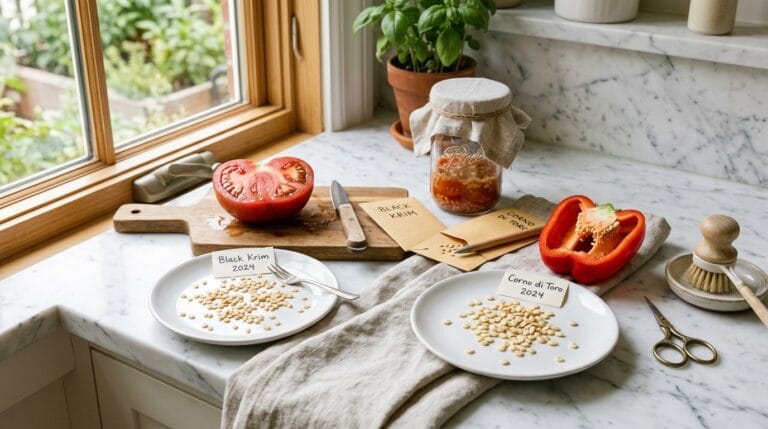
How to Save Seeds from Your Best Tomatoes and Peppers
The best tomato in your garden this year can be next year's whole crop, for free. Here's how to save tomato and…
Read more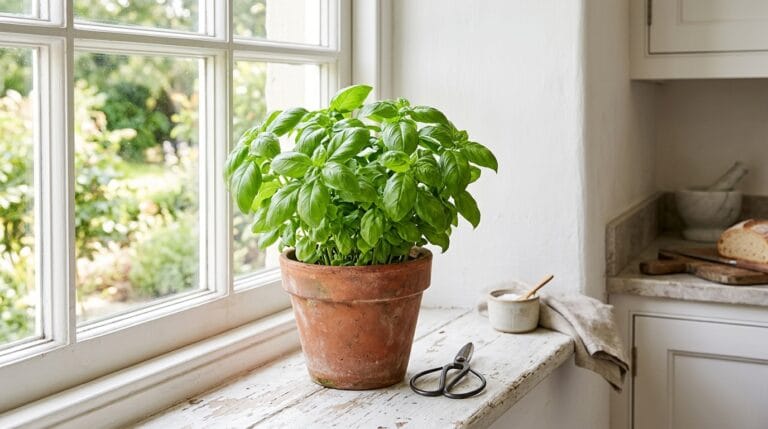
How to Grow Basil at Home (And Never Buy a Sad Plastic Clamshell Again)
How to grow basil at home — from starting plants to the pinching technique that keeps them producing all summer. A beginner-friendly…
Read more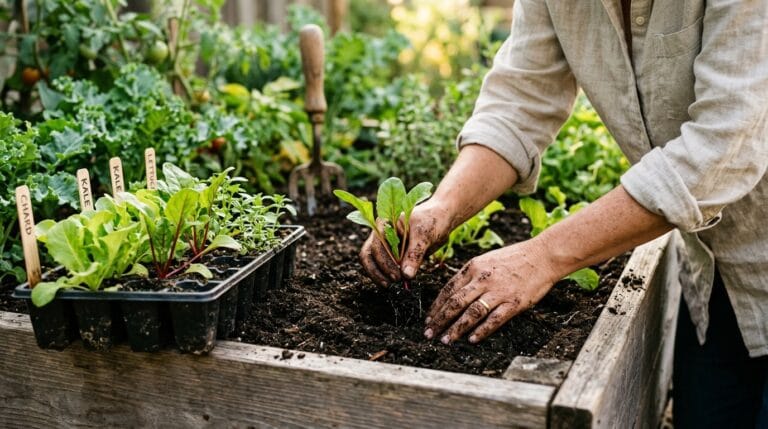
What to Plant in August for a Fall Harvest
August isn't the end of the garden — it's the start of your fall harvest. Here's what to plant now for a…
Read more