
A CSAware Alternative for Small CSAs
Weighing a CSAware alternative? How its percent-of-deliveries pricing works at small sizes, who it suits, and what a 25-member CSA actually needs from software.
 5 min read
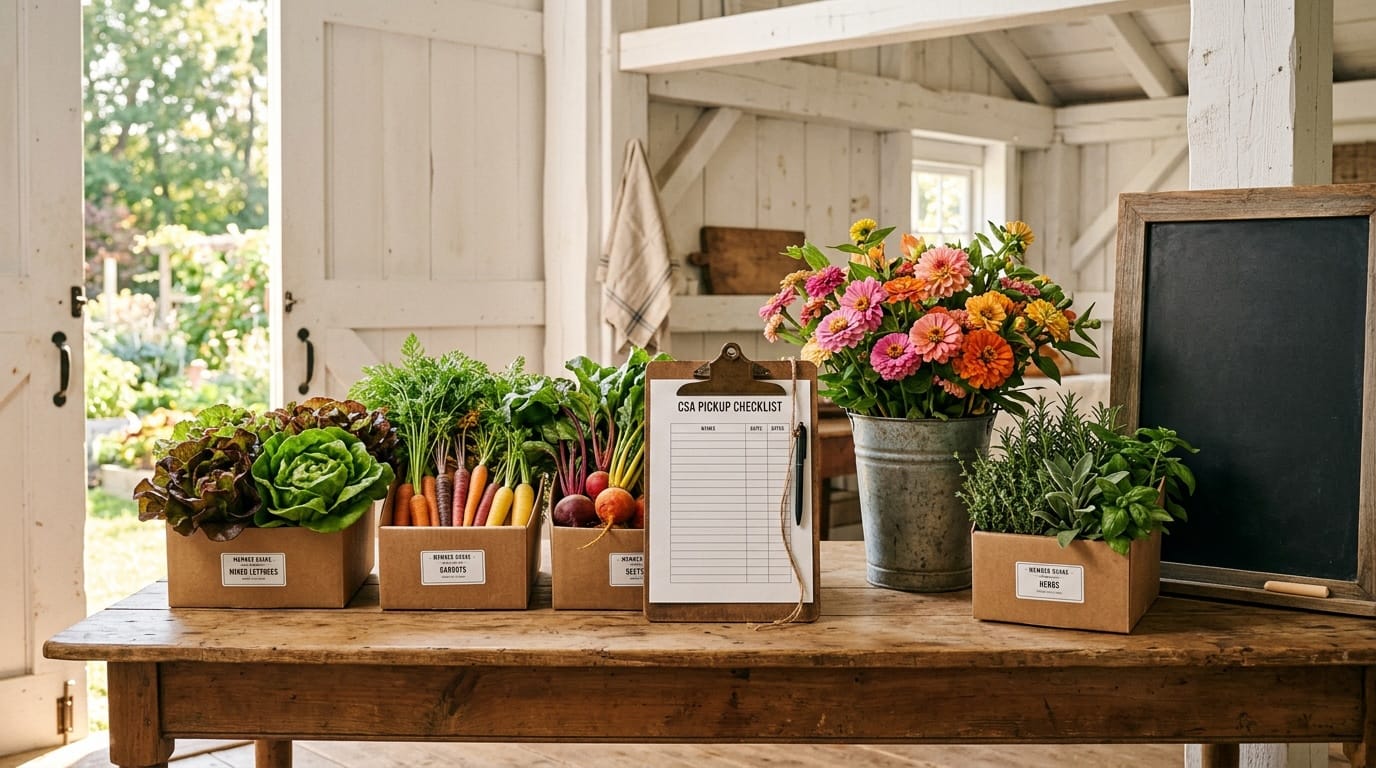
Small CSAs tend to run on a heroic spreadsheet. One tab for who paid, one for half shares, one for the family that switched to Wednesdays in July, and a column of notes only the farmer can decode. At some point it stops being charming. That is usually when people start searching for CSA software, and CSAware is one of the first names people find. Whether you need CSAware or a CSAware alternative depends mostly on your size and on how you want to pay for software.
Everything we say about CSAware here comes from its own website as of October 2026. Pricing and features change, so check CSAware’s site before you decide.
What CSAware is, in its own words
CSAware is CSA management software owned by LocalHarvest, which its site notes is not backed by venture investors. The feature list is built around running farm shares: members join and manage their subscriptions from any device, buy add-ons and customize boxes. A tool called BoxBot builds individualized boxes from harvest counts, targets and member preferences. Farmers get harvest numbers, route planning, printable labels and sign-in sheets, plus an at-a-glance view of balances, drop sites at capacity and add-on demand.
The site also lists credit card, eCheck, PayPal, paper check and online EBT/SNAP payments, a wholesale catalog with invoices and ACH payments, exportable financial reports, and member data you can download at any time.
How CSAware charges, and what that means at your size
CSAware uses a percentage model rather than a flat subscription. As of October 2026, its site says:
- No setup fees and no per-member upcharges
- 2% of CSA delivery revenue, with a $100 monthly minimum, charged only in months you deliver
- Fees as low as 1% on deliveries over a set threshold
- Wholesale at 2%, capped at $500 a month, with a $10 monthly minimum for wholesale-only vendors
CSAware’s own example is a CSA delivering $10,000 a month, which pays $200. The minimum matters most for small farms. At 2%, the $100 minimum covers everything up to $5,000 in monthly deliveries, so a farm delivering $3,000 a month pays $100, or about 3.3% of its deliveries.
The other side of that model is a real strength for seasonal farms: no deliveries, no fee. A 20-week CSA is not paying through the winter.
Who CSAware suits
On its published features, CSAware fits a CSA that has outgrown the spreadsheet in particular ways: many members customizing their boxes, several drop sites with capacity limits, delivery routes to plan, SNAP members paying online, and perhaps some wholesale accounts on the side. For a farm juggling all of that, a tool that builds individual boxes from the harvest count could save hours every week.



It is a specialist. If your CSA is the center of the business, that focus is the point.
What a small CSA actually needs from software
A 25-member CSA with one pickup spot has different problems. Walk through the season and the list gets short.
In winter: a sign-up page, share sizes, and a way to take a deposit or installments so families can afford to commit early.
In spring: a member list you trust, with who paid what and which pickup each person chose.
Every week: a pack list, a reminder to members the day before pickup, and a way for members to skip a week without texting you.
In fall: renewals for the members you want back, and a waitlist for the people who signed up too late.
The right CSA software is the one that takes the Tuesday-night texts off your phone.Butter & Sage Market
Beyond that, most small farms need help with the other side of the problem: finding members in the first place. Members mostly come from people who already know your food. Our CSA guide covers recruiting your first members, and our shopper guide to CSA boxes shows how families weigh a share against the market, which is useful to read from the other side of the table.
A CSAware alternative in the making: Butter & Sage
We should be upfront. Our CSA tools are still being built, with a small group of founding farms, and pricing has not been published yet. If you need software running next week, this is not it yet.
What our CSA software page describes for small CSAs lines up closely with the list above. A season you set up once, with weeks, share sizes and add-ons. Members who choose a share and pickup spot, then pay in full, in installments or with a deposit, with the money landing in the farm’s own payment account and the standard card processing fee applying. A weekly share members can swap or add to before your cutoff, so the pack list is final when harvest starts. Pack lists by pickup spot, a reminder the day before, waitlists and renewals with first dibs. Skips, pauses and vacation weeks members handle themselves. Members imported from a spreadsheet or another platform with a one-click link to add their card.
On the finding-members side, farms appear on our farm-share directory, which families search to find a CSA near them.

Be one of our founding farms
Founding farms get early access in time for sign-up season, a direct line to our team for requests, and our pricing before anyone else. Joining the list takes no card.
Join the founding farms
Fresh. Local. Sustainable.
How to decide
Write down your monthly delivery revenue, your member count, your number of pickup spots and whether members customize their boxes. If you have several drop sites and lots of customization, a specialist like CSAware deserves a demo. If you have one or two pickups and want the basics done well, with help being found, a simpler setup may fit better. Either way, choose the tool that matches the farm you run this year, not the one you might run in five.

Keep reading
More from the market

Farm Stand Sign Ideas That Actually Make Cars Stop
Farm stand sign ideas backed by extension research: how big to letter, how many words fit at 40 mph, where to put…
Read more
How to Fill Next Season’s CSA Shares Before Spring
How to fill CSA shares before spring: renew members in November, set early-bird deadlines, offer deposits and payment plans, and get SNAP…
Read more
How to Price CSA Shares So the Farm Actually Gets Paid
How to price CSA shares from your real costs: a worked season budget with your own pay, packaging, card fees and a…
Read more