
How to Start a Farmers Market in Your Town: Sponsor, Site, Vendors and Budget
Here is how to start a farmers market in your town: find a sponsor, pick a site, line up vendors and write rules before the first tent goes up on opening day.
 6 min read
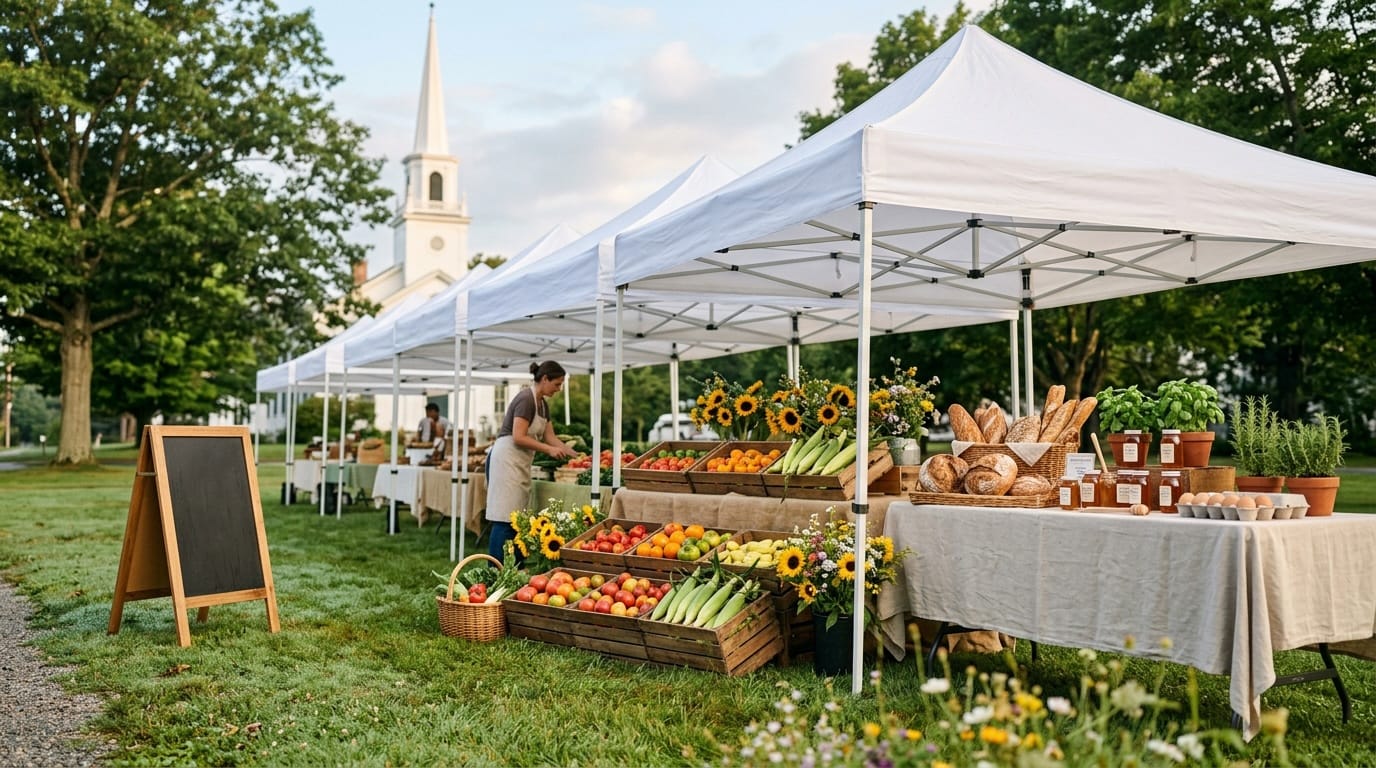
It usually starts at a kitchen table or a town meeting. Somebody says the town needs a farmers market, three people nod, and a month later one of them holds a clipboard, wondering what comes first. If that is you, here is how to start a farmers market in your town in an order that avoids the expensive mistakes: people first, then the place, then vendors, then rules, paperwork and money.
None of it is complicated, and all of it takes longer than you would guess. The Massachusetts Department of Agricultural Resources’ guide to running a farmers market suggests several months for research and organizing, then several more to secure a site, recruit farmers and promote the opening. Planning this winter is right on time for next summer.
- How to start a farmers market in your town: people before tents
- Pick a site shoppers can see and farmers can drive into
- Line up vendors before you announce a date
- Write the rules before the first application goes out
- Permits, insurance and the phone calls to make first
- Choose a season and a budget you can keep
- Treat the first season as the test run
How to start a farmers market in your town: people before tents
A market needs a home before it needs a parking lot: a parks department, a chamber of commerce, a church, an existing nonprofit, or a new group of farmers and neighbors. The USDA Agricultural Marketing Service guide How to Start a Farmers Market puts creating a sponsoring organization near the top of its steps. The sponsor signs the site agreement, buys the insurance, holds the bank account and stands behind the rules.
You do not need your own nonprofit status on day one. The Farmers Market Coalition’s market fundamentals FAQ notes that joining an umbrella organization is one alternative. Which structure suits you is a question for an attorney or accountant.
Whatever the structure, write down why the market exists. “Fresh food from farms within 50 miles” leads to very different rules than “a Saturday gathering place for local makers,” and it is what you will point to when a vendor asks why an application was declined.
Pick a site shoppers can see and farmers can drive into
The Maine Federation of Farmers’ Markets is blunt: finding a location “is frequently one of the most difficult aspects of getting a market off the ground.” The good sites have a few things in common.
- Visible from a road neighbors already drive, so the market advertises itself every week
- Room for trucks to pull in, unload and park beside or behind the stalls
- Customer parking close by, restrooms, and a level, accessible surface
- A written agreement that lets you stay longer than one season
Church lots, school lots, town greens and parks are the usual candidates, and the Massachusetts guide notes a site can often be had for free. Free is lovely. A free site you lose in year two is not, because moving a young market is a quick way to lose its shoppers. Get it in writing.
The USDA guide treats a 10-by-10-foot tent as the standard booth. Multiply by the vendors you hope for, add aisles, and you will know whether the lot holds twelve booths or twenty.
Line up vendors before you announce a date
A market with four tables on opening day rarely gets a second chance. A long-running extension guide, written at Kansas State and republished by the University of Arizona, says some markets succeed with three to five vendors but “ten or more make for a more successful market.” Massachusetts suggests a core of at least three farmers so shoppers find real variety from the first week.



Timing matters more than most organizers realize. As the Massachusetts guide puts it, farmers plan their markets when they order seeds, which means winter. By May, their summer is already planned. Call your county extension office and state department of agriculture, visit nearby markets, and ask growers in person.
Think about the mix as well as the count. Produce is the anchor, but eggs, meat, honey and bread give shoppers more reasons to come back. Cottage food makers, neighbors baking and jarring in their home kitchens under their state’s cottage food law, are often the easiest vendors to find and among the most reliable. If the category is new to you, this beginner’s guide to cottage food explains what it covers.
Write the rules before the first application goes out
Rules are far easier to write before anyone has a reason to bend them. At a minimum, cover who may sell (producer-only, or some resale), which products are allowed, how far away vendors may travel from, hours and setup times, how stalls are assigned, fees, insurance, and what happens when a rule is broken. The Farmers Market Coalition’s market policies guidance stresses that rules must be specific enough to enforce, and enforced the same way for everyone.
Send the rules with the application and have vendors sign that they have read them. That signature makes the rules an agreement.

Running a market takes more than a clipboard
We are building Farmers Market Manager for the people who organize markets. Founding markets get it first.
Join the founding markets
Fresh. Local. Sustainable.
Permits, insurance and the phone calls to make first
This part varies by town, so treat it as a list of calls to make. Your planning office will tell you whether the site needs a special event or zoning permit. The local health department sets the rules for sampling, prepared food and anything refrigerated. Scales used to sell by weight must be tested and sealed, as the Massachusetts guide notes. Cottage food vendors follow their own state law, and our cottage food law guides by state are a useful starting point for you and for them.
Insurance surprises almost everyone. Many site owners require the market to carry general liability coverage, and the Coalition’s insurance FAQ describes the common practice of asking vendors to carry their own liability policies and name the market as an additional insured. What you need, and how much, is a conversation for a licensed insurance agent.
Choose a season and a budget you can keep
Start smaller than your ambition: one day a week, a few hours, and a season that matches when your farmers have product. The Arizona guide notes many markets run from late May or early June into October, and Massachusetts suggests a new New England market may do best opening in July, when tables are full. Commit to rain or shine. Shoppers who find you there every week become regulars.
The budget is shorter than you fear and still has to balance: insurance, permits, signs and promotion, supplies, any site rent, and eventually a paid manager. Vendor fees are the main income for most markets, sometimes with a sponsor or grant on top. Set fees from your budget, not the next town’s price list, and sketch a three-year plan, as Massachusetts recommends.
A farmers market is a promise to be in the same place every week. Everything else is detail.Butter & Sage Market
Then promote it: local papers, community calendars, and every vendor’s own followers.
Treat the first season as the test run
Count shoppers, ask vendors how they did, and keep notes. The markets that last are the ones that adjust. Before you settle on your day, browse the farmers market directory to see when the markets around you already run, so you are not asking the same farmers to be in two places at once.
Which part feels hardest right now: the site, the vendors or the money? Tell us in the comments.

Keep reading
More from the market
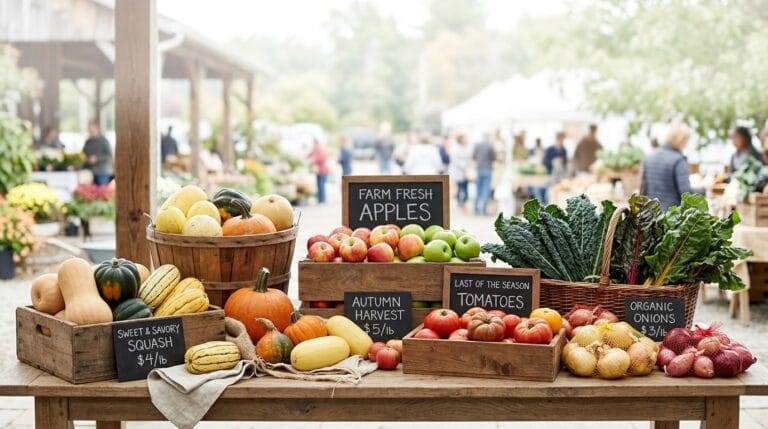
What’s at the Farmers Market in November? Your Late-Fall Shopping Guide
November farmers markets are smaller, colder, and sweeter than you expect. Here is what is in season, what frost improves, and what…
Read more
How to Survive a Slow Market Day (And Get Something Out of It)
Four hours, eleven customers, a full table. What to do with a dead market instead of scrolling, and how to leave with…
Read more
Cold-Weather Booth Setup: Wind, Light, and Days That End at Four
A booth built for August falls apart in November. What to change for wind, cold and a market that ends after dark…
Read more