
How to Survive a Slow Market Day (And Get Something Out of It)
Four hours, eleven customers, a full table. What to do with a dead market instead of scrolling, and how to leave with something worth more than the takings.
 1 min read
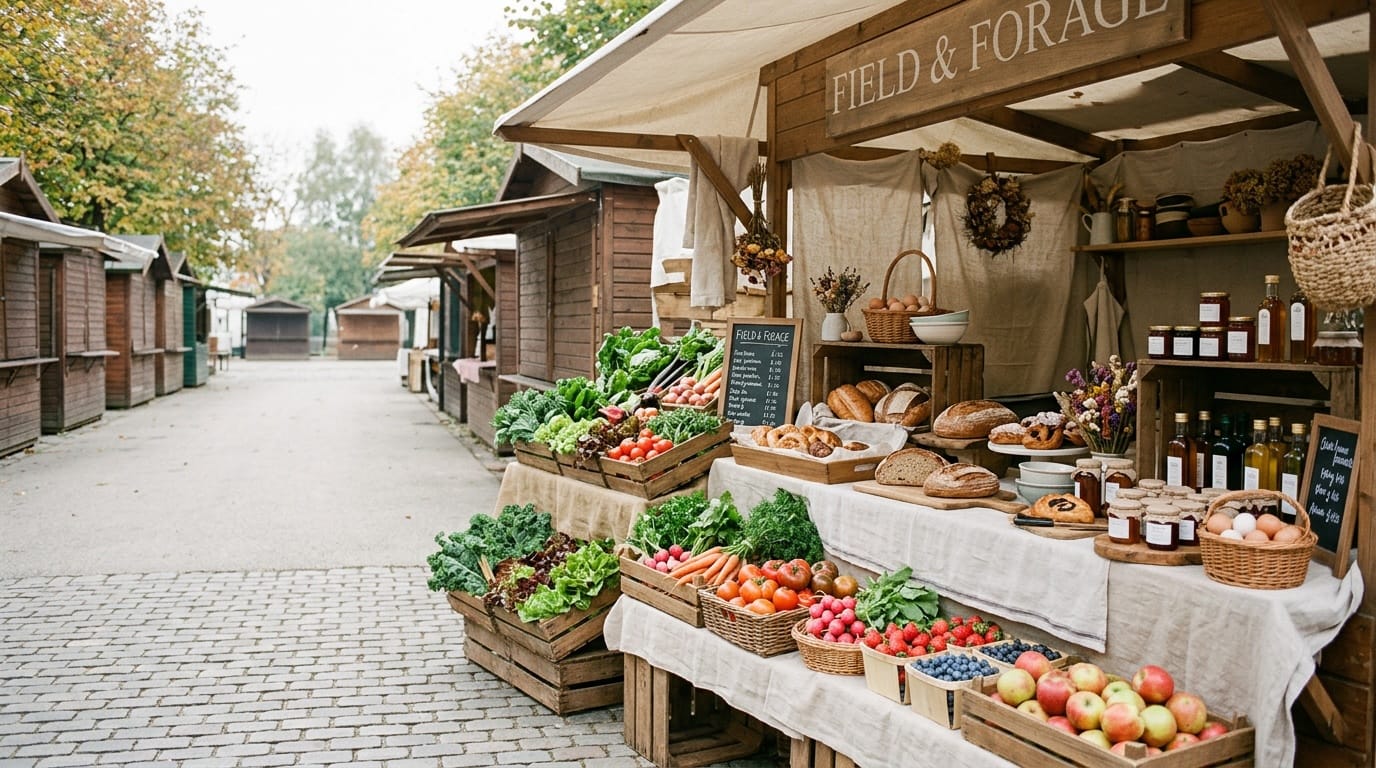
It rained. Or there was a football game, or a fair the next town over, or it is simply the third Saturday in a row that has been strange for no reason anybody can name. You are two hours in, you have taken forty dollars, and the person opposite is packing up early.
Every vendor has these. The difference between the ones who last and the ones who quietly stop is mostly what they do in those four hours.
First: it is almost never you
The slow day feels personal because you are standing behind the product with your name on it. But market footfall is driven by weather, the calendar, the local sports schedule, road works, school holidays and what the market itself is doing to promote the day. Your jam is not the variable that changed since last Saturday.
Check whether everyone is slow. Walk the aisle, ask two other vendors how they are doing. If the answer is "dead", you have learned something useful and you have also just had the most valuable conversation available to you today.
If it turns out everyone else is fine and you are not, that is worth knowing too — and it is a table, price or placement question, not a verdict on what you make.
What to do with the hours
The instinct is to get the phone out, and it is the one thing guaranteed to make it worse. A vendor on their phone reads as closed. People will not interrupt you.
Instead, in rough order of usefulness:
Talk to the vendors around you. This is the single highest-return thing available. Wholesale leads, which markets are worth applying to, who is leaving a good market next season, which commercial kitchen rents by the hour, who will split a bulk order with you. Nearly every good opportunity I hear about came from a vendor conversation on a dead morning.
Give away samples, generously. On a busy day samples are a queue-management problem. On a quiet one they cost you almost nothing and every single person who walks past is available to talk to for as long as you like. The conversation you would never get on a busy Saturday is free today.

Collect emails or sign-ups. You have time to explain what the list is and why it is worth joining. Twelve sign-ups on a dead day is a better outcome than two hundred dollars of sales, because you can reach those people on purpose next month.
Fix the table. Stand where a customer stands and look at it properly. Are the prices readable from six feet? Is the best-selling thing at the front? Is there a height difference, or is it a flat field of jars? You never have time to do this on a good day.
Take photographs. An empty aisle means clean backgrounds, no strangers in the shot and no queue. Get the product shots you have been meaning to get for three months. This alone can justify the morning.
Talk to the market manager. They are also having a bad day and will remember the vendor who was pleasant about it. That matters when spots are allocated next season.
What not to do
Do not discount in a panic. Cutting prices at eleven o'clock teaches your regulars to arrive at eleven. If you must move stock, bundle it — three for a price — so the individual prices stay intact.
Do not pack up early unless the market allows it and the weather is genuinely dangerous. The person who arrives at the last half hour and finds a full table becomes a regular; the one who finds you gone does not come back.
Do not decide anything today. No quitting the market, no dropping a product, no rewriting the pricing. Judgement made at the end of a bad Saturday is bad judgement. Write it down and look at it on Tuesday.
Then write down what you actually learned
Keep a market log. Date, weather, hours, takings, best seller, anything unusual — a note takes ninety seconds.
The point is that one slow day is noise and a season of notes is information. After a year you will know that the first Saturday in August is always dead, that rain costs you about forty percent, that the week after the county fair is a write-off, and that your soft-set honey sells four times better when the weather turns. Then you bake to it, and the slow days stop surprising you.
That log is also the thing that stops a bad morning feeling like a referendum on the whole business. It was a Saturday. There is a column for it.

What is your worst market day story? Mine involves a gazebo, a gust and a very understanding woman with a dog. Misery on this topic genuinely does love company.

Keep reading
More from the market
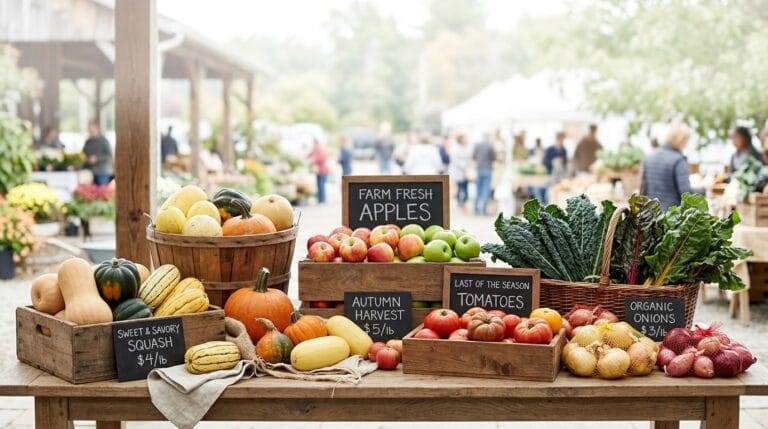
What’s at the Farmers Market in November? Your Late-Fall Shopping Guide
November farmers markets are smaller, colder, and sweeter than you expect. Here is what is in season, what frost improves, and what…
Read more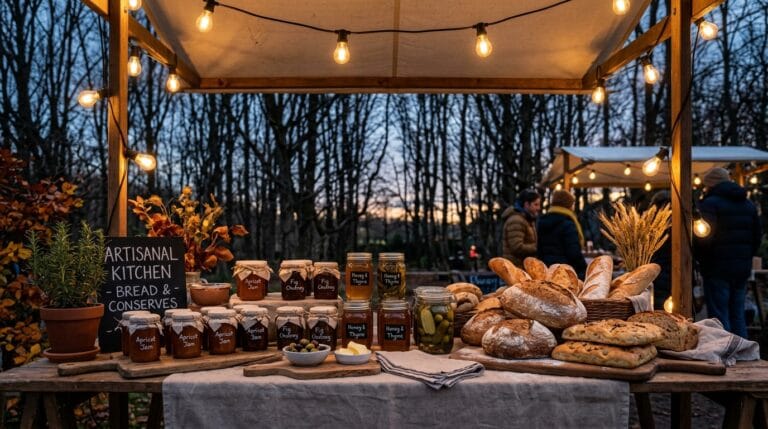
Cold-Weather Booth Setup: Wind, Light, and Days That End at Four
A booth built for August falls apart in November. What to change for wind, cold and a market that ends after dark…
Read more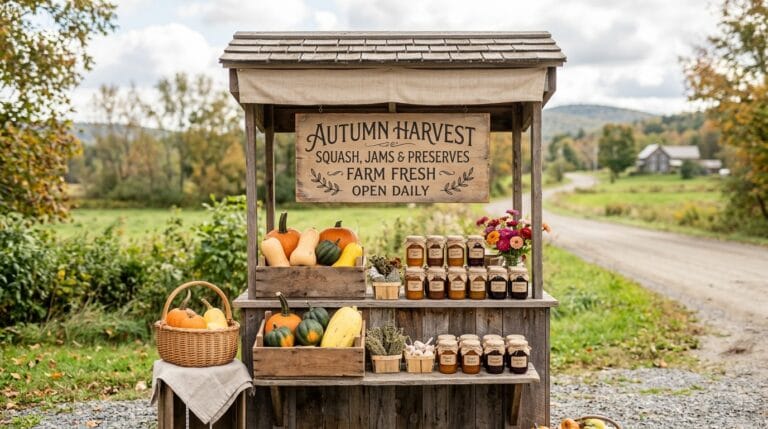
Selling from a Farm Stand: What It Takes and What It Makes
A stand at the end of the drive has no booth fee and no set hours. What to check before you build…
Read more