

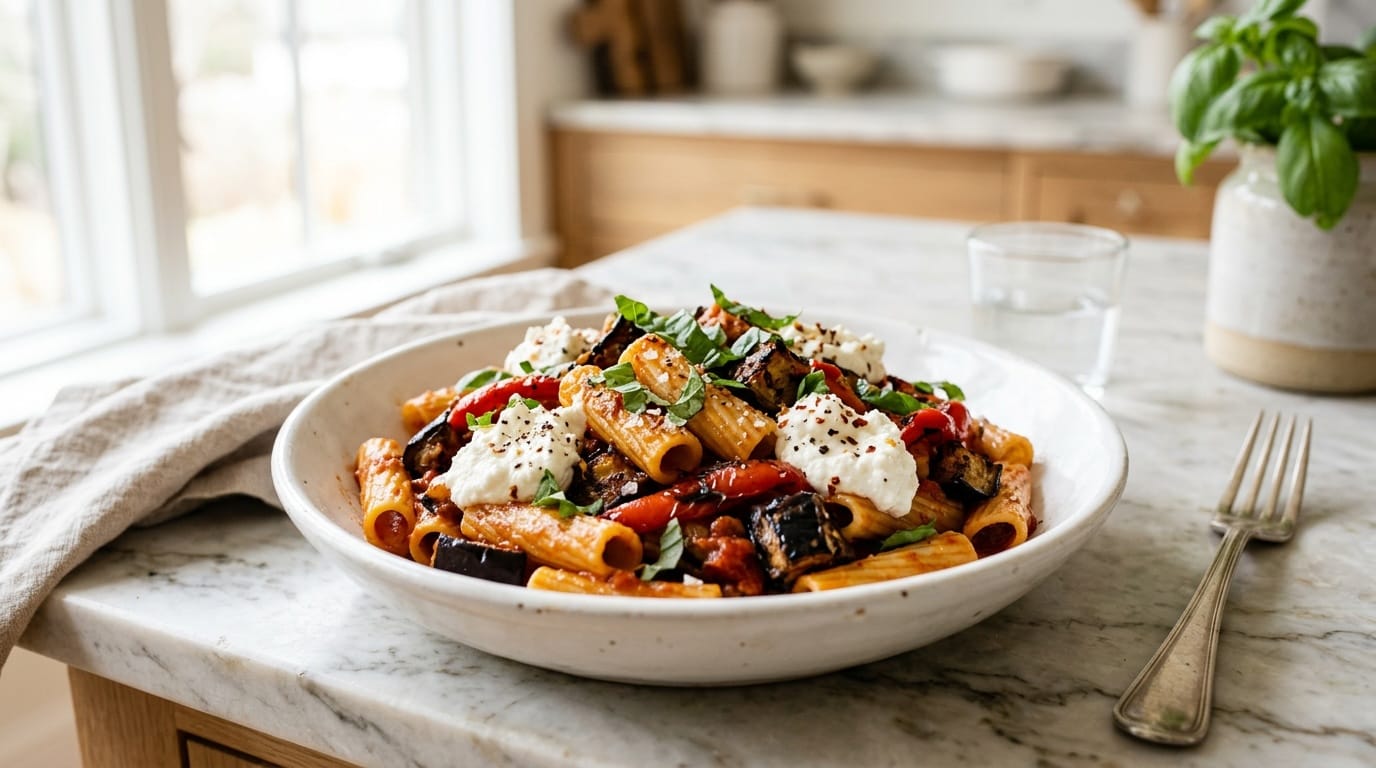
There's a moment at every market in late July when the eggplant table looks almost showy about it. Glossy purple globes, skinny lavender-streaked Japanese ones, tiny white ones the size of an egg that explain the whole name. And next to it, a crate of sweet peppers just starting to turn from green to red.
Most people walk past both. Eggplant has a reputation — bitter, spongy, oily, somebody's bad memory of a rubbery slice at a potluck in 1998. That reputation is fixable, and the fix takes about eight minutes of high heat.
This is the dinner I make the week eggplant and peppers overlap. It comes together in about 35 minutes, most of which is unattended, and it tastes like it took a great deal longer.
Why These Two Vegetables, Right Now
Eggplant is at its best in the back half of summer, and market eggplant is a genuinely different vegetable from the one that's been in a cooler for two weeks. Look for fruit that feels heavy for its size with taut, shiny skin and a green, fresh-looking cap. Press gently — the flesh should spring back. If your thumb leaves a dent, it's been sitting.
Smaller is better. A modest globe eggplant or a couple of slender Japanese ones will have fewer seeds, thinner skin, and less of the bitterness people complain about. The enormous ones are impressive and they're mostly seeds.
Sweet peppers, meanwhile, are hitting their real peak. A pepper that's ripened to red or orange on the plant is dramatically sweeter than a green one, and market growers let them get there. Ask what they've got — this is the time of year when a grower will happily hand you three colors and tell you which one is sweetest.
The Technique That Makes This Work: Char, Don't Sauté
Here's the part that matters. Eggplant is full of tiny air pockets, and in a lukewarm pan it does exactly what everyone fears — drinks a quarter cup of olive oil and turns to sponge.
The answer is heat. Get the pan genuinely hot before anything goes in, use less oil than feels right, and then leave it alone. Don't stir. Let the cut faces sit against the metal until they're deeply browned — properly browned, past golden, edging toward the color of a good roasted coffee. Those air pockets collapse, the flesh turns silky and creamy instead of spongy, and you get a smoky depth that no amount of gentle sautéing will ever produce.
The peppers get the same treatment. Blistered skin, some black spots. That's flavor, not a mistake.
Two more small things that carry the dish. Salt the eggplant for fifteen minutes before it hits the pan if you have the time — it draws out moisture so the vegetable browns instead of steams. And save a full cup of pasta water. The starch in it, whisked with ricotta, turns into a sauce that clings to every noodle without a drop of cream.
Make It Yours
Add heat. A jalapeño or a spoonful of hot honey stirred in at the end takes this straight into the sweet-heat territory everybody's chasing right now. If you've got a jar of small-batch hot honey from a market vendor, this is a very good use for it.
Swap the cheese. No ricotta? Fresh goat cheese melts into the pasta water beautifully and brings a tang that plays well against the sweet peppers. Burrata torn over the top is the showing-off version.
Make it a sheet-pan dish. Toss the eggplant and peppers with oil and roast at 425°F for 25 minutes instead of using the skillet. Less active work, nearly as much char, and your kitchen stays cooler.
Add a protein. Italian sausage browned in the pan first leaves fat the vegetables can char in. White beans stirred in at the end make it heartier without meat. Grilled shrimp on top turns it into something you'd serve company.
Use what the market gave you. Zucchini, cherry tomatoes, and corn all work in this framework. The technique is the recipe; the vegetables are negotiable.
What to Buy, and From Whom
This dish is essentially a shopping list from one Saturday morning. Eggplant and peppers from the vegetable grower. Basil from whoever has the biggest, most fragrant bunch — buy more than you need, because basil doesn't keep and you'll want it. Fresh ricotta from a local dairy if your market has one; it is a completely different food from the supermarket tub, and it's the ingredient that makes this taste expensive.
If you're not sure who at your market has what, ask. Growers love the question. It's the most flattering thing you can say to somebody who's been thinking about their peppers since March.
Made it? Tell us how it went, and tag us @butterandsagemarket — we love seeing what your market haul turned into. And if you're looking for the vendors near you, our vendor directory will point you at the neighbors growing and making this stuff a few miles from your kitchen.
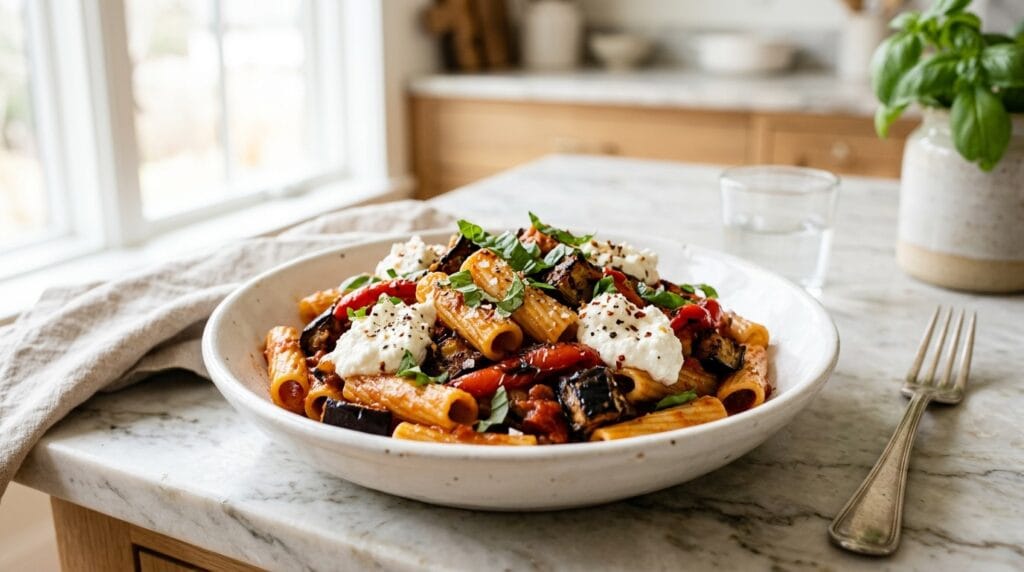
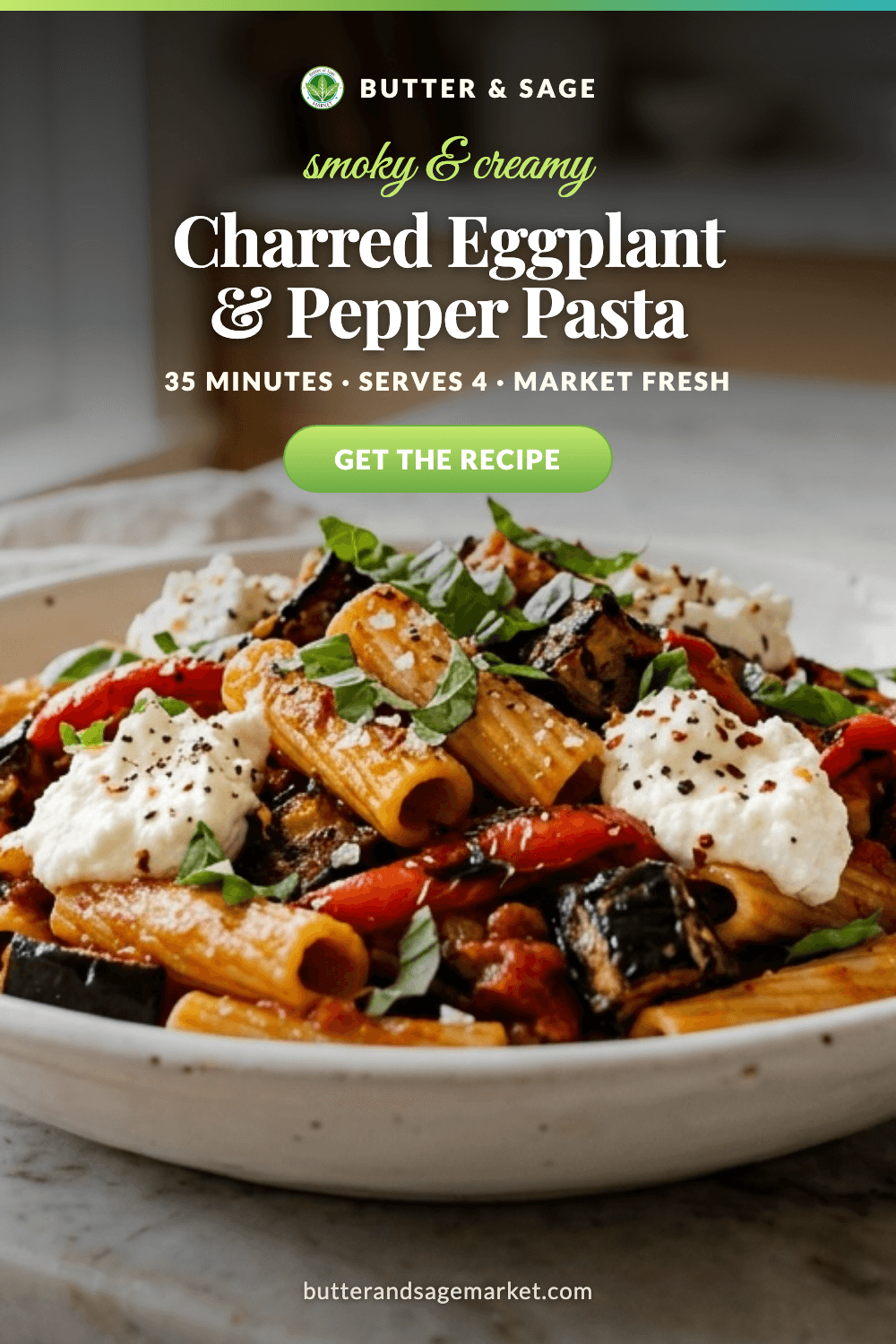
Charred Eggplant and Sweet Pepper Pasta with Ricotta and Basil
Smoky charred eggplant and sweet market peppers tossed with pasta, fresh ricotta, and a mountain of basil. A 35-minute weeknight dinner built for peak summer produce.
Ingredients
Instructions
- Toss the cubed eggplant with 2 teaspoons kosher salt in a colander and let it sit for 15 minutes. Pat dry thoroughly with a towel. This step draws out moisture so the eggplant browns instead of steams.
- Bring a large pot of well-salted water to a boil for the pasta.
- Heat 3 tablespoons olive oil in a large skillet over medium-high until it shimmers. Add the eggplant in a single layer and do not stir for 4 to 5 minutes, until the undersides are deeply browned. Toss once and cook 4 to 5 minutes more until charred in spots and creamy inside. Transfer to a plate.
- Add the remaining tablespoon of oil to the same skillet. Add the peppers and cook, stirring rarely, for 5 to 6 minutes until blistered and softened with some black spots.
- Reduce heat to medium-low. Add the garlic and red pepper flakes and cook 60 seconds, until fragrant but not browned. Return the eggplant to the pan and turn off the heat.
- Meanwhile, cook the pasta until 1 minute short of al dente. Reserve 1 full cup of pasta water, then drain.
- In a large serving bowl, whisk the ricotta with 1/2 cup of the hot pasta water until smooth and creamy. Add the Parmesan and whisk again.
- Add the drained pasta to the ricotta and toss, adding more pasta water a splash at a time until the sauce coats every noodle and looks glossy rather than thick.
- Fold in the charred eggplant and peppers, the vinegar, and most of the basil. Taste and season generously with salt and black pepper.
- Serve immediately, topped with the remaining basil, extra Parmesan, and a drizzle of good olive oil.
Notes

Keep reading
More from the market
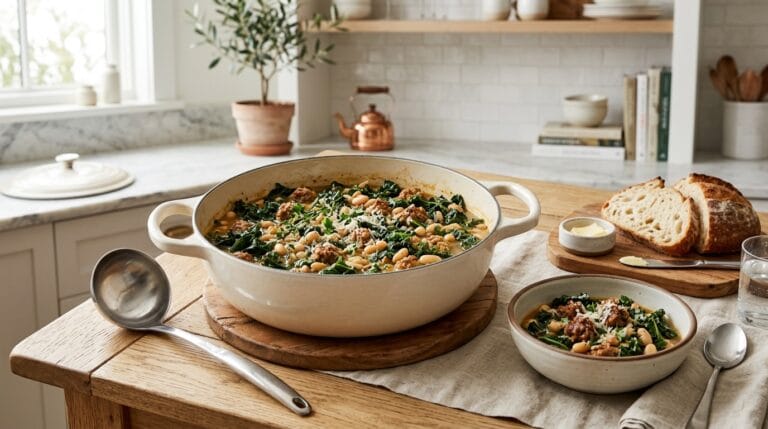
Kale and White Bean Stew with Sausage
One pot and forty minutes. Sausage, creamy white beans and a whole bunch of market kale, with the vinegar trick that stops…
Read more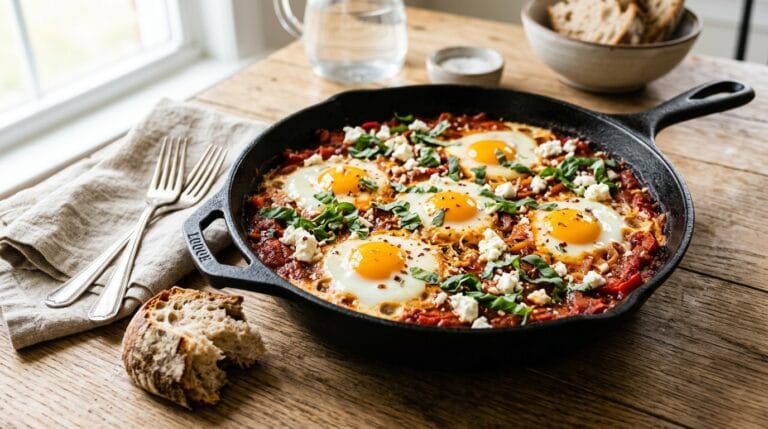
Skillet Baked Eggs with Blistered Tomatoes and Feta
One skillet, thirty minutes, and the best possible use of late-summer market tomatoes and farm eggs. Breakfast, lunch, or a very good…
Read more
Overnight Sourdough Cinnamon Rolls (Soft, Tangy, and Market-Ready)
Soft, tangy overnight sourdough cinnamon rolls. The cold rise does the work while you sleep — and they hold up beautifully on…
Read more