Growing Edible Flowers for Your Kitchen and Cottage Food Booth (The Spring Garden Upgrade That Pays Off)
Edible flowers are one of the most underused additions to a cottage food kitchen — and one of the most rewarding things you can grow this spring. Here's which ones to plant and exactly what to do with them.
 1 min read
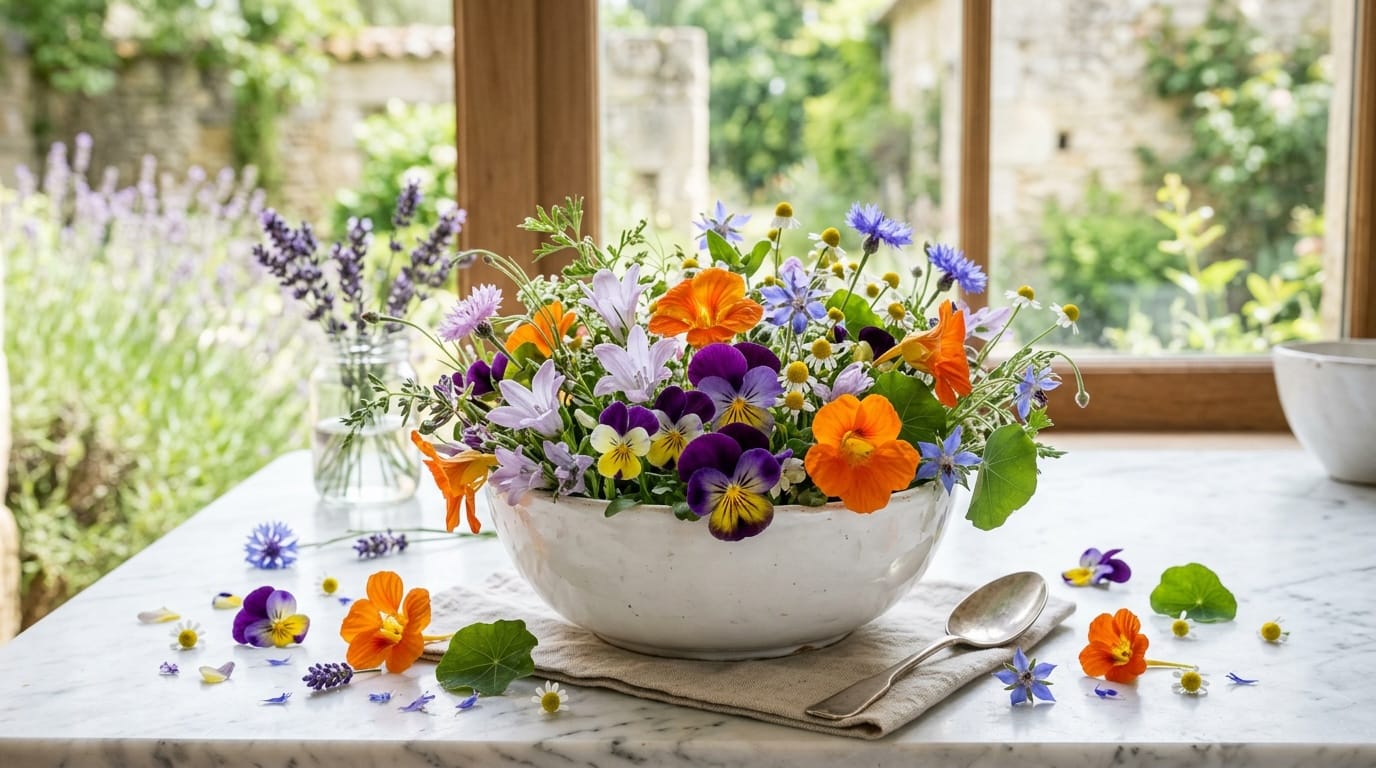
At some point last spring, I started paying attention to the booths at the farmers market that stopped people cold. Not the biggest setups or the loudest signage — the ones where people just paused and stared. More often than not, there was something floral happening. A jar of violet jelly. A sprig of chamomile tucked into a cookie package. A tray of shortbread with a pressed nasturtium on top.
Edible flowers are doing a lot of quiet work in food right now, and most of it is completely accessible to home gardeners. If you have a small yard, a few pots on a porch, or even a sunny windowsill, you can grow edible flowers this spring that will change how you cook, how you present your food, and how people see your booth.
The Best Edible Flowers to Start With This Spring
Nasturtiums — The gateway edible flower. Nasturtiums are almost aggressively easy to grow from seed (they prefer being direct-sown rather than transplanted), they bloom in oranges, yellows, reds, and peachy pinks, and they have a peppery, watercress-like flavor that's genuinely useful in cooking. Add them to salads, press them into shortbread before baking, or infuse them into vinegar. Grow them in poor-to-average soil — rich soil produces more leaves and fewer flowers, which is the opposite of what you want.
Chamomile — If you plant German chamomile (the culinary variety), you'll have tiny daisy-like flowers with a sweet apple fragrance from mid-spring through summer. Dry them for herbal teas, infused honeys, or as a delicate garnish. Chamomile is easy to grow and will self-seed once established — meaning it comes back year after year without any effort on your part.
Violas and Pansies — These are the show-offs. Violas come in nearly every color imaginable, have a mild and slightly sweet flavor, and have that face-like beauty that's impossible to overlook. They're perfect for pressing onto baked goods, freezing into decorative ice cubes, or candying with egg white and fine sugar for cake decoration. Plant them now — they prefer cool weather and will slow down in summer heat.
Lavender — The flowers are absolutely edible, and culinary lavender is one of the most versatile additions to a cottage food kitchen (which you may have just learned from our lavender honey shortbread recipe). Lavender takes a season to establish fully but rewards patience with years of harvest. Plant in well-drained, sunny soil.
Borage — Small, star-shaped flowers in a vivid blue that photographs beautifully. The flavor is mild cucumber with a hint of sweetness. Borage grows quickly, sprawls enthusiastically, and self-seeds with abandon — give it more space than you think it needs.

Calendula (Pot Marigold) — Not to be confused with regular ornamental marigolds (not edible), calendula has bright orange and yellow flowers with a slightly peppery flavor. The petals add color to baked goods, soups, and rice — and they bloom prolifically from early summer through fall.
How to Use Edible Flowers in Your Cottage Food Kitchen
The most obvious use is as a garnish — a nasturtium on a cheese board, a viola pressed into frosting, dried lavender tucked into a packaged cookie bag. But edible flowers can go much deeper than decoration:
- Floral infused sugars — Layer dried flowers with granulated sugar in a jar for two weeks. The sugar absorbs the fragrance and flavor. Lavender sugar, chamomile sugar, and rose petal sugar are all shelf-stable, beautiful, and sellable as a standalone product.
- Floral honeys — Warm honey gently and steep dried edible flowers in it for several hours. Strain, jar, and you have something that commands a premium at market. Lavender honey and chamomile honey both sell consistently.
- Pressed flower shortbread — Press a fresh viola or pansy onto unbaked shortbread before it goes in the oven. The flower bonds to the surface during baking and the result looks like something from a bakery window. It goes viral for a reason.
- Floral jellies — Violet jelly, dandelion jelly, and rose petal jelly are real, shelf-stable, cottage-food-legal products that consistently sell out at markets because they look genuinely magical. If you have the flowers, you have a product.
- Candied flowers — Brush individual petals or whole violas with lightly beaten egg white, dust with superfine sugar, and dry on a rack. They keep for weeks and transform any baked good into something that looks completely professional.
A Few Important Rules
Only use edible flowers you've grown yourself without pesticides, or flowers purchased specifically as food-grade culinary product. Flowers from a florist or garden center are almost certainly treated with chemicals not approved for food use. If it came from your own untreated garden, you're fine.
Harvest flowers in the morning after the dew has dried but before the heat of the day sets in. Use or preserve them promptly — fresh flowers are perishable, and their peak window is brief.
If you're selling products that include edible flowers, list them in your ingredients just as you would any other component. Some people have ragweed-related sensitivities that extend to chamomile, for example. A flower on a label is charming. An undisclosed allergen is a problem you don't want.
Start Small, Then Expand
You don't need a dedicated cutting garden to start. A few pots of violas on your porch, a nasturtium plant in a sunny corner of the yard, and a small chamomile patch in a raised bed is enough to begin incorporating edible flowers into your kitchen and your market table this spring.
Grow what you're curious about. Cook with it. See what customers respond to. And then plant more of that next spring.
Fresh. Local. Sustainable.
— Amy

Keep reading
More from the market
How to Save Seeds from Your Best Tomatoes and Peppers
The best tomato in your garden this year can be next year's whole crop, for free. Here's how to save tomato and…
Read more
How to Grow Basil at Home (And Never Buy a Sad Plastic Clamshell Again)
How to grow basil at home — from starting plants to the pinching technique that keeps them producing all summer. A beginner-friendly…
Read more
What to Plant in August for a Fall Harvest
August isn't the end of the garden — it's the start of your fall harvest. Here's what to plant now for a…
Read more