

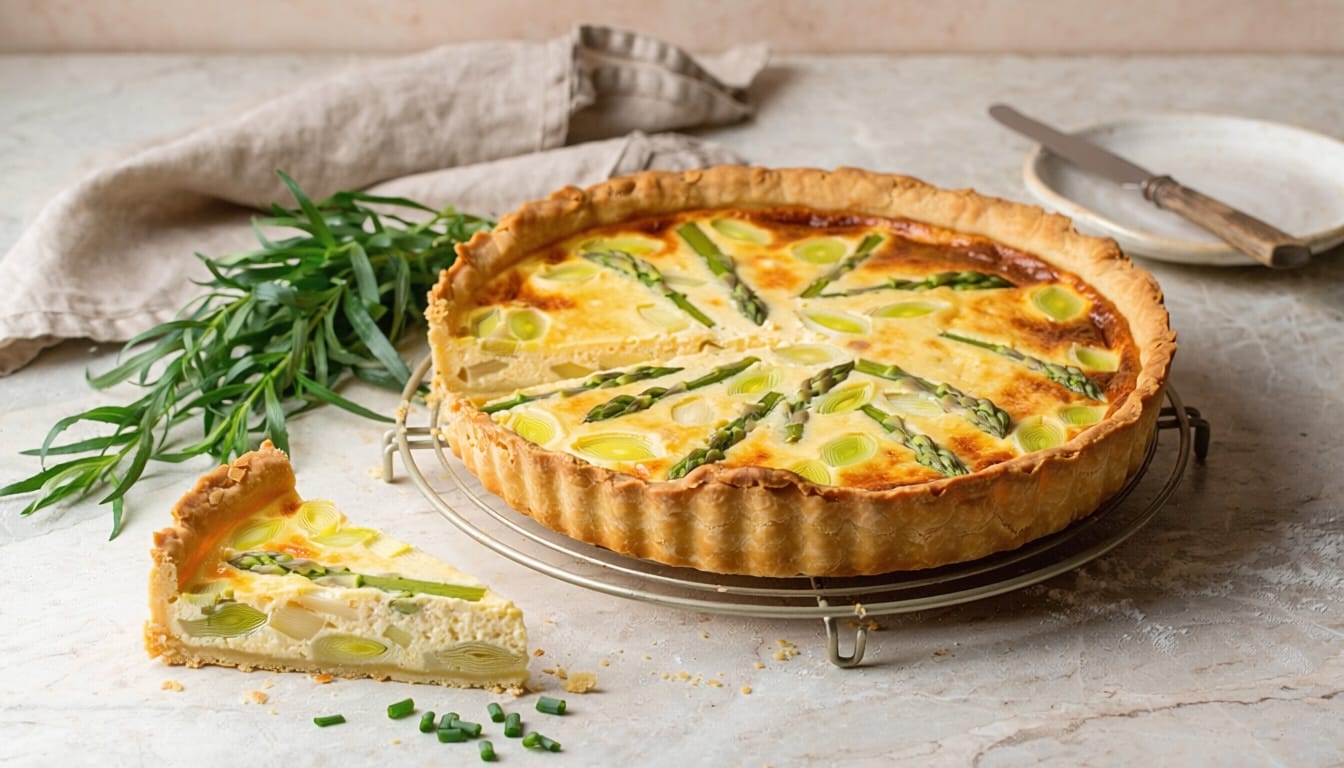
You know that moment at the farmers market when you look down at your canvas bag and think, okay, I went a little overboard with the asparagus again? This quiche is for that moment.
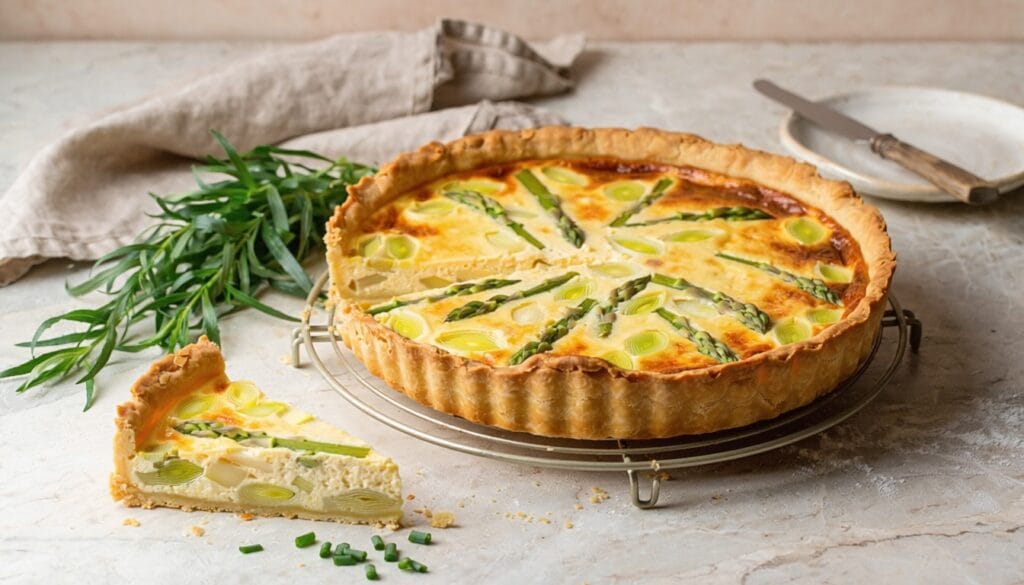
It is a proper spring quiche -- eggs, cream, a pile of asparagus and leeks, and enough fresh herbs to make your kitchen smell like someone who actually has their life together. It is the kind of thing that looks like you spent all afternoon on it, but is genuinely, almost offensively simple to make.
Why a Spring Quiche Belongs in Your Market-to-Kitchen Rotation
Spring farmers markets are peak asparagus season -- those thin, bright-green spears are some of the best things you can buy right now, and they are only available for a narrow window. Same with leeks. And farm-fresh eggs, well, those are worth making the trip for any time of year.
A quiche is one of the best vehicles for spring produce because the custard does the heavy lifting -- you just need good eggs, a little cream, and whatever looks beautiful at your market that morning. The fresh herbs are the secret weapon here. Tarragon has this faint, almost anise-like flavor that plays incredibly well with asparagus. Chives bring brightness. Together they make this taste like something from a little French cafe, which is frankly a wonderful thing to conjure in your own kitchen on a Sunday morning.
The Simple Secret to a Custard That Actually Sets
A lot of people end up with a watery quiche, and it is almost always because of too much liquid or too short a cook time. Here is the ratio that works every time: 4 eggs to 1 and a half cups of dairy (I use a mix of heavy cream and whole milk). That is it. Do not overthink it.
The other key is blind-baking your crust first -- just 15 minutes at 375 degrees F with a piece of parchment and some pie weights (or dried beans, which is what is actually in my pantry). It prevents the soggy-bottom situation that ruins quiche for people, and it is genuinely not a big deal to do.

Bake until the custard is set at the edges and barely jiggles in the center -- not liquid, just a gentle, soft wobble. Then rest it for 10 minutes before you cut into it. I know, I know. But those 10 minutes matter.
Making It Yours with Local Ingredients
This recipe is a framework, not a mandate. The asparagus and leeks are our spring picks, but quiche is wonderfully flexible. Come summer, swap in zucchini and corn. In fall, caramelized onions and mushrooms are incredible. In winter, roasted butternut squash and sage will make you emotional.
The cheese is also flexible -- goat cheese gives you that tangy, creamy thing that pairs beautifully with asparagus, but gruyere is more classic, sharp cheddar is more crowd-pleasing, and a sharp feta works if that is what your local vendor has at the market.
If you shop at your farmers market regularly, you know that what is there varies week to week, and that is not an inconvenience -- that is the whole point. This quiche rewards the shopper who buys what looks best and figures out the recipe around it.
[Recipe card will be embedded here via Divi builder]
Make it this weekend. And maybe grab an extra bunch of asparagus while you are at it. You will know what to do with it.
-- Amy
Fresh. Local. Sustainable.
Spring Quiche with Asparagus, Leeks & Fresh Herbs
A creamy, custardy quiche built entirely from what you'd find at a spring farmers market — asparagus, leeks, farm-fresh eggs, and a fistful of fresh herbs. No shortcuts, no apologies, just the real thing.
Ingredients
For the Crust
For the Filling
Instructions
Prep the Vegetables
- Preheat your oven to 375 degrees F. Heat olive oil or butter in a skillet over medium heat. Add the sliced leeks and cook for 5-7 minutes, stirring occasionally, until soft and fragrant. Add the asparagus pieces and cook for another 2-3 minutes. Season lightly with salt and pepper, then remove from heat and let cool slightly.
Make the Custard
- In a large bowl, whisk together the eggs, heavy cream, and milk until smooth. Add the salt, pepper, nutmeg, tarragon, and chives. Whisk again until fully combined.
Assemble & Bake
- Scatter the cooked leek and asparagus mixture evenly across the bottom of your blind-baked pie crust. Crumble or scatter the goat cheese (or grated gruyere) over the vegetables. Slowly pour the egg custard over everything, taking your time so it settles evenly.
- Bake at 375 degrees F for 38-45 minutes, until the custard is set around the edges but has just a slight wobble in the very center. If the crust starts to brown too quickly, tent the edges with foil.
- Let the quiche rest for at least 10 minutes before slicing. Serve warm, at room temperature, or straight from the fridge the next day.
Notes

Keep reading
More from the market

Kale and White Bean Stew with Sausage
One pot and forty minutes. Sausage, creamy white beans and a whole bunch of market kale, with the vinegar trick that stops…
Read more
Skillet Baked Eggs with Blistered Tomatoes and Feta
One skillet, thirty minutes, and the best possible use of late-summer market tomatoes and farm eggs. Breakfast, lunch, or a very good…
Read more
Overnight Sourdough Cinnamon Rolls (Soft, Tangy, and Market-Ready)
Soft, tangy overnight sourdough cinnamon rolls. The cold rise does the work while you sleep — and they hold up beautifully on…
Read more