

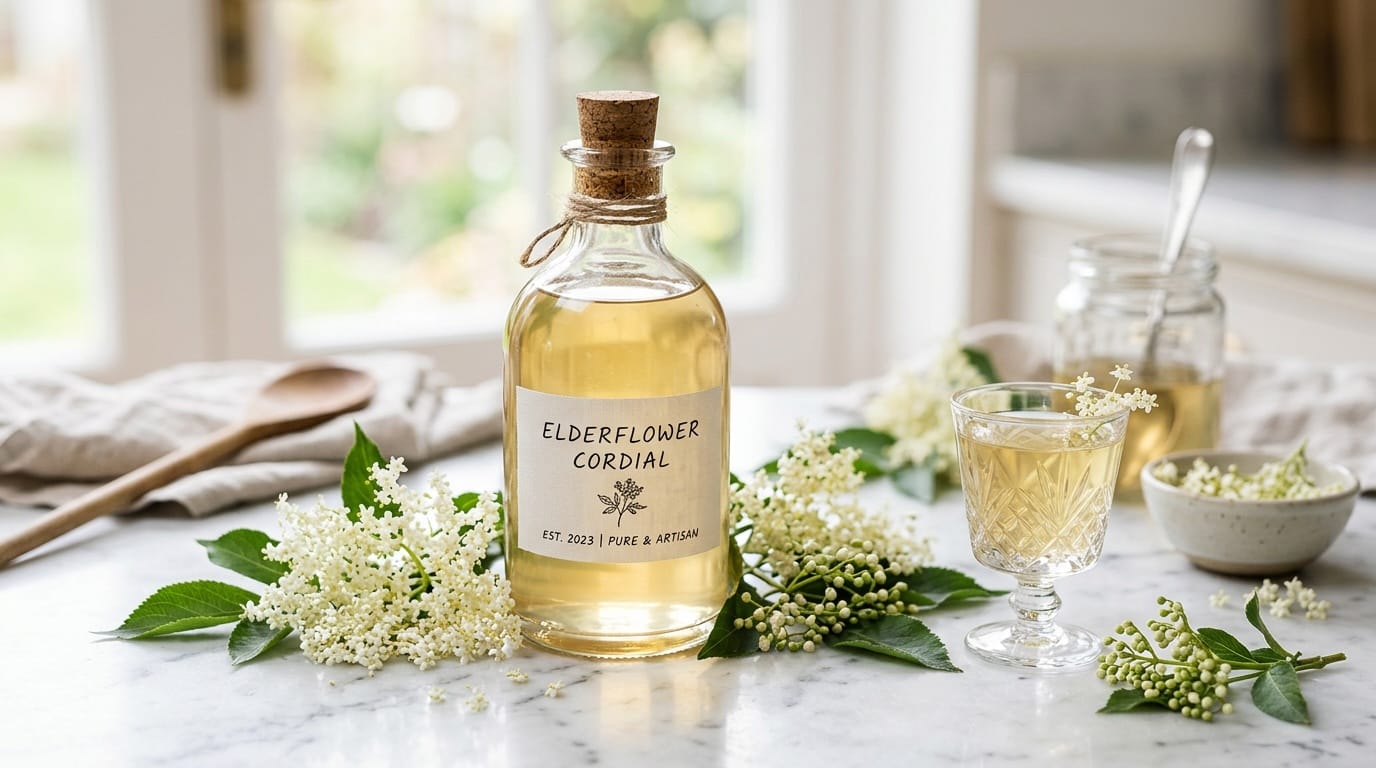
There's a small window in June — roughly two to three weeks, depending on where you live — when elderflowers are at their peak. The blossoms are wide open, creamy white, and they smell like honey and sunlight and something you can't quite name but immediately recognize as summer. Miss that window and you wait another year.
This syrup is how you catch it.
What Elderflower Actually Tastes Like
If you've never cooked with elderflower, the closest comparison is something between honey, lychee, and the lightest possible floral note — nothing heavy or perfumey, just a soft sweetness that makes other flavors more interesting without announcing itself loudly. It's the kind of ingredient that makes people ask what's in a dish without quite being able to place it.
Elderflower cordial has been popular in the UK for generations, and it's having a well-deserved American moment right now. Floral flavors are trending heavily in 2026, and elderflower is the most elegant of them — and the most genuinely seasonal.
Where to Find Elderflowers
If you're in a region where elderberry bushes grow — they're common across much of the eastern and midwestern US — you may be able to forage the flowers yourself. The blooms appear before the berries, typically in late May through June, and the plant grows along roadsides, creek banks, and woodland edges. Be certain of your identification before foraging any wild plant.
If foraging isn't your thing, check local farmers markets — specialty herb growers sometimes sell the heads during the brief season. You can also find dried elderflowers at specialty tea shops or online, though fresh is significantly more aromatic and worth the effort when in season.
For Cottage Food Vendors: This Is Your Product
If you run a cottage food business or are thinking about starting one, elderflower syrup deserves your attention. It's a small-batch specialty product with a short natural season, which creates genuine scarcity. It photographs beautifully. It appeals to the cocktail crowd, the wellness crowd, and anyone who wants their sparkling water to feel a little more special. And it's the kind of product that builds loyal repeat customers — because once people know what elderflower tastes like, they'll be looking for you again next June.
Check your state's cottage food regulations for specific shelf-stable syrup requirements before selling. Most states permit it with appropriate labeling and safe production practices.
How to Use It
The simplest introduction is elderflower sparkling lemonade: two tablespoons of syrup, the juice of half a lemon, sparkling water, and a sprig of mint if you have it. It's the kind of drink that makes a regular Tuesday feel like an occasion.
Beyond that: stir it into gin cocktails, drizzle it over a pavlova or fresh peaches, use it as a glaze on roasted chicken, mix it into salad dressing with champagne vinegar, or add a spoonful to your morning yogurt. It's more versatile than you'd expect from something so delicate.
Make a batch before the season passes — you'll be glad you did come August when the elderflowers are long gone and you're still finding new things to do with the syrup. And if you find elderflower anything at your local farmers market this June, buy it. The vendor behind the table will be very glad you did.
Homemade Elderflower Simple Syrup
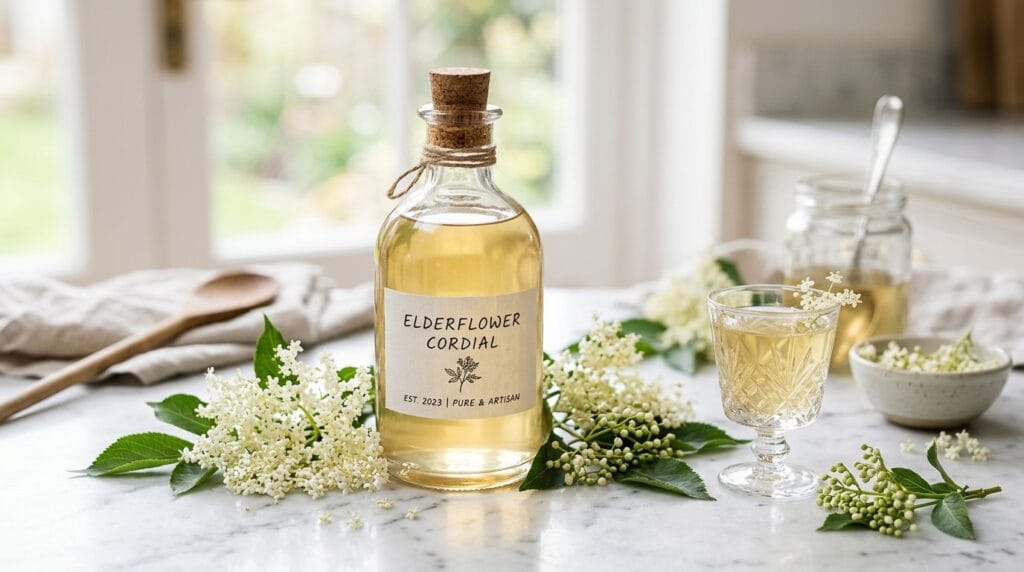
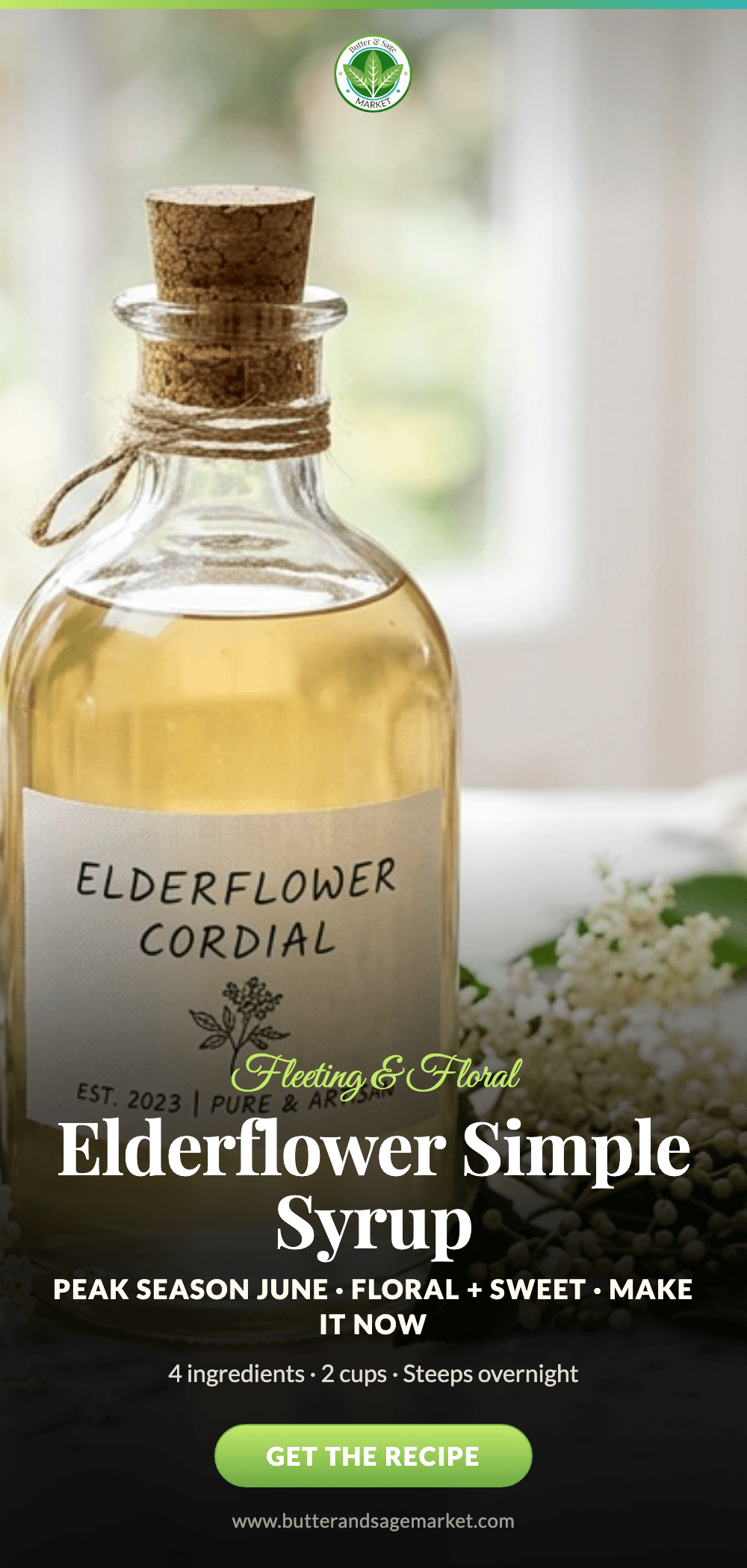
Light, floral, and unmistakably summer — elderflower syrup is one of those ingredients that makes everything it touches taste more elegant. Stir it into sparkling water, lemonade, cocktails, or drizzle it over fresh fruit. And if you're a cottage food vendor: this is exactly the kind of small-batch specialty product that sells out at farmers markets.
Ingredients
Instructions
- Gently shake the elderflower heads to remove any insects. Do not rinse them with water — water dilutes the fragrant essential oils that make elderflower distinctive. Use them the same day you pick or purchase them if at all possible.
- Combine the water and sugar in a medium saucepan over medium heat. Stir until the sugar is fully dissolved, then bring to a gentle simmer and cook for 5 minutes. Remove from heat and let cool slightly for 5 minutes.
- Add the elderflower heads, lemon zest, and lemon slices to the warm syrup. Gently press the flowers down to submerge them.
- Cover the pot and let steep for at least 2 hours at room temperature, or overnight in the refrigerator for a more intense floral flavor. The longer it steeps, the more aromatic the syrup.
- Strain through a fine-mesh sieve lined with cheesecloth, pressing gently to extract all the liquid. Discard the solids.
- If using citric acid, stir it into the finished syrup while it's still warm — it will dissolve easily and help preserve the pale golden color.
- Pour into a sterilized glass jar or bottle. Store in the refrigerator for up to 3 weeks, or freeze in ice cube trays for up to 6 months.
Notes

Keep reading
More from the market
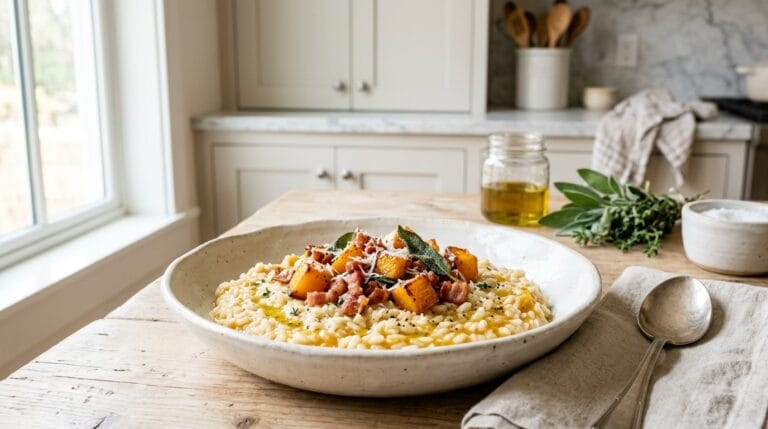
Butternut Squash Risotto with Crispy Pancetta
Half the squash melts into the rice, half stays roasted and whole. The two-texture trick that stops butternut risotto tasting like sweet…
Read more
Savory Sweet Potato and Caramelized Onion Galette with Sage
Sweet potatoes, onions cooked down slow, and fried sage on a free-form crust. A savory galette that turns three cheap market vegetables…
Read more
Kale and White Bean Stew with Sausage
One pot and forty minutes. Sausage, creamy white beans and a whole bunch of market kale, with the vinegar trick that stops…
Read more