
How to Build a Cottage Food Gift Box That Actually Sells (Fall and Holiday Guide)
A cottage food gift box turns products you already make into a higher-margin offer. Here is how to build one that sells out before December.
 1 min read
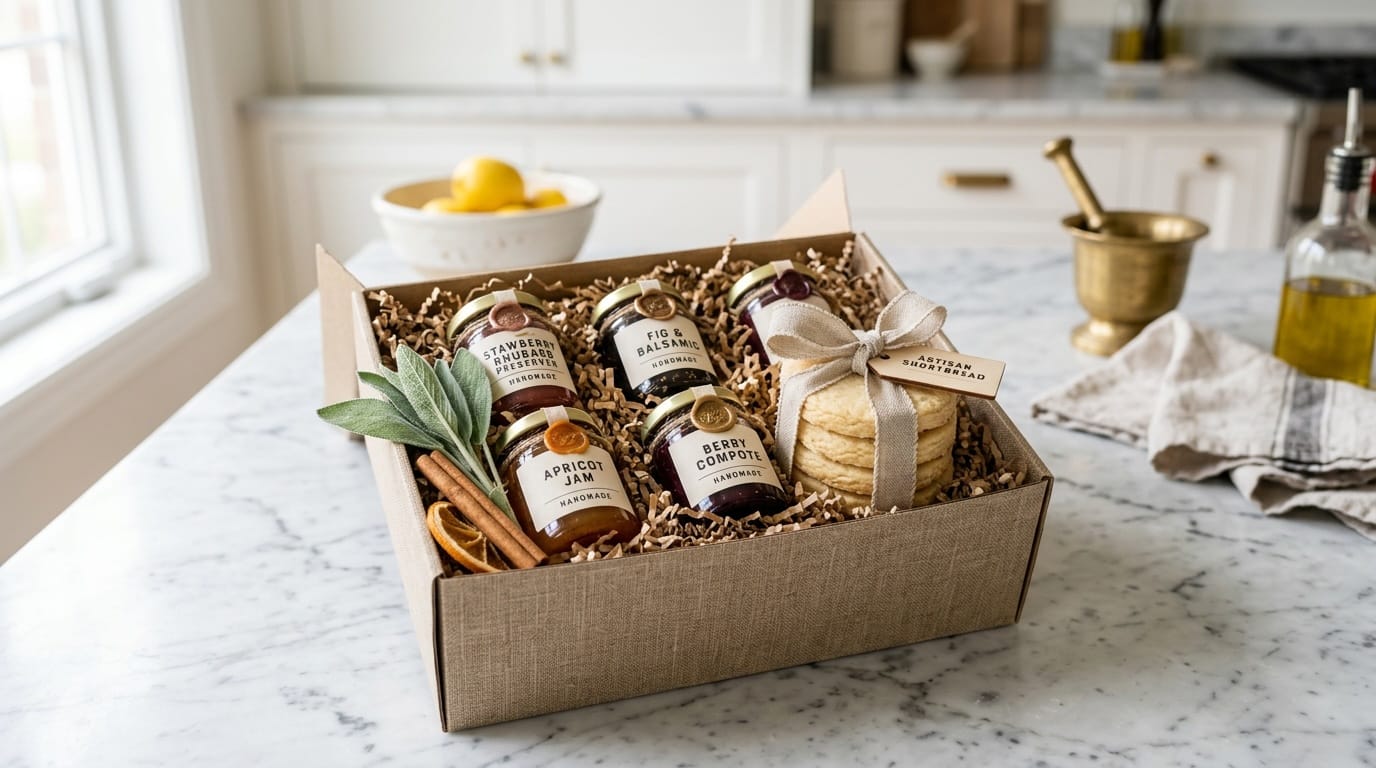
Every fall, the same thing happens at markets across the country. A customer picks up one jar of your jam, turns it over, and says, "Do you have anything I could give my mother-in-law?" And you say, "Well… you could buy three jars?" And she smiles politely and buys one.
That is a sale you already earned and are leaving on the table. A cottage food gift box is the fix, and it is easier to build than most vendors think. It is not a new product line. It is a nicer way to hand people the things you already make — at a price that finally reflects what your work is worth.
Why a Cottage Food Gift Box Outsells Individual Jars
Gift buyers are a completely different animal from your regular market shopper. Your regular shopper is buying for herself, comparing you to the grocery store, and thinking about her grocery budget. A gift buyer is thinking about how she will look when the box gets opened. She is comparing you to a candle from a big-box store, not to a supermarket jam.
That shift in comparison is where the money is. Gift shoppers reliably pay a meaningful premium over regular market pricing — not because you raised your prices, but because you changed what you are selling. You are no longer selling twelve ounces of apple butter. You are selling "the hostess gift I do not have to think about."
The other thing gift boxes fix is your December problem. If you have ever spent the first week of December frantically taking custom orders one text message at a time, a fixed set of gift boxes is your escape hatch. Three options. Fixed prices. One order form. Done.
Pick Three or Four Products — Not Eight
The most common mistake is treating the gift box like a sampler of everything you have ever made. Resist it. A box crammed with eight tiny things reads as fussy and costs you a fortune in packaging. Three to four items, chosen so they clearly belong together, reads as intentional.
The combinations that work best have an internal logic a customer can explain to someone else in one sentence:
- The breakfast box — a jar of preserves, a bag of granola, and a small loaf or scone mix. It tells a story: Saturday morning.
- The cheese board box — hot honey, a savory jam or pepper jelly, and crackers or seeded crisps. It tells a story: someone is coming over.
- The baker's box — a dry cookie mix, a jar of vanilla or spiced sugar, and one finished sweet. It tells a story: this is a project we do together.
- The one-flavor box — apple butter, apple cider caramel, and spiced apple shortbread. It tells a story: harvest.
Whatever you choose, anchor the box with your best seller. The product people already stop for is the reason someone picks up the box in the first place. Everything else is supporting cast.

How to Price a Gift Box Without Guessing
Price the box the way you price everything else, then add the parts most vendors forget.
Start with the retail price of each item inside — not the cost, the retail price. Add the full cost of packaging: the box itself, the shred or tissue, the ribbon, the label, the shrink band, the shipping mailer if you ship. Then add fifteen to twenty minutes of assembly labor per box, priced at whatever you pay yourself. That total is your floor.
Now here is the part that trips people up. Do not discount the box below the sum of its parts. A gift box is not a bulk deal — it is a convenience and presentation product. Customers are paying for the fact that they do not have to assemble it, wrap it, or think about it. If you slash the price to make it feel like a bargain, you have done the extra work and given away the reason it was worth doing.
A reasonable structure is a good, better, best set: a small box around your average two-item purchase, a mid box that is your workhorse, and a premium box with something exclusive in it that people cannot buy separately. The premium box will sell to fewer people, and it will make the mid box look like the sensible choice. That is its job.
Packaging: Make It Survive the Car Ride
Nothing kills a gift box business faster than a jar arriving in pieces. Before you commit to a box size, load one up and drive it around with a full grocery run rattling next to it. If anything shifts, it is not tight enough.
A few practical rules: use a rigid box, not a bag. Fill every gap — kraft shred, crinkle paper, or a molded insert if your volume justifies it. Anything glass gets a shrink band or a wax seal so nobody has to wonder whether it was opened. And keep your labeling requirements intact — every individually packaged food item inside still needs its own compliant label, even when it is tucked inside a gift box.
One more thing that costs nothing and lifts the whole box: a small printed card with your story, the products listed, and a note about what to do with each one. Gift recipients often have no idea who you are. That card is how you turn someone else's gift into your next customer.
Start Now, Not in November
Gift box season is decided in September. That is when you order packaging, photograph the box, build the listing, and start letting people know it is coming. By the time the first cold snap hits, the vendors who sell out are the ones whose customers already know exactly what they are buying.
Photograph the box in daylight against a plain background, styled the way you actually pack it. Put it on your shop page with a clear ship-by date. Then tell the people on your email list first — they are the ones who will buy three at a time for the office.

Start with one box. Sell it at three markets, listen to what people ask for, and build next year's lineup from what they tell you. The best gift box you will ever make is the one your customers accidentally design for you.

Keep reading
More from the market
How to Get Your Baked Goods to Market Without Wrecking Them
Cakes slide, frosting sweats, cookies go soft in the car. The crates, timing and packing order that get your bakes to the…
Read more
How to Store Root Vegetables and Winter Squash So They Last Until Spring
Potatoes, squash, carrots and onions will keep for months if you get a few things right. What each one wants, and the…
Read more
What to Do With Unsold Stock When the Market Season Ends
The last market of the season ends with a car full of what did not sell. Here is how to turn that…
Read more