
Why Homemade Bread Molds Faster Than Store Bread (And How to Store It)
You spent $12 on a beautiful loaf and lost half of it. Here's how to store homemade bread properly, and why the fridge is the worst place for it.
 1 min read
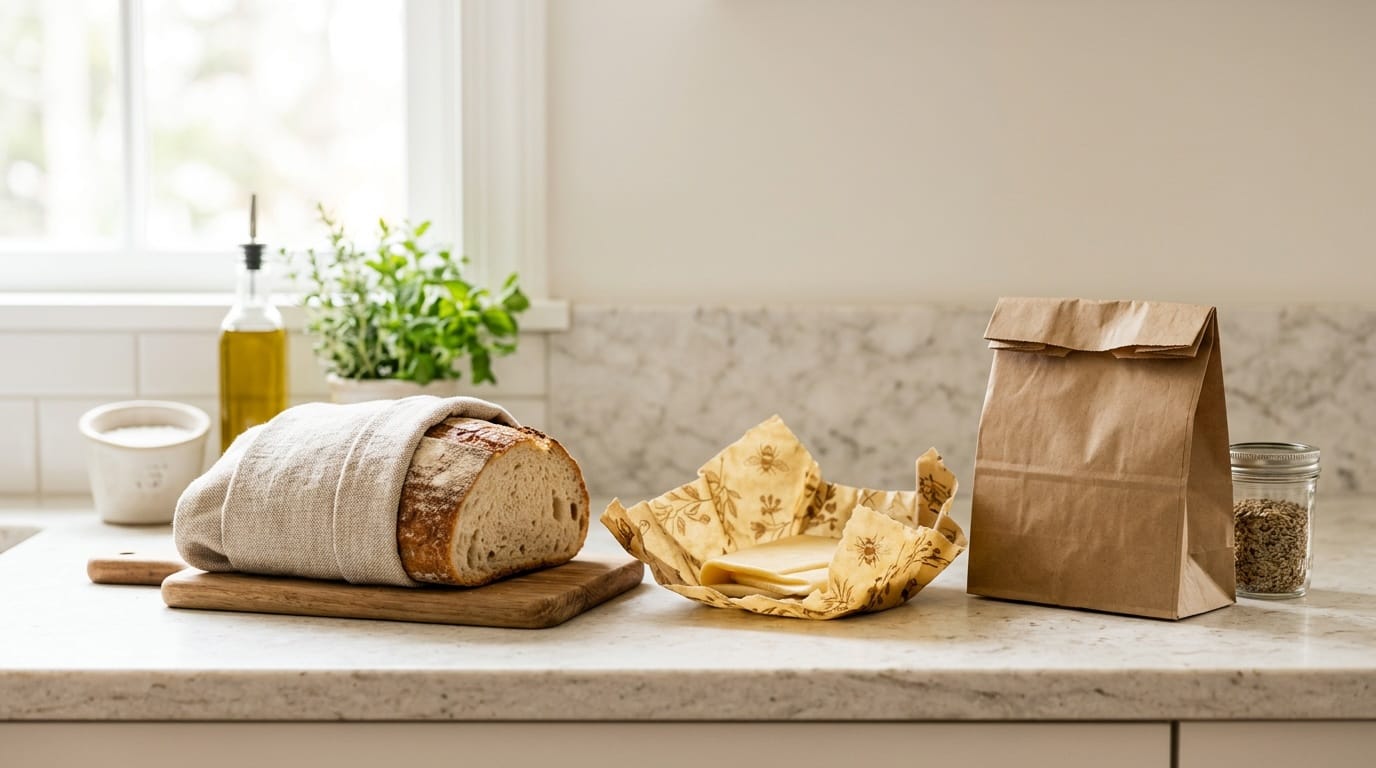
You paid twelve dollars for a loaf of sourdough with a crust like a drum and a crumb full of holes, and you carried it home like a newborn. By Wednesday it could be used as a doorstop. By Friday there was a fuzzy green spot.
Meanwhile, the supermarket sandwich bread you bought two weeks ago is still, somehow, soft.
This is the single most common disappointment in the entire farmers market experience, and it drives away repeat customers who never once mention it to the baker. Nobody ever explains how to store homemade bread, so let's do that — and let's start with what's actually happening, because the short shelf life isn't a defect. It's the receipt.
Why commercial bread lasts two weeks
Supermarket bread doesn't stay soft through superior craftsmanship. It stays soft because of a small pharmacy of ingredients your market loaf doesn't contain.
- Mold inhibitors — calcium propionate is the usual one. It does exactly what it sounds like.
- Dough conditioners and emulsifiers — things like DATEM and mono- and diglycerides, which slow the staling process and keep the crumb pliable long past its natural window.
- Added fats and sugars — both hold moisture, which is why enriched sandwich bread outlasts a lean crusty loaf even before you count the additives.
- Sealed plastic packaging — great for softness, and the reason a preservative-free loaf in a plastic bag molds in about two days.
Your market loaf is flour, water, salt, and time. There is nothing in it engineered to fight mold, because there is nothing in it that isn't food. The three-day window is not a flaw in the bread. It's proof of what the label says.
How to store homemade bread on days one through three: air, not plastic
A crusty loaf has a job to do, which is stay crusty. Plastic traps the moisture leaving the bread and pushes it back into the crust, which goes from crackly to leathery in about four hours. Every baker has watched a customer do this and died a little inside.
Instead:
- Cut side down on the counter. Slice what you need, then stand the loaf on its cut face on a board or a bare counter. The bread seals itself with its own crumb. This is free and it works absurdly well.
- Linen or paper, loosely. A linen bread bag, a clean tea towel, or a paper bag lets moisture escape slowly instead of pooling. If you only do one thing, do this.
- Room temperature, out of the sun. A bread box is lovely but not required.
- Don't slice the whole loaf up front. Every cut face is a new escape route for moisture.
Done properly, a good sourdough is genuinely excellent on day one and two, perfectly good toasted on day three, and headed for croutons after that. That's the honest range. Plan around it.
The refrigerator trap
Here's the one that surprises people: the fridge makes bread stale faster, not slower.

Staling isn't drying out — it's starch retrogradation, where the starch molecules that gelatinized during baking slowly recrystallize and squeeze out the water they were holding. That process runs fastest at temperatures just above freezing. Your refrigerator is a staling accelerator, roughly several times faster than your counter.
The fridge will slow mold down a bit. It will also turn your beautiful loaf into a dense, cottony brick while it does it. That's a bad trade.
The freezer, on the other hand, is below the range where retrogradation happens at all. Which is why:
The freezer is the actual answer
If you cannot eat a loaf in three days, freeze it — and freeze it on day one, not day three when it's already halfway gone. Freezing preserves whatever state the bread was in when it went in.
- Slice it first. All the way through, the whole loaf. Frozen bread is not sliceable and you will not thaw it just to cut two pieces.
- Wrap tight, then bag. Plastic wrap or foil directly against the bread, then a freezer bag with the air pressed out. Plastic is now your friend — the enemy in the freezer is dry air, not trapped moisture.
- Toast straight from frozen. No thawing. Slices go directly into the toaster and come out better than counter bread on day three. This is the entire trick.
- For a whole loaf: thaw wrapped at room temperature, then refresh in a 350°F oven for 10 minutes to bring the crust back.
Three months is a comfortable window. Label the bag with the date, because you will not remember.
How to revive a day-three loaf
Stale is not spoiled. Retrogradation is partly reversible with heat, which is why a day-old loaf can be brought most of the way back.
Run the whole loaf briefly under the tap — actual running water, all over the crust, quickly. Then straight into a 350°F oven for 10 to 15 minutes. The water steams through the crumb, the crust re-crisps, and you get something startlingly close to fresh. Eat it within the hour; this trick only works once.
(And genuinely stale bread is not a loss. Panzanella, croutons, bread pudding, and French toast all exist because bread goes stale. Some of the best things in the repertoire are day-four food.)
While we're here: the rest of your market haul
The same "no preservatives means shorter clock" logic applies to almost everything else in your basket.
- Jam, once opened. Sealed and shelf-stable it will keep a year in the pantry. Opened, it goes in the fridge and you have roughly three to four weeks. Always use a clean spoon — a buttery knife going back into the jar is how jam grows things.
- Soft cheese. Wrap in parchment or cheese paper, then loosely in a bag — never tight plastic against the rind, which suffocates it and turns it slimy. Fridge, and eat it inside a week.
- Cut greens and lettuces. Wash, spin genuinely dry, then store in a container with a dry paper towel. Wet greens turn to slime; dry greens last five to seven days.
- Fresh herbs. Stems in a jar of water like flowers, loose bag over the top, in the fridge. Basil stays on the counter instead — cold turns it black.
- Farm eggs. If they were never washed, they're fine on the counter for a couple of weeks. If your vendor washed them (most do), they belong in the fridge and will keep for well over a month.
A note for the bakers reading this
Print a storage card. One small tag tied to the bag: cut side down, linen not plastic, freeze on day one, toast from frozen, never the fridge. It costs you pennies and it converts the customer who quietly stopped coming back into the one who buys two loaves and freezes one. Nearly every "your bread went bad" complaint is actually a storage problem, and you are the only person in a position to prevent it.
The loaf that goes stale in three days is telling you the truth about itself. Wrap it in linen, freeze what you can't eat, and never, ever put it in the fridge — and that twelve dollars stretches a lot further than you thought.


Keep reading
More from the market
What’s at the Farmers Market in November? Your Late-Fall Shopping Guide
November farmers markets are smaller, colder, and sweeter than you expect. Here is what is in season, what frost improves, and what…
Read more
Cold-Weather Booth Setup: Wind, Light, and Days That End at Four
A booth built for August falls apart in November. What to change for wind, cold and a market that ends after dark…
Read more
Selling from a Farm Stand: What It Takes and What It Makes
A stand at the end of the drive has no booth fee and no set hours. What to check before you build…
Read more