

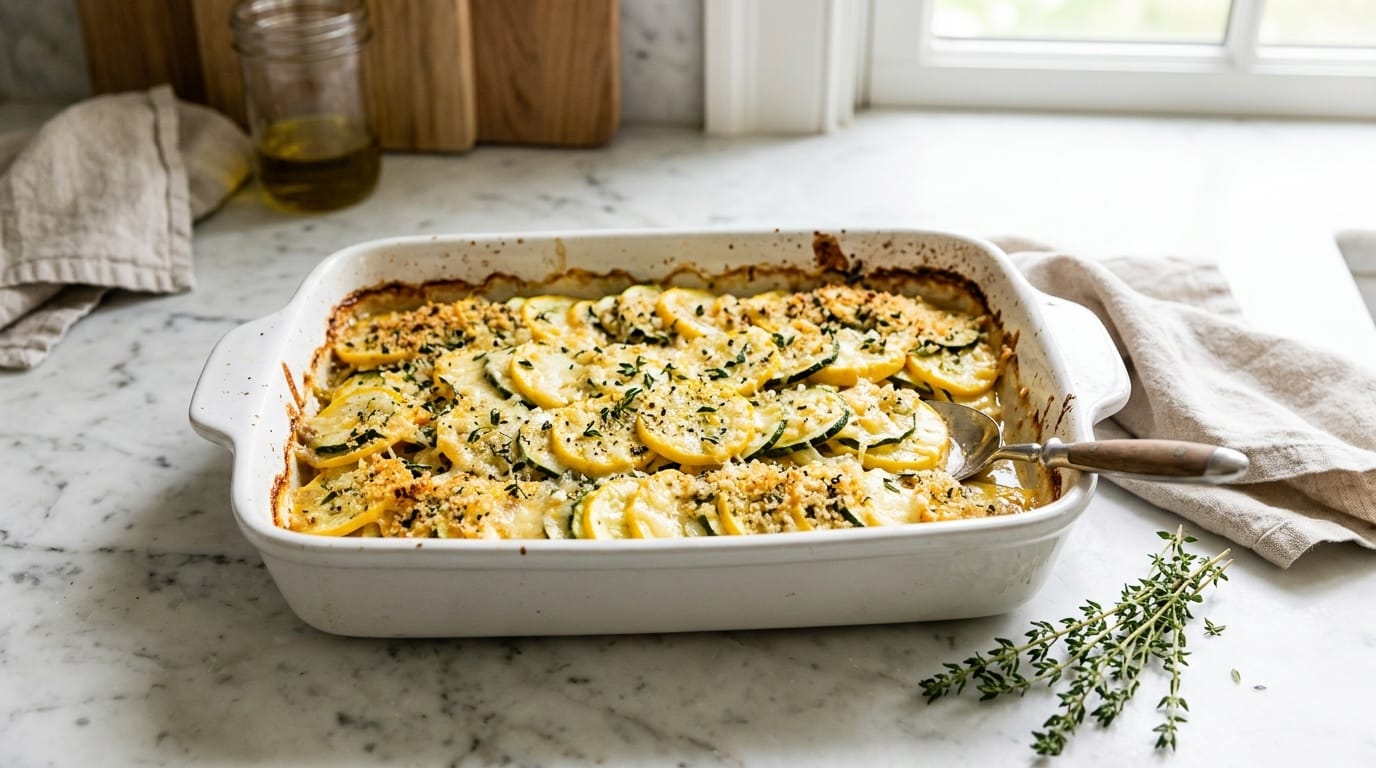
By the last week of July, the squash situation at the market has gotten out of hand. Yellow crooknecks, pale green pattypans, zucchini stacked in crates that were clearly not sized for the volume, and at least one grower who will offer you a fourth one free if you'll just take it. Gardeners are leaving bags on each other's porches under cover of darkness. It is the season of abundance and mild desperation.
Most of that squash gets shredded into bread or fried into fritters, both of which are excellent. But the dish that actually makes people stop and ask what it is — the one that turns a humble pile of summer squash into something you'd serve to company — is a gratin.
The Problem With Every Squash Gratin You've Had
Water. That's it. That's the whole problem.
Summer squash is roughly 94 percent water, and it holds onto that water right up until it gets hot, at which point it releases all of it into your beautiful baking dish. You pull out something that looked golden and gorgeous, cut into it, and watch a puddle spread across the plate while your crisp breadcrumb topping goes soft in real time.
The fix is boring and it is non-negotiable: salt the squash and let it drain before it ever goes in the dish. Slice it thin, toss it with salt, and let it sit in a colander for 30 minutes. You will be genuinely startled by how much liquid comes out — often a half cup or more from two pounds of squash. Then press it gently between towels.
That's the difference between a gratin and a casserole full of squash soup. Thirty minutes of doing nothing. Do not skip it.
Why Gruyère, and What Else Works
Summer squash is mild to the point of shy. It needs a cheese with actual personality or the whole dish tastes like warm vegetables and good intentions.
Gruyère is the classic choice because it's nutty and slightly sweet, it melts without turning greasy, and it browns into those crisp lacy edges at the side of the pan that everyone fights over. Comté does the same job. Aged white cheddar is sharper and very good. Fontina is milder and meltier. A little Parmesan mixed into the breadcrumbs adds a savory backbone regardless of what else you use.

The breadcrumbs matter more than you'd think. Panko stays crisp far longer than fine dry crumbs, and torn fresh bread tossed in olive oil is better than either if you've got a heel of good market sourdough going stale. Toss the crumbs with olive oil, chopped thyme, and lemon zest before they go on top — that lemon zest is small and it does an enormous amount of work.
Make It Yours
Layer in tomatoes. If you've got late-July tomatoes, slice them thin, salt and drain them alongside the squash, and alternate layers. It becomes something close to a tian and it is beautiful.
Add corn. A cup of fresh kernels scattered between layers brings sweetness and a little texture. Very good with a sharp cheddar version.
Go herbier. Thyme is the default, but basil, oregano, marjoram, or a handful of chopped chives all belong here. Use whatever's biggest and most fragrant at the herb table.
Make it a main. Add a layer of ricotta seasoned with lemon and black pepper, or scatter in white beans. Serve it with a green salad and good bread and call it dinner.
Make it ahead. Assemble everything except the breadcrumbs up to a day early, refrigerate, then add the topping and bake straight from cold with an extra 10 minutes. This is the version that saves a weeknight.
What to Look for at the Market
Smaller squash are better. Six to eight inches, firm, glossy skin, no soft spots. The enormous baseball-bat zucchini that gardeners are so proud of is mostly seeds and water — beloved, but not gratin material. Save those for bread.
Buy a mix of colors if you can. Yellow crookneck and green zucchini layered together look genuinely striking, and pattypans sliced crosswise make little scalloped rounds that are unreasonably charming.
And get your thyme and your bread at the same market. Fresh herbs from a grower are a different plant than the plastic clamshell, and a loaf from your market baker makes breadcrumbs worth the extra step. Both of those vendors are standing about forty feet from the squash.
Made this one? We'd love to see it — tag @butterandsagemarket. And if you want to find the growers and bakers near you, our vendor directory is a good place to start.
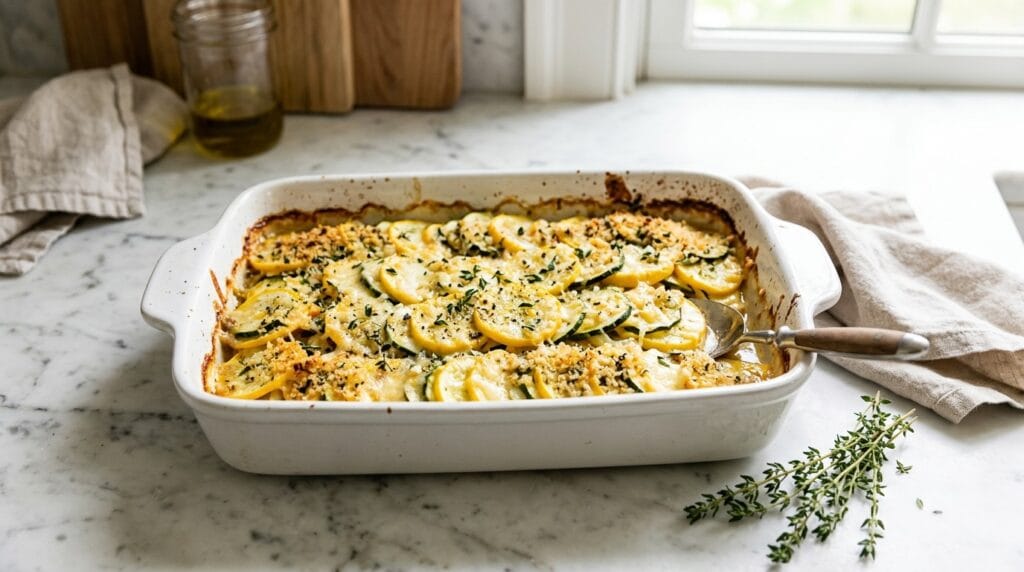
Summer Squash Gratin with Gruyère and Herbed Breadcrumbs
Thin-sliced summer squash layered with nutty Gruyère and topped with lemony herbed breadcrumbs. Salting the squash first is what keeps it golden instead of watery.

Ingredients
For the gratin
For the topping
Instructions
- Toss the sliced squash with 1 1/2 teaspoons kosher salt in a colander set over a bowl. Let drain for 30 minutes, then press gently between clean kitchen towels to remove as much liquid as possible. Do not skip this step — it is what keeps the gratin from turning watery.
- Heat the oven to 400°F and butter or oil a 9x13-inch baking dish or a 10-inch cast iron skillet.
- Warm 2 tablespoons olive oil in a skillet over medium heat. Add the onion and cook 8 to 10 minutes until soft and lightly golden. Add the garlic and cook 1 minute more. Remove from heat.
- Combine the breadcrumbs, 2 tablespoons olive oil, Parmesan, chopped thyme, and lemon zest in a small bowl. Toss until the crumbs are evenly coated.
- Layer half the drained squash in the prepared dish, overlapping the slices slightly. Scatter over half the onion mixture, half the Gruyère, 1/2 teaspoon thyme, and a generous amount of black pepper.
- Repeat with the remaining squash, onion, Gruyère, thyme, and pepper. Pour the cream evenly over the top.
- Bake uncovered for 30 minutes, until the squash is tender and bubbling at the edges.
- Scatter the breadcrumb mixture evenly over the top and return to the oven for 12 to 15 minutes, until the topping is deeply golden and crisp.
- Let the gratin rest 10 minutes before serving — it firms up as it cools and slices much more cleanly.
Notes

Keep reading
More from the market

Kale and White Bean Stew with Sausage
One pot and forty minutes. Sausage, creamy white beans and a whole bunch of market kale, with the vinegar trick that stops…
Read more
Skillet Baked Eggs with Blistered Tomatoes and Feta
One skillet, thirty minutes, and the best possible use of late-summer market tomatoes and farm eggs. Breakfast, lunch, or a very good…
Read more
Overnight Sourdough Cinnamon Rolls (Soft, Tangy, and Market-Ready)
Soft, tangy overnight sourdough cinnamon rolls. The cold rise does the work while you sleep — and they hold up beautifully on…
Read more