
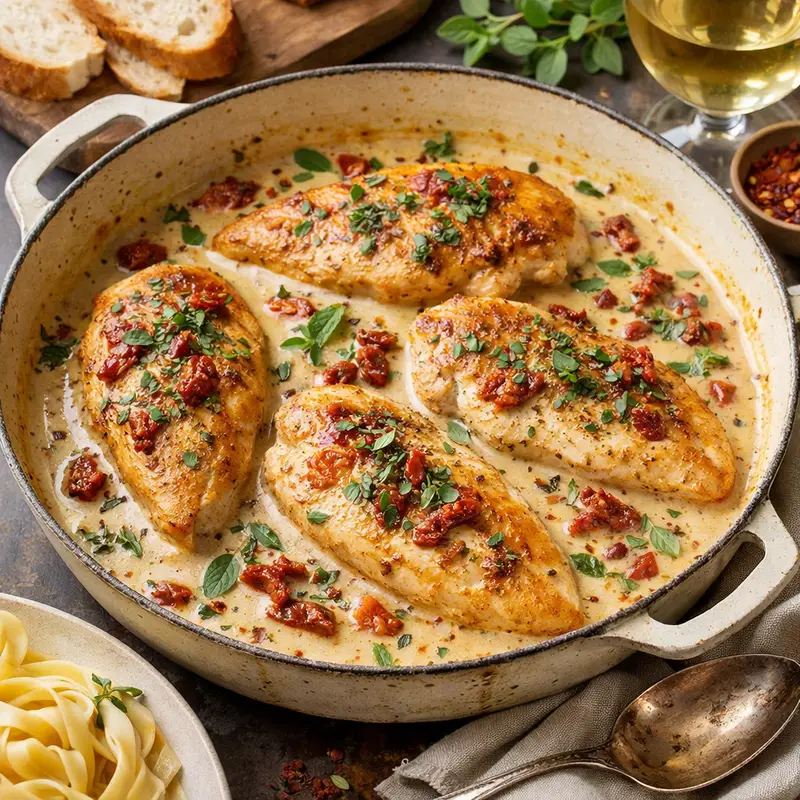
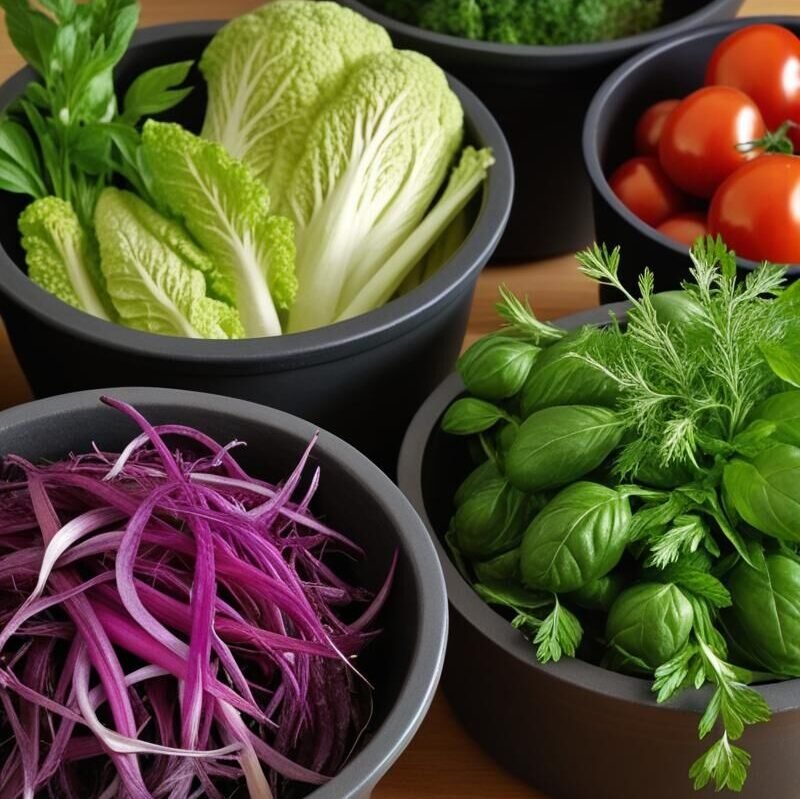
Tuscan chicken may have taken the internet by storm but in our opinion most of the recipes we’ve seen lack the most important step – developing flavor. So we took to the kitchen to develop a better version that’s still easy to do, uses common ingredients, and is one pan and budget friendly but builds enormous flavor that will have your family begging to have it again and again.
Northern Italy and southern France share more than a border. They share olive oil instead of butter as a default fat, an affection for fresh herbs, restrained use of spice, and a deep respect for simple ingredients treated well. French cooking brings structure—pan sauces, reductions, careful heat control—while Italian cooking brings generosity, aromatics, and an instinct for balance rather than precision.
This Franco-Italian Cream Chicken with Sun-Dried Tomatoes lives right in that overlap. It uses a French pan-sauce approach—searing, deglazing with wine, reducing stock, finishing with cream—while leaning Italian in flavor: oregano, thyme, sun-dried tomatoes, and just enough red pepper flakes to wake everything up. Tarragon, a very French herb, ties it all together with its subtle anise note, keeping the sauce from feeling heavy or flat.
It’s a dish that feels elegant enough for company but forgiving enough for a weeknight, which is exactly where good cross-border cooking shines.
Franco-Italian Cream Chicken with Sun-Dried Tomatoes
Serves 4
Ingredients
4 boneless, skinless chicken breasts
Kosher salt and freshly ground black pepper
1/2 t Red pepper flakes, to taste (if you like it spicier add a little more)
2 tablespoons olive oil
2 shallots, finely minced
3 cloves garlic, minced
½ cup dry white wine (I use the little 4 pack bottles of Pinot Grigio so maybe a little more than 1/2 cup but do what works for you)
1 cup chicken stock
1 cup heavy cream
¼ cup sun-dried tomatoes, chopped (oil-packed preferred, drained)
1 tablespoon fresh oregano, finely chopped
1 tablespoon fresh thyme leaves
1–2 teaspoons fresh tarragon, finely chopped (if you’re in the South like us you can’t grow this but you can use Mexican Mint Marigold instead. If you don’t have that either go with dried tarragon but then only a pinch)
Why This Recipe Works (A Chef’s Perspective)
This dish is built on classic pan-sauce ratios and sequencing, which is why it feels cohesive instead of “creamy chicken with stuff in it.”
Sear first, sauce second
The chicken is cooked almost entirely before the sauce begins. This ensures proper browning and prevents overcooking while the sauce reduces.Wine → stock → cream
Wine deglazes and adds acidity.
Stock adds savory depth and volume.
Cream is added last, after reduction, so it thickens without breaking.
This order is critical. Adding cream too early dulls flavor and prevents proper reduction.
Reduction by at least half
Reducing the wine and stock concentrates flavor so the cream doesn’t overwhelm. Think intensity first, richness second.Herbs added in layers
Heartier herbs (oregano, thyme) can simmer briefly. Delicate tarragon goes in at the end to preserve aroma.
The result is a sauce that’s silky, balanced, and spoon-coating without being heavy.
Instructions (With Technique & Temperature Guidance)
1. Mise en Place (set up)
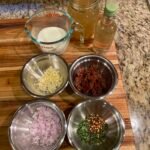 Please don’t skip this step. This is the number one tip that will transform your cooking from good to great. The beginning stages of cooking are usually pretty calm and slow going. It’s towards the end that it gets frantic. Having all of your ingredients already prepared makes the end stages go smoothly and reduces the chances that you burn something or over-reduce because you have to rush to chop up an ingredient or measure out a liquid. Dice your shallots, chop your herbs, measure out the stock and cream. Have everything prepared before you start cooking and you’ll find that cooking the dish is a much more pleasant and stress-free experience.
2. Prepare the Chicken
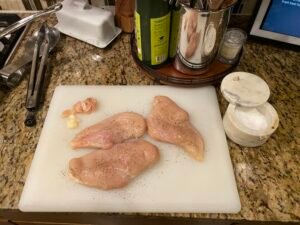 Take the time to trim your chicken breasts. If you bought them butchered from the store they often leave the small tendon on the back that attached the wing. This isn’t a pleasant bite so i always remove that. Trimming this also helps the breast to lay more flat. Also trim any extra fat.
Pat the chicken breasts completely dry—this is non-negotiable for browning. Season generously on both sides with salt and pepper.
If the breasts are very thick, lightly pound them to an even thickness. Even chicken cooks evenly and browns better.
2. Sear the Chicken
Heat a large stainless steel or cast-iron skillet over medium-high heat. When the pan is hot, add the olive oil. You’re looking for oil that shimmers but does not smoke aggressively.
NOTE: Get to know your stove top and your pans. Some pans heat faster or more aggressively than others. Stove top burners can have different strengths and sizes. If yours runs hotter you may need closer to medium to get a good sear and not burn. If yours doesn’t run as hot, a little more past medium-high may be needed.
Place the chicken in the pan, presentation side down.
Do not move it.
Temperature cue: Medium-high, steady—not cranked.
Time: 4–5 minutes per side.
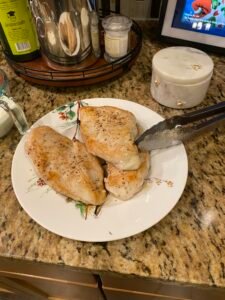
You’re looking for deep golden browning. If the chicken sticks initially, leave it alone—it will release when the crust forms.
Once browned remove the chicken to a plate.
3. Build the Sauce Base
Reduce heat to medium. Add the shallots to the same pan with the residual fat.
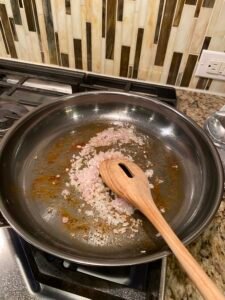 Cook 1–2 minutes until softened and translucent, scraping up browned bits. Add garlic, oregano, and thyme and cook 30 seconds, just until fragrant.
4. Deglaze with Wine
Pour in the white wine. It should sizzle immediately.
Using a wooden spoon, scrape the bottom of the pan thoroughly. Let the wine simmer until reduced by about half, 2–3 minutes.
What to look for:
Bubbling slows
Alcohol smell disappears
Liquid looks slightly syrupy around the edges
5. Add Stock and Reduce
Add the chicken stock and sun-dried tomatoes. Bring to a steady simmer and reduce again by about half, 5–7 minutes.
You want the sauce to look glossy and slightly thickened, not watery.
6. Finish with Cream & Herbs
Lower heat to medium-low. Stir in the cream.
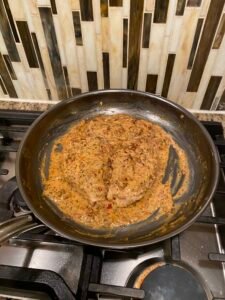 Simmer gently 2–3 minutes until the sauce coats the back of a spoon. Taste and adjust seasoning.
Return the chicken and any accumulated juices to the pan. Spoon sauce over the chicken and simmer until the internal temperature of the chicken reaches 165 degrees (I pull mine off the heat when it reaches 157-159 and let the resting rise in temperature reach 165. But no matter what I always check that it ultimately reached 165).
Turn off heat and stir in the fresh tarragon just before serving.
Alternative Herb & Tomato Combinations (Pantry-Friendly)
This recipe is flexible once you understand the structure.
Herb Swaps
No tarragon? Use Mexican mint marigold, basil, or chives at the end.
No oregano? Increase thyme slightly and add rosemary (very sparingly).
Only dried herbs? Use one-third the amount and add earlier in the sauce.
Tomato Variations
No sun-dried tomatoes:
Use a spoonful of tomato paste added with the shallots
Or add halved cherry tomatoes during the stock reduction
Each option shifts the dish slightly more French or Italian, but the core technique remains sound.
What to Serve It With
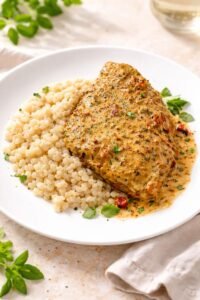 The first time we made this we served it with pearl couscous. It was delicious but my family instantly begged to have it again with roasted vegetables or mashed potatoes. It just craves that earthy richness.
This sauce begs for something that can catch it:
Creamy polenta
Buttered egg noodles or pappardelle
Mashed or roasted potatoes
Crusty bread (highly recommended)
For vegetables:
Roasted broccolini
Green beans with lemon
- Roasted carrots and potatoes
Simple arugula salad with vinaigrette
Storage & Reheating
Storage
Store leftovers in an airtight container for up to 3 days.
Keep chicken and sauce together to prevent drying out.
Reheating (Best Method)
Reheat gently in a skillet over low heat, adding a splash of chicken stock or cream to loosen the sauce.
Avoid the microwave if possible—cream sauces are prone to breaking with aggressive heat.
If you have a sous vide circulator store your leftovers in a vacuum sealer bags (sauce and chicken in separate bags) and reheat in a warm water bath at around 140 degrees for 30-60 or until warmed through.
Final Thought
This is the kind of recipe that teaches you how to cook, not just what to cook. Once you understand the rhythm—sear, deglaze, reduce, enrich—you can make endless variations with whatever herbs, proteins, or aromatics are on hand.
That’s the real inheritance of Franco-Italian cooking: not rigid tradition, but confidence built on technique.
Did you try this recipe? Make any adjustments that you love? Leave a comment and let us know how it goes, or tag us on social media.
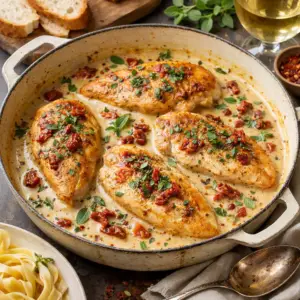
Franco Italian Creamed Chicken with Sun Dried Tomatoes
Equipment
- 1 stainless steel skillet
- 1 wooden spoon
Ingredients
- 4 boneless skinless chicken breasts
- Kosher salt and freshly ground black pepper
- 1/2 t Red pepper flakes or more to taste
- 2 tablespoons olive oil
- 2 shallots finely minced
- 3 cloves garlic minced
- ½ cup dry white wine
- 1 cup chicken stock
- 1 cup heavy cream
- ¼ cup sun-dried tomatoes sliced (oil-packed preferred, drained)
- 1 tablespoon fresh oregano finely chopped
- 1 tablespoon fresh thyme leaves
- 1 –2 teaspoons fresh tarragon finely chopped
Instructions
Mise en place all ingredients
- Dice shallots, garlic. Chop herbs, Measure out wine, stock, red pepper flakes, and cream.
Prepare the Chicken
- Pat the chicken breasts completely dry—this is non-negotiable for browning. Season generously on both sides with salt, pepper, and a pinch of red pepper flakes.
- If the breasts are very thick, lightly pound them to an even thickness. Even chicken cooks evenly and browns better.
Sear the Chicken
- Heat a large stainless steel or cast-iron skillet over medium-high heat. When the pan is hot, add the olive oil. You’re looking for oil that shimmers but does not smoke aggressively.
- Place the chicken in the pan, presentation side down.
- Do not move it.
- Temperature cue: Medium-high, steady—not cranked.
- Time: 4–5 minutes per side.
- You’re looking for deep golden browning. If the chicken sticks initially, leave it alone—it will release when the crust forms.
- Once browned and just cooked through (internal temp ~160°F), remove the chicken to a plate and tent loosely with foil.
Build the Sauce Base
- Reduce heat to medium. Add the shallots to the same pan with the residual fat. Season lightly with salt and pepper.
- Cook 1–2 minutes until softened and translucent, scraping up browned bits. Add garlic and cook 30 seconds, just until fragrant.
- Deglaze with Wine
- Pour in the white wine. It should sizzle immediately.
- Using a wooden spoon, scrape the bottom of the pan thoroughly. Let the wine simmer until reduced by about half, 2–3 minutes.
- What to look for:
- Bubbling slows
- Alcohol smell disappears
- Liquid looks slightly syrupy around the edges
Add Stock and Reduce
- Add the chicken stock and sun-dried tomatoes. Bring to a steady simmer and reduce again by about half, 5–7 minutes.
- You want the sauce to look glossy and slightly thickened, not watery. Taste for seasoning and add salt if needed.
Finish with Cream & Herbs
- Lower heat to medium-low. Stir in the cream. Taste again for seasoning but keep in mind the chicken is also salted. If it’s under-seasoned add a little salt.
- Return the chicken and any accumulated juices to the pan. Spoon sauce over the chicken and simmer until internal temperature of chicken reaches 165 degrees.
- Turn off heat and stir in the fresh tarragon just before serving.









0 Comments