
Kitchen Gadgets that are Worth the Investment: Our ultimate kitchen tools top list after 30 years
If you’re building a kitchen to last a lifetime (and maybe to be fought over at estate sales), this is the guide for you. Below are the essential, investment-grade ultimate kitchen tools — the heavy hitters that make better food, save time, and actually become more lovable with age. This is my tried and true advice after 30 years of building a kitchen that I love coming back to day after day. No matter what I want to make - I know I can easily get it done with my well stocked kitchen.
 1 min read
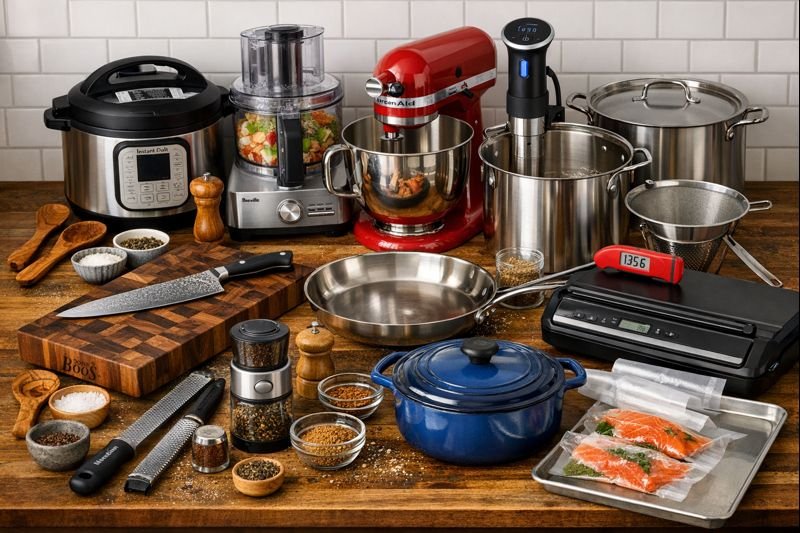
The Foodie’s Dream Kitchen — Investment-Grade Gadgets You’ll Keep Forever
I am an ultimate enthusiast for good, healthy, food. One of my biggest pet peeves (aside from produce pre-packaged in plastic bags) is a kitchen that doesn't feel functional. Making great food for my family is my love language - a small tasty bite can bring a smile, turn around a bad day, and show your loved ones how much you care. But a kitchen that doesn't work with you can make the experience a downright chore. Having the right tools for the right job can make cooking a wonderful experience, and bring you and your family back to cooking good meals at home. This is my list of the kitchen gadgets that everyone needs after 30 years of testing.
If you’re building a kitchen to last a lifetime (and maybe to be fought over at estate sales), this is the guide for you. Below are the essential, investment-grade kitchen gadgets — the heavy hitters that make better food, save time, and actually become more lovable with age. This is my tried and true advice after 30 years of building a kitchen that I love coming back to day after day. No matter what I want to make - I know I can easily get it done without feeling like I just ran a military obstacle course just for making one dish. For each item you’ll get:
Recipes that become way easier or better;
What to look for when buying (features that matter);
How to care for the tool so it lasts; and
A recommendation (and a reputable resource) so you can learn more or buy with confidence.
I'll admit up front that these recommendations are investment pieces. I'm not a believer that higher price is higher quality but I am focusing on items that I use constantly and that will last a lifetime - and that often comes with a higher price tag. I built my collection over decades, learning the hard way after buying cheaper versions and having to replace them. Buy the best that you can afford, try to save up for the true investment pieces, and focus on the items that will help you make the food you love the most.
Pressure Cooker — Fast braises, shockingly good stocks
Why: Pressure is the secret cheat code for intensifying flavor and reducing cooking time — without turning tender into leather.
Recipes that get a glow-up: braised short ribs, rich chicken bone broth, pork carnitas, chili, steaks so tender you could eat them with a spoon, and even risotto with almost no stirring.
What to look for: heavy base, secure lid and pressure indicator, replaceable gasket, durable vent design. Stovetop models (European makers) are built like tanks; electric multi-cookers are convenient but consider repairability and gasket availability. See Bon Appétit’s roundup of top pressure cookers for performance and safety. Bon Appétit
Care: replace the rubber gasket every 12–24 months if you use it often; hand-wash lids and check vents for debris; store lid off (or inverted) so seals don’t compress.
Recommendation & resources: For a long-lived, professional-grade stovetop model, look at premium European brands and read Bon Appétit’s buying guide. Bon Appétit
NOTE: If you want to skip the stove-top models (scary) for electric models (my personal fave) go with the can't be beat Instant Pot or Ninja Foodi. Great features, safer, and same functions as professional grades.
High-Speed Blender — Not just for smoothies (but excellent at that too)
Why: A true high-speed blender turns nuts to butter, makes velvety soups, and can even heat pureed soup by friction. If you love smoothies, nut milks, silky sauces, or making small-batch ice cream, this is indispensable.
Recipes that get easier: smoothies, hot blender soups, nut butters, blender hollandaise, frozen cocktails, smooth pancake or crepe batters, salad dressings, vegetable puree (my parsnip puree is so easy with these!), sauces, chili ancho, and so much more.
What to look for: robust motor (lots of torque), durable stainless blades, warranty/repair support, a jar designed for good circulation. Vitamix and similar commercial-grade blenders are built to run for years. Serious Eats’ testing consistently favors Vitamix for power and longevity. Serious Eats+1
Care: rinse and blend warm soapy water immediately after use; avoid the dishwasher on expensive containers; don’t store with lid sealed (odors).
Recommendation & resources: The Vitamix Ascent series (and Vitamix legacy pros like the 5200) are frequent test-kitchen favorites. Read Serious Eats’ Vitamix reviews for in-depth testing. Serious Eats+1
NOTE: The Vitamix Ascent is what I personally own, and love. I also love that the base can run both the blender and the food processor. The two-in-one takes up less valuable kitchen real-estate. I also love the easy clean up.
Food Processor — The prep time annihilator
Why: For quick shredding, slicing, mixing, and dough — the food processor is the knife-skill substitute that still gives beautiful results.
Recipes that get easier: pesto and chimichurri, pie crust and scone dough, hummus and nut butters, shredded slaw, tortilla or rosti potatoes, uniform gratins, and even quick cookie doughs.
What to look for: strong motor (1000W+ on top models), multiple bowl sizes, a variety of discs/blades, wide feed chute, secure locking. Bon Appétit and other test kitchens consistently rank Breville’s Sous Chef at the top for performance and intuitive design. Bon Appétit+1
Care: hand-wash blades (they dull in dishwashers), dry metal parts immediately, store discs carefully so edges don’t chip, and wipe the base clean after use.
Recommendation & resources: The Breville Sous Chef (various sizes) is a premium choice—excellent power and user-friendly design. See Bon Appétit’s review for details. Bon Appétit
NOTE: See my note above in blenders that I personally own the Vitamix food processor attachment for the Ascent model. Cabinet space is precious so I chose the less footprint option of a two-in-one.
Stand Mixer — The dough whisperer and attachment powerhouse
Why: If you bake regularly (or want to), a heavy-duty stand mixer will pay for itself in less sore forearms and better bread, cookies, and whipped confections. Attachments turn it into a pasta machine, meat grinder, or ice-cream maker.
Recipes that get easier: cookies, pasta, artisan breads, pizza dough, brioche, meringues, buttercreams, waffles, cakes, homemade butter, compound butter. Add a pasta roller to make fresh tagliatelle, or a grinder for sausage and burger experiments. I mean honestly, you aren't using this one enough.
What to look for: strong motor and metal gears, at least 5–7 qt capacity for most households, planetary mixing action, and an ecosystem of attachments. If bread is your thing, consider heavier-duty models (Ankarsrum, Bosch) that outperform in extended kneading. Comparative reviews show Ankarsrum and KitchenAid both have strong cases depending on what you prioritize. Sher She Grows+1
Care: wipe the motor housing (don’t submerge), hand-wash attachments or confirm dishwasher safety, tighten/beater-height adjust annually if needed.
Recommendation & resources: KitchenAid remains the ubiquitous, tried-and-true choice for most home bakers; Ankarsrum (and Bosch for some markets) is worth a look if you frequently make large batches or heavy doughs. See side-by-side reviews for which fits your baking habits. Sher She Grows+1
NOTE: If you've ever made a recipe that requires creaming the butter & sugar I promise you aren't letting it run long enough. Throw that butter & sugar in your stand mixer and let her run. You need more than 5 minutes to even get close. I wouldn't dare attempt this with a hand mixer.
Sous Vide Immersion Circulator — Precision, reliably
Why: Nothing beats sous vide for repeatable, restaurant-quality doneness. You get edge-to-edge perfect steak, ultra-tender chicken breast, and custards that never curdle.
Recipes that get easier: steak cooked exactly to the degree you want; chicken breast that never dries; salmon that flakes but stays silky; the pork tenderloin of your dreams, poached eggs, sous-vide eggs and custards; crème brûlée, crunchy pickles, ice cream base, crème anglaise, infused syrups and cocktail elements.
What to look for: accurate temperature control, good circulation, quiet operation, and reliable construction. Tech and kitchen reviews put the Anova Precision Cooker among the best for value and performance. Serious Eats+1.
My personal choice is the Breville Joule. I like the small footprint and turbo feature. I wouldn't say the high price point makes it better than other models though, so in this case aim for well rated unless you want the fancier features.
Care: descale occasionally with vinegar or descaler; dry the unit before storing; use high-quality bags and avoid letting the unit sit in dirty water for long periods.
Recommendation & resources: Anova Precision Cooker 3.0 is a commonly recommended model for home cooks; read Serious Eats and TechGearLab testing for performance notes. Serious Eats+1
NOTE: I'm making a special note on this one because I can hear you thinking you probably don't need this. I felt the same way when my daughter recommended it. And then I got one and my world changed. Just try it - you'll love it.
High-Quality Stainless-Steel Skillet (12") — Your everyday searing and saucing pan
Why: A tri-ply stainless skillet sears, sautés, and finishes sauces with professional results — it tolerates high heat and oven use, and it’s the backbone of weekday dinners.
Recipes that get easier: pan-seared steaks, crispy chicken thighs, frittatas, stir-fries, pan sauces after deglazing, Tuscan chicken, and elegant one-pan dinners.
What to look for: fully clad tri-ply construction (not just disc-bottom), riveted handle, flat bottom that sits well on your cooktop, and good oven safety. Serious Eats’ testing highlights All-Clad D3 as a top pro-grade option. Serious Eats
Care: preheat before oiling/adding food, deglaze to lift fond (flavor is free), use Bar Keeper’s Friend for tough stains, and avoid aerosol cooking sprays which leave sticky residue.
Recommendation & resources: Consider All-Clad’s D3 stainless range for a pro-level pan; check Serious Eats’ skillet tests for performance details. Serious Eats
NOTE: My personal fave is the Hestan NanoBond titanium. The price is ridiculously high. I never thought any pan would be worth that price. Then I tried one and holy cow. If you've ever struggled with getting a good sear, golden color, sticking food, or clean up this pan solves it all. It gives you effortless professional results and makes clean up a breeze. You don't need a pan this expensive but if it's in your budget I highly recommend.
Large Stainless-Steel Stock Pot (8–12 qt) — Big batches, zero drama
Why: Stocks, soups, pasta for guests, blanching and canning — a roomy, heavy-gauge pot is required for serious cooking.
Recipes that get easier: rich bone broths, minestrone, paella or large pasta boils, shellfish boils, canning tomato sauce, and large-batch blanching/freezing.
What to look for: at least 8–12 quarts depending on your family size, heavy bottom for even heat, tight-fitting lid, and sturdy handles. 8 quart is typically the right size for a family of 4. The only time I break out the 12 quart is turkey stock during the holidays and a large chili when the whole extended family is coming over. All-Clad’s stockpot lines are often recommended for even heating and durable construction. All-Clad+1. On this one I also love my Hestan, but it's mostly cosmetic. It looks like a jewel on my stovetop. While it might have slightly better even heating, I've seen similar performance from All-Clad, MadeIn, and Hestan. All-Clad and Hestan are dishwasher safe due to the bonded edging where MadeIn is hand wash only.
Care: let cool before washing to avoid warping, remove mineral spots with vinegar, and store with the lid off.
Recommendation & resources: All-Clad’s tri- or 5-ply stock pots are excellent long-term investments — Food & Wine and other outlets have highlighted them as top picks. All-Clad+1
High-Quality Chef’s Knife (8–10") — The tool that truly matters
Why: A great chef’s knife will save you time, make cuts safer, and actually make prep enjoyable. It’s the single most transformative purchase in the kitchen.
Recipes that get easier: everything from chopping vegetables to breaking down poultry — but especially onion work, juliennes, fine herb chiffonade, carving roast meats, and fine slicing for carpaccio.
What to look for: comfortable handle that fits your hand, full tang, steel that holds an edge (German or Japanese steels both have pro fans), and a balance that makes long prep comfortable. Long-standing makers like Wüsthof and Japanese lines like Shun or Miyabi often appear in comparative reviews. Deliciously Plated



Care: never the dishwasher; hone frequently and professionally sharpen once or twice a year (depending on use); store in a block, sleeve, or magnetic strip.
Recommendation & resources: Explore Wüsthof and Japanese makers for different weight and edge profiles; read comparative reviews to find the feel you prefer. Deliciously Plated. My personal favorite is the MAC professional series. I own several and they never let me down. They aren't as well known a brand but you'll find them at the top of many chef's lists.
NOTE: Don't buy knife sets! It's a waste of money. A good, sharp, chef knife covers 95% of kitchen tasks so put your budget toward one good knife. But your knife is only good when it's sharp, and your knife will dull with use. Please follow manufacturer recommendations and learn how to sharpen your knife properly. You'll be amazed how much a good sharp knife changes your kitchen experience.
Quality Cutting Board — Protect your blade and your food
Why: A good board is forgiving on edges and is an actual surface upgrade for prep (and charcuterie). End-grain boards are often the most knife-friendly.
Recipes that get easier: any prep, especially large veg prep, carving meats, and charcuterie presentation.
What to look for: thick (1–1.5"+) end-grain or edge-grain maple/walnut, weighty to stay put, reversible if you like separate surfaces for meat/veg. John Boos is a pro-grade name that frequently comes up in tests and kitchens. The Spruce Eats+1
Care: hand-wash, dry immediately, oil monthly with food-safe mineral oil, and sand/resurface when necessary; never soak or put in dishwasher.
Recommendation & resources: John Boos butcher blocks and boards are widely used in pro kitchens — Food & Wine and The Kitchn have reviews and maintenance tips. The Spruce Eats+1. My personal favorite is from Teak House, just another brand to consider.
NOTE: Whatever brand you choose make sure you get the right size! Small boards can make kitchen prep more difficult. Larger cutting boards mean you can prep more food at once and reduce the amount of times you have to move food around, saving you time and stress!
Enameled Cast-Iron Dutch Oven — Slow-cooking royalty
Why: The Dutch oven is a one-pot marvel that braises, simmers, bakes bread, and makes the kind of ragu you want to hug. Premium enameled cast iron combines heat retention with easier cleaning and color options.
Recipes that get easier: braised short ribs, coq au vin, Sunday ragu, bolognese, no-knead bread, stews, chili, and one-pot roasts.
What to look for: authentic heavy cast iron with smooth, durable enamel; size (5–7 qt is versatile for most), and knobs that tolerate your intended oven temps. Le Creuset and Staub are the premium names — both are excellent, and reviews discuss differences in interior finish, lid design and weight. Serious Eats+1
Care: avoid metal utensils to protect enamel, soak and gently scrub for stubborn bits, avoid thermal shock (no rattling a hot pot into cold water).
Recommendation & resources: Staub and Le Creuset consistently appear at the top of comparative reviews; read Serious Eats and House Beautiful for pros/cons between the two. Serious Eats+1
Digital Instant-Read Thermometer — Ditch the guesswork
Why: Temperature is the only reliable way to know doneness. Fast, accurate readings prevent dry chicken and underdone roasts.
Recipes that get easier: roast chicken/turkey, steak, pork, custards, candy, and bread (internal doneness). Food & Wine and ThermoWorks testing rank the Thermapen family as the top instant-read thermometers for speed and accuracy. Food & Wine+1
What to look for: 1–2 second read times, ±0.5°F accuracy, waterproofing, and comfortable grip.
Care: wipe probe after each use, don’t leave in oven, store probe protectively, change batteries periodically.
Recommendation & resources: ThermoWorks Thermapen ONE is often the pro pick for speed and accuracy; Food & Wine and ThermoWorks have reviews and specs. ThermoWorks+1
NOTE: Protein should be cooked to temperature, not time. A digital thermometer is the difference between a home cook and an excellent home cook.
Half-Sheet Pan (18×13") — The unsung daily hero
Why: From roasted vegetables to cookies to sheet-pan dinners — a heavy-gauge half-sheet pan is the kitchen’s Swiss Army knife.
Recipes that get easier: roasted vegetables, oven-fried chicken, cookies, roasted salmon, roasted stock, sheet-pan dinners for family weeknights.
What to look for: commercial-grade aluminum with reinforced rim to prevent warping; consider a matching wire rack for roasting.
Care: avoid dishwasher if manufacturer recommends against it; accept a developing patina; line with parchment for sticky items.
Recommendation & resources: Nordic Ware and commercial hotel pans get frequent praise; look for heavy gauge and reinforced rims in reviews and pro kitchens.
NOTE: I have two types in my kitchen. The Nordic ware with the rack is my work horse. I use it to dry brine proteins in the fridge overnight, cover with aluminum foil for roasting vegetables and proteins and easy clean up. But for baking I go to Williams Sonoma gold touch. It produces hands down the best evenly baked cookies every time. And it's non-stick feature means cookies come off clean.
Olive-Wood Spoon & Premium Utensils — Pretty, practical, and gentle on cookware
Why: Wooden spoons are heat-resistant, kind to enamel and stainless, and genuinely pleasing to hold.
Recipes that get easier: stirring risottos, mixing delicate sauces, scraping and folding without damaging cookware.
What to look for: dense, closed-grain olive wood (durable), smooth finish, balanced weight. Re-oil occasionally with food-safe oil. Ideally you want a utensil that is single source carved with no seams for long lasting use.
Care: hand-wash, don’t soak, oil monthly.
Recommendation & resources: artisan olive-wood utensil sets are available from specialty shops; they age beautifully with care.
NOTE: Because it needs to be repeated, DON'T SOAK! And never put in the dishwasher. Wood is porous and penetrating water ruins the fibers.
Digital Scale — Once you use grams, there’s no going back
Why: Baking and precision cooking become reproducible with a scale. Weighing ingredients means consistent results.
Recipes that get easier: all baking (bread, pastry), pasta dough, candy making, and when scaling recipes up or down.
What to look for: gram accuracy, tare function, sturdy platform, high enough capacity for your largest recipes.
Care: keep dry; store flat; replace batteries.
Recommendation & resources: OXO, Escali, and similar brands produce professional digital scales frequently recommended in baking guides.
NOTE: Learning to use a scale can reduce the number of dishes you need to use for a recipe. One bowl and a scale and I can add all ingredients for a loaf of bread, no measuring cups or spoons needed.
Fine Mesh Sieve & Chinois — For sauces that sing
Why: Straining gives you silky soups, lump-free custards, and refined sauces.
Recipes that get easier: strained stocks, veloutés, custards, coulis, and clarified sauces.
What to look for: fine stainless mesh, sturdy frame, and a chinois (conical chinois) for the ultimate silky finish.
Care: rinse promptly; use a brush to dislodge bits; hand-wash.
Recommendation & resources: Kuhn Rikon and OXO make durable sieves; professional kitchens use a chinois when making stock reductions and fine sauces.
NOTE: a fine mesh chinois is a work horse in my kitchen. I make recipes now that I never would ahve attempted before and it's changed our menu options. But I won't even attempt making stock without one. Straining went from several steps, 15 minutes, and lots of dirty dishes to one step and done in one minute.
Spice Grinder — Freshness & aroma unlocked
Why: Grinding spices whole moments before use releases essential oils and flavors far beyond preground jars.
Recipes that get easier: garam masala, ras el hanout, freshly ground pepper for steak, homemade mustard, any ground spice, and curry pastes.
What to look for: small, powerful burr or blade grinder for spices (not coffee); removable parts for cleaning.
Care: wipe out between uses; avoid water on electric motors; keep whole spices dry.
Recommendation & resources: For spices, manual mortar & pestle or small electric grinders both have fans — Baratza-style grinders are great for coffee, but for spices you’ll find many simple, durable dedicated models.
NOTE: This one might not be for everyone but if you have a spice cabinet consider buying whole spices you grind yourself. Whole spices will stay fresher longer than buying pre-ground and gives you more options on how you use. The longevity means less waste.
Vacuum Sealer — Better storage, better sous-vide, less waste
Why: Vacuum sealing locks flavors in and gives you better sous-vide results and longer freezer life.
Recipes that get easier: long-term marinated proteins, prepped sous-vide bags, freezer portions of stocks, and bulk-buy preservation. We buy larger protein portions that we butcher ourselves and vaccuum seal them for storage in the freezer. It saves money and for some reason vaccume sealing a protein makes it taste better.
What to look for: strong pump, external and chamber models (chamber is friendlier with liquids), durable seals, and replaceable parts.
Care: clean sealing strips; don’t vacuum very sharp bones without protection; replace gaskets when worn.
Recommendation & resources: FoodSaver is the household name; pros may prefer chamber sealers depending on frequency and handling liquids.
NOTE: I was late to the vacuum sealer bandwagon but I am a true convert. Compressed fruits taste better, marinades penetrate better, food stores better, stays fresher, takes less space, and lasts longer. I'm not a huge fan of plastic anywhere in my kitchen but I make exception for the benefits of vacuum sealing.
Extra Worthy Mentions (because dreams have appendages)
Microplane zester — indispensable for citrus, garlic, nutmeg.
- Pepper Mill - fresh ground pepper is the best.
Heavy tongs (9" & 12") — small, cheap upgrade with enormous daily use.
Silicone spatulas — heat resistant and flexible for bowls and pans.
Mixing bowl set (stainless, nested) — durability + dishwasher safety. I have two sets. They are so lightweight it makes them easy to manuever in the kitchen.
Mandoline with safety guard — for wafer-thin gratin potatoes (use the guard!).
Mortar & pestle — for pastes, pestos, and spice crushing with texture control
Final shopping priorities (if you want a checklist)
Buy the things you’ll use weekly first: chef’s knife, stainless skillet, Dutch oven, Thermapen, cutting board. Then add high-use appliances: stand mixer, high-speed blender, food processor, stockpot, and so on. When in doubt, buy the best you can afford for the tools you actually use often — they’ll reward you for years.
Selected resources & further reading (click to explore)
Serious Eats — Vitamix and skillet testing. Serious Eats+1
Bon Appétit — Breville Sous Chef and Dutch oven comparisons. Bon Appétit+1
TechGearLab / Serious Eats — Anova sous-vide testing & reviews. GearLab+1
ThermoWorks — Thermapen ONE info and specs. ThermoWorks
All-Clad product pages and stockpot reviews. All-Clad+1
House Beautiful & Food & Wine — Dutch oven brand comparisons (Staub vs Le Creuset). House Beautiful+1
John Boos & board testing — cutting board reviews and maintenance.

Keep reading
More from the market
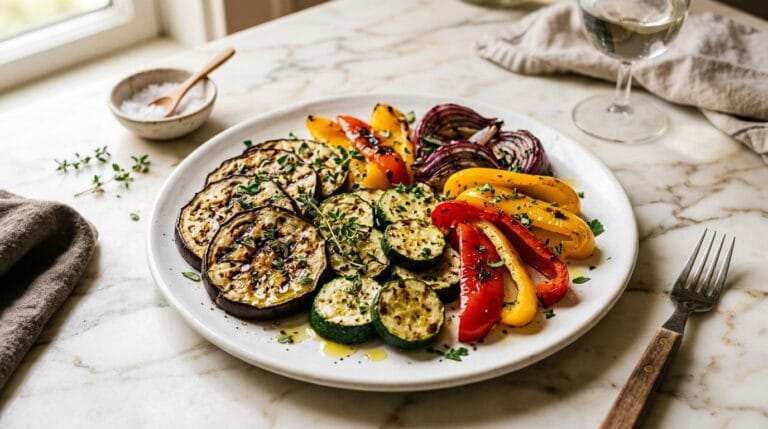
How to Grill Summer Vegetables (Eggplant, Zucchini, Peppers & More)
Grilling turns a farmers market vegetable haul into the best part of dinner. Here's how to grill eggplant, zucchini, peppers, and onions…
Read more
How to Make Refrigerator Pickles at Home (No Canning, No Special Equipment, Just Really Good Pickles)
Refrigerator pickles require no canning equipment and are ready in 24 hours. Here is the brine ratio, the flavor add-ins, and the…
Read more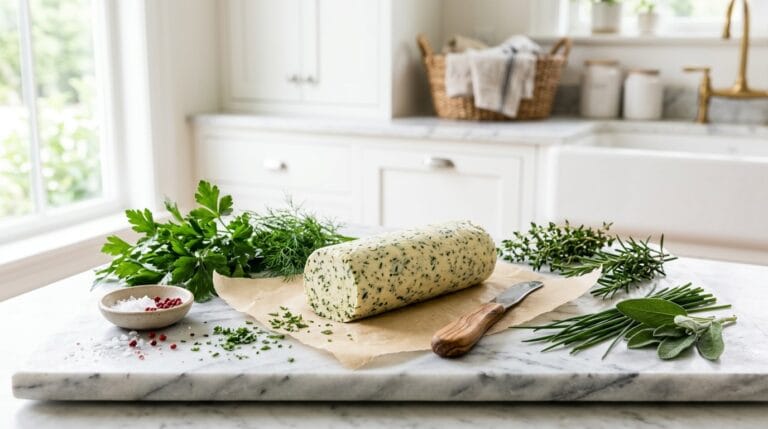
How to Make Compound Butter with Fresh Market Herbs (And Why You’ll Never Go Back to Plain)
Fresh herbs from the farmers market, softened butter, ten minutes. Compound butter is the easiest upgrade your kitchen has ever seen —…
Read more