
How to Make Compound Butter with Fresh Market Herbs (And Why You’ll Never Go Back to Plain)
Fresh herbs from the farmers market, softened butter, ten minutes. Compound butter is the easiest upgrade your kitchen has ever seen — and it freezes for months.
 1 min read
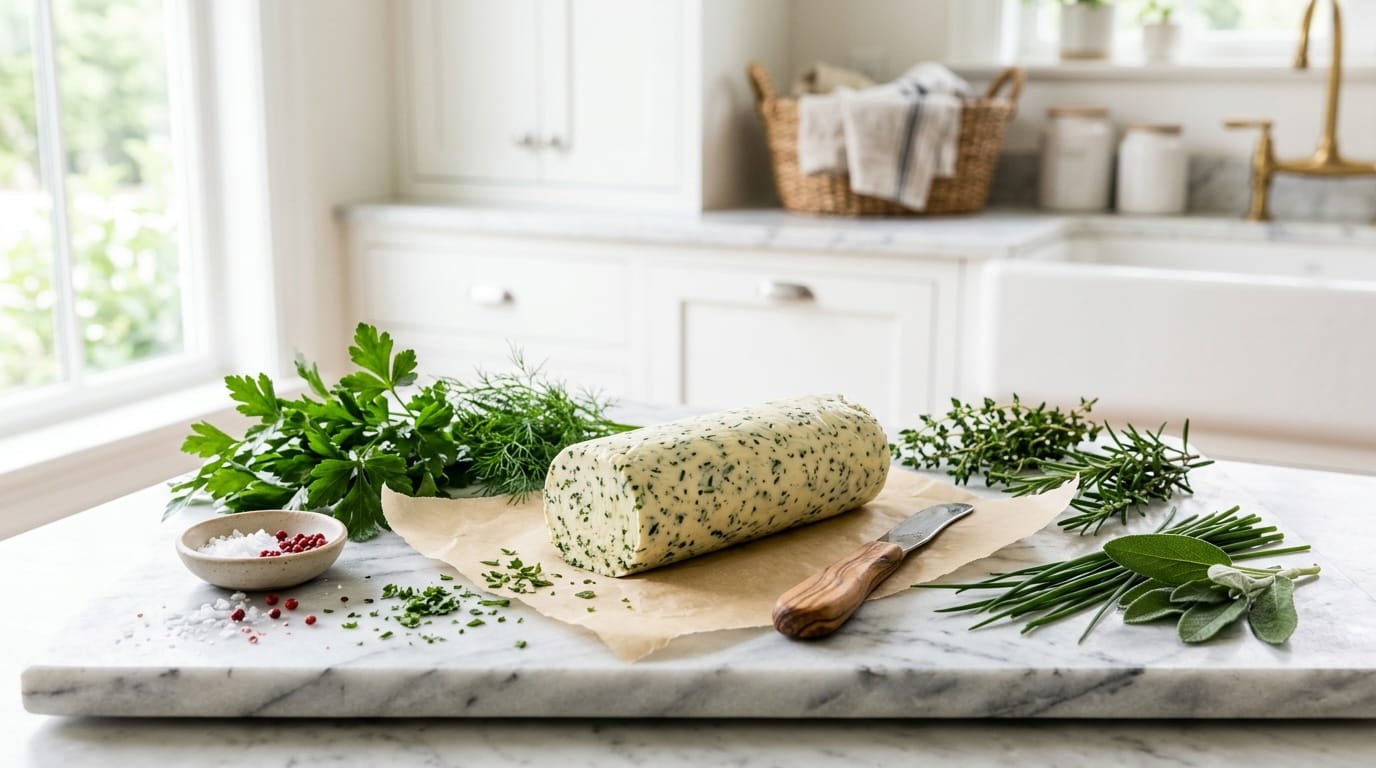
If there is one thing that turns a good farmers market haul into something genuinely memorable, it is knowing what to do with all those fresh herbs before they wilt in the back of your refrigerator. A bunch of tarragon, a fistful of chives, a handful of flat-leaf parsley — all of them threatening to turn yellow by Thursday if you do not act. Compound butter is your solution. It takes ten minutes, requires zero special equipment, and is one of those kitchen things that makes everything it touches taste significantly more intentional than it actually was.
What Is Compound Butter?
Compound butter is simply softened butter mixed with aromatics — usually fresh herbs, garlic, citrus zest, or some combination thereof — then rolled into a log and chilled or frozen until needed. The result is a flavored butter you can slice a round off of whenever you need an instant sauce, a finishing touch, or an upgrade to something that was about to be quite plain.
It sounds fancy. It is not fancy. It is one of the oldest and most practical techniques in the French kitchen, and it belongs in yours.
The Basic Method
Start with good butter at room temperature — it should be soft enough to press a finger into easily, not melted. Unsalted butter gives you the most control, but salted works fine. Take one stick (half a cup, 113 grams) as your base.
Rinse your fresh herbs and dry them thoroughly — water on the herbs makes the butter weep. Chop them finely. Large pieces of herb in compound butter create an uneven texture and pockets of overpowering flavor. The goal is for every slice to taste the same.
Mix your herbs and any other additions into the butter with a fork, folding rather than smashing. Season with salt and a squeeze of lemon juice if you are using unsalted butter. Taste as you go — compound butter is ready when it tastes like something you want to put on everything.
Scrape the mixture onto a piece of plastic wrap or parchment paper. Roll it into a log about an inch and a half in diameter, twisting the ends to seal. Refrigerate for at least an hour, or freeze for up to six months. Slice off rounds as needed directly from the frozen log — no thawing required.
The Best Herb Combinations from the Market
Classic herb butter: parsley, chives, tarragon, and a small amount of garlic. This goes on everything — steak, roasted chicken, grilled fish, steamed vegetables, baked potatoes.
Garden mint and lemon: fresh mint, lemon zest, a touch of honey. Extraordinary on lamb chops, but also genuinely wonderful on corn on the cob or stirred into peas.
Basil and sun-dried tomato: fresh basil, finely minced rehydrated sun-dried tomato, a hint of garlic. Spread on warm sourdough or toss with just-drained pasta for an instant sauce.
Chive and shallot: fresh chives, finely minced raw shallot, white pepper. The one to keep in your freezer for scrambled eggs and grilled salmon.
What to Do With It
The most obvious use — melting a round onto a hot steak or grilled chicken — is excellent. But compound butter is also the move when you want to finish a pan sauce without reducing it further, when you want to gloss roasted vegetables, when you need a quick pasta sauce at 6pm on a Wednesday, or when you want to make a dinner party appetizer by spreading it on a baguette and toasting the slices.
It also keeps beautifully in the freezer, which means your May farmers market herbs can still be feeding you in October. That is the kind of return on a ten-minute investment that makes you feel very competent indeed.

Keep reading
More from the market
How to Make Stock from Your Market Scraps (The Free Ingredient in Your Freezer)
A bag in the freezer, filled with onion ends and carrot tops, becomes the best ingredient in your kitchen for free. What…
Read more
How to Roast Any Vegetable (One Method, Your Whole Market Haul)
One temperature, one pan, three rules that decide everything. Timings for the whole fall market table, and the crowding mistake that steams…
Read more
How to Grill Summer Vegetables (Eggplant, Zucchini, Peppers & More)
Grilling turns a farmers market vegetable haul into the best part of dinner. Here's how to grill eggplant, zucchini, peppers, and onions…
Read more