
Farm-Fresh Eggs at the Farmers Market: What to Look For, What to Ask, and Why They’re Worth It
Farm-fresh eggs are genuinely different from store-bought — here's what to look for, which questions to ask your vendor, and why that deeper orange yolk actually means something.
 1 min read
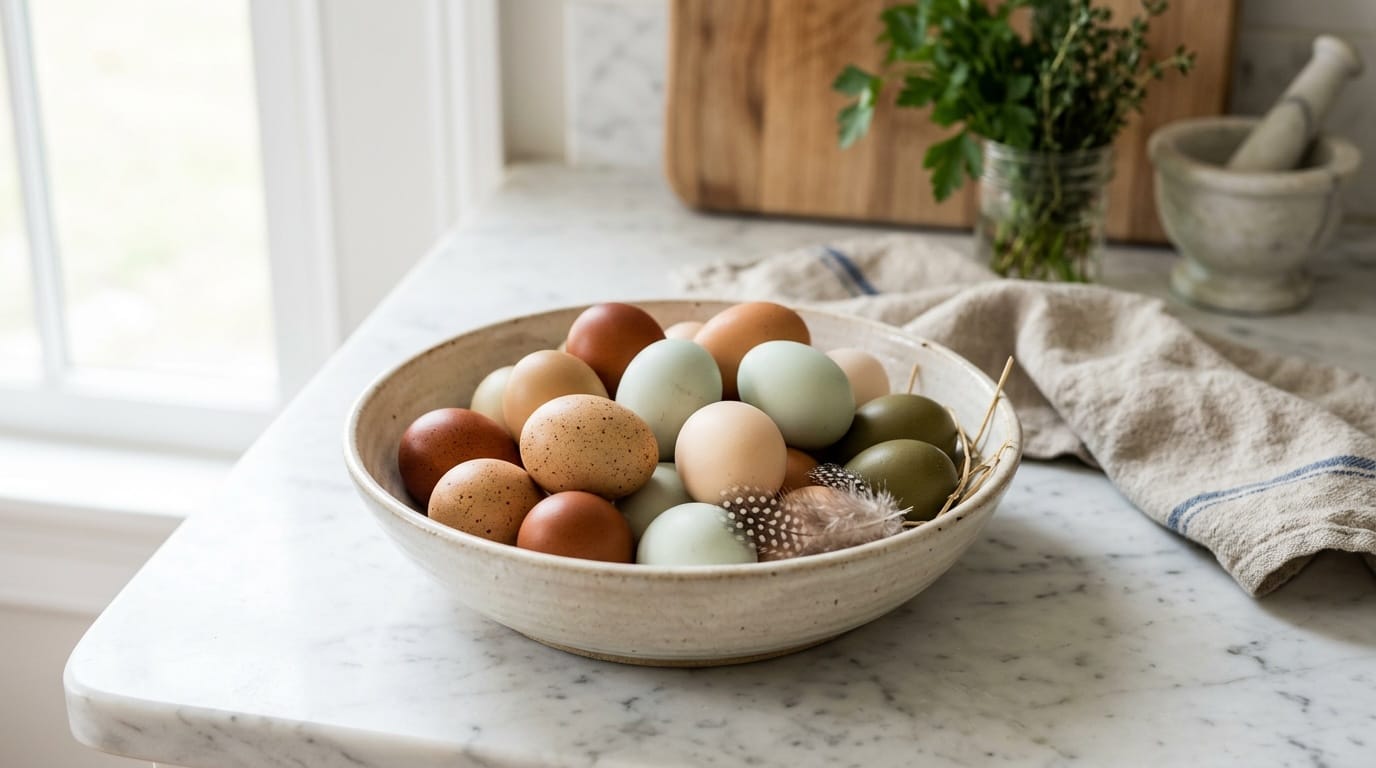
You've seen them at the market: a dozen eggs in a carton that looks nothing like what's on the grocery store shelf. The shells are different sizes. Some are brown, some are blue, a couple are almost olive green. And the vendor wants $8 for them when you could get a dozen for $3 at the store.
So what's actually going on? Are farm-fresh eggs really that different? And is the price worth it?
The short answer is yes — and once you cook with a truly fresh, pasture-raised egg, the store egg starts to seem a little sad by comparison. Here's what you need to know before you buy.
What Actually Makes Farm-Fresh Eggs Different
The biggest difference between a farm-fresh egg and a supermarket egg isn't the breed of hen or the color of the shell. It's time and sunlight.
Commercial eggs are legally allowed to be sold up to 45 days after they were laid. The eggs you buy at the farmers market were typically laid within the past week — sometimes within the past few days. Freshness changes everything about how an egg performs: the white is thicker and tighter, the yolk is more centered, and the flavor is richer.
The other big factor is what the hen ate and how she lived. Pasture-raised hens who spend real time outdoors eating bugs, grass, and worms produce eggs with yolks that are noticeably more orange — almost amber — compared to the pale yellow of a factory-farmed egg. That color comes from the carotenoids in their varied diet, and it signals higher levels of omega-3 fatty acids and fat-soluble vitamins.
How to Spot Real Farm-Fresh Eggs at the Market
Not all eggs at the farmers market are equal, and "farm fresh" doesn't automatically mean "pasture raised." Here's what to look for:
Shell variety. A mix of sizes and colors is a good sign. Commercial operations sort for uniformity; small farms don't. A carton with light brown, dark brown, and the occasional blue-green egg from an Ameraucana hen tells you you're looking at a real mixed flock.
Ask about outdoor time. Don't be shy about asking: how many hours a day do your hens spend outside? Do they forage, or is their diet primarily supplemented feed? A vendor who can answer these questions is a vendor who knows their birds.



Unwashed vs. washed. Farm-fresh eggs often have the natural bloom (cuticle) intact, which acts as a protective barrier and extends shelf life. Unwashed eggs with the bloom intact can sit at room temperature for a few weeks; washed eggs should be refrigerated immediately. Ask your vendor whether theirs are washed.
The smell test at home. A fresh egg cracked into a pan should smell like almost nothing — clean, maybe faintly eggy. If it smells off, it's off. Farm-fresh eggs from a good vendor almost never smell off.
Questions Worth Asking Your Egg Vendor
A good farmers market egg vendor will love talking about their flock. Here are a few questions that help you understand what you're buying:
"How many hens do you have?" — Smaller flocks often mean more individual attention and better living conditions per bird.
"What do they eat when they can't forage?" — Understanding winter feed tells you about year-round quality, not just summer quality.
"Are your eggs certified?" — Organic, Certified Humane, or Animal Welfare Approved certifications add transparency, but many excellent small farms skip the paperwork. The conversation matters more than the label.
How to Store Farm-Fresh Eggs
If your eggs were washed: refrigerate immediately and use within three to four weeks. If they were unwashed with the bloom intact: they can be stored at room temperature for up to a month, though most people still refrigerate after purchase.
One important note: once you refrigerate an egg, keep it refrigerated. Moving an egg from fridge to room temperature causes condensation that can push bacteria through the shell's pores. Don't go back and forth.
What to Make First
When you bring home a carton of properly raised, genuinely fresh farm eggs, the best thing to cook is something simple enough to taste the egg itself. A soft scramble in butter. A fried egg on toast with good flaky salt. A frittata with whatever herbs and vegetables you picked up at the same market.
The yolk will be deeper in color, richer in flavor, and will hold its shape better in the pan. It's one of those moments that makes you realize how much flavor most of us have been missing — and makes a $3 grocery store egg feel like exactly what it is.
Find local egg farmers and other small food vendors at Butter & Sage Market — a marketplace built to connect people who care about real food with the neighbors who grow and make it.

Keep reading
More from the market

How to Get Your Baked Goods to Market Without Wrecking Them
Cakes slide, frosting sweats, cookies go soft in the car. The crates, timing and packing order that get your bakes to the…
Read more
How to Store Root Vegetables and Winter Squash So They Last Until Spring
Potatoes, squash, carrots and onions will keep for months if you get a few things right. What each one wants, and the…
Read more
What to Do With Unsold Stock When the Market Season Ends
The last market of the season ends with a car full of what did not sell. Here is how to turn that…
Read more