Small Farm vs. Factory Farm: What You’re Actually Choosing When You Buy Local Food
Most grocery store food comes from industrial farms optimized for scale over soil, flavor, and community. Here's what the difference between small farms and factory farms actually means for what lands on your plate.
 1 min read
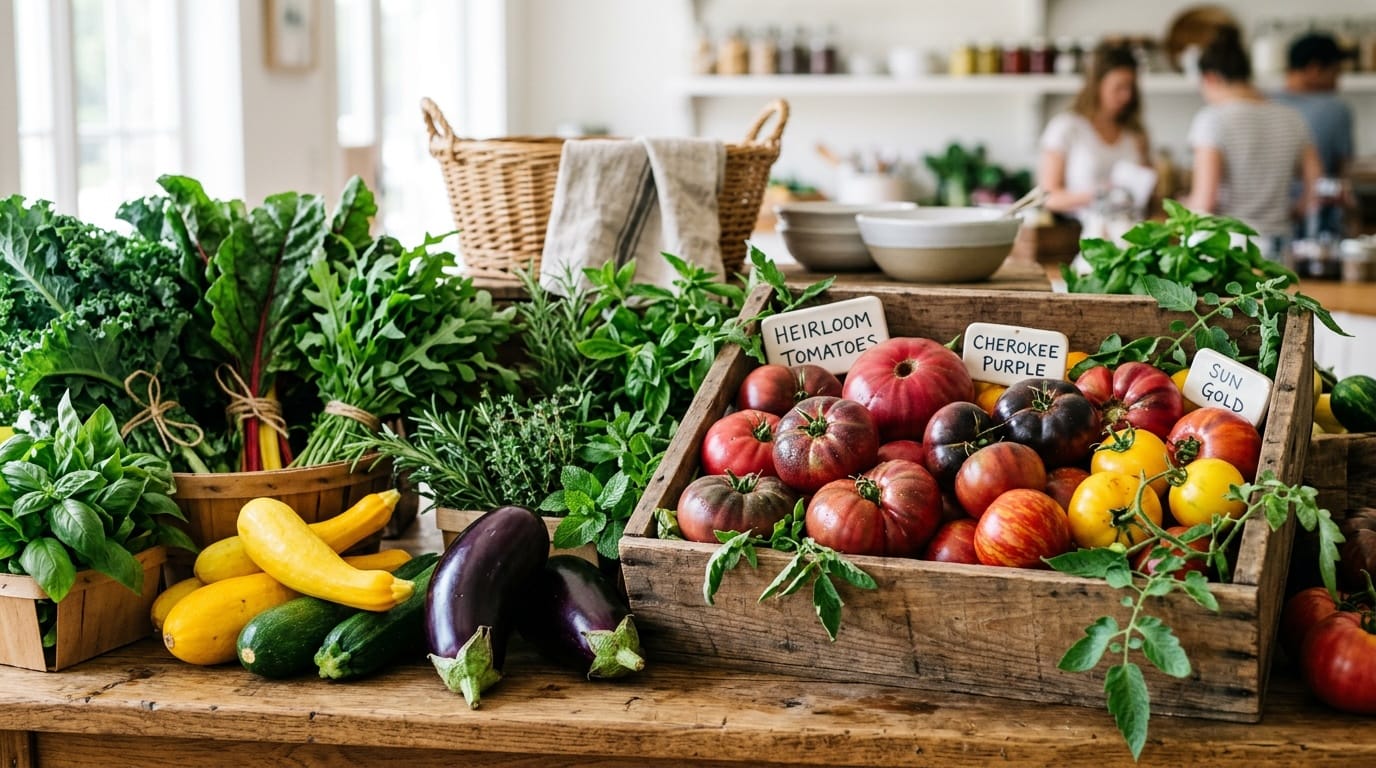
The average American meal travels 1,500 miles before it reaches your plate. That's not just a trivia fact — it's a window into how radically different the food system most of us rely on looks from the one that existed two generations ago, and from the one that still operates at farmers markets and through local food businesses every week.
Understanding the difference between small farms and industrial agriculture isn't about being precious about food. It's about knowing what you're choosing when you have a choice.
How Industrial Agriculture Actually Works
Industrial farming — what most people call "factory farming" when it involves animals, or "commodity agriculture" when it involves crops — is optimized for one thing: scale. Vast monocultures of a single crop, grown with synthetic fertilizers and pesticides, harvested with machines, processed in centralized facilities, and shipped across the country or the world.
The model is enormously efficient at producing calories cheaply. It's significantly less good at other things: preserving soil health, supporting biodiversity, producing flavorful food, paying farmers a living wage, or keeping economic value in the communities where food is grown. Industrial agriculture consumes finite resources — soil nutrients, fossil fuels, water — without replenishing them. It drives biodiversity loss through habitat destruction and monoculture farming. It creates environmental costs — water pollution, soil depletion, greenhouse gas emissions — that don't show up in the price tag.
What Small Farms Do Differently
Small farms aren't just industrial agriculture at a smaller scale — they're often a different model entirely. Small-scale diversified farming naturally builds in the variety that soil and ecosystems need. A farm with multiple crops, cover crops, and rotational practices actively builds soil health rather than depleting it. Small farms are more likely to use integrated pest management instead of blanket pesticide application.
Small farms also tend to sell to their local communities — which means less transportation, less packaging, less food waste from long-haul storage, and more of the economic value staying local. Farmers who sell locally create 13 full-time jobs per $1 million in revenue, compared to 3 jobs for industrial operations at the same revenue scale.

The Flavor Argument Is Actually the Science Argument
Here's something that sounds like preference but is actually biochemistry: locally grown food picked at peak ripeness has a different nutritional profile than food picked early for transport resilience. Tomatoes bred to survive 1,500 miles are bred to be firm, not to be flavorful or nutritionally dense. The variety, the soil it grew in, when it was harvested, and how long it sat in a truck all affect what you're actually eating.
This isn't about snobbery. It's about what food is for. A tomato that tastes like a tomato is more nutritionally active than one that tastes like nothing — and both are technically "tomatoes" at the grocery store.
"But Isn't Local Food More Expensive?"
Sometimes, yes. But the comparison is incomplete without accounting for the subsidies that make industrial food artificially cheap. Federal agricultural subsidies overwhelmingly favor large commodity operations — corn, soybeans, wheat — not the small diverse farms that grow vegetables, fruits, and specialty foods. The "cheap" price tag on industrial food doesn't reflect its full cost: the soil depletion, the water use, the carbon emissions, the health impacts of pesticide use, the economic drain on rural communities.
Local food is often priced to actually cover the cost of producing it well. That's a different proposition than being "expensive."
The Choice You Have — And When You Have It
Not everyone has consistent access to local food, and that gap is real. But when the choice is available — at a farmers market, through a local food marketplace, from a cottage food vendor — understanding what that choice means makes it more compelling than just "supporting local" as an abstract good.
You're choosing food grown with more care for the land it came from. Food that traveled less and stayed fresher. Food that pays someone a fairer wage for their labor. Food that keeps economic value in your community instead of extracting it.
That's a lot of difference for a jar of jam.


Keep reading
More from the market
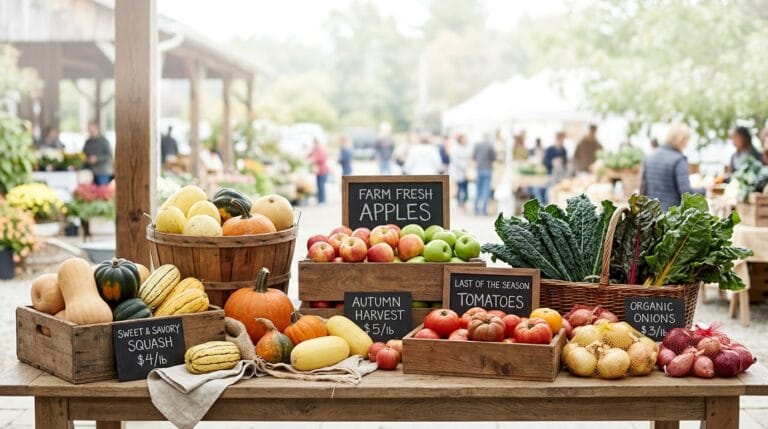
What’s at the Farmers Market in November? Your Late-Fall Shopping Guide
November farmers markets are smaller, colder, and sweeter than you expect. Here is what is in season, what frost improves, and what…
Read more
How to Survive a Slow Market Day (And Get Something Out of It)
Four hours, eleven customers, a full table. What to do with a dead market instead of scrolling, and how to leave with…
Read more
Cold-Weather Booth Setup: Wind, Light, and Days That End at Four
A booth built for August falls apart in November. What to change for wind, cold and a market that ends after dark…
Read more